James Vance

Engadget Editorial Policies

The unique content on Engadget is a result of skilled collaboration between writers and editors with broad journalistic, academic, and practical expertise.

In pursuit of our mission to provide accurate and ethical coverage, the Engadget editorial team consistently fact-checks and reviews site content to provide readers with an informative, entertaining, and engaging experience. Click here for more information on our editorial process.

Stories By James Vance

  • The DIY 3d Printed Lawnmower

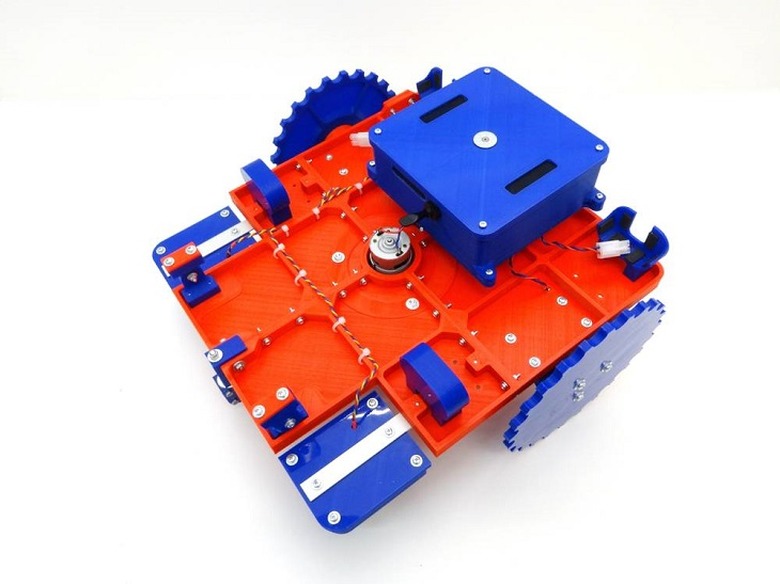
    Unless you've been living under a rock, you will know the latest tech in the gardening world is robotic lawnmowers. They have been talked about for the better part of the last decade, but even so, chances are you have probably see them roving around the front lawn of many of your neighbours. Even though robo-mowers have already been unveiled on the market in the last few years, they've not yet gained widespread popularity, mainly because they are still relatively unaffordable. Even the most inexpensive robotic lawnmower will require you to folk out about £800, while the high-end ones generally sell at triple that amount. However, thanks to the amazing work of Andreas Haeuser (a German engineer) there is an affordable new alternative. Haeuser calls it the Ardumower, and it is a do-it-yourself robotic mower, which you can apparently easily print and assemble by yourself for about £200-£300. That may at first sound quite complicated, but he has actually designed the contraption from the ground-up to be simple for anyone to construct even for individuals without any experience with DIY electronics. As long you have access a 3-D printer and some basic hand-tools with an inbuilt volume of about seven inches, it is possible to create an Ardumower. In addition to the filament (PLA and ABS) for printing the mover's parts and the needed 3D printer, as well as undertstanding of 3d printing only a few resources and tools are required to create the chassis, according to Haeuser. These are largely common hobbyist resources and tools. Any common 3D printer that has a minimum volume of "180mmx180mmx60mm" (x,y,z) is fit to carry out the job. The electronics that avail the mower with power are just as amazing as it is. This robo lawn mower derives it power from a re-chargeable 12V Li polymer battery, with everything else being controlled by a Arduino motor shield which runs open source software. The mower's bot is powered by two 12V-geared motors, while the cutting part is made from cutter discs with a radius of 110mm and a 12V DC motor. Once you have made your 3D printed ardumower it is claimed it will function extremely well on your lawn but there is a slight caveat. Since your lawn does not have walls, this lawnmower like all robotic mowers requires you to set up a boundary wire fence' around your home in order to help it know where it ought to mow. This calls for some extra effort and time, but you only require doing it once. Not only are we now having robots automatically doing our mowing for us, but we now have the ability to print and build them at home. That is the vision that Andreas Haeuser has brought to the world through his 3D printed ardumower.

    By James Vance Read More
  • Google 'Project SkyBender' to Beam 5G Internet Using Drones

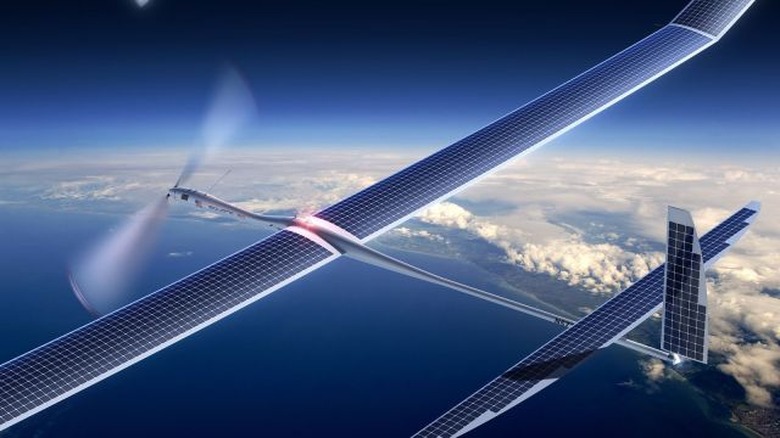
    If a report in the Guardian is anything to go by, the world's largest tech company Google is secretly testing the possibility of using solar-powered drones to beam high-speed internet from the sky at rates over 40 times that of traditional cell towers. The company is reportedly carrying out the tests in a vast private spaceflight site in New Mexico to determine the feasibility of using drones to bring unmatched internet speeds to remote areas in a project dubbed 'SkyBender.' According to the report published in the Guardian, Project SkyBender uses transceivers designed to transmit and receive high-frequency millimeter wave radio signals which can possibly transmit data at a rate of gigabits per second, as fast as 40 times the current speeds of 4G LTE cell towers. This high-frequency transmission system has in the past been proposed as a part of the future 5G standard. The millimeter wave data transmission technology has the potential to transmit more data and operate optimally in the less crowded section of the spectrum because it uses higher radio wave frequencies. This means that more people in far-flung areas with data-hungry devices such smartphones and tablets may soon be able to stream high definition videos hassle-free and without buffering. How Google is Equipping its Test Teams Project SkyBender is the latest of the numerous efforts that tech companies have launched in the recent past to improve Internet accessibility in rural and poor areas across the world. Previous proposed and tested projects included Google's Project Loon that uses balloons to beam LTE signals, Elon Musk's Space Internet that would network satellites orbiting earth to provide satellite Internet, and Facebook's Internet Drone project that is much like the Google SkyBender Drone project. Google seems to be well-positioned and adequately prepared to carry out a range of tests using solar-powered drones made at its own Titan arm as well as aircraft known as Centaur that can be manned or unmanned. The tech giant acquired exclusive permission to use the vast semi-desert area and Spaceport America runways at previously used by Virgin Atlantic. According to documents acquired by the Guardian, Google has set up a dedicated flight control centre at the adjacent Spaceflight Operations Centre. Transmission Technology Has Been Tested by DARPA Before Google is not the first company to attempt to use millimeter wave technology to transmit digital signals; back in 2014, Pentagon's research division DARPA supposedly tested how the transmission system could be used to provide high-speed Internet for soldiers in remote locations in a program called Mobile Hotspots. Google has consent to carry out millimeter wave transmission technology tests from the FCC (Federal Communications Commission) through July. The technology promises to solve a myriad of issues such as poor Wi-Fi signals in remote areas. The drones involved are a lot different from the quadcopters and hexacopters that have become extremely popular in recent years with both the public and businesses. Considering that more and more people around the world are increasingly relying entirely on smartphones and tablets to access information on the internet, largely due to the high costs of broadband, drone-transmitted connectivity such as SkyBender promises to provide a better alternative to end users without forcing them to invest in new hardware. However, because the Google SkyBender Drone project is in its early testing phase, it is difficult to estimate whether it is feasible, and if so, when it will roll out and who will be expected to pay for the service.

    By James Vance Read More
  • Wearable Tech Integration on Ford Motors Radar

    A serious investment from Ford in wearable tech accessories has resulted in them opening a new dedicated research facility. The announcement from the car giants seems to be an attempt to become early adaptors in biometric data transfer between devices worn as accessories and the vehicles themselves. Some practical applications have already been discussed after their innovation research team in Michigan investigated the potential of getting information from the driver like their heart rate and blood glucose from a smart watch and as a result of the data suggest driving adjustments like increasing the distance from cars in front of them. The manager for global vehicle design and infotronics, Gary Strumlo said "As more consumers embrace smart watches, glasses and fitness bands, we hope to develop future applications that work with those devices to enhance in-car functionality and driver awareness". The overall idea is that drivers will receive alerts via vibrations or flashing lights which will help them make better decisions for better semi autonomous driving with a view to move more functions to a full autonomous experience. On the sales side Ford are also developing smart glasses for customers in their showroom that will provide them with information on the vehicles they are currently viewing. It is hoped the added information at the pre sales stage will help consumers make a more informed decision and answer questions they would normally have had to ask sales staff about. Strumlo also added "We are evaluating many different wearable devices and applications. The potential in this space is endless, from helping to keep Ford drivers healthier and safer behind the wheel to offering an enhanced customer experience in dealerships" While the focus has mainly been on tech to help the driver, Samsung introduced an interesting transparent concept vehicle that helps other drivers visibility when behind large vehicles by placing large screens on the rear of the vehicle which show drivers behind the vehicle the road in front. The possibilities of autonomous tech contributing to both safer driving and a more enriched buying experience are currently being explored by many automotive manufacturers as the potential in the space is huge.

    By James Vance Read More