Kirsten Tanner

Engadget Editorial Policies

The unique content on Engadget is a result of skilled collaboration between writers and editors with broad journalistic, academic, and practical expertise.

In pursuit of our mission to provide accurate and ethical coverage, the Engadget editorial team consistently fact-checks and reviews site content to provide readers with an informative, entertaining, and engaging experience. Click here for more information on our editorial process.

Stories By Kirsten Tanner

  • What does the future look like for consumers? Drones, Drones, Everywhere Drones!

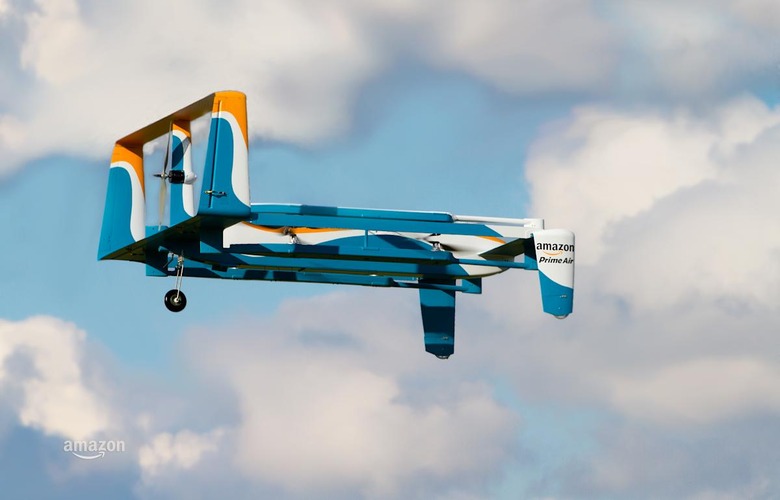
    Science fiction, no longer. Drones are among us and no more so than in the headlines but is it all just empty promises? Considering that the first drone to deliver products straight to the consumer set flight this time last year, we're getting eerily close to a life of drones, everywhere drones! So what exactly does this drone-filled future look like? Internet for the masses Sure, if you're reading this you probably don't really care about drone-use for internet consumption because you've already got internet but one of the most promising and useful applications of drones is already well underway. In mid 2015, Facebook revealed that it had completed a full-size version of its solar-powered Aquila drone which is now ready to be tested in the UK. The drone is designed to circle around the stratosphere, using lasers to provide internet service to even the most remote corners of the globe. Delivery Service Probably the most exciting application of drones to date for most of us is as a delivery service. You've probably already heard of Amazon's Prime Air, drone delivery program which was granted permission to begin testing by the U.S. Federal Aviation Administration (FAA) in April 2015. But what you might not know is that many other companies are following suit. Google is also currently developing a drone delivery service, named Project Wing, which is set to compete on a global scale with Amazon's Prime Air. It's not just hype Unless a whole hoard of big players are seriously wrong, drones are not just hype and it's not all just headlines. In an industry report by Drone Analyst, Commercial Drones: Current State of the US Industry, in just the first half of 2015 investments in drone technology totalled $172 million. That's more than the last 5 years combined. Most of that money came from venture capital investments, however there were notable amounts from tech companies including GE, Intel and Qualcomm. These technology companies are convinced that wirelessly connected drones will be part of the soon-to-be future. While most of the headlines come out of the United States, according to the House of Lords EU Committee, Europe could become the centre for drone innovation by 2050. While the EU looks set to welcome a drone-filled future, they have made it clear that more consultation with the public is needed. It also touched on the use of drones as a delivery service stating that it did not believe such a service like those touted by Amazon and Google would be safe now but that it welcomes research and development into making drone deliveries possible one day. While those in the business don't believe drone delivery will become a mass-consumer reality for at least another 5 years, it is clear that drones have a mass of potential outside of the mass-consumer. Besides, 5 years really isn't that long to wait.

    By Kirsten Tanner Read More
  • Australian Police vs. Pokémon Go

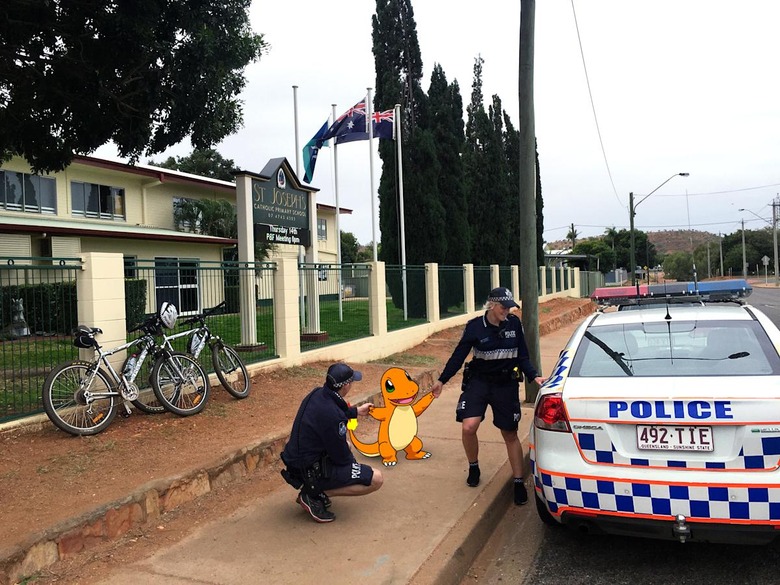
    Pokémon Go has taken the world by storm and Australian's especially have embraced the new trend. Like a zombie apocalypse (if zombie's fed on Pokémon captured on their phones rather than brains) all over the country, general (supposedly) more boring folk like myself walk amongst the dead-set enthusiastic Pokémon lovers, greedy for more. Their heads down, eyeing the world through their phone lens only making a noise when feasting their little hearts on their favourite Pokémon or when bumping into strangers to say sorry. Whether we're Pokémon Go fans or not, one thing is for certain, Pokémon though fun for many can also be quite dangerous. Dangerous for both pedestrians and drivers as many Pokémon Go players have been caught playing the game behind the wheel to capture Pokémon faster. This of course is dangerous for both playing and non-playing pedestrians. You'll also be fined and get demerit points if you're caught out, like these people did when caught by the New South Wales Police Force. How to Safely Catch Pokémon So how can you safely catch Pokémon? The easiest way of course would be to walk to catch Pokémon around your local area. While being a safe pedestrian and looking to watch your surroundings as you do so of course. If you really need to travel further afield to catch all your favourites and rarer Pokémon's, don't drive yourself. Get a friend to drive for you while you catch them on your phone or if you don't have any Pokémon loving buddies, or you do and they're all too busy playing as well, you can hire a Pokémon driver. Yes they have those. The Australian Police have been urging Pokémon Go players via their social media networks to act safely and in accordance with the law when playing the game. Driving while playing remains the top offence while trespassing on private property to catch Pokémon is another real concern. According to the ACT Police, passengers distracting drivers is another problem. If you have small children who are likely to do this, either get them to only play while walking (rather than driving), this will also prove to be a great excuse for them to get some winter sunshine and exercise or make sure they know the car safety rules. Follow these tips from the Tasmanian Police to stay safe when playing Pokémon Go: And these tips from the ACT Police force: Of course the Australian Police aren't all doom and gloom about Pokémon Go, in fact they love it too. Check out this footage of Kings Park filmed a couple of weeks ago by Police Airwing: In fact the Western Australia Police Force loves Pokémon so much they've vowed to catch 'em all! See the full post here. However, the Northern Territory Police Force may just love them the most as the Darwin Police Station features a Pokestop.

    By Kirsten Tanner Read More
  • The Hidden Cost of Electric Vehicles in Australia

    Australia needs to avoid increased congestion, lessen the nation's reliance on imported fossil fuels and escape further greenhouse warming. To do so it needs a broader and more reliable mobility strategy. Even with a recent turn of Prime Minister it seems that while Australia's leaders aren't inclined to fight the good fight, the people of Australia are. Electric vehicles have a huge role to play in developing more sustainable cities across the world, this technology has potential to develop a variety of industries and provide Australia with a much needed solution, altering the nation's energy, political and economic dynamics. Costs to Consumers Of course the upfront costs to consumers in Australia, like everywhere else in the world, are substantially more for an electric vehicle over their petrol-powered counterparts, the total lifetime costs are substantially reduced. After doing a little more digging, I asked the Australian Electric Vehicle Association (AEVA) what consumers could expect when buying an Electric Vehicle in Australia. "Most automakers are not currently tooled up to manufacture large numbers of electric cars, so the low production runs are more expensive. Also, most automakers rely on finance arrangements and regular service schedules for revenue. With a substantially reduced maintenance regime, you can expect a higher upfront cost. A new Nissan Leaf is about $39,000 and a new Tesla Model S (P85) is about $150,000. But bear in mind you will be driving around at less than 3 cents per kilometre, while a similarly sized petrol car might cost you about 12 or 14 cents per kilometre. If you drive an average of 14,000 km a year for six years, you will have spent as much overall on your electric car as if you'd been driving on petrol. You'll also break even sooner if you charge off-peak or charge from roof-top solar." Further costs to consumers may also include home upgrades in order to support the extra charging load needed of an electric vehicle. This upgrade is usually essential when your house was built before 1970 and/or has not previously gone through any substantial renovations. That being said, there are also further wins in store for electric vehicle owners with EV's registered in the ACT (Australian Capital Territory) having exemptions from vehicle stamp duty. For those registered in Victoria there's a $100 reduction in registration fees each year too. Manufacturing Costs While Australia's onshore car manufacturing facilities are dwindling, we certainly aren't seeing much in the way of EV production in the country. Manufacturing costs are perhaps the number one reasons for electric vehicle technology not being more readily accepted in Australia, with low production volumes and labour-intensive manufacturing processes the norm. Meaning upfront costs remain far too high for the average consumer. With a miniscule 2.5% profit on electric vehicles there certainly isn't much incentive for manufacturers or retailers in the country to sell EV's over their petrol-guzzling cousins. EV's based on existing vehicle designs, however, could path the way to the future and potentially give a greater profit by lowering manufacturing costs through being assembled in the same plant as ICE vehicles. Battery Costs The significant costs of electric vehicle batteries used to be the main reason EV's weren't made more available through the world, however in the past 4 years, battery costs have been dropping substantially and quickly. We're sure to see more EV's on Australian roads soon as a result of the significant price drop. Price per kilowatt hour of the battery normally would range from US $500-650, however the latest projections indicate a range of $300-325 by 2020. If prices keep falling at the current rate of 8% per year though we may even see prices drop to as low as $150 per kWh within the next decade. This is the price at which experts believe electric vehicles will become truly cost comparative with internal combustion engine vehicles. Meaning electric vehicles really are the way of the future. Energy Storage Costs While Australia is one of the largest exporters of energy in the world, the value of Australian imports of crude oil, diesel and automotive fuel equalled more than $32 Billion between 2011 and 2012. As stated, Australia clearly needs to reduce this dependence on imported fuels and the risks associated with such, including price vulnerability due to oil supply constraints. Right now, the additional load on the electricity grid thanks to EV's is pretty low and is expected to remain that way. Even in California, which has the highest electric vehicle sales the world over, utility companies are totally unconcerned with the impact on their system, stating that upgrading transformers is well within the normal cost of doing business. While EV market shares continue to remain below 1% in the majority of major markets, there has to be a coordinated effort among all stakeholders to address these significant cost issues towards not just Australian consumers but on a global scale in order to get more electric vehicles on Australian and international roads.

    By Kirsten Tanner Read More