Matthew Marley

Engadget Editorial Policies

The unique content on Engadget is a result of skilled collaboration between writers and editors with broad journalistic, academic, and practical expertise.

In pursuit of our mission to provide accurate and ethical coverage, the Engadget editorial team consistently fact-checks and reviews site content to provide readers with an informative, entertaining, and engaging experience. Click here for more information on our editorial process.

Stories By Matthew Marley

  • First-Time Buyers Using Technology To Make A House A Home

    Buying a home for the first time has always been a somewhat daunting task, but the advent of so many technical innovations in and around the home have made it far more user-friendly. There will be some people, of course, who will be more confused than ever before about home ownership, but those who have embraced technology will look to incorporate some highly impressive gadgets and gizmos from the outset. First and foremost, searching for the right property is easier than ever before nowadays. Also, thanks to the latest search engines, home-seekers can tailor searches to match their requirements perfectly, filtered by location, size, price and various other specifications. Email alerts will also allow them to find out about available homes ahead of the rest of the pack. There was a time when wealthy people could afford butlers, but nowadays we can all have our very own assistant in the home thanks to Amazon Alexa and, after a UK release sometime in the future, Google Home. Electronic assistants are becoming increasingly common now, and first-time buyers who seek brand new properties may one day find them already incorporated into the home as standard. New homes are ready homes The design and construction of new homes in the UK invariably include modifications for cable or satellite TV, Wi-Fi and various utilities. Another new development is one that purchasers are increasingly keen on, in part because it can save them a great deal of money. Smart thermostats are controllable from a mobile phone, and the best on the market have become increasingly intuitive in recent months. And while we're on the subject of saving money, high-tech light bulbs are designed to last longer and use less energy in the process. In addition to these valuable plus points, many of them will now work with Alexa and other platforms. The days when we had to scrabble around in the dark looking for a light switch are coming to an end, and that's good news for anyone who comes home struggling with some heavy shopping. Home security is often a top priority for home buyers, and many of the best security cameras on the market are ideal for the domestic market. Even the most basic models incorporate a great range of features, including motion-detect activation, HD screen quality and wide angle lenses. First-time buyers who want total secrecy can purchase cameras which look like clocks, mirrors and even air fresheners. In control even when you aren't at home Smart plugs bring us a degree of control that was perhaps unimaginable only a few years ago. Wi-Fi enabled and controlled externally by our mobile phones, they allow us to switch various appliances on and off even when we aren't at home. If you'd like to activate heaters, lights or air conditioners just before you get home at the end of the day, you can do so with ease. With more and more home gadgets relying on a good, strong Wi-Fi connection, we have become increasingly aware of the need to avoid skimping on routers, connectors and hubs. There are several to choose from on the current market, but given the fact that we know how fast improvements can come along it would perhaps be prudent to invest in appliances which are future-proof. The property market is a busy, ever-changing entity, and keeping tabs on developments isn't always easy. The good news for potential buyers is that the internet plays host to a comprehensive selection of informative websites. A guide to buying property for the first time can make the difference between a smooth purchase and a long, complicated ordeal. Stay on target by staying on budget It isn't always easy to keep tabs on the spending sometimes, and this is particularly true for first-time buyers. There are so many payments to take into consideration – far more than just the monthly mortgage commitment – and the best way to remain on track is to plan ahead. Accurate budgeting always helps, and there are several software applications which can do the job in style. While the concept of a robot butler may seem a long way off, our most modern homes are already capable of performing a wide range of functions on our behalf. Some fridges are able to keep track of which items have been consumed, for example, and will even remind us of what we need to order on our next visit to the grocery store, or the next visit to the store's app, of course. First-time buyers who are keen to buy brand new properties will often have a choice of houses and flats which offer a range of eco-friendly benefits. Everything from the bricks used in construction to the energy source will be greener and more sustainable. As more and more homes do their bit for the planet, it may be that older residences will start to be seen as unwanted white elephants. We all love a nice garden, but of course keeping this area in tip-top condition can be hard work. Those people who don't have the time, the energy or the money to keep everything in bloom may want to consider automatic watering systems which are able to monitor the local weather forecasts in order to remain as effective as possible. Inside and out, technology is helping to make life for home owners easier than ever.

    By Matthew Marley Read More
  • Best Financial Apps of 2016

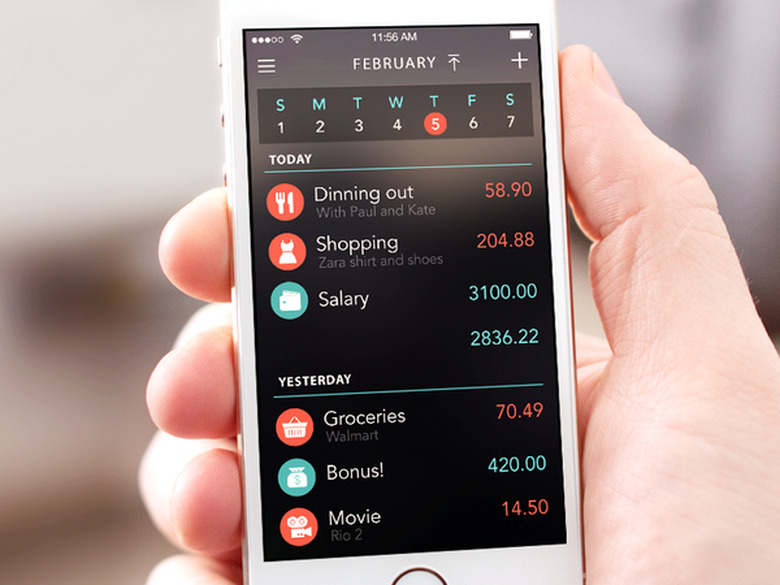
    When it comes to staying out of debt, and avoiding a future tied to an Individual Voluntary Arrangement (IVA) in order to sort out your finances, it's all a matter of keeping track. With time demands, and financial pressures from everyday life, keeping track can feel easier said than done. However, we're fortunate to be able to whip out our smart phone and manage our finances on the move. 2016 has been a great year for financial apps, and you've now got even more choice than ever. So get savvy, and select a few that will make tracking your finances a doddle. Use them wisely and you'll be able to stay out of debt and keep Individual Voluntary Arrangements (IVA's) and the need for other debt management solutions at bay. With these apps there is no excuse that financial management takes up too much time. OnTrees Personal Finance Suitable for: Android and iOS Cost: Free OnTrees Personal Finance has moneysupermarket.com behind it, a well-known consumer champion dedicated to ensuring your money goes as far as possible. The beauty of this app is that you can see everything in one place. It conveniently and sensibly splits money in to various categories such as household bills, groceries and travel. In plain speaking (and colourful!) terms you get to make sense of everything coming in and going out and use it to make the most sensible and informed decisions. mySupermarket Suitable for: Android and iOS Cost: Free Whilst not a financial app in the sense of many others, we like mySupermarket because it does the important job of ensuring you don't overspend on your groceries. Once you've got another financial spending tracker app on board you'll realise this is imperative as groceries will almost certainly account for one of your biggest expenses. This app enables you to get the cheapest deals without having to laboriously shop around. You simply let the app know what you want and they compare you basket for you across the main British supermarkets including Tesco, Asda, Morrisons, Sainsburys, Boots, Superdrug, Waitrose, Ocado, Aldi, Poundland and Iceland. It has a hand barcode scanner for when you're out and about and you can set price alerts, get spending suggestions and even cashback vouchers. Debt Manager Suitable for: iOS Cost: 79p One of a suite of apps available from M H Riley Ltd, you can get Debt Manager as a standalone app, or as part of their Finance Bundle. This app offers a user-friendly way of keeping on track of your spending through the management of your various debts including your mortgage, student loan, overdraft and more. This may be a useful step to take before heading down the Individual Voluntary Arrangement (IVA) road. It's simple and intuitive and offers hints and tips along the way as well as tracking your progress. You can choose from different debt payment strategies and ensure a repayment method to suit you. Spendbook – Personal Finance Tracker Suitable for: iOS Cost: £1.49 This is American, so be a little wary of the lingo, but you can edit the categories and subcategories to suit. It's an easy way of keeping track of expenses, and you can even snap a quick photo of the receipt if you want. The sub-categories make it possible to drill down within your spending. For example, you can break transport costs down in to different types. There are plenty of charts and infographics for those who like visual displays and an informative calendar to help keep you in line. MoneyHub Suitable for: Android and iOS Cost: Free for one month, then 99p per month thereafter Money Hub allows you to see all of your accounts in one place alongside loans, credit cards and investments. You can set goals and plans and importantly, keep track. There are useful calculators included within the app for things such as taxes, pensions, savings and house prices. You can even use the app to calculate your net worth. UK Salary Calculator 2016-2017 Suitable for: iOS Cost: Free This is a handy little app for knowing where you stand in terms of your income - whether you've got a new job or changes to your existing one. The app works out your take-home salary based on current UK tax and also takes in to account National Insurance, student loans, pensions and your age. Wally Smart Personal Finance Suitable for: Android and iOS Cost: Free This app has been named the Number 1 Finance App in 22 countries and with good reason. It's user-friendly and intuitive and displays your income and expenses within the context of setting budgets and planning. You can back-up data on iCloud, and export data to Excel. Furthermore, the app uses location services to predict where you are making updates to spending as fast as possible. It sends notifications if you've forgotten to add anything and uses its various algorithms to make it smarter the more you use it. Toshl Finance Suitable for: Android and iOS Cost: Free, with in-app purchases This is a well-designed app with a humorous character. It's got various customisable features making it possible to clearly visualise what you spend and where. It enables you to organise and keep on top of bills. You can export data to Excel, PDF and Google Docs. Additionally, you can use it in conjunction with Toshl.com on your desktop where you can access more graphs. Be warned, this is the basic version. If you want more functionality then you'll need Toshl Pro which requires a monthly or annual subscription. Spending Tracker Suitable for: Android and iOS Cost: Free, with in-app purchases Another offering from M H Riley Ltd, Spending Tracker is an intuitive platform for keeping a track of your spending enabling you to stick to your budget, and ultimately save, ensuring that you remain out of debt. You can easily log expenditure and look at summaries and reports of your expenses and income. Conclusion The best financial apps are the ones that enable you to stay on top of your spending and finances and offer transparency about what is going on. The simplest way to stay out of debt is to be fully knowledgeable on a daily basis on your budget in the context of your expenditure.

    By Matthew Marley Read More
  • Rangefinder Technology & How it's Changed the Hunting Industry

    Rangefinders first hit the hunting market over two decades ago. Back then we were excited by new tech on the horizon but it didn't quite cut the mustard. It didn't do what we expected it to do. Most hunters went back to relying on dusky distance practice in their own backyard, with a view to judging range the old-fashioned way. And mostly this did the trick. Hunters, by and large, love their tech. Yes, you get the few who use a traditional bow and arrows, but the vast majority utilise tech in their game hunting in the way they utilise the smartphone in their pocket during the week in the office: constantly. And given rangefinders are now far removed from the rangefinders of the mid-90s, they are radically changing the hunting industry. Then & Now: Rangefinders Old & New Twenty years ago a rangefinder seemed like an exciting piece of kit. We didn't have the gadgets and gizmos infiltrating our lives as we do now, so it seemed like a little bit of magic that we could point and click and know a distance. The problem was, these rangefinders were about as realistic as a kid's plastic wand. Great in the imagination. In reality, you'd be out on a hunt, carrying a cumbersome piece of kit, that often required you disturbing the game by recalibrating, and not very accurate if so much as a blade of grass got in its way. Bad information is worse than guessed information. Hunting frustration. Rangefinders now are a completely different ball game. The units themselves are considerably more compact so much easier to access, carry and utilise. The processor within them combined with memory storage is now equivalent to what we are used to: fast. Many come with integrated digital accelerometers. They all come with visual displays and a far greater ranging distance as well as faster speeds. Importantly they are more accurate. What Can a Rangefinder Do For a Hunter? Hunters are pretty used to being sold tech and the latest gadgets. Game hunting is big business in the US and therefore, it's big money. This means you need to be savvy when it comes to deciding where best to spend your buck. However, this seismic shift in rangefinder technology means that you'd now be positively missing out if you don't have a rangefinder on your next hunting trip. A laser rangefinder can be the difference not only between a clean kill and a messy one but can be the difference between a successful hunt or not. Novices and inexperienced hunters can lessen the learning curve and score big quickly. But for all hunters, even the pros, using a rangefinder to gauge the distance will significantly reduce the margin of error compared to estimating based on eyesight alone. This means you can take aim, make the shot, and know that the most tricky variable of a hunt has been factored in. This is particularly important on hunts out west, or on the plains, where distances are large. If you're thinking the elk is 185 yards away but it is in fact 250 yards, that makes a huge difference to your shot. Add in complicating factors like the dusky light that skews distances, or natural hazards causing deception such as rivers or mountains, and chances are your time spent working out distances will mean the elk moved on. Rifles, slug guns, and muzzleloaders are typically sighted at the 100-yard range. But head up to around 200 yards, and the chances of getting the shot accurately where you want it is harder. Does It Matter What Type of Hunter I Am? It sure does. Whatever your preferred method of hunting you're going to need something slightly different from your rangefinder. Given hunting rangefinders are no longer marketed as a one size fits all piece of kit, but highly specialized, you're going to need the one that best suits your hunting needs as well as your pocket. The type of rangefinder you go for will depend on the type of hunting: Rifle Hunting; Bow Hunting; or Target Shooting. Each of these requires a different set of features from the rangefinder. For the Bow Hunter, for example, you need a rangefinder to accommodate the arc of a released arrow as well as likely hunting up or down a steep gradient. This is where you need your tech know-how. Target Tamers use their expertise to help you narrow down your rangefinder choices. From the Leica 10x42 Geovid HD-B Laser Range Finding Binocular being their top pick for rifle hunters to the Bushnell Scout DX 1000 ARC for bow hunters and the Nikon Prostaff 3i Laser Rangefinder for target shooting, they have rangefinder information pertinent to any hunter. They even go so far as to recommend a good general all-rounder, the Nikon Aculon. They understand the hunter's needs and offset these against rangefinder features and benefits. Rangefinder Downsides Rangefinders are only a useful tool for improving your hunting if you take the time and effort to use them accurately. It's worth investing a little time when you have your new gadget to learn it. Then make sure you can carry this new tool easily – the case needs to be accessible, silent to open, and not too snug. Also, be sure you understand the limitations. Rangefinders aren't magic, just yet, so they can't see through thick cover. Also, consider the likely angles encountered on your shoots and decide where you need a tilt-compensated model. The Hunting Game Changer Rangefinders, with the best tech of the moment, are reducing the impact of the single trickiest variable in hunting: distance. This means that you're more likely to get the hit you want in the time you want it, making hunting success time and again. And for the nay-sayers, a clean kill is the best kill, and rangefinders make that possible. Hunting and rangefinders are now completely synonymous with each other.

    By Matthew Marley Read More
  • The Impact of Virtual Reality on Education

    Pack an apple for your school trip – to The Great Wall of China It's not a dream, it's not impossible. It is Virtual Reality (VR). We're nicely settled in to the digital age, we've got educators on board with technology in the learning setting, but there's a new frontier. It's a seismic shift that will shake the very foundations of how we 'do' education: Virtual Reality. 2016 looks set to be the year that VR takes off and launches education in to a new dimension. Raconteur have predicted that this is the year that VR moves away from the shadows and in to the limelight in the classroom. And it's easy to see why. Virtual Reality and Education – The Shift Change takes time to gain momentum. Education is traditionally slow to adapt to new learning methodology, requiring compelling reasons to move away from the norm. Faced with tight budgets and over-stretched educators, taking on board new technology is risky. However, VR itself has undergone a massive shift. Once the preserve of the gamers, VR was limited in its capabilities. With better collaboration, and improving product design, that is no longer true. Virtual Reality can be integrated in to Reality, from the roots up. With programmes such as Google's Expeditions Pioneer Program the big players are engaging VR with the world of education head on. Through this program children in schools worldwide are getting a one-day virtual class trip. They are seeing VR is action. They are getting a hands-on experience and liking what they see. What Does Virtual Reality Bring to Education The problem with traditional education models is a matter of numbers. What is the simplest, easiest way to educate the masses? The reality: classroom-based education. However, is this actually the best method of education for the individual? Does a child learn more on their twice-yearly trip to the museum, or producing maths results from personally collected data, or a singularly-delivered lesson in a classroom? What if you could bring the benefits of the hands-on learning of trips and real-life experience to the classroom without the logistics or expense needed of an educational trip. VR does just that. Imagine sitting in a classroom in Scotland and taking a trip to The Great Wall of China, or sitting in a classroom in India and joining with Australian children on an exploration of history at the Colosseum in Rome. That's what VR can do for education. It can pluck the disengaged digital age student from being slumped on the desk and transport them to a place where learning is fun, engaging, dynamic and retentive. Immersive educational content through Virtual Reality not only offers insight in a way you simply can't get in a classroom through traditional methods, it carries real impact. This immersive experience fosters learning retention that beats a text book or PowerPoint presentation hands down. For example, two schools in the US are utilising NearpodVR Virtual Reality Lesson Plans, via Google Cardboards, enabling the students to go on field trips that include the ancient pyramids of Egypt, caves on Easter Island, marine biomes of the Great Barrier Reef and even trips to Mars. These lesson plans are available right through the education system from the very youngest children up to school leaving age. How can a classroom experience beat that? VR allows you to be taken out of the classroom without even leaving the building. Also, according to Matthew Marley a UK based tech blogger and Freelance SEO Consultant , Virtual Reality could create a host of new interactive and immersive experiences to deliver online learning courses anywhere at any time, students will no longer need to leave their own home to attend classes with courses being delivered through a Virtual Reality environment. The Hurdles to VR in Education As we know, educators can be resistant to change for various reasons, most notably cost, time and logistics. VR systems for education are not nearly as expensive as people may imagine from a point of little exposure. The technology has taken off, competition for market-share is coming in to play, and the result is affordable systems such as the Google Cardboard. Add in to this the free, or highly subsidised, global outreach that is currently underway by a vast number of VR firms, and it's easier to reach than you may think. The beauty of VR technology is that it is instinctive. There is no right or wrong. Convincing educators is unlikely to take little more than a demonstration of what VR can do. Seeing is believing. The logistics are not nearly as daunting as they may at first appear. For teaching staff this is a vital point. By delivering curriculum content through a VR program, we can free up teacher's time to support the curriculum and provide hands-on supportive learning without them simply being spread too thin. There is also the global parental and educators concern of screen time. However, it needs to be remembered that this is the digital generation. Screens are and will be an integral part of their lives, world and workplace. Incorporating technological advances alongside the best of traditional learning methods is the learning method of the future. How better to learn than contact and interaction with dimensional objects, properties, animals and environment, making the sciences such as biology, anatomy, geology and space science, ideal launchpads for VR education. Virtual Reality in Education Beyond the School Gates Virtual Reality in Education needn't be restricted to school age pupils either. There is a place for education merging with VR tools in both adult education and career and workplace development. How better to keep learners engaged, fired up, and excited than placing them at the cutting edge of technology. How better to teach hands-on simulations without real-life risk? Virtual Reality in Education – The Future Virtual Reality is our Reality, it brings the reality of the diversity of all learning matters in to the hands and minds of everyone. It levels the playing field. As Arthur Goickhman, CEO of SurrealVR, has said: "The ability to truly experience something as if it was real, be it a historic setting or the inner organs of our bodies, makes VR an unparalleled resource for education." It is the future of the coming generations of learners.

    By Matthew Marley Read More