Mine Salkin

Engadget Editorial Policies

The unique content on Engadget is a result of skilled collaboration between writers and editors with broad journalistic, academic, and practical expertise.

In pursuit of our mission to provide accurate and ethical coverage, the Engadget editorial team consistently fact-checks and reviews site content to provide readers with an informative, entertaining, and engaging experience. Click here for more information on our editorial process.

Stories By Mine Salkin

  • How an Existentialist / Tech Geek Disconnects

    I was raised in a household full of computer programmers and engineers, often hearing my parents name drop things like "the mainframe," and "application wireframes." While I didn't grow up to become a software tekkie so to speak, my love for all things technology have been thoroughly cultivated by my career evolution into a multimedia journalist.I spend all day in front of two computer screens, a phone screen, a tablet screen, pretty much any screen I can find. It's intoxicating. The thirst for knowledge, news and information in general is incredibly overwhelming. The way we search for information is almost like an existentialist quest to discover who we are, defining our essence with each successive search. We look downwards at the glowing orb of potential in our hands. We bump into things, not even looking around us, or to see who is there.These are three things that I use to disconnect from technology, even if it is for a few needed moments at a time.1 Running in NatureNothing makes you forget what you're missing in News Feed than your whole body searing with pain, your lungs about to explode, your legs about to break off. Reminding yourself that your body is a machine, not a screen-reader, helps sometimes. If you see wildlife, you'll want to pull out your camera and take a picture of it. Don't—the sounds will frighten the animals and you'll miss the picture entirely. Look at the wonders of nature intensely, and don't blink. Now you're in the moment.2 The Pleasure of PaperSometimes I experience an actual freak out and all I want is a notebook and a pen. A keyboard doesn't always keep up with the rhythm of your thoughts the way a pen, being moved by your own hand, does. Keep a journal. Remember the little moments in your day in between Google searches and news articles.3 BooksWhy have we forgotten books? I always used to say, I would never trust anyone who doesn't read, but now we're all readers online, on our phones. Books smell good. They feel good in your hand, and they have some pretty interesting things to share. Turn off the television and pick up a copy of an old favorite or a new book on something you've always wanted to read. Pretty soon you'll notice that your mind starts creating images by itself, your imagination starts coming back to life. Characters have their own voices, you can smell the countryside. Comic books work just as well, too.

    By Mine Salkin Read More
  • Love and PCs: The Retro Mac that Blew My Mind

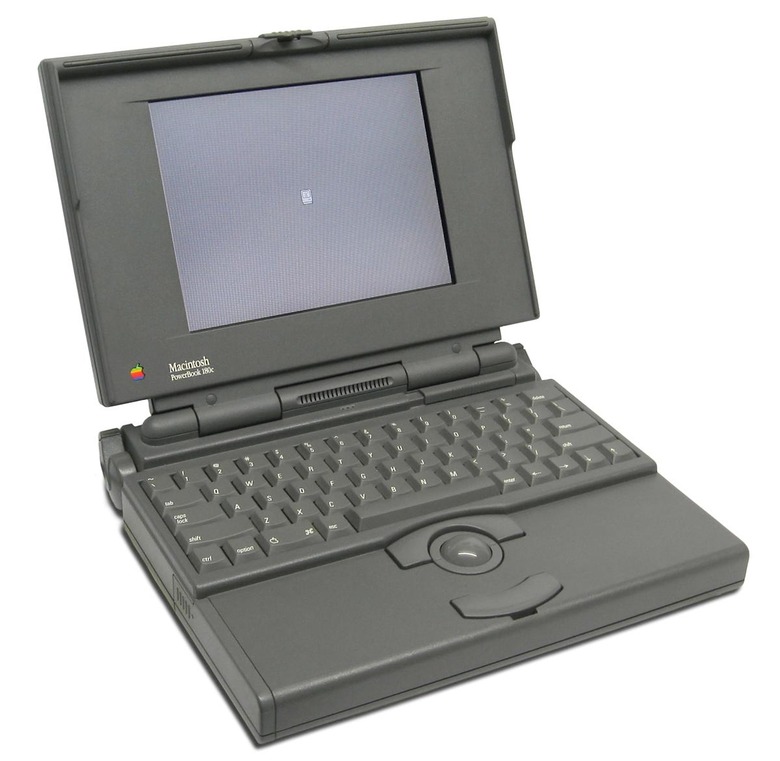
    The first time I ever touched a computer (as far as I can recall) was when I was the tender age of 7 in my mom's friend's apartment. It was a early 90's Macintosh PowerBook; clunky, monochrome, pathetic by today's standards. But at the same time, this newly presented piece of technology was to me, perfectly exhilarating. I was completely and utterly in love. Sparks flew from my pudgy little fingers as I navigated through the rudimentary operating system, baffled at how files within folders could be stored into other folders and into infinity. There was no mouse, only a difficult-to-use trackpad that included a little rubber tip in the middle, which my mom's friend affectionately referred to as "the nipple." He was a computer programmer, and explained to me that while this machine was revolutionary for the time, that computers were only really getting started. Pretty soon they would play more games, have larger screens with colour, and would all one day be able to connect to a single network, making everyone with a computer accessible to each other. I didn't know it, but it was one of the single-most profound epiphanies I'd had during my brief life so far. I was then turned on to my second realization, that videogames are addictive. The only non-boring program on that PowerBook was Shufflepuck Café, a game where you challenge a series of players of varying skill level in a gritty, dimly-lit public house. Now in retrospect, I enjoyed those games of air hockey immeasurably as a Canadian. I played that game more than I'd like to admit, and never was able to fully beat "Biff" (the beefy angry dude in the far right) without using cheats. A seed was planted in my child's mind that one day computers would have extraordinary functions and applications, would contain every book and piece of human knowledge in a virtual, infinitely vast non-physical space. This was the future. Eventually, computers could take over the world. After all, that computer and that game had become MY world. More than twenty years later, I have long since developed a very complex and irrevocable love affair and dependency with computing systems. The experience of first siting and spending so many hours with this machine still resonate with me today, as a writer and as a human being. I'd like to end this little story of sentimentality with the final message that my love for Apple had been conceived then and there. I have since been a Macintosh devotee and support all things iOS. %VIRTUAL-YouTubeEmbed-vVtYVyyX5NY%

    By Mine Salkin Read More
  • End of days: Three Exit Strategies for the Post-Apocalypse

    "This is the way the world ends Not with a bang but a whimper." ― T.S. Eliot, The Hollow Men Since human beings have been conscious of their own existence, they've been aware of their mortality and the fragility therein. There's no doubt that we have a facscination with our own mass exctinction—from popular cutlure to literature and the sciences—the apocalypse is almost part of the daily lexicon. So what if it actually happened? If humankind doesn't find a way to make the earth inhospitable for life through global warming, or deforestation, or manufacturing super diseases, or if in actuality zombies actually do exist, without a doubt I'd fight my way to the very end for myself and my loved ones. Here are three decently viable exit strategies for surviving into the post-apocalypse. Option 1: Life on Mars If and only if we aren't extinct by that time, or the apocalypse hasn't occurred yet, the ability to colonize Mars could be salvation for those prepared to leave behind their Earthly terrestrial comforts. Researchers are already looking into greenhouse options, how to produce oxygen and generally make the neighbouring planet hospitable to life. Not to mention the fact that Mars will be wifi-equipped throughout. Living on the big Red Rock might not be so bad so long as there's Netflix. Option 2: Life Extension and/or Cryonic Preservation If a zombie plague hasn't killed us yet, life extension no matter what will add years to life. For these researchers, age is seen as a curable disease, and that for only some species is aging actually coded in to our beings. Take turtles for instance; while they might get larger they do not exhibit weakness or diseases associated with age until they die, and they live astronomically long. Cryopreservation, an experiment over 60 years in the making, could allow people to suspend themselves with the hope that one day in the future (after all the apocalyptic stuff has gone down and we're in the clear) we'd be reanimated. This might be the best option for those too cowardly to fight the great battle, but aren't ready to die yet. Option 3: Hard core Cybernetics Zombies, mutants and other freaks of nature trying to hurt me and my family will get the bitter taste of metal with my cybernetic body mods. That's right. I'll be equipped and rigged up with the perfect blend of bionic enhancements and cognitive programs to help me outsmart any danger that threatens. My leg suit will allow me to crush the giant insects with little effort, and I'll be able to run at breakneck speeds. Most viable option if you're feeling bloodthirsty. Humans do happen to be very resilient, especially considering how soft our flesh is and that our skeleton is stupidly on the inside of our bodies instead of providing natural armor. With all that said, the End of Days could possibly be something outside the parameters of our imagination, and even our own survival.

    By Mine Salkin Read More
  • GadgetUtopia: My Descent into Full, Immersive Multimedia

    You might not realize it, but most journalists are full-on, hardcore technology geeks. Nearly every reporter I have ever met (including yours truly) has been obsessed with how research and development of media technologies have forged a new arena of storytelling through the gadgets and tools themselves. On my desk above you can see all the tools of the digital media trade; a superb 5K iMac, an URSA Blackmagic 4K camera, a GoPro, and of course, an iPhone. Give me extra points for editing a video of a drone and also taking this photo with a second GoPro cam. I have been an avid user of anything Apple-related since I was a wee one, a tender young geek at the age of 7, and while Android has its merits it has always lacked the premium interface and feel of Apple. With the gadgets you see here, I have everything in front of me required to be a lean, mean multimedia publishing machine. I finished J-school five years ago, graduating at a time when multimedia reporting was finding its voice, Twitter was only two or three years old, a 6 megapixel camera was super sweet and 2GB of RAM made you edit video at (what felt like) superhuman speeds. But what resounded with me the most fundamentally was the power of citizen-generated media, our growing ability to consume it and broadcast it from our phones, and how easily we can share it. My teacher Alfred Hermida wrote a book called Tell Everyone, explaining the fundamental reasons why social media trends are so compelling and shareable for society as a whole. But at the root of it, having the technology in our pockets has been the facilitator for these new realms of journalism and storytelling. So what's hot now? You might even hear it whizzing next to you. It's drones. Companies like DJI and Solo have reinvented indie filmmaking with their accessible, consumer models—and this has bred journalistic opportunities as well. Drones were used by CNN to explore hurricanes and chase storms. While the FAA and the public have some concerns (rightly) about the fact that nearly everyone can buy a drone and fly it anywhere, drones have ushered in a whole new age of multimedia reporting. Until the "glasshole" speculations became so common they blindsighted the public, I had some very strong beliefs as a journalist that Google Glass would reinvent a new form of first-person narrative that would be invaluable to the reporting and documentary filmmaking communities too. I still hold that belief and while the Explorer program (in which my company participated) created other types of communicative functions, that gadget has been put aside for very specific purposes, at least for the time being. The common theme that many reporting gadgets and technologies interfere with the public's private lives is a big issue as a whole that is endemic. Like the Professional Society of Drone Journalists advocate, responsible and ethical journalistic practices form the basis of how one should use any technology for reporting. Most of this is based on principles of newsworthiness and common sense. Technology and storytelling go hand in hand, and feed off the other. One provides the content, the other the vessel for broadcasting and contextualizing that said content. Journalists are no strangers to the newest forms of multimedia storytelling—and the delightful arsenal of gadgets that come with the territory. As a self-proclaimed geek and journalist I have never been more excited to glance at the horizon and adopt the next gadget that will help me tell a story. %VIRTUAL-YouTubeEmbed-Mus58S4N3-s%

    By Mine Salkin Read More
  • For your app-roval: For the News Junkies

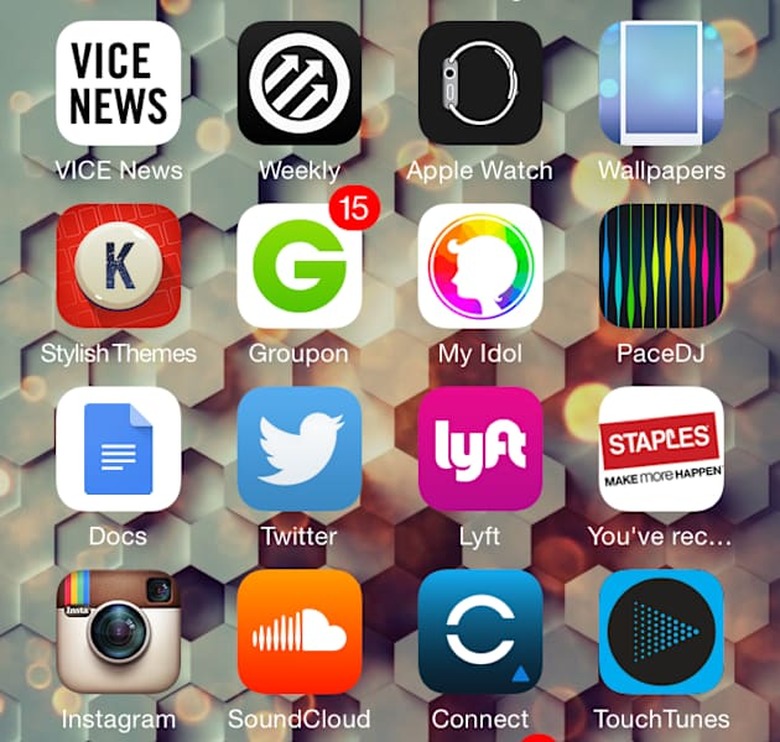
    Internet connectivity in our pockets has become one of the single most important shifts in modern society because it has allowed everyone to be connected to information and to reach other 24 hours a day.My personal kryptonite as a multimedia journalist has been of course, the frontier of news apps. When done well, they are addictive and necessary. When done poorly with counter-intuitive design they are an abhorrence to the pursuit of journalism itself. If you like curated news that is relevant, impactful and contextual, here are the top three news apps I'd recommend to any fellow journalist, professional or citizen.Timeline (free, iOS and Android)Timeline is a gorgeous news app that aggregates articles and presents them to you in context. This is kind of like what Facebook has tried to do, but the social media giant falls short when it comes to the relevant way that Timeline presents stories to its users. It's simple to navigate, has a beautiful, simple black and white interface with a timeline sequence. Best yet is that it adds a "fourth dimension" to news in that it gives relevant back history and context to the articles you read.VICE News (free, iOS and Android)If you like edgy news, underreported international documentaries that you will invariably tell all your friends and coworkers about, then get the VICE NEWS app. They cover the gritty stuff, everything from how the digital world has effected our souls to new technologies to preserve the dead. The media giant has truly embraced multiplatform journalism and has successfully turned their reporting into a beautiful mobile experience. They also have a beautiful native video player that is simply stunning.BBC News (free, iOS and Android)Welcome to the world of digital-journo innovation. This team killed it in the noughties with their award-winning website that quickly became recognized as the world's best international news source, and their app now is no different. Easy navigation, simple interface, and as expected, award-winning reporting from around the world. The ads are a little annoying however but they can be swiped off pretty quickly.Apps are everywhere, they're a household word, they are iconic, they are LIFE, they are on the tip of our tongue and on the forefront of our minds to find the perfect one. Sadly, 90% of them are ineffective and fail to engage users past the initial download. It is a great pity considering how much time and effort goes into actually building a mobile app. These apps have amazing shareability and work across many API's to help disseminate the news to the people who care about it the most.

    By Mine Salkin Read More
  • Apple: Imitation or innovation?

    One of the oldest battles that has raged around me I've been thrust within the tech world is the ever-long rivalry between Apple and Android systems. It's bloody, cut throat, and each brand has a loyal-as-ever army. Both companies' products have merits, but hey—that's because they've evolved alongside one another carefully examining the other's move, the other's innovation, trying to break out of the mold and create the next best piece of technology. By definition, innovation means taking something pre-existing, and improving what's there in a new way. Apple and Samsung have been at each other's throats over patent battles, device features etc. I'm going to puke if I hear anything more about which fingerprint scanner or digital wallet is better. Apple is innovative because it imitates... and improves. I've been using Apple products since I was a child and will continue to do so because one of the things it cares about the most as a brand is the user experience and design. I hope the rivalry continues, because the battle makes nothing but a healthy competitive ecosystem—and we get a better computer or phone at the end of the day, whichever cult we subscribe to.

    By Mine Salkin Read More