Nasrullah Patel

Engadget Editorial Policies

The unique content on Engadget is a result of skilled collaboration between writers and editors with broad journalistic, academic, and practical expertise.

In pursuit of our mission to provide accurate and ethical coverage, the Engadget editorial team consistently fact-checks and reviews site content to provide readers with an informative, entertaining, and engaging experience. Click here for more information on our editorial process.

Stories By Nasrullah Patel

  • How Mobile Apps are Becoming More of a Need than a Luxury

    Mobile applications have emerged as a game-changer for each and every section of society. Today they are being avidly used by not only individuals but also private and public enterprises. Their impeccable expertise in providing the ease in any form of work and real time tracking has raised the standard of living for the people across the globe. Gone are the days when mobile apps (or a particular application) was a symbol of luxury or professionalism, they have now become the need of humans of the era. What's driving the force? Looking at this growing inclination, the first and foremost question that might probably knock the walls of your brain could be the force that's driving the trend. Is it the luxury or the need of time? Personally, I won't agree to the force being a luxury. Apps have made their presence in almost every stream. They assist you in your professional and personal life, they take care of your health and entertainment section both. Not only these, they also guide you in improvising your hobby and profession. A recent study unveiled that 50% of smartphone users grab their smartphone soon after waking up. This 50 % include teenagers and professionals both. Well, if this doesn't amaze you, another research claims that around 87% people will always have a smartphone at their side 24*7 and 365 days (366 in the case of leap year). Why have they become the need? If you are one for the kind who prefer to have a brief glance, here are the three reasons that transformed mobile app development to need: A friend: Mobile applications stay by your side like a friend. If you are reserved by nature and don't open up quickly (which most of the people are), mobile applications are your true mate. You can spend time with them, share your part, without any complaint or fear. Making this better is Artificial Intelligence, which allows you to even have a virtual friend who can talk to you anytime and anywhere. A philosopher: One in a million becomes a philosopher, and it's really tough to meet them and have your piece of information/counseling. Mobile apps avail you with these at your fingertips. A Guide: These applications house an entire universe inside them. Starting with the making of galaxy till the microparticles around you, you can have everything through them. While on one side they are helping the corporates, on another they are assisting housewives and teenagers with their day to day activities and hobby sessions. Beyond a normal approach, let's be more specific Private Sector Private enterprises have integrated mobile applications as an invincible part of their business. These apps are intended to deliver: Better service to customers Creating awareness Increasing profit Smarter approach to work Wider access Effective marketing Live tracking, etc. These are just the handful of benefits out of the massive list that one can relish through mobile applications. Private enterprises have been noticed getting constantly inclined towards the app world. Industries that are using applications to deliver better service includes anything and everything that comes in the retail market and warehousing business. Government Departments: It isn't just the private sector, but also the government departments have started using mobile applications to deliver better service to the people of the nation. Their primary reason behind using them includes: Creating transparency Providing ease Creating awareness Attracting people towards sector Mobilizing the work Faster service, etc. In past couple of years, government sectors across the globe have been noticed coming with applications for various departments, and their initiative indeed received grand accolades for all good reasons. Daily households: Mobile apps have vastly spread their dimension in the household works. Be it the IoT, or the apps helping to cook the food; they have made an unmatched space in daily household tasks. They allow you to: Control and manage your house Keeping house Secured Tracking house activities from distance Cooking new dishes through cookery apps Living healthy by eating healthy, etc. Applications have given a standard of living through their multi-professionality. They can not only help you in living a luxurious life when in your house, but they also actively accomplish their tasks when you are away. Health: With the help of these mobile applications, one can live a much healthy life by keeping a track of his daily activities. Applications when integrated into wearables, can help you with real time information of your body. Numerous athletes and heath enthusiasts have started using them to track their sleep, workout, calorie intake and output. They are playing a special role by: Keeping a track on your activities Tracking your food intake Assisting and guiding you for better workout Sharing real-time data Your 24*7 doctor Motivating and reminding you about essential health concerns, etc. Basically, we can say that, while you are busy with your daily societal and professional tasks, these apps do their duty by keeping an eye on your health. Education: There are numerous mobile apps in the app stores, which guide and educate yours about things around you. With these applications, you can learn about everything starting from the metals beneath the surface, till the vast universe. This include: Apps for small kids Fun and learn apps Fairy fables and moral stories Apps to help teenagers in learning Professional papers by experts, etc. Mobile apps for education have made created a unique arena for the people who want to explore the world around without any hindrance. They allow the user to learn anytime and anywhere without any restrictions. Entertainment: Mobile apps for entertainment need no introduction. They have created a personal space filled with fun for the people across the globe. The segment like the rest is getting innovative with the passing days. The segment includes: Music applications Watch Movies on the move Play games Get the enhanced blend of your hobby, etc. Entertainment applications have helped people in finding some time for fun and leisure in this busy lifestyle. Conclusion Before signing off I would just say that the mobile application industry has grown avidly in past few years. With the passing time, one thing's for sure that it isn't just a wave of time, and is, in fact, a change that will embark a better future in the years to come. Thus looking at the above details we can be assured that these mobile applications are no longer getting used for the sake of luxury, but with the multi-usage expertise, they have become a need today.

    By Nasrullah Patel Read More
  • How to create a strong mobile strategy for your business in 2017

    The desktop version of computing has become an old school fable, while the laptops are almost confined to an instrument to serve official requirements. Preferences and expectations of people have changed drastically in the last few years and are still creating new definitions with the passing time. When we talk about e-commerce, things are pretty much in favor of the smartphones. According to a report, by the end of 2015, close to 50% of total digital media time spent comes through smartphone app usage. Talking about the mid of the year 2016, 65% of the time spent on digital media comes through mobiles alone. The result of this inclination? Looking at the people's inclination, the business houses together ran towards the growing market. However, while few relished the essence, few failed to find the essence leaving behind the remaining juggling their thoughts to find the right boulevard. To assist the latter two with the benefits of business mobility, here we have prepared a list of strategies that you can follow in order to reap the best results: 1. Make a Responsive website Rather than going with a mobile website separately, prefer a responsive design which promptly works on all the devices. The reason behind this is to lessen the efforts involved in maintaining separate versions of the website. Also if a user visits your website from different devices, he might get confused. However, if your company has resources, you may develop a mobile app and feature the same on two major platforms; Android and iOS. This, in turn, will reap you better benefits in comparison to a mobile website. 2. Performance is the master Key A study reveals that if your website takes more than 3 seconds to load, you have lost 57% visitors. And you might get shocked to know that around 80% of these visitors will never come back. So this states that if you wish to make your business survive and succeed in the growing market, you need to focus on the performance of your website on all the devices. Ensure that your application/website works smoothly as smoothly on mobile devices as it works on desktops. 3. Voice assistance could be a better option The best gift today the 'humans on earth' have is the way they communicate and express themselves. Same goes for your visitors. Recently in an interview, founder and CEO of video chat company Agora.io, Tony Zhao said that the in-app communications to an extent increase your user's interest and engagement. You can easily enable video calling or a click-to-call option for voice calls in your application or website. For the same you can find numerous click-to-call Software Development Kits online. These kids will just require a couple of coding lines and some steps, in order to deliver what you need. 4. Scalable It is forecasted that for the coming four to five years, the smartphone market will grow by over 10 percent. Same goes with the application stores, which are expected to face double downloads in the coming few years. To race with this growing market and to create a place, you need to ensure that your planning, implementation, and the output are scalable. You have real time analytics for all your data and performance specs. 5. You can't afford a loophole They are using mobile for a hassle free experience, and a little loophole from your end will make them flea. You are well aware of the fact that there are many like you trying best to grab as much audience as possible. During this entire chaos, you need to be sure that you deliver the best to them. You can optimize your mobile design to work even when the connectivity is low. Ensure a proper interaction with your users, and take their feedbacks and compliments seriously and take necessary actions. Conclusion These were the top five mobile strategies to strengthen your business. Summarizing the information, it can be said that you either need a good team of developers. If not these, you may also consider having a technical partner or a consultant to avoid these minute pitfalls. The post is originally published at Peerbits

    By Nasrullah Patel Read More
  • How to manage e-carts for your mobile application

    Mobile applications are redefining the way people interact with their smartphones. It is no longer used solely for making calls or exchanging messages. People shop from their smartphones, indulging in the buying and selling process all through their phone. Mobile app development companies consider the value of user interface while developing an app. It is imperative for these mobile applications to provide end users with an exceedingly satisfying experience. Various factors shape up the success of a mobile application, such as app design, typography, marketing techniques, convenience, integrity, and quality. A successful mobile app comes with highly convenient UI so that end users can use it without many hassles. The primary focus is on enabling them to carry out the entire process of purchasing a product, i.e. from the time when of booking a product online till the time they receive it physically, However, it is equally important for mobile application development to generate revenue in order to run a sustainable business. Using an appropriate payment gateway for your business activities on mobile apps can certainly contribute to building a broader audience. The primary task of payment gateway is to encrypt the payment information and render the same to concerned banking agencies. The aim is to allow customers to carry hassle-free payment activities at the time of checkout. E-carts enable customers to select items they prefer to purchase and by providing them with the relevant information before making the final move. For example, it includes product details, shipping information, and net amount. The total amount calculated by shopping carts also includes taxes and shipping charges. Once the order is placed, buyers are redirected to enter payment details to complete the transaction. The role of a payment gateway is to control and manage this part of information. The most important issue of e-commerce businesses is to resolve the act of controlling e-carts and payment gateways. It includes activities like developing a shopping cart, adding items, and signing out. It allows mobile app developer to maintain transaction records for payment status of every transaction. There is a sense of freedom given to app developers when it comes to the payment management as they are entirely free to decide how they want to manage the payment gateway.The given path is recommended to e-commerce users who strive to control the chosen payment gateway and e-carts. The first step is to import statements and then comes the act of initializing, for example, you have to initialize with App42API by giving the API key and the secret Key that will get activated once you are done creating an application. The API key and the secret key are provided when the mobile application is developed. After having initialized the API key, the app developers needs to call the buildXXXService method on App 424API in order to receive the example of the API he wants to develop. The next step is to form a cart session for the given customer, and the needed parameter is the user's name. It creates the given user's Cart ID that will be used throughout the entire process. After that, it asks for card details so as to fetch the payment information. This information is used by developers to reveal card details like the total number of items. You can also add a product to the cart and alter the quantity. The required attributes are Cart ID, item ID, item Quantity, and price. The next task is to fetch the specified items from the cart and it requires Cart ID and item ID. It is important to ensure that the cart is empty. Once you know it is empty, check out the cart and place it at the checkout stage and replace the transaction ID that will be used in near future for updating the Payment Status on the basis of the Payment Gateway Interaction. Now, the next step is to get the user's payment data that reflects the payment history and order. Furthermore, it will get payment data for the specified Cart ID, for the user ID, and then for updating the Payment Status. Following this, one is required to fetch the payment history for a user in order to render all the specified carts that are in different states. There are few more optional actions given to a user, such as increase quantity, decrease amount of a particular item, and remove it or all the items from the cart. Moreover, the functions given in Cart API can provide exceptions at times. For handling cart APIs, there will be an action which informs users about malfunctions, for example, if a user enters an id which is not stored in database; the action will render the 'Not Found' message. This way, it gets easier to integrate e-cart within the ecommerce mobile application that ensures seamless and enhanced UX. Regardless to the steps that goes in roping e-carts, the main vision of keeping users engaged throughout the checkout process is highly essential. For this reason, it is imperative to provide best possible checkout experience.

    By Nasrullah Patel Read More
  • Touchless technology that blows your mind: Project Soli

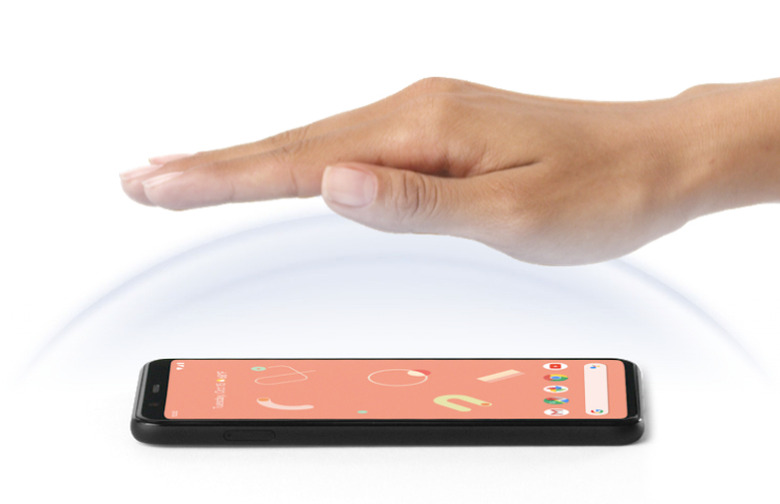
    Smartwatch is around us since past couple of years now. Few of the best in a business like Samsung, FitBit, Apple, and plenty of other brands comes with their set of distinctive features for that tiny thing that sits on your wrist. On the other hand, there are mobile applications that control the functions of wearable devices. In that case, it nothing short of a challenge for mobile app developers to suffice wearables with much needed mobile apps. One of the amazing concepts that work on the fundamentals of haptic technology, Project Soli was showcased during last month's Google I/O event. Project Soli successfully stood out against all the proposed innovations at the event. Google's Project Soli is aimed towards removing the need for physical human interaction while communicating with the devices. However, One must be clear about the fact that Soli is not a concept limited to only smartwatch (as tested for now), but it can be used in plenty of other devices as well. One of the biggest shortcomings with the smartwatches available in the market is that it limits the navigation and control of wearers. Even UX designers have known the fact that interacting with the watch-dial with your finger can cover a significant portion of the dial display. It has many reasons like touchscreens being tiny, interactive buttons are too close to each other, and all these often results in a wrong input. The ergonomics are such that dial can only offer limited control. The problems are encountered every time a user attempts to interact with the dial, making it an arduous process for to interact with the watch. Let us write off this technology as an innovation of past because in the recent Google I/O event, it came up with a more innovative smartwatch than ever before. The latest edition of smartwatches is expected to incorporate Project Soli's innovative chip. The unique thing about Soli is that it utilizes the gesture-recognition technology like the ones that are used in games like Microsoft Kinect or say Leap Motion. Project Soli is the result of Google's ATAP division's (Advanced Technology And Projects) perseverance to present one of its smartest technology this year. Although, Soli was initially revealed at the event of Google I/O 2015; there are important design and application changes which we have seen this year and shall be discussed in detail over here. Ivan Poupyrev, Google ATAP Project Lead points out that Soli's strength lies in letting users do anything merely with the gentle finger gestures and movements. The core idea lies in considering hand as an ultimate input device. Google's ATAP division has a significant role to play in making the project soli possible. Firstly, it was responsible for shipping the developer kits to these the developers. Kits were meant to build the object recognition devices, wearables, and plenty other including gesture-based Bluetooth speakers. Even though Project Soli is expected to revolutionize the smartwatch market; we can certainly expect its significant contribution in wearable IoT as well.These development kits will enable developers to design their applications for gesture controller. Talking of design changes, redesigning the new chip led to reducing the power consumption by a significant amount, almost 22 times than before at it now sits at just 0.054 Watts. The initial iteration was shipped to in a development kit that fetched the power of 1.2w The previously-built radar consumed much of computational power. While the latest release has improved radar's efficiency as it is now 256 times more efficient, running at 18,000 FPS (frames per second). Also, the deployed sensor is equipped with the ability to detect movement within the impressive range of 15 meters. And once you get in close enough to the range, you can start doing fine grained controls. Radar has few of the unique properties that match to that of the camera. For example, it possesses very high positional accuracy that can sense even the tiniest of motions. Radar deployment is common in many different things like tracking cars, big objects, planes, and even satellites. Project Soli's smart watch utilizes the same to track the micro-motions that even includes small twitches of the human hand. Google incorporated this innovative technology by joining hands with the South Korean company, LG. ATAP team of developers were successful in shrinking down the chip size to deploy the same inside a customized LG's smartwatch, Urbane Although the smartwatch is just a prototype, the gesture-enabled sensor is capable enough to work without a computer or any other human interactive interface devices as well. The incorporated mechanism of radar hardware has a functional innovation which can be used in devices like speakers as well. Because of its ability to transmit radio wave towards a target whereby the receiver of radar's competency can intercept the reflected energy from that target, this mechanism widens its usability scope. There is a full gesture pipeline that comes deployed inside the device. It is the reason why the multiple inputs can be efficiently decoded while interacting with any Soli-enabled device. There are different stages in the interpretation pipeline that are designed to extract the detailed information from a single detector at a high frame rate. Vertex data is prepared inside the openGL-enabled micro-radar when the device receives input from users. The same is rendered for the Vertex Processing. It is from these foreign-ranged Doppler signals the interactive device interprets the human intent. Now there is also an actual haptic feedback that occurs when a hand performs such particular actions. Here the hand can embody a virtual tool while it even acts on that device at the same time.The feedback is recognized in the chip as a mere physical act. It then gives direction to the users for smooth interaction with the device. The best part about Google's Project Soli is that it has successfully pushed the processing power of the electronics further out to do the remote sensing tasks. Integrating the radar enables to work through materials and one can also embed it into objects. The robustness is also present because radar is reliable, it does not break, nor it has any moving parts and no lenses. In layman's words, it is nothing but a piece of sand on board. The ramifications of Project Soli incorporate precise controls on gadgets that usually have little touchscreens. One year from now, ATAP is planning to come up with another Beta DevKit that permits designers to execute Soli in various gadgets. We can anticipate the official announcement for the public launch of Soli-driven smartwatches anytime this year. With these partnerships, Google is putting all efforts to launch this innovation in the commercial market in the form a usable consumer product. But we all know the story of Google Glass and how it failed to stand by the expectations. Glass did not work out well as a consumer product for a variety of reasons, but there is much potential for wearable devices in the consumer market. It is reported that ATAP team has strengthened the team of engineers to work with and have started to get engineers intrigued to help the organization leap forward some the current limitations. In spite of the fact that Google ATAP team has demonstrated first genuine working items for the current year, Project Soli is yet to transverse to be adaptable to other commercially marketable devices. It all depends on the level of interest from hardware manufacturers to chart out the future road for this radar-based gesture technology. There's still far to go before Soli is up in the market for sale. Nevertheless, considering the advancement it made from the previous versions, something can be expected pretty soon. Also, with the advent of accessibility to beta dev kit scheduled one year from now is projected to aid progress at a relatively faster rate.

    By Nasrullah Patel Read More