

Watch the NVIDIA CES 2026 keynote with CEO Jensen Huang live here: AI, robotics updates and more
NVIDIA is showcasing robotics, simulation, gaming and more at CES 2026.
Last year during CES 2025, NVIDIA spent most of the time during its keynote touting its leading position in artificial intelligence. It threw in a few hardware announcements, including its RTX 5000-series GPUs and Project Digits desktop supercomputer (later redubbed Spark). For CES 2026, the company promises to "light up" the show with "the power of AI." It seems NVIDIA will be going big in Las Vegas this year, with hands-on demos in its Fontainebleau booth, replete with the "latest NVIDIA solutions driving innovation and productivity across industries."
But if you won't be in Vegas for the action, don't worry. Here's how you can watch the livestream of the company's January 5 press conference, and what NVIDIA is expected to unveil at CES this year.
How to watch the NVIDIA CES 2026 keynote
NVIDIA CEO Jensen Huang will deliver a 90-minute keynote at CES 2026. The event will be livestreamed on Monday, January 5 at 4PM ET via NVIDIA's YouTube channel (which we've embedded below).
We'll also be covering Huang's presentation with a liveblog for instant analysis.
94 Updates
-
I'm off to eat something and check out some NVIDIA demos. Thanks for joining us, folks!
-
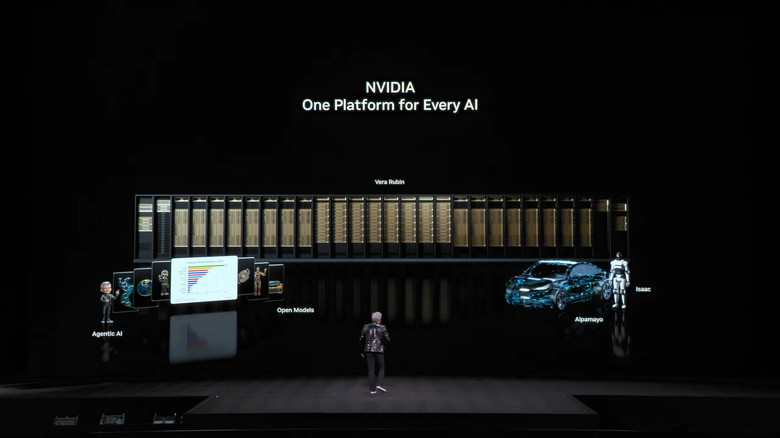
Here's a look at everything Huang announced during this event.
-
We're done! And now we're watching... Outtakes? Okay.
-
It feels like we're at the "please clap" phase of the presentation.
-
Huang claims everything is encrypted in Vera Rubin, allowing for safer computing. It's also cooled by hot water (45C), paradoxically. That also helps to save energy costs, he says.
-
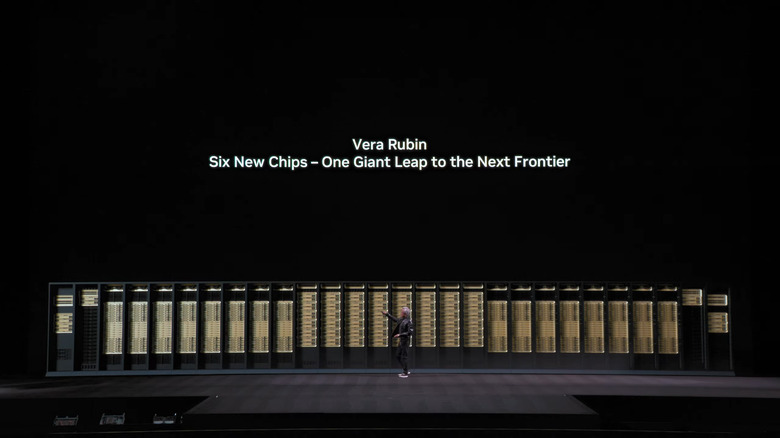
Here's a look at the Vera Rubin.
-
"Context is the new bottleneck — storage must be rearchitected," reads a new slide. Now data has to move through high bandwidth memory, standard memory, a rack SSD and then a network SSD.
-
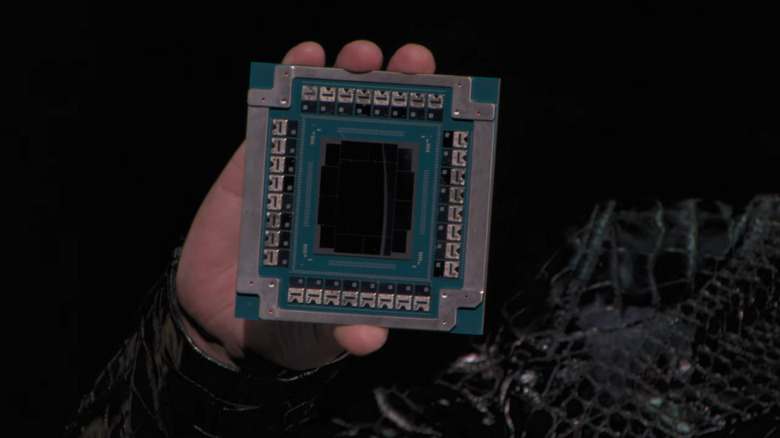
The Spectrum-X Ethernet chip.
-
Now we're looking at the giant Spectrum-X Ethernet chip, which uses optics for incredibly fast data transfer.
-
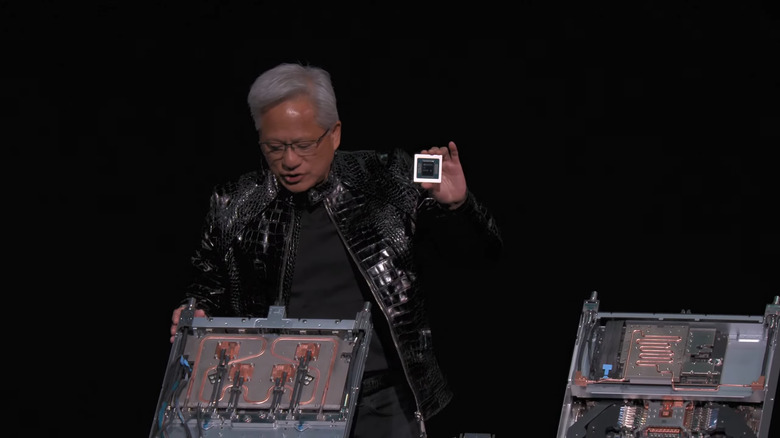
Huang is holding the NVLink 6 Switch.
-
The NVLink 6 Switch can help all of the GPUs in Vera Rubin talk to each other at the same time.
-
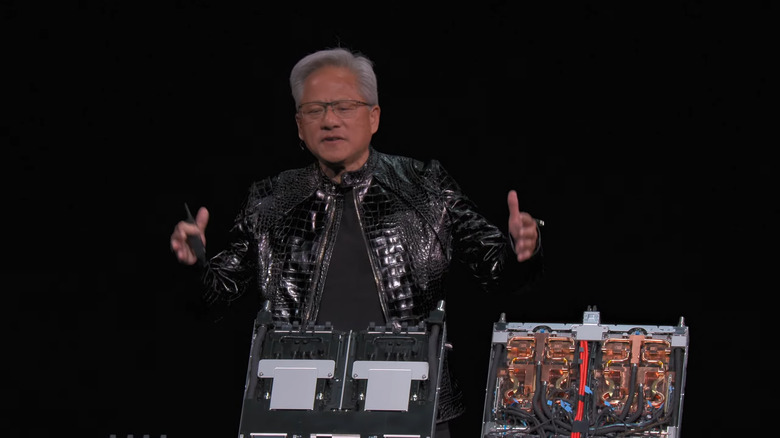
Here's a closer look of the newer system versus the older system.
-
Vera Rubin also includes the NVIDIA ConnectX-9 Spectrum-X SuperNIC. He also says Vera Rubin takes five minutes to assemble, instead of two hours like its older system. It's also entirely water-cooled.
-
The Rubin GPU is built on 336 billion transistors, with 5X Blackwell NVFP4 inferencing.
-
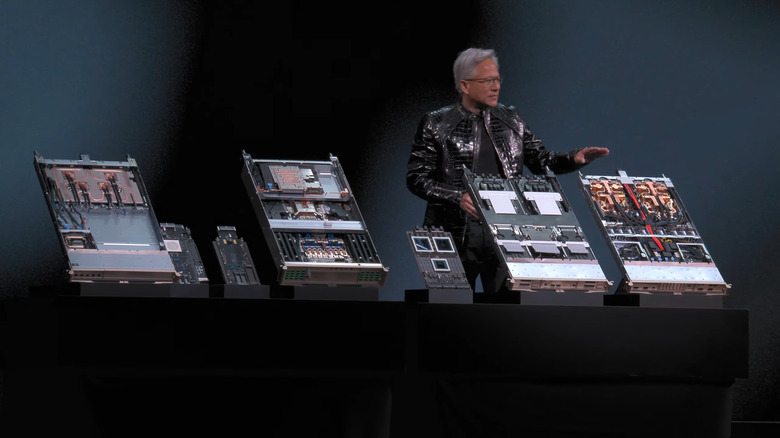
He's got the Vera CPU on stage now.
-
So that's where all the RAM went.
-
The NVIDIA Vera CPU features 88 custom Olympus cores, 1.5TB of system memory, 1.2 TB/s LPDRR5X, totaling 227 billion transistors.
-
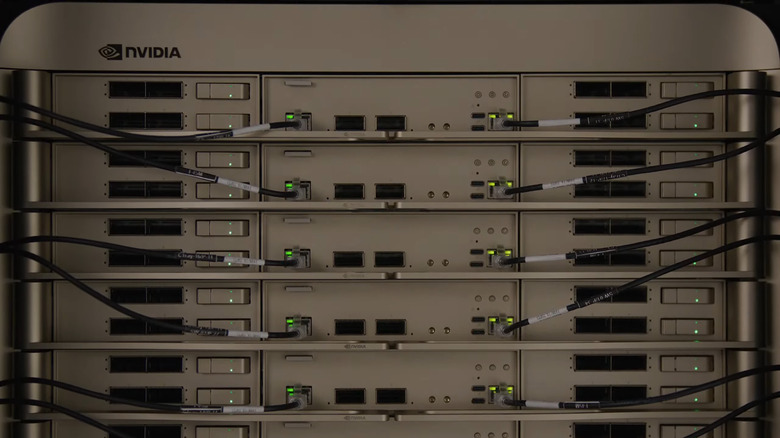
They just broke down what's in a Vera Rubin computer.
-
It looks like a complex system, with two of NVIDIA's Vera CPUs and two Rubin GPUs.
-
Now he says the "Vera Rubin" supercomputer is in full production.
-
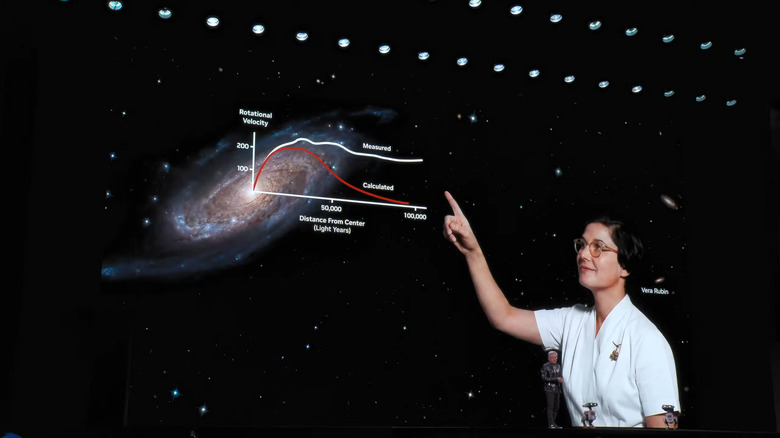
NVIDIA is naming its next computer after Vera Rubin — now in full production.
-
We're talking about Vera Rubin, who noticed that the tails of galaxies were moving about as fast as the center of galaxies. That led to her discovering dark matter. Huang says NVIDIA is naming its next computer after her (NVIDIA already announced the Rubin GPU microarchitecture in 2024).
-
We're taking a look at what Siemens will do with NVIDIA's robotics tech. Apparently, Siemens will integrate NVIDIA's CUDA X libraries for its design work. That also means they'll be using Omniverse for robot simulation, among other tools.
-
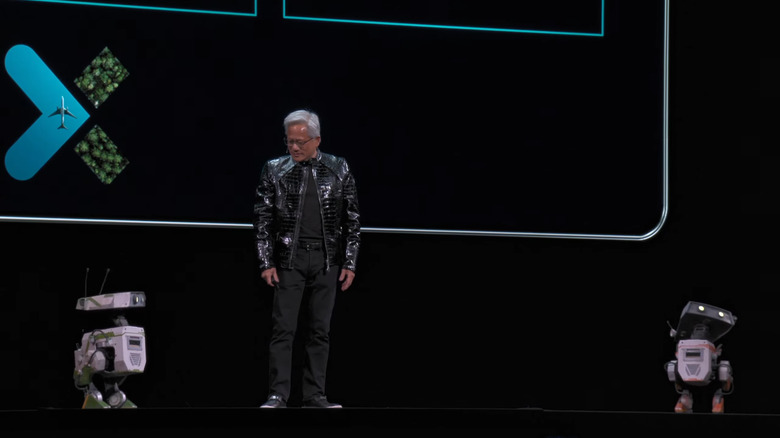
Huang's having a "conversation" with the little bots now.
-
I'm a sucker for the cute sounds and mannerisms of these robots. I wish I could have kept that Piaggio bot around to lug kid gear.
-
We've got two BD-1 units on stage, we saw one last year. Now Huang and his bot friends are looking at the larger family of robots relying on NVIDIA's tech.
-
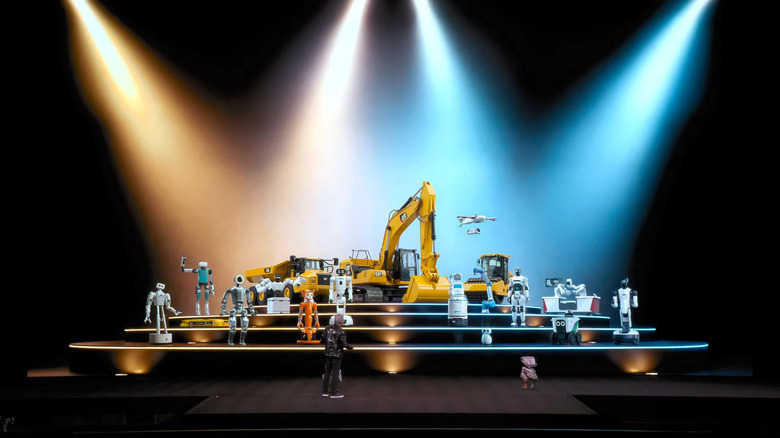
Tons of robots on stage now.
-
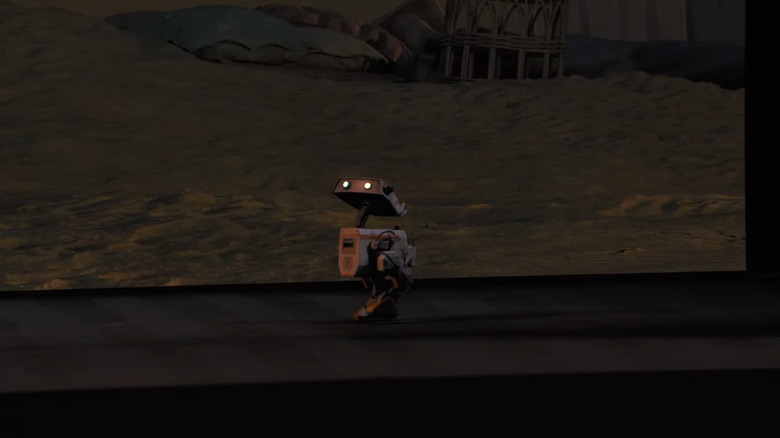
Cute little robots just entered the stage!
-
The super cute Star Wars robots are back!
-
"This is going to be the first large scale, mainstream, physical AI market," Huang says, referring to autonomous vehicles. He says the era of autonomous vehicles is "fully here." The next era for robotics systems will be robots, he says. Now we're waiting for a friend to appear....
-
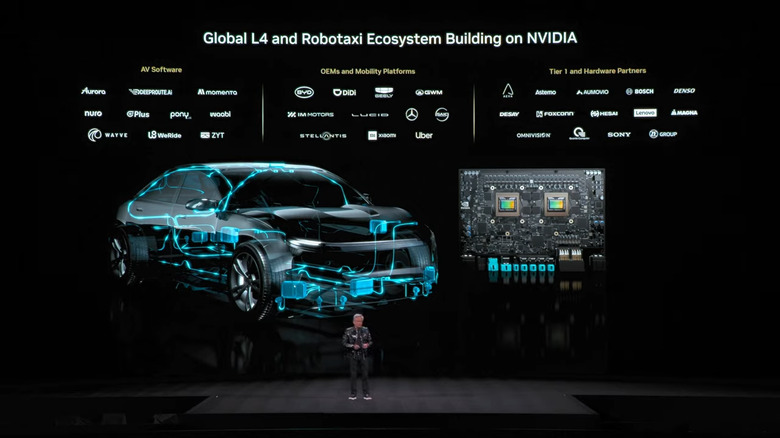
Huang is still talking up robotaxis and autonomous vehicles.
-
"Our vision is that someday, every single car, every single truck, will be autonomous," Huang says.
-
The 2025 Mercedes Benz CLA will include NVIDIA's full autonomous driving stack, with Alpamayo, a policy and safety evaluator, a classical AV stack and Halos Safety OS. He says it was recently named the world's safest car.
-
Alpamayo is open sourced. Huang says it took several thousand people, as well as their partner Mercedes to help make it possible. Huang says Alpamayo could lead to robotaxis that you order, or a car of your own that you drive. He says the first AV car from NVIDIA will roll out in the US in the Q1, followed by other territories.
-
The demo car changed lanes when it noticed one car waiting to turn left, and it did a great job of handling several more jaywalkers. I'm still iffy about the widespread deployment of self-driving, but yah, it's hard to deny how cool this looks.
-
We're watching an Alpamayo demo now in a Mercedes. It's watching out for jay walkers in San Francisco, following other cars, and taking turns safely. It seems to be handling the chaos of tight streets and a busy city pretty well.
-
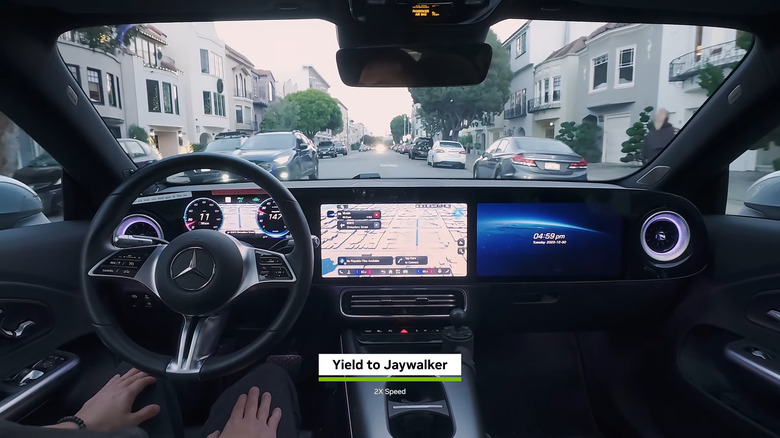
We're now watching a video of the self-driving car in action.
-
As far as AI training goes, it sounds like a smart way to build a self driving cars. It can learn from human demonstrators, train within NVIDIA's Omni model, and "reason" about what to do. Huang says it's impossible to collect every single driving scenario from around the world, for every different driver. But Alpamayo can determine what to do based on a more limited set of examples.
-
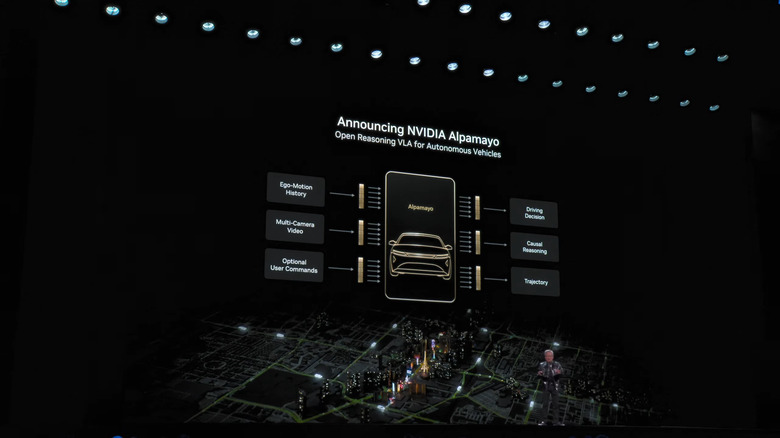
Huang just announced Alpamayo.
-
Huang says NVIDIA uses Cosmos itself for its owns self-driving car. Today, NVIDIA is announcing Alpamayo, the "world's first" thinking and reasoning AI for autonomous driving.
-
Cosmos isn't a new product, but this year Huang is spending more time discussing how it helps to build physical AI. Cosmos is an open world foundation model, which can be used to generate 3D simulation or realistic video for AI traning. It can generate realistic video from a single image, or visualize edge cases from scenario text prompts. "Cosmos turns compute into data," Huang says in a demo video.
-
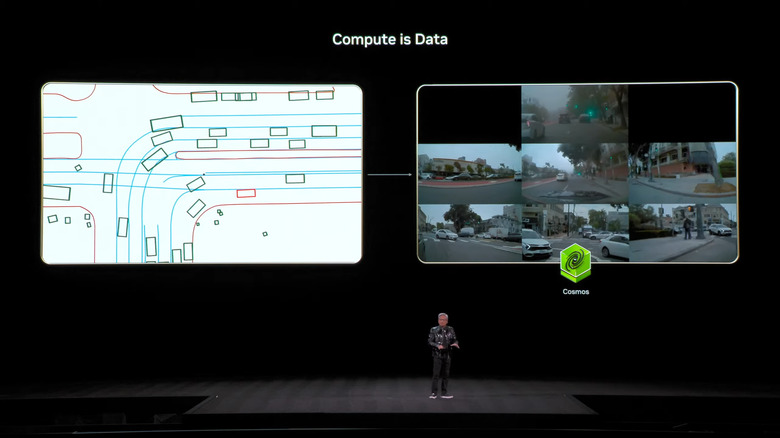
Huang says they can now selectively generate data to train the AI.
-
"How do we teach an AI the ground truth of physics?" He asks. Now NVIDIA's Cosmos can take synthetic data and generate the data necessary for training AI.
-
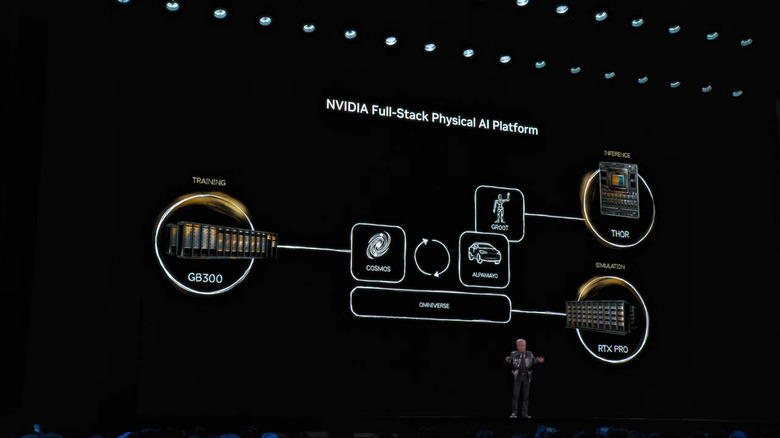
NVIDIA has been working on this platform for eight years, Huang says.
-
We're onto physical AI. "How do you take something that's intelligent inside a computer... to something that can interact with the world?" This is the difference between AI simulations, and AI working within the real world.
-
Haung says enterprise platforms like Palantir, Snowflake and CodeRabbit are all using NVIDIA AI. (And that's why we saw some of their CEOs ahead of this keynote.)
-
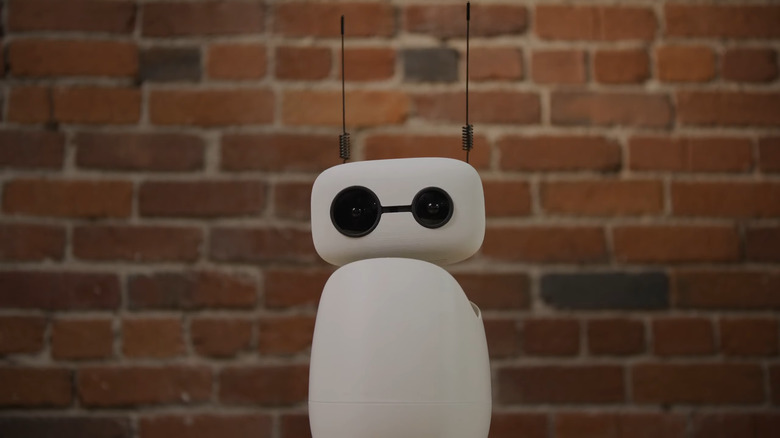
The video is now showing this cute little robot.
-
More presentation hiccups are happening on the giant LED behind Huang. The crowd is laughing, he's just rolling with the punches.
-
He's building the assistant to leave data around his personal emails on the DGX Spark, but it can use large frontier models to handle other questions. He's also integrated the AI personal assistant with a robot that they can talk to with voice commands.
-
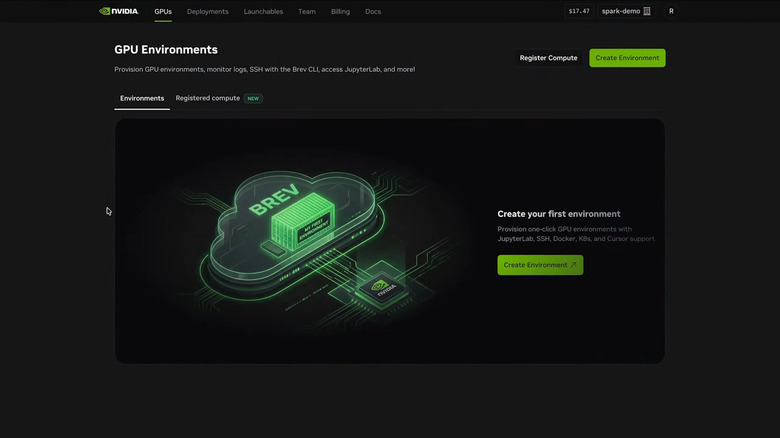
They're showing a video of someone creating an AI agent via Brev.
-
Now we're watching a video of how someone can build their own personal assistant. (Of course, they also have a powerful DGX Spark box to help.)
-
AI can be both multi-modal, to understand a variety of types of data, but also multi-model, to jump to the best possible model to solve its problems. Similarly, he claims they're also multi-cloud. This will be the future of how we build applications, he claims. A chill just went down my spine.
-
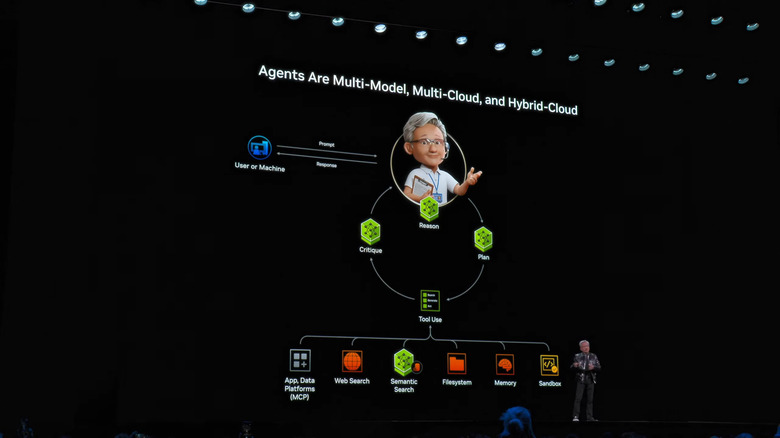
Huang says AIs are multimodal, multi-model, multi-cloud and hybrid-cloud
-
Just like how humans can reason to solve new problems, Huang claims AI agents can do something similar. (I hesitate to call it reasoning, though. He welcomes that word for AI.)
-
Huang also claims NVIDIA's open models top many bechmark charts.
-
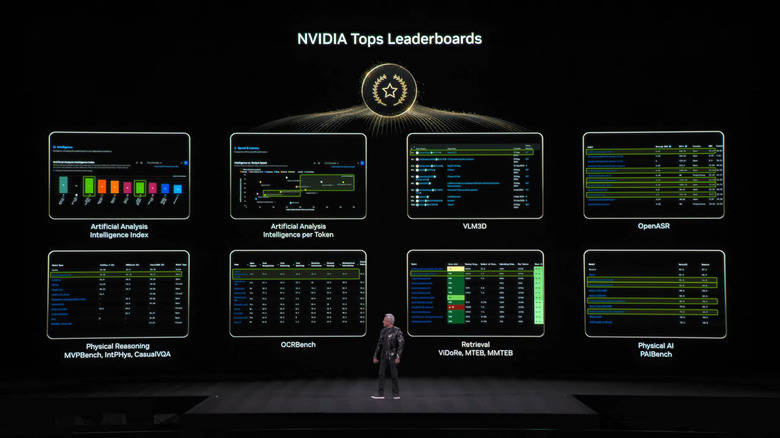
Huang's now talking about NVIDIA's "world-class" positions in the leaderboards.
-
"These models are also world class," he says as the massive presentation LED goes dark. Now it's back, "all systems are down he jokes."
-
There's also Nemotron, NVIDIA's agentic AI model, Clara for biomedical AI and Alpamayo for autonomous vehicles. "Not only do we open source the models, we open source the data we used to train those models. Only in that way can you truly trust how those models came to be," Huang said. That's something Meta never did with its Llama model.
-
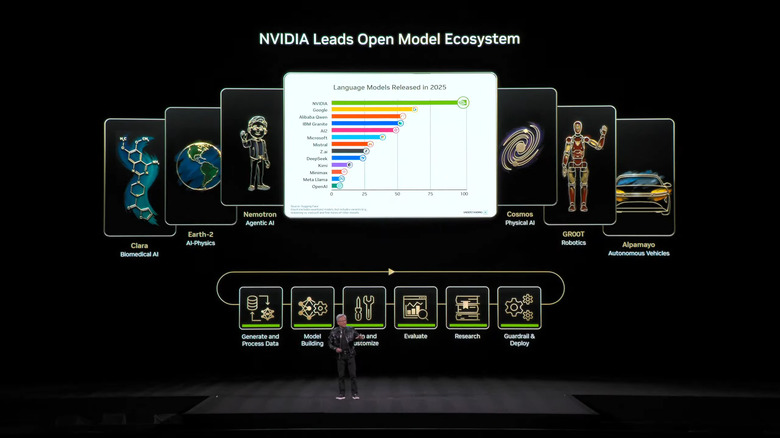
Here's a look at NVIDIA's open model ecosystem.
-
Huang claims NVIDIA is leading the open model ecosystem. That includes "GR00T" for robots, "Cosmos" for physical AI, and "Earth-2," which works with the laws of physics.
-
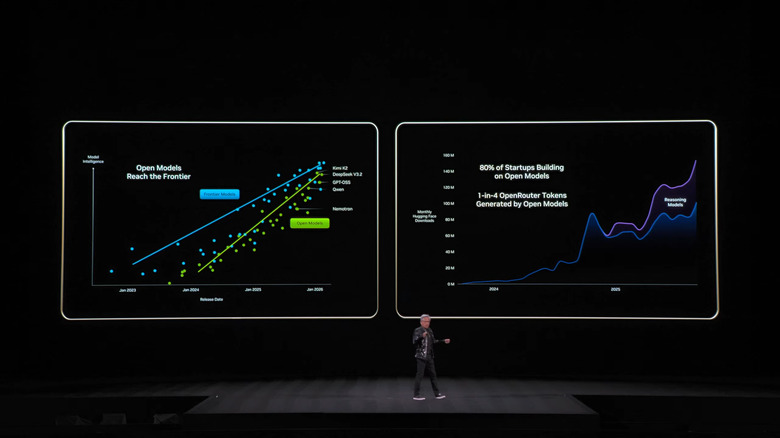
He's talking about the open models systems now.
-
He claims 80 percent of startups are building on open models, and that 1-in-4 OpenRouter tokens are generated by open models.
-
As of this month, he says open AI models are about six months behind the expensive frontier models from big AI companies.
-
Last year, we also saw more "physical AI," or robots powered by AI, models learning the laws of nature, and the progression of useful open models.
-
Now he's discussing the potential usefulness of agentic models, which can handle some AI tasks on their own and learn over time. "Wherever the universe has information, wherever the universe has structure" can be used to train AI, he says.
-
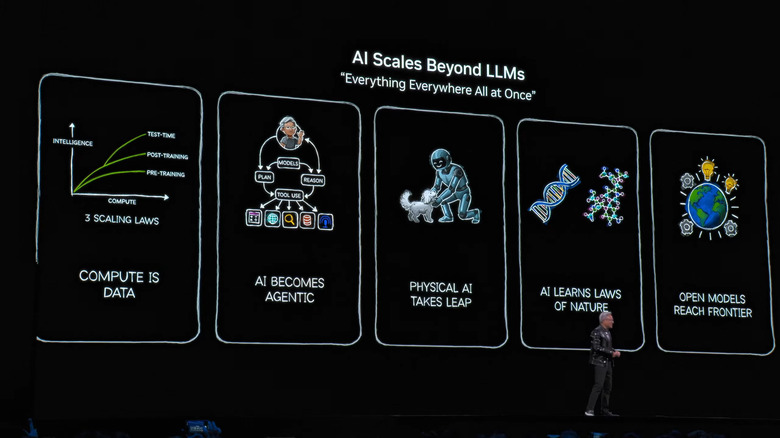
Huang is talking about "AI Scales Beyond LLMs" right now.
-
Our first slide: "AI Scales Beyond LLMs." He's charting the progress AI has made over the last decade. He saw the first intersting model in 2015, in 2017 transformers arrived, and then we saw more impressive models from OpenAI.
-
Every 10 to 15 years, the computing industry shifts, he says. Each time, the industry builds for new platforms. This time, there are two shifts happening at the same time. Applications are now being built on top of AI, and the way you build software has changed.
-
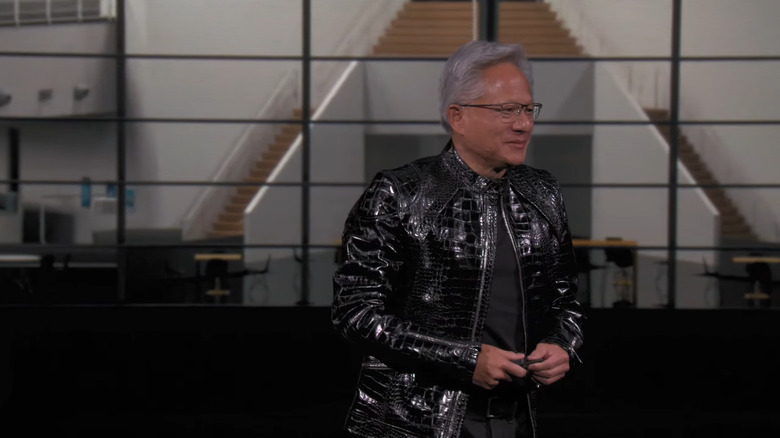
NVIDIA CEO Jensen Huang is kicking off the CES 2026 press conference now.
-
Finally, Jensen Huang trots onto the stage, equipped with his usual leather jacket. Actually, this one is pretty shiny.
-
We end with "Earth 2." Did they render an entire planet?! ;)
-
It's a supercut of everything NVIDIA is working on. Loud music, lot of bass. Exciting edits.
-
Now we're seeing some hot "physical AI" action and server infrastructure.
-
Lights are down, we saw a brief clip of Street Fighter 6, and now we're looking at a variety of other titles including Microsoft Flight Simulator. Games, baby! Start with the games!
-
This music is definitely generated by AI, right?
-
The worst Where's Waldo reboot. Where's Jensen? In a pile of money.
-
We are now officially ten minutes late. Where's Jensen?
-
It's like the backing track to an Imagine Dragons anthem but somehow worse than that.
-
The music. It continues.
-
I just want this thing to start so they can stop this godawful music. Good lord.
-
We're six minutes way from the main event. I wonder how Jensen is mentally preparing himself for this keynote. He probably doesn't want a repeat of last year, that's for sure.
-
Mercedes-Benz CEO Ola Kallennius is discussing the ways NVIDIA's technology is enabling better self-driving in his company's cars. He says he took an autonomous "Level 2++" ride through busy San Francisco traffic, onto the freeway, and back into the city without any trouble yesterday. We'll likely hear more about Level 2++ (better than normal Level 2, but not as smart as Level 3) self-driving today.
-
I'm back, hopefully this Wi-Fi sticks! The panel talked with Harjot Gill, CEO of CodeRabbit, who unsurprisingly thinks AI will play a major role for programmers moving forward. Similarly, Shiv Rao, founder and CEO of the medical AI startup Abridge thinks AI will transform healthcare. I'm shocked
-
We're also hearing that Devindra is having some internet issues, so we might not get the front-row action we were hoping for. But don't worry, Team Engadget is rallying and will still bring you hot NVIDIA news, right as it comes out the oven!
-
We're just 24 minutes away from what will probably be the most-watched show of this CES. Hold tight!
-
The thing about company-sponsored panels like this is that they'll never bring up the downsides of shiny new tech, it's always about overly optimistic promotion. They briefly brought up the idea of an AI bubble, but quickly moved passed it. Remember, if the AI bubble does pop, NVIDIA and all of its partners are going to hurt big time.
-
The panel is discussing the rise of consumer and enterprise AI, data security and the impact of unstructured "dark data." There really isn't anything new being said here.
-
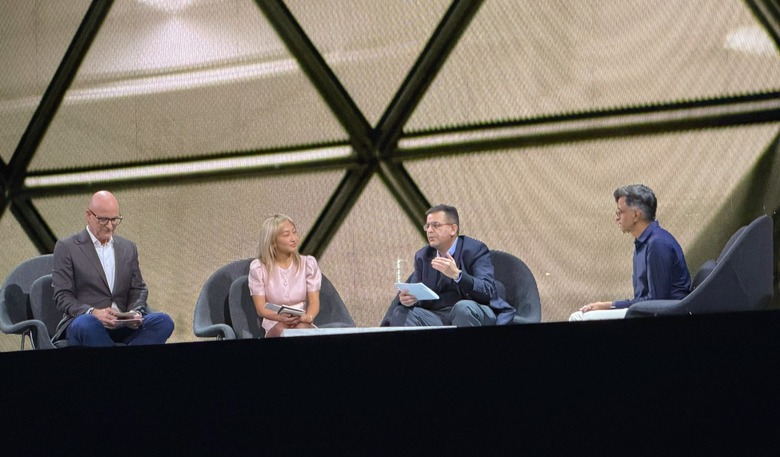
NVIDIA CES 2026 AI infrastructure panel
We're pre-gaming with a group panel about... AI infrastructure. Panelists include Vivek Arya, a Senior Analyst at Bank of America; Sarah Guo, founder of the VC firm Conviction; and Sridhar Ramaswamy, CEO of the cloud data company Snowflake.
-
You know, I really don't want to be aware of what Jensen smells like. (Sweat, desperation and leather, is my guess.)
-
NVIDIA CES 2026 keynote
NVIDIA CES 2026 keynote
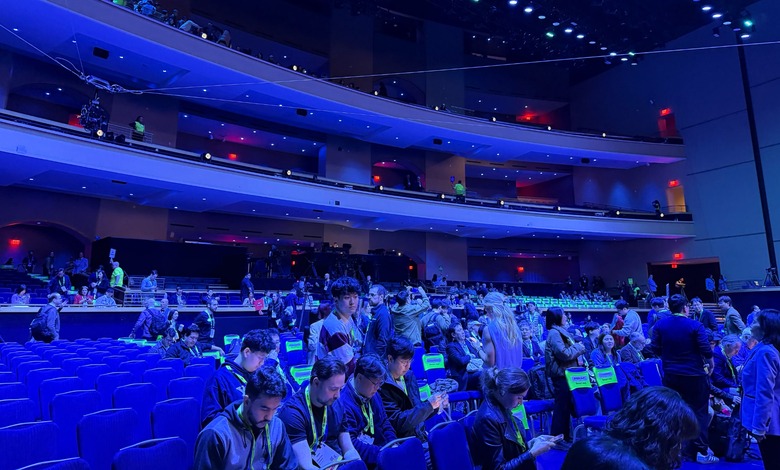
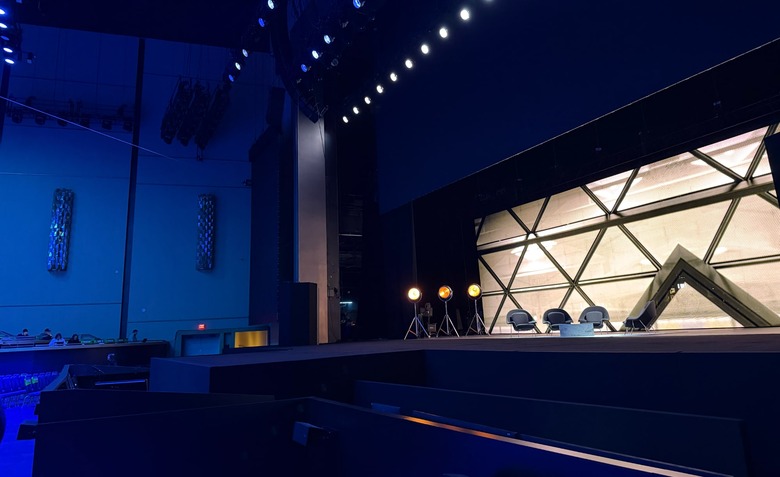
I've made it to the Fontainbleau theater, after fighting through hundreds of attendees. NVIDIA events turned into Big Tech rock concerts so quickly, I barely noticed. Anyway, I've got a front row seat for the action.
-
I hear Devindra has secured front-row seats at NVIDIA, so I'm sure we'll be getting top-tier photos or coverage from the press conference. Maybe Devindra can tell us what Jensen smells like.
-
I wonder what jacket Jensen will be wearing today. Will it be designed by AI?
-
I'm hoping this keynote is far less dry than last year's 90-minute AI fest. As I recall, the crowd wasn't very into Huang's never-ending AI and enterprise news. And when I saw him the next morning, he definitely seemed frazzled by the lack of crowd support. I'm crossing my fingers for a tight and less snoozy 60-minute session!
-
Good morning folks! We're fully in the swing of CES 2026, and I'm looking forward to seeing what NVIDIA and CEO Jensen Huang is cooking up today. We're a few hours away, but I'll be heading into NVIDIA's CES home at the Fontainebleau hotel soon to snag a good seat. Look out for updates along the way!
What to expect
NVIDIA's game plan for CES is suitably vague so far, including "cutting-edge AI, robotics, simulation, gaming and content creation at the NVIDIA Showcase." It also notes there will be more than 20 demos. Although we're unsure if all of these will be shown during the keynote, we can at least expect to see them throughout the week of CES.
NVIDIA arrives at CES as the most valuable publicly traded company in the world (a stunning $4.6 trillion at the time of this writing, albeit down from an even higher valuation earlier in 2025). And given that the health of the US and global economy seems increasingly linked to infrastructure spending on AI data centers — largely powered by chips from NVIDIA and its competitors — expect Huang's remarks to be as closely followed by Wall Street investors as technology acolytes, if not more so. Will we get any insight on a successor to the company's Blackwell chip? A more detailed look at how NVIDIA's partners are applying AI to real-world robotics? Time will tell, but you might want to keep your stock portfolio in a split screen while taking in Huang's presentation.
Note, too, that NVIDIA rivals Intel and AMD will also be delivering their own CES presentations later in the day.
Update, January 5 2026, 11:00AM ET: This story has been updated to include the embedded video stream for the NVIDIA presentation.