

Sega's Dreamcast retro console is still getting new games 25 years after it was abandoned
Fans refuse to let it die.
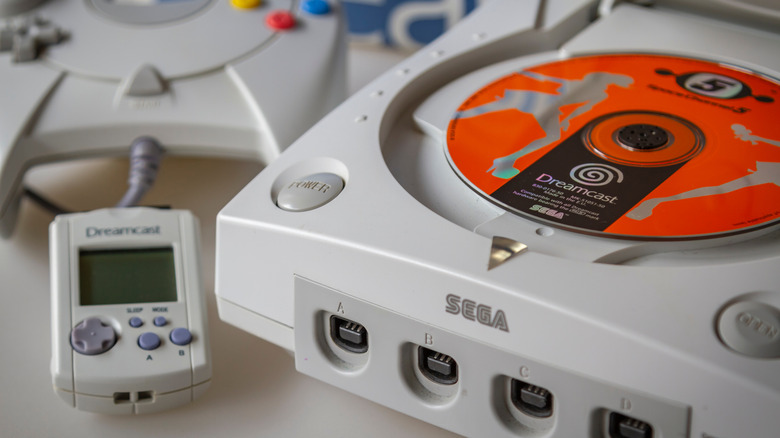
The Dreamcast was Sega's attempt to bring the arcade experience to players' living rooms in the late '90s with a lineup of fighting games, 3D graphics capabilities and online play, plus a controller with a modular secondary display. It came out in Japan in late 1998 and hit the global market one year later, introducing pivotal titles like ChuChu Rocket!, SoulCalibur, Sonic Adventure, Phantasy Star Online, Space Channel 5, Jet Set Radio, Shenmue and Resident Evil – Code: Veronica. The Dreamcast was the first console to include a modem, enabling online services including live worldwide leaderboards and multiplayer experiences.
It was also Sega's final console. Sega discontinued the Dreamcast in March 2001, one year after Sony's launch of the PlayStation 2 in Japan. Gun-shy from the bungled and ultimately failed release of the Saturn in the mid-90s, Sega decided to bow out of the console game entirely when it saw the runaway success of the PS2.
However, the Dreamcast games kept coming. Hackers discovered that the console provided an ideal platform for homebrew experiences, thanks to its rudimentary online capabilities and reliance on a GD-ROM disc format that was quickly bypassed to allow tinkerers to boot from standard CDs, no hardware adjustments required. As the first console with built-in online functions, Sega hadn't tied any critical capabilities to its network, so the company wasn't able to remotely shut players out of its systems, as is routinely the case nowadays.
Dreamcast does survival-horror
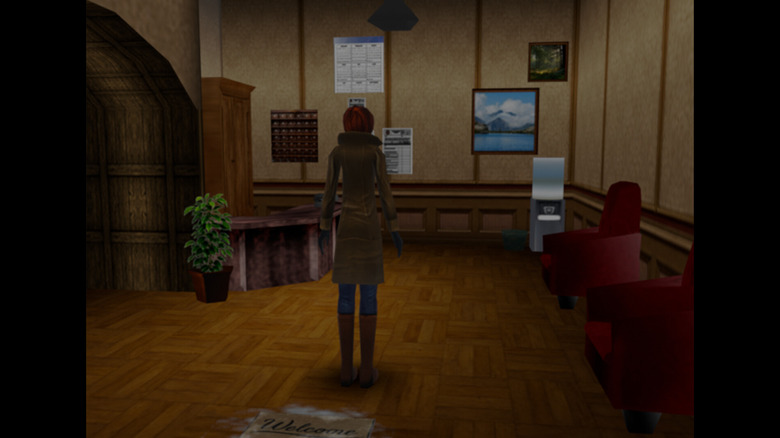
More than 25 years after Sega shuttered the Dreamcast, indie developers are still building new, original games for the console. The latest project was revealed on Kickstarter just this June, and it slides perfectly into the current meta of fabulous horror media: White Creek comes from developer Story Bird Studios and publisher PixelHeart. It's a survival-horror game starring exorcist Alicia Morelli as she investigates a small wintry town haunted by lost souls. Using an arsenal of psychic powers, firearms and a cell phone, Alicia decides whether to execute or exorcise the possessed people, solving puzzles related to her search along the way.
White Creek is in active development, and even though it's also coming to Steam, its intended platform is the Dreamcast. Story Bird writes the following on Kickstarter:
"White Creek isn't a game 'inspired by the Dreamcast.' It's a game designed for it, from day one. Our team worked to exploit the console's full technical potential: 3D environments, cinematic cameras and visual effects that rival the biggest productions of the NAOMI era. Every camera angle is a narrative choice. Every shadow, an intention. You won't play White Creek on Dreamcast despite the console. You'll play it because the game is made for this machine."
PixelHeart and JoshProd are big names in Dreamcast publishing, but there are a ton of independent teams, hobbyists and solo developers dedicated to keeping the console alive with retro ports, remakes, emulation and server support for a sizable number of online games. Sites like The Dreamcast Junkyard keep up with the latest news for Sega's undead console (complete with a staggering roundup of its game library), and the Dreamcast subreddit is hopping.
The Dreamcast continues to prove that, above all else, gamers love a playground. Provide a stable foundation with the basics — downloads, online play, an accessible development platform — and video game fans will build entire universes on it for as long as possible, even decades after its creators have walked away.
The Dreamcast bridge
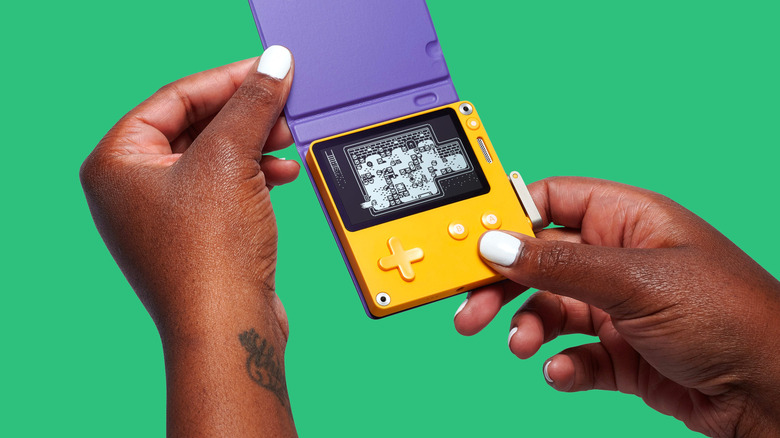
This legacy lives on in devices like Panic's Playdate, which landed in 2022. An adorable yellow handheld with a tiny crank and a monochromatic screen, Playdate runs on an accessible and open development landscape that welcomes anyone who wants to try expressing themselves through pixels. Or cranks. The results have been remarkable, with a steady stream of innovative games hitting the Playdate store since launch, rad seasonal bundles and more than 1,600 Playdate titles currently on itch.io.
On the flipside, Sony this year announced that it was ending support for its stores on PlayStation 3 and Vita, closing those platforms to new games for good. This is typically how it goes with gaming hardware requiring even passive network support to function: Once the console's heyday has passed, the maker shuts down its online store, effectively freezing players' libraries in time. Further development for the console becomes impossible. Meanwhile, the market for emulators and third-party hardware revamps proves that a significant audience remains.
The Dreamcast occupies a perfect moment in video game hardware history for sustained and unstoppable homebrew development, porting and emulation. The console has just enough online functionality to make it play nicely with modern uploads and downloads, but not enough that Sega can remotely shut it down wholesale. It's powerful enough to run blocky multiplayer 3D games, and it boots from a standard disc, no special cartridges required.
Sega Dreamcast was the bridge between offline and online gaming, and thanks to the tenacious support of its player base, it's still standing strong a quarter century after Sega discontinued it. Not bad for a console that was on the market for just 2.5 years.