

How to fight a data center
Most Americans don't want them in their backyard, but beating AI companies isn't easy.
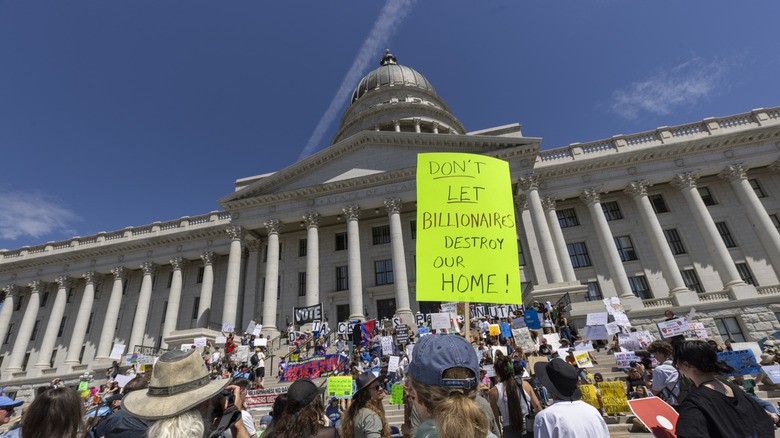
This past April spending on data center construction surpassed $50 billion, marking the first time more was spent in the US on building cloud infrastructure than new public transportation. It would be an understatement to say this has been a broadly unpopular shift in priorities. Regular people and local politicians are organizing their communities to fight against data center projects and decide if — and on what terms — Oracle, Google and other tech giants are allowed to build near their homes.
If a company is pushing to complete a data center in your town or city, these are the steps you can take to challenge its construction, or what you can do after a facility is completed in your backyard.
Why are communities opposing data centers?
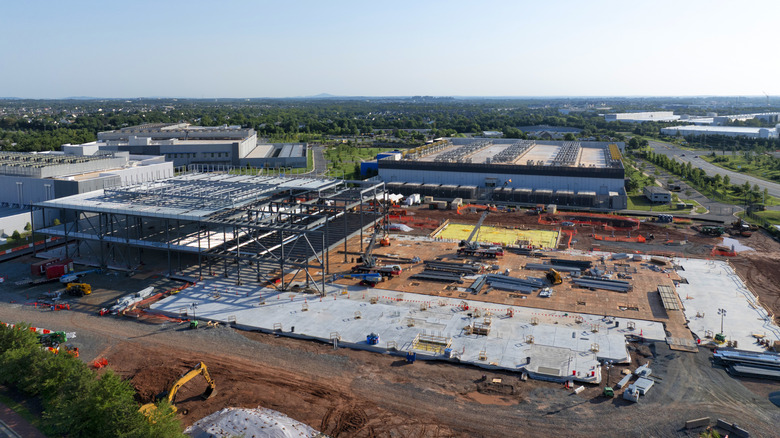
A recent Heatmap Pro poll found that seven out of 10 Americans now oppose the construction of a data center near their home. The Pew Research Center also found in March that more Americans believe data centers have a negative effect on the environment, home energy costs and the quality of life of those who live near them than they do a positive effect. According to Abre' Conner, the director of the NAACP's Center for Environmental and Climate Justice, hastily built data centers present a number of concerns, starting with air quality.
"Typically all of them have some type of diesel backup generator," she explains. "A lot of them use whatever energy sources they have access to so they can get online as quickly as possible, and oftentimes those aren't clean, renewable sources."
In April, the NAACP, with support from Earthjustice and the Southern Environmental Law Center (SELC) sued xAI (now known as SpaceXAI after merging with SpaceX), alleging the company has been illegally operating 27 methane gas turbines to power its Colossus 2 data center in South Memphis. The organization says those turbines have the potential to emit more than 1,700 tons of smog-forming nitrogen oxides (NOx) into the air each year.
Those same turbines also produce substantial noise pollution. Jason Haley, a resident who lives within a mile of the Colossus 2 facility, measured sounds that range in the mid-50 decibels, with the sound penetrating into his home. In a recent interview with CNBC, he described the noise "like a form of torture." In Manassas, Virginia, residents recorded a constant hum that measured at 65 decibels.
In 1974, the US Environmental Protection Agency recommended outdoor and indoor noise limits of 55 decibels and 45 decibels respectively. "These levels of noise are considered those which will permit spoken conversation and other activities such as sleeping, working and recreation, which are part of the daily human condition," the agency wrote at the time.
"When these facilities first came out, the conversation was around the idea that it's a slightly annoying hum — but oftentimes the sound is debilitating," says Conner. "It has cut people's sleep in half in some of the places where we're talking to residents."
In some areas, data center construction has also affected local water supplies. In Wyoming, for instance, the state implemented stricter regulations after a contractor working on a Meta project flushed contaminated water into a city's public sewage. "People have shown us what their water looks like in certain places after a data center shows up, and at times that water is dirty, completely contaminated," says Conner.
There are things hyperscalers could do to mitigate the concerns of those living near their data centers, but so far, those companies have been reluctant to appease residents. In Virginia, for example, the community outside of Manassas had to wait six weeks following a string of complaints before Amazon agreed to meet to discuss the noise from one of its data centers — noise it claimed involved proprietary information. After 18 months of sustained pressure, Amazon eventually reduced noise output of the facility by 10 decibels.
"The goal of the advocacy is to make these projects work for everyone — relying on clean energy, reducing noise impacts, reducing water usage," says Amanda Garcia, senior attorney and leader of the data center project at the SELC. "Bringing better development to the table for communities is going to get tech companies a lot further than trying to shove these projects down people's throats the way they're currently proposing them.
A strong opposition starts early
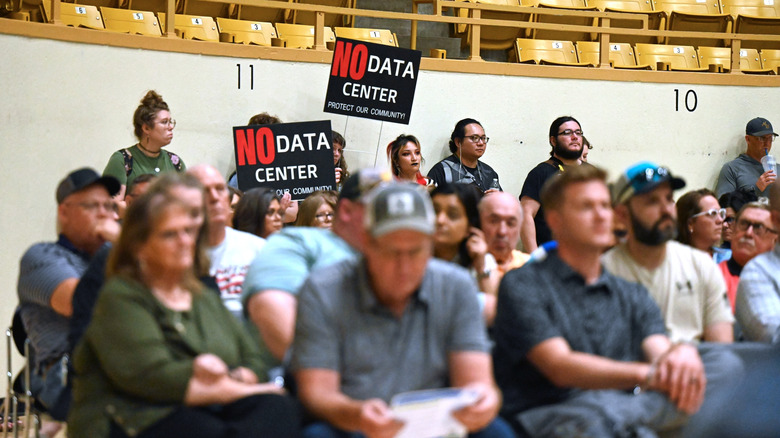
As one person, you cannot prevent a data center from being built near your home. Collective action is required, but the good news is that finding like-minded individuals won't be a challenge. "We're seeing this as a nonpartisan issue on the ground — I wouldn't even say bipartisan, I'd say nonpartisan — where folks are showing up regardless of race, regardless of class, learning basic organizing principles so they can fight back at the hyper-local level," says Conner. Town hall meetings, social media, your local church, all are good places to find those individuals.
Once you're part of a group, one of the most effective strategies is to advocate for guardrails that ensure a company must consult your community before it ever embarks on a project in your backyard. "One of the first things we advise, even before there's a live proposal on the table, is to make sure local land use ordinances require notice and input from the community up front," says Garcia. You and your neighbours should advocate for bylaws that ensure data centers aren't allowed "by-right" in any zone in your community. By-right permitting means a project can move forward simply because it meets all applicable development standards and use-specific requirements in your state.
Given the secrecy involved with many data center projects, building a coalition as soon as possible is essential. "What we advise is not to start when you first hear about a data center, but really to watch the pipelines being built, and any changes in the utilities or the grid," says Conner.
In Conner's experience, companies will often employ what she describes as a "piecemeal" approach to a buildout. For example, the tech giants will often work to secure permitting for a power plant and gas infrastructure long before they do the same for the actual data center they intend to build.
"Try to get as much information as possible, so file public records requests to see what communication or correspondence may have happened related to the data center," says Conner. Every state has its own set of laws governing how people can request and obtain public records. The National Freedom of Information Coalition provides guidance and resources to help Americans file such requests. The organization also operates hotlines that can answer any questions you might have about the process.
"By the time people find out [that power plant or pipeline] is for a data center, a number of decisions have already been made. So we're encouraging people to be part of all the environmental permitting decisions, construction permitting decisions, planning and zoning commission meetings, city council meetings — and really ask the hard questions."
According to Garcia, some communities — like Birmingham, Alabama — have also found success pushing for special-use permitting requirements, which force companies to obtain special authorization to site a data center. "That allows for a front-end conversation about conditions that can be placed to address the community's concerns about air, water, or whatever's specific to that project," says Garcia. "We actually recommend a 'both-and' approach: have the specific guardrails in place, and also require a special-use permit, especially for larger data centers — because one size doesn't fit all. Every community is different, and different concerns come up depending on where a facility is located."
In March, Birmingham city council passed a six-month moratorium and one of the strongest zoning policies in the country. On July 21, Nashville's Metro Council voted to establish new regulations for data center development.
According to Data Center Watch, an organization that's been tracking the growing opposition to data center development, the first quarter of 2026 saw 75 projects across the US worth approximately $130 billion either disrupted or blocked by local opposition. "The quarter reflected a structural shift rather than a cyclical spike: communities have internalized an opposition playbook, legislative sessions introduced formal regulatory uncertainty, and the number of active opposition groups more than doubled across 49 states," the group writes on its website.
What can you do if there's already a data center in your community?

If you live in a town or city where there's already a data center, the fight is not lost. "A lot of these companies are still trying to expand," explains Conner. "It's not like they just build the data center and that's it — they do it in phases [...] negotiate community benefits, but also make sure you're fighting to get information about any expansions, or any changes in the contracts for how long they can operate in your community." The NAACP maintains several templates on negotiating with data center companies; One of those is a community benefits agreement, which can help secure information about potential air, water and noise pollution impacts.
According to Garcia, once a company breaks ground on a data center or begins operating one, the most important thing to do is monitor the facility for compliance.
"If a project gets approved, you first want to make sure the process was followed properly — we're finding in some cases that the land use process didn't comply with all the notice and other requirements. So you want to make sure you've had all the rights you're entitled to in that first process," she says. "If a project is moving forward, you need to keep tracking the different permitting processes — frequently a project will need an air permit, and may need other local permits. So stay informed about other processes where you might be able to raise concerns."
Often, one of the most effective things you can do is to drive by a facility and document what's happening. In the case of the Amazon facility mentioned above, residents used a drone to photograph the rooftop exhaust tubes that were the cause of noise plaguing the subdivision.
More than a few communities have been successful in using monitoring to mitigate data center expansion harms. In Georgia, for instance, the SELC found a Serverfarm facility where a company named VoltaGrid had installed 40 on-site methane and diesel gas turbines before obtaining the proper air permit. After informing the Georgia Environmental Protection Division of the infraction, the agency ordered a stop to construction.
"That happens because people drive by," says Garcia. "It really is about communities on the ground continuing to be watchful. In some cases they'll know because they can hear the operation, but sometimes it's just a matter of checking what's happening on the ground." It was also local residents who drove by the Colossus 2 facility and made the NAACP and SELC aware of SpaceX's gas turbines.
Cutting through corporate secrecy
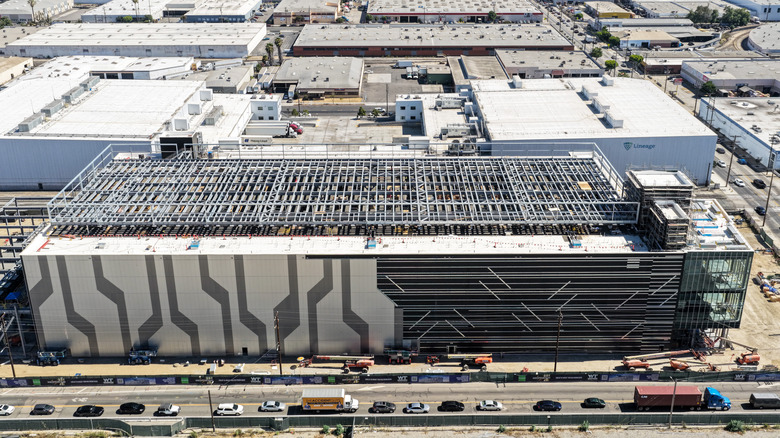
It can be challenging for communities to even be aware of proposals for data center construction in the first place — all that comes down to the widespread use of non-disclosure agreements (NDAs) to shield construction projects from scrutiny. "We frequently hear from communities that there's just not information being shared up front about a facility's potential impacts," says Garcia. The companies have argued NDAs are essential for protecting sensitive corporate and technical information, but the agreements prevent public officials from sharing what harms a project could pose to their constituents.
"Oftentimes it takes litigation, and active campaigns, to get a shift in how a lot of these elected officials think about the lack of transparency" says Conner.
Knowing an NDA can be used to prevent the flow of information is half the battle. "Communities can put public pressure on elected officials not to sign NDAs or advocate for local policies that prevent them from being used for these types of projects," says Garcia. "We have had success obtaining NDAs through litigation or threatening litigation."
"We advise people to show up as a unified front, making sure companies aren't able to pit one part of a community against another," adds Conner. "[A data center] is going to impact everyone. We also advise people, if it feels like things are moving too quickly, to push for a pause, so people can make informed decisions." A pause would involve pushing your local or state representatives to pass a temporary moratorium like the ones recently passed in Birmingham and New York.
What does the future of data center resistance look like?

Going forward, one of the major challenges communities will face is the federal government. In the president's AI Action Plan, the Trump administration said the US must "build and maintain vast AI infrastructure and the energy to power it. To do that, we will continue to reject radical climate dogma and bureaucratic red tape, as the Administration has done since Inauguration Day."
In Memphis, that's already playing out. "The Trump administration has stepped in and tried to intervene in the lawsuit the NAACP filed against Elon Musk's xAI, and their intervention is on the basis of national security," explains Aya Ibrahim, senior economic and security fellow at the AI Now Institute, which studies the social impact of AI. "I think that will be a recurring challenge organizers are going to come up against."
All of that might make it feel like opposing AI infrastructure is impossible, but that's not how Ibrahim sees it. "It feels impossible until it's not, and we have no choice but to figure this out."