

Hot vs cold: What's the ideal temperature for solar panel efficiency?
There is a correct answer, but ambient temperature is just one of several variables.
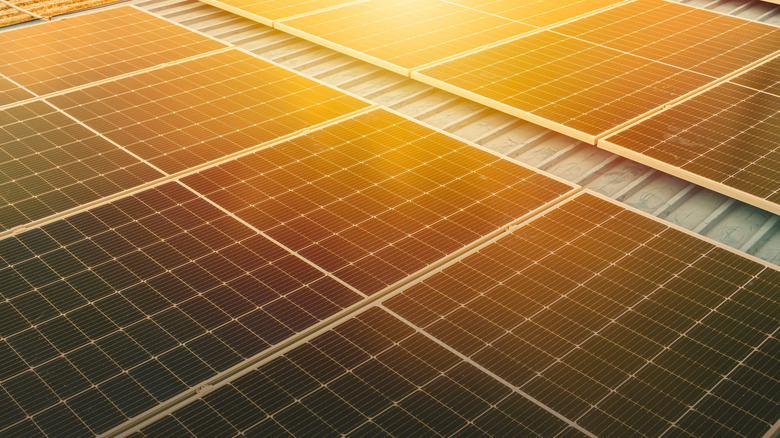
Sunlight is a solar panel's best friend. But heat, not so much.
The most common number you will see is 77 degrees Fahrenheit. That is 25 degrees Celsius, which is the temperature of the cell when manufacturers rate panels under standard test conditions, alongside irradiance of 1,000 watts per square meter. It's a good indicator, but it's not a magic outdoor temperature at which your roof achieves peak output.
So yeah, cold wins, technically. The efficiency of solar cells is typically higher at lower temperatures because the voltage decreases more than the current increases with temperature. The problem is that efficiency and total electricity production are not the same. A cold panel might generate more power from the same amount of sunlight, but a hot summer day might generate more power because there might be more sunlight.
Why solar panels lose efficiency as they get hotter
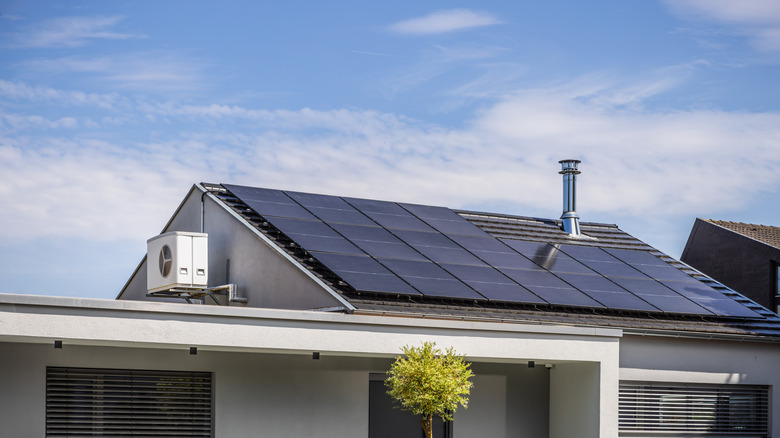
The first wrinkle is that the temperature on your weather app isn't necessarily the temperature of the panel. A module in direct sunlight can be much hotter than the ambient air temperature, and Sandia National Laboratories, a US Department of Energy lab, models module temperature based on ambient temperature, solar irradiance, wind speed and mounting configuration.
As soon as the cells get hotter than their rated reference temperature, output begins to drop according to the panel's temperature coefficient. There isn't one universal 0.5 percent penalty. REC Group, a leading solar panel manufacturer, has a maximum-power temperature coefficient of -0.24 percent per degree Celsius for its current Alpha Pure-RX, while solar manufacturer Qcells lists -0.29 percent per degree Celsius for its residential Q.TRON BLK M-G2+ series. If you live in a place that's really hot, that's something to consider.
Nor is 77 degrees Fahrenheit "too hot" in the sense that the panel is in danger. The Q.TRON model has a continuous operating range of up to 158 degrees Fahrenheit, according to Qcells. REC lists a T98 module operating temperature of 176 degrees Fahrenheit for the Alpha Pure-RX. The Department of Energy says extreme heat can still damage cells and other module materials and shorten their operating lifetimes.
The best weather for efficiency isn't always the best for production

This is where the simple hot vs cold answer gets complicated. While a bright, cold day can be great for solar efficiency, clouds, snow, roof orientation, sun angle and daylight hours may be more important to the amount of electricity your system can generate.
So the best time is not necessarily 10AM to 4PM. Output generally rises as more direct sunlight reaches the panels, then falls later in the day, but an east-facing array will be different from a west-facing array. Although panels can run hotter in the summer, the longer days and often stronger solar resources can result in more total electricity being produced.
That's also why some homeowners size a solar system above their typical electricity needs. The 20 percent rule for solar panels is based on giving a solar system some breathing room when conditions aren't ideal.
The National Laboratory of the Rockies' PVWatts calculator (the lab's free online estimator) allows you to input location and system information to estimate monthly and annual production, which gives you a more specific answer than "summer" or "midday." NLR does not specify a single best month or time of day, and it cautions that PVWatts cannot account for all site-specific variations or differentiate between higher- and lower-performing PV technologies.
Its expected production range is based on 30 years of actual weather data.