

Hohem's Eyepic gimbal camera has a detachable camera
It's got a novel approach to the two-in-one camera.
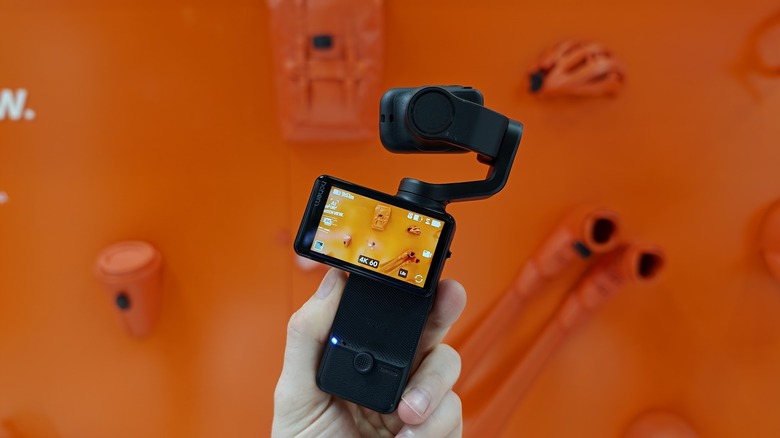
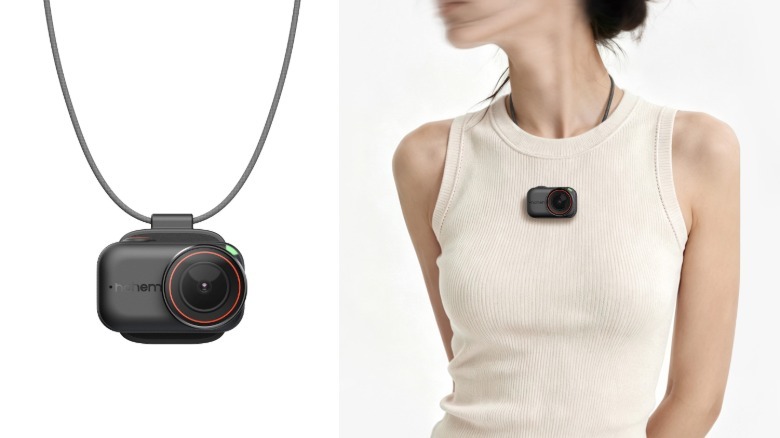
You might not have heard of Hohem, but you've likely seen its camera and smartphone gimbals in the wild, adding stabilization and object tracking to video capture. Its newest product is an entirely new proposition: a two-in-one gimbal camera with a removable camera unit you can wear on your person, whether around your neck, attached to a helmet, cap or more.
The camera can record up to 4K video at 60 FPS, with three-axis stabilization when attached to the gimbal. Rotating the 2.5-inch touchscreen switches between horizontal and vertical capture at full resolution, with no cropping. The company is framing it as a sharing-centric vlogging camera.
Hohem hasn't shared all the technical specs, but it'll come with a hat clip and lanyard, like similar hybrid cameras from DJI and Insta360. It also has magnetic connectors to attach to metal surfaces. It's also waterproof up to 32.8 feet underwater. You can still preview footage up to 33 feet away on the gimbal's touchscreen.
Hohem's attempt at an Osmo Pocket rival, and the company seems to have made a lot of clever choices. Namely, not trying to beat dominant rivals like DJI. Aside from the fully removable camera unit (trend alert!), it doesn't have built-in zoom (or dual cameras), and a spokesperson said it aims to dip below the price point of existing gimbal cameras. That said, you can expect capture at up to 4K at 60fps, a slow-motion mode, and the aforementioned native vertical video capture, which may be a boon for vertical content creators and vloggers.
 Mat Smith for Engadget.
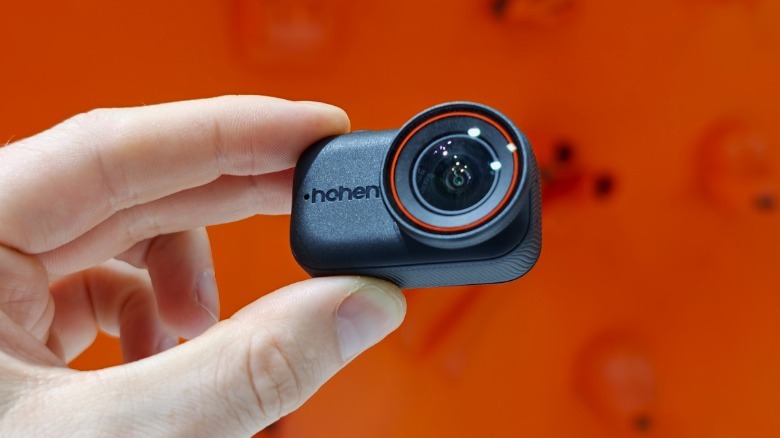
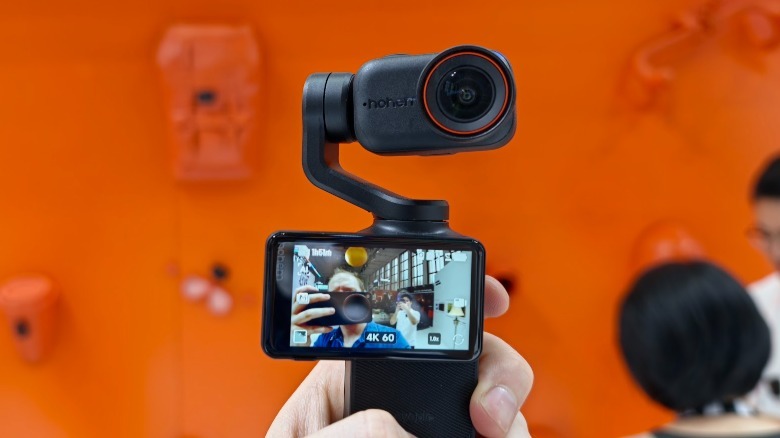
At IFA, I got to handle the device and rotate the screen to switch between vertical and horizontal shooting, which is very satisfying. You detach the camera by double-pressing the record button and pinching two connectors to release it from the gimbal head. The gimbal then shuts down and folds away while you use the camera separately.
The standalone camera reminds me a lot of the Go Ultra, and I'm glad to see another company trying this kind of camera form-factor. It feels solid and has magnetic connectors on the back, which means you can mount in on a metal surface, streetlight poles and more.
The gimbal's display can still stream footage from the action cam, which could be great for solo videographers – it's something I've loved testing out on Insta360's Luna Ultra. The Hohem booth was decked out in multiple scenarios for mounting the action cam, too, from bike helmets to bags to skis.
The gimbal would occasionally glitch out, spin around or just get stuck while trying to stabilize, but there is plenty of time to work out these kinks. Hohem's spokesperson told me it plans to announce final specs, availability and pricing early in 2027, possibly at CES.
 Hohem
Hohem
The company is also launching two new smartphone gimbals. The iSteady V4 Ultra has a detachable touchscreen and native Apple DockKit tracking in the iPhone camera app. At the same time, the iSteady X4 offers native Apple DockKit tracking and an integrated touch-control panel. Hohem is also taking further steps into wireless audio with the Mic 2, which comes with one receiver and up to four transmitters for interviews, podcasts and work meeting recording. For now, the company isn't sharing pricing or launch dates.
 Mat Smith for Engadget
Hohem joins RugOne, HoverAIR and others attempting to fuse related product categories into more versatile video cameras. I'm intrigued, but how will the video quality fare compared to rival devices? Or will the camera unit's versatility make that less of an issue?