

The popular Apple features you won't be getting with the iPhone Duo
Switching to a foldable requires some sacrifices.
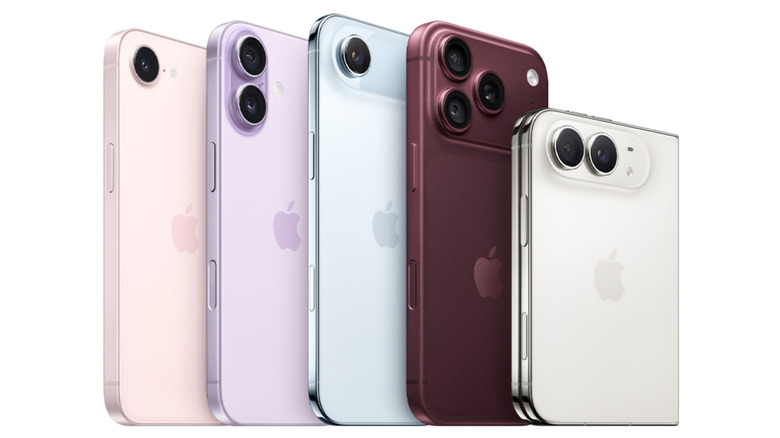
Smartphone users eyeing the new iPhone Duo may be enraptured by its matte-finish inner folding display and slick software redesigned around that experience. It's certainly the most exciting Apple device in a decade or more, but Apple's first foldable phone is not without its compromises. On the Android side of the fence, foldable owners have spent years adapting to the sacrifices that come with a bleeding edge device, and it turns out Apple wasn't able to fully overcome any of them. Of course, the Duo is less durable than the more traditional iPhone 18 Pro that was released alongside it, but that's far from the only way it falls short. For some people, losing a few features in exchange for a folding display is worth it, but some of those losses will be a dealbreaker for others.
Apple's current iPhone lineup is its most diverse in recent memory, and you shouldn't feel compelled to buy the Duo when another model might make more sense for your needs. From cameras that can't quite compete to a lack of FaceID, here are the main iPhone features you'll miss out on with an iPhone Duo.
iPhone Duo ditches FaceID and Camera Control button
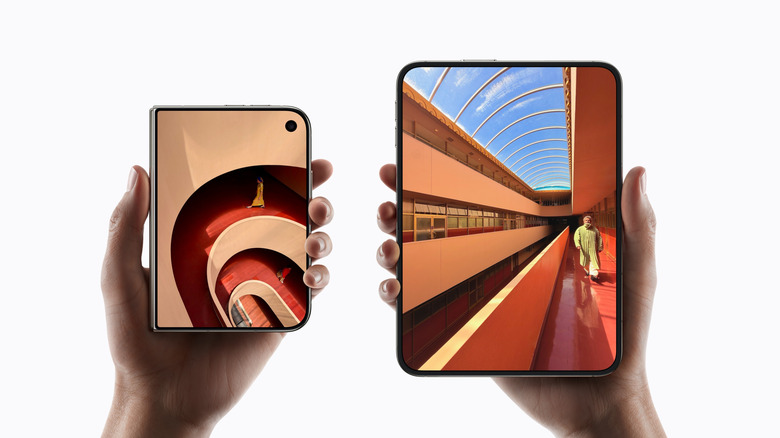
The biggest loss you'll feel when switching from a traditional iPhone to the Duo is the latter's lack of a FaceID array for facial recognition. You'll authenticate with fingerprints or passwords only. If you've grown accustomed to FaceID, which pretty much always works as long as your face is somewhere in front of the screen, losing that option could be a major blow. When unlocking your phone, making purchases and logging into apps requires fiddling with a finicky fingerprint sensor every time, it can become aggravating.
On the other hand, some users still miss the older iPhones with TouchID. Maybe your face doesn't play nice with FaceID for whatever reason. Maybe you just prefer the tactility of a fingerprint sensor. Apple placed the Duo's TouchID sensor in the power button, a similar implementation to that found on foldables from Samsung and other vendors.
A feature some may not miss on the iPhone Duo is the Camera Control button found on the side rail of other iPhones. It's a neat piece of kit, with a two-stage shutter and a capacitive control that allows you to change camera settings on the fly, but it seems to have gone over with some users about as well as the infamous butterfly keyboard on late 2010s MacBooks. In other words, it's innovative and cool from a tech perspective but often frustrating to use in practice.
However, if you're one of those iPhone users who swears by the Camera Control button, this loss will sting. Combined with the Duo's less capable cameras, the lack of a Camera Control button suggests that Apple sees the Duo as a media consumption device rather than a creative tool (an impression further advanced by the phone's lack of true multi-window multitasking).
The iPhone Duo's cameras leave a lot to be desired
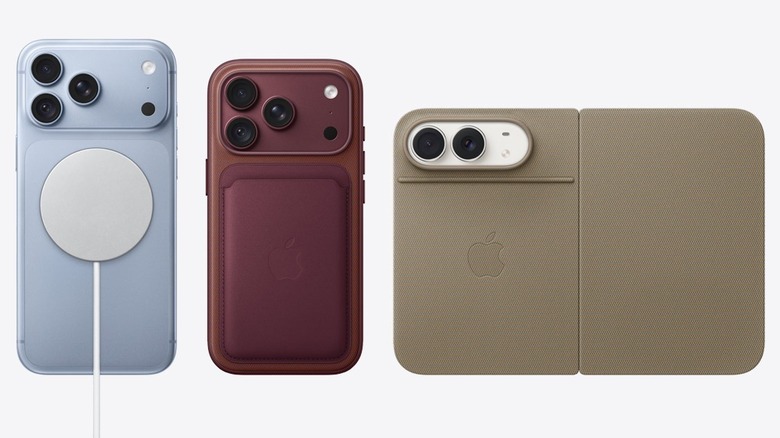
Other major losses can be found in the iPhone Duo's camera department, ironic for a phone with so many cameras. There are three camera arrays on the iPhone Duo: the main pair of shooters on the back, the Dynamic Island selfie shooter on the front display and the under-display camera on the folding interior display which Apple is branding a FaceTime camera. Each of these systems is compromised in a major way compared to the iPhone 18 Pro's camera innovations.
Starting with the main camera array, the Duo is aptly fitted with two lenses on its back platter. It carries the two 48-megapixel wide and ultrawide modules found on its slab-shaped siblings, but lacks the periscope telephoto lens they offer. And that incredibly cool-looking mechanical aperture, icing on the iPhone 18 Pro's cake, won't be found here, nor will its LiDAR scanner for better nighttime photography. The selfie camera on the cover display is a 12-megapixel letdown compared to the iPhone 18 Pro's aptly implemented 18-megapixel self-shooter. As discussed above, it also lacks the FaceID face-scanning array.
Even on the software side, the Duo is a camera downgrade. Apple announced new Pro Controls for the iPhone 18 Pro. Users can adjust shutter speed, aperture and more, making the 18 Pro a more useful camera for professionals. Those controls are absent on the Duo. So, too, are ProRAW shots which work better in professional photo editing software, as well as spatial photo and video — not a big deal if you don't own a VR headset, but Vision Pro owners may want to consider it.
An under-display FaceTime camera
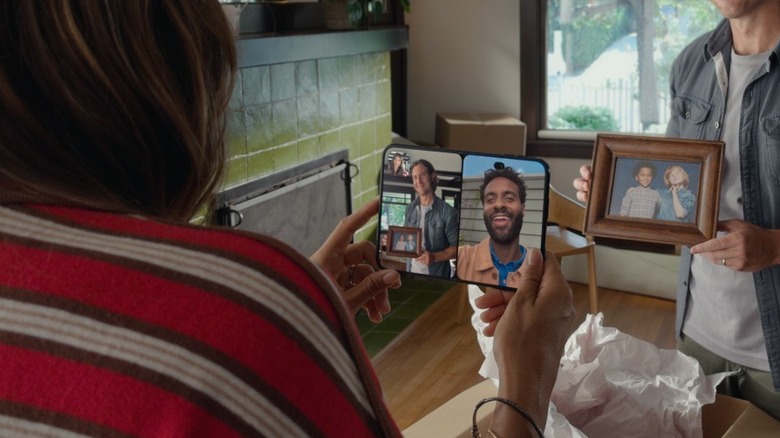
Last but certainly not least in terms of camera downgrades, the under-display FaceTime camera found on the inner display is almost certainly going to be a dog's breakfast. Apple has declined to tell anyone how many megapixels it is, which is not a great sign. We need look no further than Cupertino's largest competitor, Samsung, which used under-display cameras in the Galaxy Z Fold 4 and carried the feature forward for several generations.
The benefit of using under-display tech was always a completely uninterrupted image with no ugly "hole-punch" lens to ruin it, but it came at the cost of picture quality. Every phone that has ever had an under-display camera has failed to overcome the fact that you're putting a layer of pixels between you and the lens, and the results have been predictably awful. There's no reason to believe Apple has solved that issue, which is why they're not calling it a selfie camera but rather a FaceTime camera.
For many users, none of these tradeoffs will be particularly hard to deal with. If you're only snapping photos for personal use and social media, you'll hardly notice the lack of a periscope zoom lens or a few more megapixels of resolution in your selfies, and you probably weren't using the Camera Control on your current iPhone to begin with. The lack of FaceID might be jarring at first, but you'll quickly accustom yourself to reaching for the power button to unlock your phone as you slide it out of your pocket. But avid photographers and FaceID enthusiasts should think twice before spending at least $2,000 on a phone that will never quite be enough to satisfy.