

How long can you expect your PC RAM to last?
Individual RAM needs may be the biggest factor to lifespan
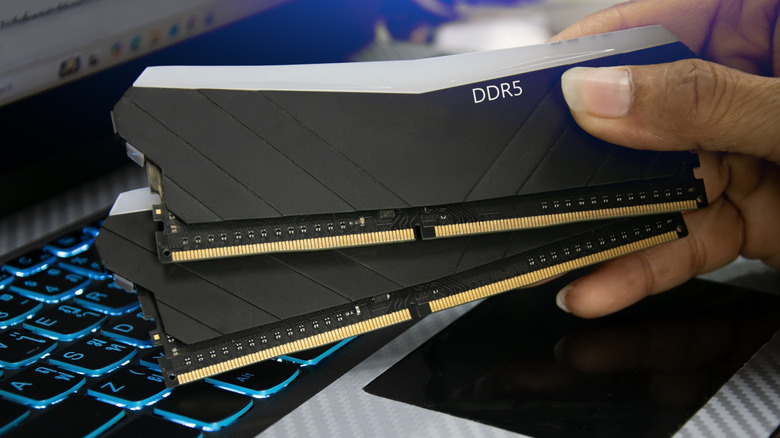
We probably don't need to remind you that RAM prices are out of control, spiraling into the sky like a broken rocket because of the unending growth of AI data centers. Companies like Apple have had to raise the cost of existing devices to keep up profit margins, and newer products are often launching with eye-watering price tags. Valve's Steam Machine costs over $1,000 — which is in line with a comparable gaming PC, but it was originally intended to be much cheaper, probably closer to $750. There's no telling how expensive Sony and Microsoft's next consoles will be.
This makes clinging onto the RAM you have particularly important. Replacement memory could potentially be unaffordable, never mind buying or upgrading to an entirely new computer. In fact, companies like Intel are even backtracking to support cheaper DDR4 RAM, despite DDR6 already being on the horizon. The good news here is that in terms of durability, your RAM will probably survive until you buy a new PC, regardless of how many years away that might be. Whether you'll tolerate the performance barriers of older modules is another matter. The demands of PC apps are always evolving, after all.
The factors impacting your RAM's lifespan
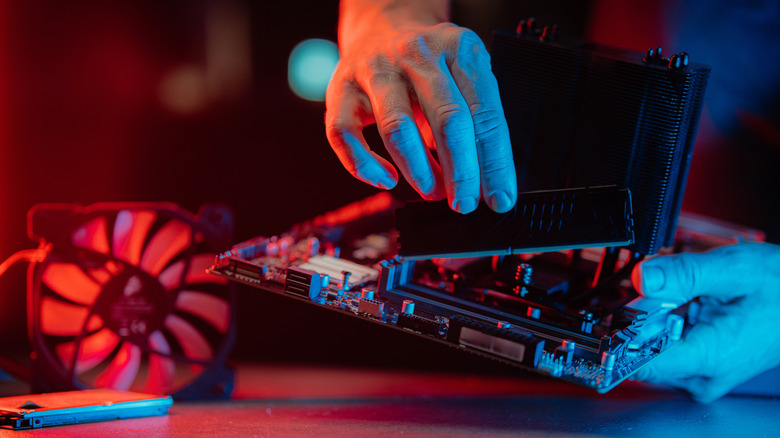
While it's tough to track down hard figures, PCWorld claims that on average, the material longevity of RAM should fall anywhere between 3 and 15 years. That's obviously an extremely broad range. It's very plausible, however, when you consider the range of factors involved. For one, there's initial manufacturing quality. While it's hard to go wrong with any of the major brands out there — such as G.Skill, Samsung and Corsair — there's always the possibility of a defect, since quality control is never perfect. If you turn to an obscure brand, you're taking an even bigger gamble.
More significantly, different users put RAM under different workloads. In a PC mostly tapped for browsing, email, streaming and light gaming, there isn't much strain. But if you're handling hours of tasks like video editing, AI processing or photorealistic 3D gaming, you're naturally stretching your RAM to the limits. All of the electricity for reads and writes generates waste heat, slowly wearing down your RAM's circuitry.
Some people take their RAM to the limits and beyond by overclocking it. This boosts performance, but can push heat past intended design tolerances, at least without additional cooling. Ambient conditions play a part as well, say if your CPU and GPU are generating a lot of heat, or voltage stability is inconsistent. Lastly, there's the potential for quasi-random failures such as static shock. Your PC should always be well-grounded.
How performance gaps can force upgrades

Realistically, older DDR4 RAM is plenty fast for most people. DDR5 can deliver meaningful improvements in tasks like gaming, yet even then, CPU and GPU speeds are going to have a deeper impact. Also, quantity can matter more than quality. If you're doing a lot of multitasking, you're easily better off with 32GB of DDR4 than 16GB of DDR5. Google Chrome alone can consume over 8GB of RAM if you have a dozen or so tabs open.
It's really the link between RAM and CPU performance that's the killer. Normally, motherboards designed for the latest CPU sockets are also built with DDR5 RAM in mind, and they're not backwards compatible with DDR4, let alone DDR3. Opting for a DDR4-compatible motherboard may place serious limits on CPU speed unless you specifically hunt down one of the recent options (like Intel's) designed to circumvent the memory crisis.
The gist is that if you want to stay on the cutting edge of computing, you may be forced to upgrade the kind of RAM you're using long before what you've got expires. Even five years can be an eternity in PC evolution, never mind 10 or more. It's only the people putting their PCs through the wringer — whether in terms of prolonged workload or excessive overclocking — who should seriously be worried about sudden death.