

Open-ear vs. in-ear earbuds: Which is actually better for your ears?
Each type of earbud has its perks and pitfalls.

With the very different designs of open-ear and in-ear earbuds, you might be wondering if one kind is better for your ears than the other. Since in-ear buds go in your ears, similar to earplugs, they offer a tight seal and direct sound into your ear canal. This can provide some level of pressure, especially if you wear them for hours. They are also more prone to getting dirty from secretions like earwax. By contrast, open-ear buds sit atop your ears so there's minimal contact. They wrap or clip around the top or bottom of the lobe, some even with bands that position behind the neck. Bone conduction models rest on your temple and transmit audio to your ears via vibrations.
It's not just about which option is better for your ears, as there's also a trade-off in sound quality and noise cancellation versus comfort. When it comes down to it, while there are fewer potential issues linked to open-ear buds, you also won't get as good a sound experience as you would with in-ears since the audio isn't as focused. Plus, ambient noise will still be audible. With proper wear and care, though, in-ears are perfectly fine for limited use.
The upsides and downsides of in-ears

As noted, in-ear buds completely seal your ear canal, which isolates outside sound and focuses audio directly into your ear. This offers an advantage in sound quality and noise cancellation. You get better bass and richer, more immersive sound with music, and crisp, clear audio for phone calls. They can also block ambient sounds, like the hum of an airplane or people milling about. This occurs through both passive and active noise cancellation: they physically plug your ears (passive), and many models use microphones and algorithms to further cancel out noise (active).
But there are downsides. Since they plug the ear, there's some pressure, which can lead to ear fatigue over time. They can also cause irritation for some, especially for those who suffer from sensitive skin or conditions like eczema. Wax and moisture build-up can also be an issue. Users who tend to turn the volume up too high risk damaging their hearing, especially if they exceed safe levels for long periods of time. This isn't necessarily an issue with open-ear headphones since they aren't plugging your ears and filtering sound right into the eardrum.
Because of the pressure and isolation, you won't want to wear in-ears for hours upon hours. That said, if you limit usage, keep them clean, and maintain safe volume levels, in-ear buds can be perfectly fine. They are not necessarily "worse" for your ears. But they present risks you don't have to worry about with open ears.
Why open ears might be better for your ears
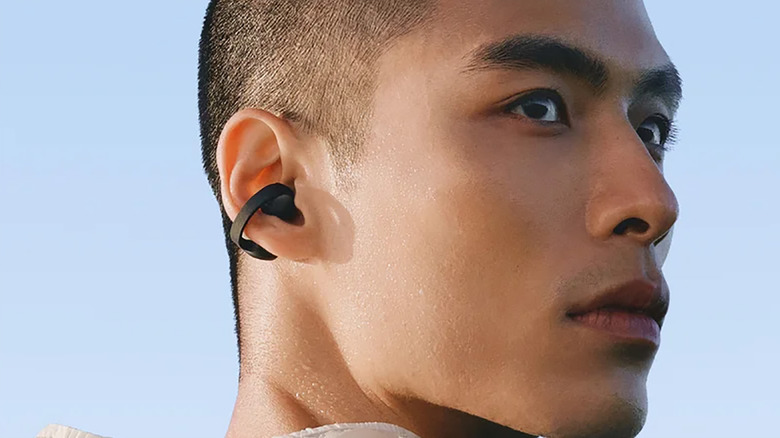
Sound quality is rarely as good with open-ear models since they don't seal the ear. Since sound isn't directed into your ear canal, you may need to crank the volume, resulting in sound leakage so others around you can hear the audio.
With open-ear buds, you don't typically get noise cancellation, though the Shokz OpenFits Pros are an exception with proprietary noise reduction. It works well, but doesn't rival in-ears. With open-ears, you remain more aware of your surroundings, though many in-ears have transparency and awareness modes to use as needed as well, so you're not completely oblivious to the world.
Furthermore, while some people find in-ears don't fit right or are uncomfortable, some open-ears may not sit perfectly either. That's especially the case for clip-style buds on larger lobes. But most open-ear models are more secure than you may think, even during rigorous workouts. And they are usually more comfortable since nothing is plugging your ears.
The main upside is that they're more hygienic and thus better for you in the long term unless you're extra diligent about cleaning your in-ear buds. However, the concessions with sound quality and noise cancellation are important to consider if you go this route. But overall, open-ear buds pose little to no risk to your ears or hearing.
Given this, for occasional, focused listening, especially in noisy environments, in-ears are the way to go. For everyday casual listening, long wear periods where sound quality and noise cancellation aren't the priority and sweaty outdoor fitness activities like running where you want to remain aware of your surroundings, open-ear buds are the better option.