

Ray-Ban Meta (Gen 3) review: Minor upgrades that cost too much
Meta's very best AI glasses are only slightly better than other recent models.
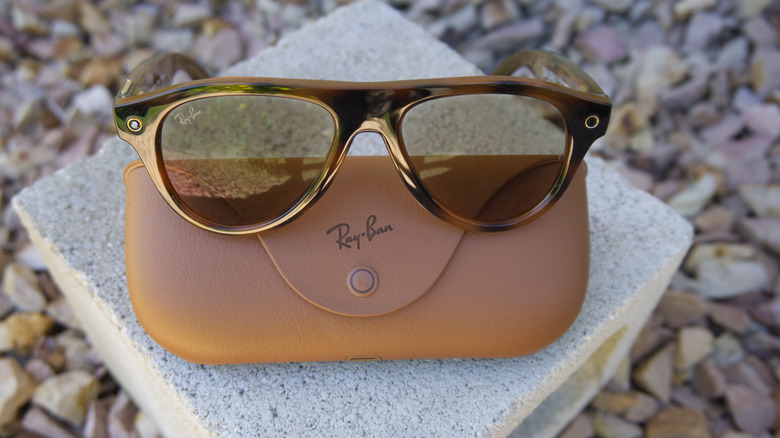
- Slightly better battery life than other models
- New styles are available in a lot more colors
- No DIY adjustable fit
- Expensive for relatively small upgrades
- Why is there an $80 premium for non-Wayfarer styles?
You'd be forgiven if you came out of Meta Connect feeling like Meta's third-generation Ray-Ban glasses seemed like a bit of an afterthought. The latest model was announced alongside the company's new audio-only glasses, its first VR glasses and an updated lineup of cheaper Meta-branded frames.
Compared with other recent glasses from the company, there's not that much new to report. Meta's latest Ray-Ban glasses have gotten some cosmetic updates and a few performance upgrades around the edges. There's still a lot to like; the frames are the most premium Meta-branded smart glasses without a display. But considering just how many variations of frames the company now makes, it's not clear that the $449 Gen 3 glasses should be your default choice if you're looking to invest in a new pair.
New frame styles and details
For now, the third-gen Meta Ray-Ban glasses only come in three frame styles: there's the classic Wayfarer frames, which have gotten a bit slimmer; Zena, a new cat-eye shape and Aviator, which Meta says is a tribute to the classic Ray-Ban design. As usual, each style is available in a number of different frame colors, many of which are semi-transparent so you can see some of the inner components if you look closely.
For this review, I wore a pair of Aviator frames in a brown tortoiseshell color called Havana. I've spent a lot of time in previous reviews complaining about glasses only coming in dark, boxy frames, so I was excited to see two new shapes. But it is disappointing that both the Zena and Aviator frames start at an eye watering $529.
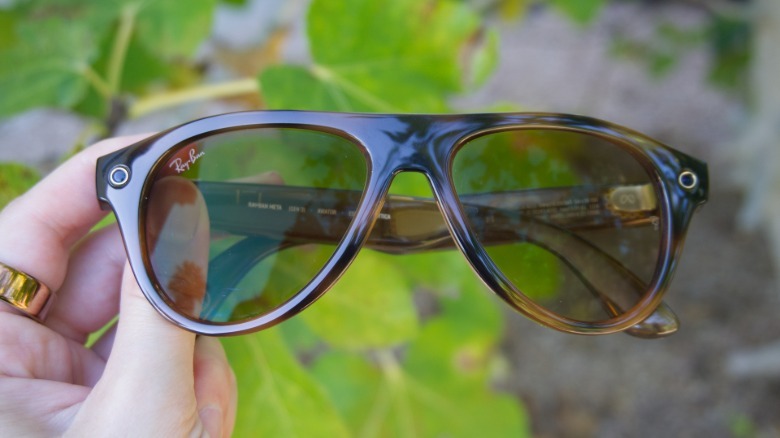
Maybe it's because the new, bolder frame shapes aren't for everyone. I've owned many aviator-style sunglasses over the years, but these felt the most oversized. They are 10mm wider than the smallest Gen 3 Wayfarer frames and it definitely showed on my face. I also felt a little silly wearing thick aviator glasses with clear lenses. I understand Meta offers clear transition lenses as the default choice for most of its AI glasses because it gives people more flexibility in how they wear them. But I think this particular frame shape is better suited to sunglasses.
 Karissa Bell for Engadget
The bulkiness of the frames also caused some issues with the fit. The glasses constantly slipped down my nose to the point where I considered buying after-market silicon tips to keep them in place. The glasses' tips are technically adjustable, but unlike some other Meta Glasses that offer DIY adjustments, Ray-Ban Meta frames need to be adjusted professionally by an optician or at a Meta store. That's not a big deal if you buy a pair at one of these physical establishments, but it's kind of a pain if you order online.
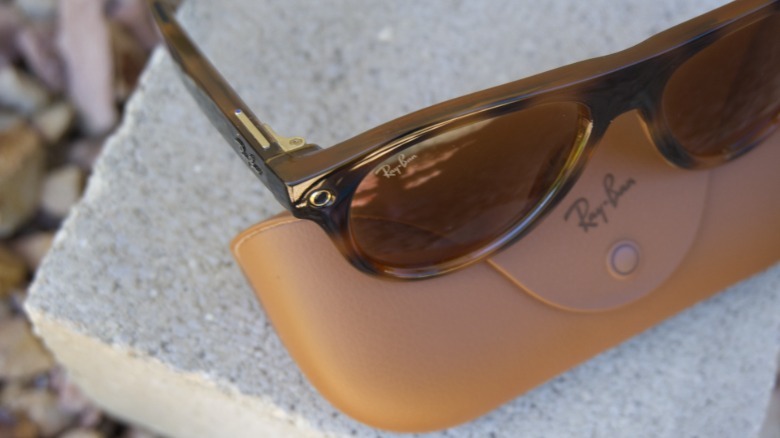
The other major noticeable change with Gen 3 is the addition of the action button, which has appeared on other recent models of Meta glasses. It's basically a customizable shortcut that lets you trigger a specific action without a voice command. I like to set mine to "read my latest text message," but you can use it for just about any Meta AI query.
Under the hood, Gen 3 comes with two upgrades compared with Gen 2. It has a slightly better battery life, with the frames lasting "up to 9 hours" on a single charge and the charging case adding an additional 50 hours. That's about an hour better than Gen 2, but as usual, battery life can vary significantly depending on how you use them. I was able to squeeze about six hours of continuous audio playback on my pair. Features like Live AI, which uses the camera to analyze your surroundings, will drain the battery even more quickly.
 Karissa Bell for Engadget
Gen 3 also comes with an extra microphone, which Meta says should improve the sound quality for phone and video calls you take with your glasses. I never got any complaints with the five-mic setup on Gen 2, but people I spoke to on the phone while wearing Gen 3 assured me that I sounded clearer than I do on my AirPods Pro 2.
Meta AI + what's to come
The latest glasses come with all the same Meta AI features as the rest of the company's lineup. The AI assistant is now powered by Muse Spark, which has generally made conversations feel more natural and reduced errors. I do miss the celebrity voices, though.
Speaking of voices, Meta has made it clear that its smart glasses will be even more important to the company as its AI agent Muse advances. The company previewed Muse on its glasses during Connect, but the feature hasn't officially rolled out yet, though a Meta support page describes it as being in "beta." Once Muse is available on the device, you'll be able to chat with your agent via your glasses and "show" it what you're seeing through the glasses' cameras. That obviously opens up a lot of interesting possibilities, though it's hard to say how big of a deal this will actually be.
 Karissa Bell for Engadget
I also worry that Muse and other AI features are likely to become a vehicle for Meta to more aggressively hawk Meta One subscription plans. The company has already shown a willingness to paywall some features, like its new hearing enhancement tool (which has yet to roll out). The company also seemingly considered a similar move with its other hearing-related feature Conversation Focus, which also has yet to fully roll out despite being announced more than a year ago.
And when I look at my own glasses settings, the very first menu I see is a promotion to sign up for Meta One in order to unlock more photo storage. The company is, officially, still "testing" these subscription plans, but it does raise important questions about future enshittification.
One setting I am grateful to have is the ability to opt out of allowing the company to train its AI models on "visual data" collected by your glasses. That means that when you ask Meta AI a question about something you're looking at, the glasses will not store that image and won't show it to contractors the company employs. That addition doesn't address all the privacy concerns people have about this product, but it's an improvement nonetheless.
Is the Gen 3 worth it?
When Meta rolled out its Gen 2 Ray-Ban glasses last year, they were an obvious choice. But a lot has changed since then, and I'm not sure Gen 3 makes sense for most people. Meta's non-Ray-Ban glasses come with basically the same features for a starting price of $249. If you want the more premium finish that comes with the Ray-Ban branding, Gen 2 is still a solid option for $349, and you can still buy Gen 1 frames for $224.
So while Gen 3 can still be fairly considered "top of the line" for non-display enabled glasses, it's a much more minor distinction at this point. With all the options now available, I think the only reason to choose Ray-Ban Meta Gen 3 is because you love the Ray-Ban styles (no shame in that!) or you really want that extra bit of battery life. I suspect for most people, that's not quite enough.