

Ray-Ban Meta Gen 3 vs. Ray-Ban Meta Gen 2: How these AI glasses compare
Meta's newest smart glasses are an iterative, expensive update.

Meta announced a slew of new smart glasses at Meta Connect 2026, including its first camera-free options, but the company's Ray-Ban Meta models remain the flagship. The Ray-Ban Meta Gen 3 carry over many of the improvements introduced in smaller updates over the last year, like the more prescription-friendly Ray-Ban Meta Optics or the affordable Meta Glasses, with new features that mostly rely on software rather than reinvented hardware.
Other than new colors and frame options, it's hard to tell how the Ray-Ban Meta Gen 3 glasses differ from the Ray-Ban Meta Gen 2, unless you really dig into the specs. And you kind of need to, since understanding those differences is the only way to justify the new $449 starting price.
The Ray-Ban Meta Gen 3 last longer and listen better
The biggest changes Meta introduced to the Gen 3 are a longer battery life and the addition of more microphones. The Ray-Ban Meta Gen 3 lasts up to 9 hours on a charge — one hour more than the Gen 2 — and up to 50 hours with its charging case, two hours more than the Gen 2's 48 hours. In day-to-day usability this might not make a huge difference, especially when compared to the 12 hours of battery life the company is promising on the Ray-Ban Meta Audio. We'll need to do a full review of the glasses to see what the battery life improvements mean in real-world use.
The Gen 3's six-mic array, one more mic than what Meta offered on the Gen 2, is a similarly modest change. Meta says adding the extra mic and redesigning the microphone layout on the Gen 3 model has allowed for better background noise reduction for calls and AI interactions, but that will have to be tested to see if it's meaningfully different. One way the new mic on the Gen 3 could allow it to stand out from the Gen 2 is support for listening to and recording Dolby Atmos spatial audio, a feature the company says is launching later in 2026.
Meta has also ported over the action button it introduced on the Ray-Ban Meta Optics and Meta Glasses to the Gen 3. The button can summon Meta AI, act as a capture button, or be assigned as a shortcut for a variety of other Ray-Ban Meta features. The Gen 2 features a capture button that only works with Meta's camera features.
The Ray-Ban Meta Gen 3 are smaller and available in new styles
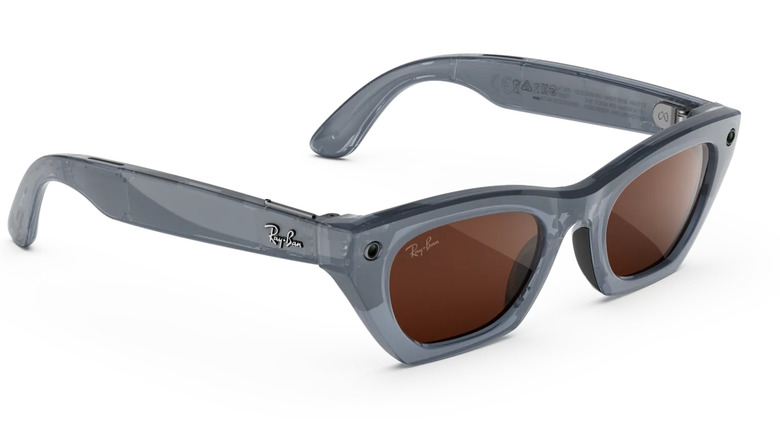
Smart glasses are fashion as much as they are anything else, so another way the Gen 3 are differentiated from the Gen 2 is the addition of two new frame styles. The Ray-Ban Meta (Gen 3) Aviator features lenses shaped like Ray-Ban's classic aviator glasses, with thick frames in multiple translucent and tortoiseshell colors. For something a little less in-your-face, the Ray-Ban Meta (Gen 3) Zena comes with more of a cat-eye shape in translucent, black and tortoiseshell colors. The only frame shape that's carrying over from the Gen 2 is the Wayfarer, Ray-Ban's most well-known frame. That doesn't mean Meta won't port more Gen 2 styles over in the future given its penchant for mid-cycle refreshes, but for now most Gen 3 glasses will look pretty different.
They're also, technically, a bit smaller. The best comparison point is the Ray-Ban Meta Wayfarer. The standard-fit Gen 2 model is 131mm from hinge to hinge, while the Gen 3 model is only 129mm. The temples on the Gen 3 model are also slightly shorter at 149mm compared to 150mm on the Gen 2. The relationship is reversed when it comes to weight, though, where the Gen 3 model is a slightly heavier 51.5 grams compared to the Gen 2's 51 grams. Those changes might not be noticeable unless you have the glasses side-by-side, but it does suggest Meta is mostly trending towards smaller glasses overall.
Meta's new software features are coming to older models
Software and AI access define the experience of using Ray-Ban Meta smart glasses. And the vast majority of features the company announced alongside its Gen 3 model will be available on older Gen 2 models, too. That includes using the smart glasses' FDA-cleared hearing enhancement feature, interacting with the company's Muse AI agent, and taking photos with the glasses' new dynamic photo capture feature, which captures multiple shots at once and lets you pick the best framing.
Combined with the Ray-Ban Meta Gen 3's higher starting price of $449, $70 more than the Ray-Ban Meta Gen 2, that makes justifying an upgrade hard. The company's new smart glasses will likely be a great way to jump into Meta's growing ecosystem, but if you can buy a used Gen 2 pair (assuming you don't need a prescription) you'll likely get a better deal.