Josiah Motley

Engadget Editorial Policies

The unique content on Engadget is a result of skilled collaboration between writers and editors with broad journalistic, academic, and practical expertise.

In pursuit of our mission to provide accurate and ethical coverage, the Engadget editorial team consistently fact-checks and reviews site content to provide readers with an informative, entertaining, and engaging experience. Click here for more information on our editorial process.

Stories By Josiah Motley

  • Interview with Bo Lu, CEO of the company using Robo-Advisors to apply investing principles to client portfolios

    When you start trying to predict the market, risks become a huge factor. Sure, what if it pays off big? What if it doesn't though? While there is a place for risks, it's not always the right answer when investing your hard-earned money. There needs to be balance, and that's where a company like FutureAdvisor comes in. You see, your investment accounts work better when they work together, and FutureAdvisor understands that. They use robo-advisors and real people to gain a holistic view of your accounts in order to best invest your money. There are so many more layers to it, however, and we had a chance to talk with Bo Lu, of FutureAdvisor, to explain how FutureAdvisor works, what robo-advisors are, and the future of the company. Check out the interview below! Care to introduce yourself and your role with FutureAdvisor? Hi, I'm Bo Lu, CEO and Co-Founder of FutureAdvisor. I've taken on a lot of roles since our early days, from earning my Series 65 and helping create the investment model, to building the product, talking to customers, and identifying new avenues for our technology to be used via partnerships with other large financial institutions. These days, I focus mainly on defining our new partnerships and guiding FutureAdvisor through a period of rapid growth as we continue to integrate with BlackRock. For those unfamiliar, what is FutureAdvisor? We're what's known as a Robo-Advisor -- a term that describes companies like ours that use technology to aid humans in applying time-tested investing principles to clients' portfolios. Our portfolio management team works in tandem with our algorithm to manage clients' portfolios. We don't try to predict the market, but instead use the algorithm to diligently apply the time-tested principles of good investing to client portfolios. The algorithm helps us rebalance accounts, reinvest cash intelligently, place assets into the right type of account for their tax treatment, capture tax savings via "tax loss harvesting," and so much more. We began by offering our service directly to consumers, and have expanded into a business-to-business model as well. We were acquired by BlackRock in autumn 2015, enabling us to leverage BlackRock technology (analysis, educational materials, etc) to strengthen our product and our partnerships. What inspired the creation of FA? I've always been interested in finance, even before I opened my first Roth IRA with money from my first summer job. Because of this, I quickly gained a reputation as the finance nerd among my group of friends in college and afterwards. Once my friends started earning their first "real world" paychecks, they found themselves with lots of questions -- "how much should I be saving?" "What do I invest in?" Some tried to visit traditional financial advisors, but found that their budding life savings didn't yet meet the advisors' minimums. So, they turned to me for help. I shared my spreadsheets and tools with my friends, and realized that it was really easy to share and implement good financial advice at scale with the help of technology. My cofounder Jon and I created a tool where DIYers could get advice on their investments, and those who prefer to hire us to manage their money could do that as well. Who is FutureAdvisor meant for? FutureAdvisor is meant for anyone looking for better financial outcomes. Technology helps us to apply good investing and wealth management principles to client portfolios every day, which is difficult for individual investors to do on their own. Our clients have a wide range of "investing savvy" -- we try to make what we do easy to understand even if you don't have a finance degree. Some of our clients choose us because we help them manage everything in one place strategically. Others who have a passion for investment strategy choose us because of the particularities of our approach, like the ways we evaluate funds, or how we apply automatic tax-efficient asset placement (which means that we put income-producing assets like bonds and REITs in tax-sheltered accounts whenever possible). In the last year we have partnered with a series of retail banks and wealth management firms to make customized versions of the FutureAdvisor platform available to individual investors via their existing banking or wealth management relationships. Each offering is unique to the investment model of the individual partner. Delivering automated investment advice in this way leverages the efficiency of a single sign on process, linked to existing banking or investment accounts, and encourages new investors to get started building wealth with an organization that they know and trust. What sets you apart from other robo-advisor firms? One major distinguishing factor for us is our focus on working with human advisors. We've had a team of advisors on staff since our early days, because we realized that many investors like talking things through with another human. We've also focused heavily on aiding traditional (in-person) financial advisors in our partnership efforts, believing that technology frees them from day-to-day routine work and allows them to spend more time doing what they do best -- talking to clients about their dreams, fears, and goals. We're also unique within the space since our roots are in our direct-to-consumer business, but BlackRock has given us powerful resources and stability to capture many business-to-business opportunities as well. At its core, BlackRock is a technology company; and FutureAdvisor is a technology offering, much like company's flagship risk analysis tool, Aladdin. What differentiates using a robo-advisor from a classical financial advisor? Do you see customers sometimes using both? I'm excited by how many opportunities there are for consumers in the current market. While historically we've served investors who prefer a self-serve digital approach, we've come to find that many others value the human element of having someone explain investing to them. We've always offered consumers the best of both worlds, with a digital-based experience and human advisors available anytime to discuss a client's goals and investment decisions. We're continuing this approach in our partnerships, and seeing some traction. We're focused on maximizing efficiency as there are only so many hours in the day for advisors to speak with clients, create reports, and trade in their client's accounts. Our solution helps advisors with the legwork, which frees them up to do what humans really excel at -- talking to each other. Anything exciting coming to FutureAdvisor in the near future? We're excited to leverage more of BlackRock's powerful analysis and technology to grow our existing partnerships and create new ones, creating even more ways in which consumers and advisors can adopt our technology. BlackRock has so many teams of great thinkers who are coming up with better ways to analyze and understand the markets, construct clever portfolios for clients, and visualize and communicate our work -- we're excited to put that powerful information into practice. We'd like to thank Bo for taking the time to answer some of our questions. FutureAdvisor was founded in 2010 and is headquartered in San Francisco. To learn more about FutureAdvisor click here.

    By Josiah Motley Read More
  • Interview with the man changing the insurance field for on-demand economies

    Insurance can be a fickle thing. You need it, obviously, but it's always a pain when you see that bill come up and you haven't needed your insurance in what feels like forever. With the growing on-demand economy, this becomes even more relevant for people like Uber drivers and AirBnB renters. One company is setting out to change how we look at insurance, however, in what is commonly referred to as insurtech - or the melding of insurance and technology. Slice Labs is focusing on disrupting traditional insurance models for on-demand positions by giving people insurance when they need it, and only then. We had a chance to talk with Tim Attia of Slice Labs to find out more about Slice, how it got its start, and how it works. Check out the interview below! Care to introduce yourself and your role at Slice? My name is Tim Attia, and I am the CEO and co-founder at Slice Labs. For those not familiar, what is Slice in just a couple of sentences? Slice is a startup providing on-demand insurance for the on-demand economy. Think of insurance for a Slice of time. Pay for it when you need it, not when you don't. What inspired the creation of Slice? Three smart guys who worked in the insurance and technology space for years got fed up with the same old broken model and decided to make insurance better by building their own technology platform. Slice was founded on the principle that technology should drive the insurance transaction and insurance should be sold on a frictionless per use basis. So I understand how Slice will work for on-demand services like Uber, but you're also planning on offering insurance for other types of on-demand economies, correct? Correct, our goal is to offer insurance for everyone involved with the on-demand economy. How will Slice work with services like AirBnB and VRBO? The Slice product is purchased by the the person renting out their place. The Slice product requires the person renting their place to be registered on one of the platforms. AirBnB, VRBO, Homeaway, etc. Slice will also offer its product as an embeddable API so the platforms can incorporate it if they choose. Slice needs to offer its products independently since the properties and frequently listed on multiple platforms. Why should renters look into using Slice for their rentals as opposed to traditional insurance options? Traditional insurance options don't have options for the growing on-demand economy. You can buy personal insurance, which doesn't cover you when you're acting as a business (renting your home on Airbnb, driving for Uber, etc.) or you can buy commercial insurance, which is too cost prohibitive to be worth it. They treat you as a person or as a business, but not for the constant back and forth - if you're a business one minute and a person the next. Slice provides complete coverage for dollars a day only for the time you want it, the time you're acting as a business, only for the weekend Airbnb rentals, for example. Thanks for taking the time to answer some of our questions, anything you'd like to close with? The only thing bigger than the on-demand economy is the risk. We're not here just because we have a great idea, we're here because there is a real need for proper protection. Unfortunately, many people working in the on-demand economy don't understand their risk nor lack of protection until it's too late. We want to change that and provide trust, safety and protection. Technology is changing the way we do almost everything, and insurance is just the latest player to start seeing the effects. With on-demand economies growing in multiple sectors, having an insurance option that allows those people to pay for the insurance only when the need it is a great option to give great coverage, without spending any extra money. We'd like to thank Tim for taking the time to answer some of our questions, find out more about Slice on their blog.

    By Josiah Motley Read More
  • Interview with the CEO of the world's most popular VPN

    A VPN, or Virtual Private Network, at its core is simply a large group of computers that are networked together over the internet. Its purpose? To add security and anonymity to your browsing and personal information. Big business can, and should, use VPNs to secure private, sensitive information and that same ideology trickles all the way down to the individual. If you find yourself in a coffeehouse or on basically any public network, using a VPN will help ensure your information is safe. VPNs can also be used in countries where internet activity is closely monitored, or even restricted, as a means to obtain information that governments or agencies may be trying to conceal from the public eye. On a more casual level, VPNs can be used to circumvent regional locks on streaming services like Netflix. AnchorFree is the world's largest Internet Freedom and Privacy platform, and their product Hotspot Shield is the world's most popular VPN service, with both paid and free options. We had the chance to sit down with some of the team over at AnchorFree to pick their brain about their product, VPNs in general, and the different uses of them. Check out the interview below! Hey, thanks for taking the time to answer some questions, care to introduce yourself and your role with AnchorFree? Thanks for the opportunity. I'm David Gorodyansky, CEO and co-founder of AnchorFree. AnchorFree's Hotspot Shield application is the world's largest platform for secure connectivity to all of the world's information. We securely connect people to each other and to unrestricted global information. We enable users to have control over their security and privacy and to turn that control on when ever they need it. What is Hotspot Shield, for those that aren't familiar? Hotspot Shield is the world's most popular virtual private network (VPN) that let's people browse the internet safely and securely across all their devices. Hotspot Shield gained popularity as the first VPN application for consumers. While companies like Cisco and Juniper are competing for leadership in the enterprise VPN space, AnchorFree has been able to own the consumer space, controlling more than 50% of the consumer VPN market. Hotspot Shield use cases include security at public Wi-fi networks (like a Starbucks, hotels, airports, on planes, etc.).,and privacy online when it comes to health, wealth, and family matters. Hotspot Shield also connects users to global content, so expats or travelers are able to connect to Hotspot Shield servers in their home country while abroad or locals in countries that restrict access to information are enabled to gain unrestricted connectivity and access. Hotspot Shield's proprietary technology enhances performance of such connections, substantially increasing Internet speed for users in far away countries. By establishing a secure connection through Hotspot Shield, anything you do online remains private and your information stays safe. To date Hotspot Shield has been downloaded 400 million users and is on track to reach 1 billion user downloads by 2018. What inspired the creation of AnchorFree and Hotspot Shield? The genuine believe that every user on the planet deserves control over their personal data and the freedom to get to all of the world's information without any restrictions. So, the Great Recession of 2008. You've mentioned that it was a rough time for your company, how were you able to bounce back from that? Well, it couldn't have come at a worse possible time for us honestly. We had just burned through our initial investment and needed more cash, and that was right when the Recession took hold. Luckily - and also through a lot of hard work - smartphones started becoming ubiquitous throughout the world and people needed a secure way to keep their data private - especially in developing countries where we are seeing a massive move from feature phones to smart phones and users having a real need to gain access to global content and to protect themselves online. Hotspot Shield suddenly had a huge audience for people wanting secure connectivity to all of the world's information. We were able to turn the challenge of hard times fund raising in 2008, into an opportunity. We raised $6M in Series A funding in 2006 and another $5M in Series B funding in 2008, the 2008 investment environment was so tough that it taught us a lesson about pushing towards profitability. We became profitable in 2009 and later raised a $52M Series C round in 2012. Many people look at VPNs as just a way to circumvent region restrictions for services like Netflix, but that's only a small part of a much larger whole, right? Absolutely. Watching Canadian Netflix movies is a byproduct of VPN technology, but it's so much bigger than that. Using Hotspot Shield allows people unrestricted and secure access to information online. We break down barriers to connectivity and enable people with the freedom to connect to the world and to do so securely and privately. Mobile continues to be a dominating force, with more people using smartphones for browsing and purchasing than ever before. Do you have a lot of people using Hotspot Shield on mobile devices? 70% of our users are on mobile devices. Back in 2010, 100% of our users were on Windows and Mac. In 2011 we launching Hotspot Shield for the iPhone and in 2012 for Android. Since then our user base quickly migrated to 70% mobile. As 5B users move from feature phones to smartphones in the next 5 years, the need for secure connectivity to the world's information will become exponentially larger. AnchorFree is excited about being in the position to provide secure connectivity to the next 5B people. What's in store for the future of AnchorFree and Hotspot Shield? We believe that like air, water, and food, online access has become a basic necessity for human life in 2016. Facebook's Free Basics program comes close, but AnchorFree envisions a world where everyone has unfettered secure online access to all information (not just Facebook). In addition to our growth towards 1B user downloads by 2018, we are opening up an SDK to our technology for other app developers to use. If an app developer wants to enable security, privacy, performance improvement for users in far away countries, and connectivity within their applications, they will be able to run Hotspot Shield inside of their apps. A number of security companies have already integrated our SDK for Wi-Fi security inside of their apps. Others are integrating us for performance and connectivity benefits. Our strategy is moving from being a popular application to being a platform that powers many applications. Think about what Twilio has done for VOIP connectivity, our SDK is similar, although the benefits for app developers are around security, connectivity, and performance. The bottom line? VPNs are extremely useful and everyone can justify the use of them at some point in their lives. Whether it's to watch Canadian Netflix or to protect your credit card information during online purchases, individuals can benefit from the use of a VPN. Businesses, who exchange and hold valuable information constantly, should also be using a VPN to help protect that information from prying eyes. And while a business shouldn't be using a free VPN, with free options from companies like AnchorFree, there really isn't any reason not to have one on your computer.

    By Josiah Motley Read More
  • Shofur brings modern tech to a traditional industry

    The bus industry hasn't changed much, but one startup is well on their way to making consumers look at charter buses and bus lines in a new light. Shofur, founded in Atlanta, brings modern tech into the world of bus transportation. It all started in 2012 when founder Armir Harris realized the need for better transportation during the Democratic National Convention in North Carolina. By acting quick, and using his uncle's charter bus connections, Harris was able to alleviate the problem of transportation during an extremely hectic and busy time, and from there the idea behind Shofur bloomed. With only $800 Harris turned his idea into a reality and created Shofur to basically aggregate charter bus demand all over the country. His angle? High-end buses filled with creature comforts like reclining seats and Wi-Fi and a website and app that made booking reservations ridiculously easy. The platform caught on quickly and now is used by companies like Facebook, the NFL, and Microsoft. Shofur has now taken their concept and platform to the next level by offering more traditional bus lines, and have currently implemented this new branch around Texas. Think of it almost like an Uber for bus transportation, whether it's for leisure or business. You check out current bus lines on the app and reserve your seat. The app will make you aware of delays and estimated arrival time to your destination. By using a peer review system, drivers (and companies) are rated on a 5 star scale, with anything below a 4.5 rating not being allowed on the platform. This helps ensure riders are getting the best experience possible. The service is currently available to the "Texas Triangle," which includes Dallas, Austin, San Antonio, and Houston. When asked where they see the bus lines going next, COO Merrick Levy states, "We plan on aggressively scaling our service across the U.S. We have operators signed up and ready in key markets. Eventually we will create a network of bus lines from coast to coast." Shofur is in over 100 cities with the app being available for both Android and iOS.

    By Josiah Motley Read More
  • How one company is bringing science to the subscription box

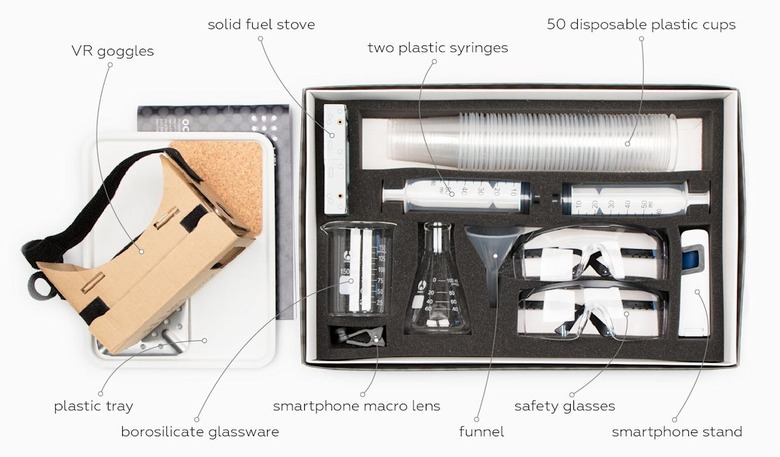
    We're all familiar with subscription services at this point. The offerings are almost endless. From video game related boxes and general "nerd" boxes to makeup and fashion, there's a box for almost everyone. Nickelodeon is evening getting into the mix. One we haven't seen, however, is a box for school-age children that contains science experiments meant to spark creativity and learning. You can now rest easy, because that box has been made available through MEL Chemistry. MEL Chemistry works like many of the other offerings available to consumers, but ships out twice a month. After a year, you'll receive a total of 38 science experiments for your kids to do at home. Everything is included in the boxes, meaning you will not have to make any last minute trips to the store to secure any final items necessary. That first box you get, the Starter Box, will contain many of the items you'll use throughout the year, and this is where some of the more interesting items come in to play, as well. MEL doesn't just include your basic, cookie-cutter science experiments, they really want to bring them into the 21st century by offering things that kids who have grown up with smartphones and tablets will appreciate. There is an app that allows kids to explore experiments in greater depth and there is even a VR headset (the cardboard kind) included. The headset will allow you to put almost any smartphone into the holster and give your kids the ability to see what their experiments are doing at the molecular level. With school funding down, science experiments have taken a backseat in many school systems, and that's a real shame. Science experiments spark the imagination and can be a deciding factor in how well children understand the material. If you want to make sure your children are still getting the joy and wonder from their science lessons, MEL Chemistry might be the way to go.

    By Josiah Motley Read More
  • Meet the CEO of the company changing legal discovery

    Logikcull is not new to the discovery game. Having had a successful discovery business (simply called Logik) since 2004, the crew was no stranger to discovery and helped in the service of file and data organization for companies and legal firms. Fast forward a bit, and the company has pivoted to a SaaS platform that is using the cloud to offer unique discovery solutions that they have been fine-tuning since 2004. It can be a confusing subject, so we've pinged Andy Wilson of Logikcull with some questions to shed some light on his company and the importance of legal tech and discovery. Check it out below! Hey Andy, care to introduce yourself and your role at Logikcull? I'm the CEO and co-founder of Logikcull.com What is Logikcull? Logikcull is a cloud-based legal intelligence platform that automates the process of discovery and data management for compliance, litigations, investigations, and open records requests (i.e. FOIA). We help businesses, law firms, governments, and non-profits of all sizes reduce the time and cost associated with these types of data-intensive projects from weeks to hours and from millions of dollars to thousands. What inspired the creation of Logikcull? Sifting through emails, office docs, zip files, PDFs, etc. for litigations, investigations, and open records requests is ridiculously complicated and expensive. It's still common for legal teams to print emails to paper. It's still common to look at every single document just to "make sure" it's not relevant. This is a horribly inefficient process which can take weeks, months, and even years to complete. It also delays access to justice and costs our country billions in waste every year. We wanted to fix this problem and democratize the process by creating technology that is accessible, user-friendly, transparent, and affordable. Your website states that it's time to put an end to "eDiscovery," care to elaborate? Imagine you just got sued. Let's assume it's a patent troll that's suing you. The troll pursues discovery (aka eDiscovery) and your lawyer tells you that she'll need literally all of the data in your possession so her firm can search and review the data before handing it over to the troll. But, and here's the kicker, you won't know how long this process will take or how much it will cost. It could take a week and cost a few thousand dollars. Or it could take months and cost hundreds of thousands of dollars. You don't know. This terrible process is what's known as eDiscovery. And we can, and should, do a whole lot better. Why should the general public care about legal tech? Almost daily now there's an email leak. Hillary's emails. The DNC emails. Maybe even Trump's emails will get leaked. That would be YUGE! And just like your own inbox, email dumps contain A LOT of junk data. This is where legal tech comes in. Legal tech like Logikcullhelps people quickly and easily sift through these email dumps. It also helps to surface information that could've easily been missed. So, why is legal tech important? Ask your next president. Maybe more importantly, discovery, believe it or not, is one of the de facto methods of dispute resolution in US courts today. Should it be the case that, in order to get a fair shake, you have to be able to afford eDiscovery? That doesn't seem right to me. And again, that's why we created Logikcull. What does the future hold for Logikcull? We are going to continue to solve the massive inefficiencies and growing challenges (for instance, information in the cloud creates a million new problems for legal search) in the legal market with powerfully simple technology. And if we continue to work hard, and we're lucky enough, we may go public one day. We'd like to thank Andy for taking the time to answer some of our questions, if you'd like to find out more about Logikcull, make sure to check out their website.

    By Josiah Motley Read More
  • The Ecwid App Market lets store owners completely control their online presence

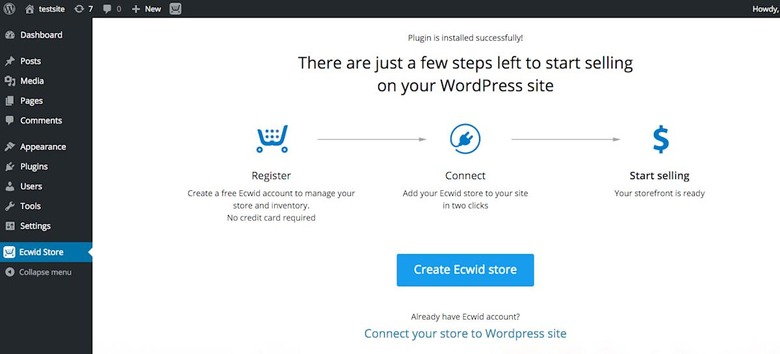
    There are plenty of options to choose from when deciding on an ecommerce solution for your website or blog. All are not created equal, however. Some require a new website, others only work with certain CMS platforms, and some are so locked that customizing them is nearly impossible. There are some available that do not fall under these categories, Ecwid being one of them. While many praise Shopify for its ease of use, Ecwid should also be considered when deciding on a platform to sell your goods. With a free option available to users, it's a risk free option that gives shop owners a chance to test out the waters before committing to one of their paid plans. With the paid plans, a whole new world is available to users through the robust Ecwid app market. This marketplace is chock full of different kinds of apps to help bring convenience to the end user and the shop owner. Everything from apps to help with the visual appeal of the shop to apps to help with shipping are available through the marketplace. You have your basics, like social share buttons which give customers a way to share products they find interesting, as well as apps to add icons for free shipping and contact forms. If you dig a little bit deeper though, you'll start finding a plethora of other apps to bolster your store front and its back end. With the TaxJar app, you'll save time by having your sales tax reports automated, regardless of state, with automatic filing options available, as well. There's also messaging apps like Message Mate and Facebook Chat to integrate live and near-live chat into your support services. One of the most intriguing offerings through Ecwid is the ShopApp app. People are looking at your store from their mobile devices and as technology continues to advance it can be expected that more people will turn to using mobile for everything from browsing to shopping. With ShopApp you can take it to the next level by creating fully functional, native apps for both Android and iOS. ShopApp takes care of pretty much everything and will even get your app on the different marketplaces. Deciding on an ecommerce solution can be a lofty decision. With so many options to choose from the choices can seem overwhelming. There are many great options available, but if you're looking for one that offers many different versions (both free and paid) with a large app market, then Ecwid might be worth checking out.

    By Josiah Motley Read More
  • Russian bank, Sberbank, offers free insurance to Pokemon Go players

    There's no denying the success of Pokemon Go. While it has lost some user engagement recently due to questionable decisions from developer Niantic, the nostalgia factor brought on by the Pokemon franchise was a sure recipe for success. What wasn't so expected, however, was the number of people injuring themselves while playing the mobile game. Reports from all over the world have players breaking bones, being robbed, and stepping out in traffic in an attempt to catch them all. One company in Russia has your back. Russian banking institution, Sberbank, is offering Pokemon Go players free insurance in case of injury while playing the game. Offering up to 50,000 rubles (about $800) in coverage, the insurance is completely free and you can sign up for it in minutes. The sign up is quick, only requiring your name, address, email, and nickname (your Pokemon Go one), and Sberbank will send your insurance card for free, as well. Sberbank believes that the cost to them will be well worth it if it helps bring financial literacy to those who sign up for the insurance, mainly younger people. CEO of Sberbank, Maksim Chernin, is quoted as saying, "It is important for us that the project will improve financial literacy, as the younger generation will be able to learn about insurance instruments while playing the game." To bolster that idea, Sberbank locations around Russia have been keeping the PokeStops (places where players and Pokemon congregate) charged with Lures to draw in even more people.

    By Josiah Motley Read More
  • Meet the man who's implementing digital learning into law school curriculum - Connected Casebook

    If you're in college, or have ever been, you know that there are a lot of books. Constantly hauling books to and from class, study groups, and libraries. Students of law are no exception, and will find themselves carrying around casebooks, the reading material that doesn't just lay out the laws, but give examples from specific cases. Needless to say, there are a lot of laws and a lot of casebooks. Connected Casebook hopes to alleviate some of those book carrying woes with their cloud-based solution that allows you to read, study, and outline casebooks from anywhere. We had a chance to talk with Vikram Savkar of Wolters Kluwer, the team behind Connected Casebook, to find out more about the service and how technology made it possible. Check out the interview below! Would you like to introduce yourself and your role at Wolters Kluwer? I am the General Manager of the Legal Education business at Wolters Kluwer. We are the leading provider of teaching and learning materials to the 200+ law schools in the United States as well as hundreds of other law schools around the world. As General Manager, I guide the acquisitions, editorial, marketing, sales, operations, and digital teams in light of an overarching strategy. Since we are part of a publicly listed company, we have to hit both short-term (quarterly and annual) and long-term (3 – 6 years) goals . . . balancing our time and strategy to achieve both of those is one of my core challenges. For those not familiar, what does your group at Wolters Kluwer specialize in? Since law schools still rely heavily on textbooks, they continue to be our core offering, and we invest a major part of our energy in recruiting and developing the finest authors in the legal world to help make complex legal concepts clear to the next generation. Our authors range from established thought leaders such as Richard Posner, Elizabeth Warren and Erwin Chemerinsky to up and coming law professors with a new and passionate point of view. Law schools, though, are evolving in keeping with the times, and are actively trying to incorporate non-textbook-based teaching approaches into their curriculum, including simulations, clinics, digital learning platforms, and flipped classrooms. This has created a new opportunity for textbooks publishers to become the key partner for law schools in their innovation efforts, and we are aggressively focused on capturing that space. We've done so through a combination of organic innovation, partnerships, and bespoke solutions. We've seen some really promising success so far, and we intend now to double down on the future. So, Connected Casebook, can you tell us more about it? Connected Casebook is the most significant success we've seen thus far in our efforts to help law schools evolve their teaching and learning model. Connected Casebook is a SAAS blended learning solution – print and digital – with the digital side (a website called Casebook Connect) by far the more powerful. Casebook Connect contains a rich ebook version of the print textbook. By "rich ebook" I mean that we do much more than just deliver a cloud-based PDF . . . we've designed a custom reading experienced that is specifically tailored to the needs of law students and that allows the ebook to be more functional than the print book. For instance, law students are usually taught to highlight their print books in multiple colors, with each color representing a particular type of legal concept. We've built that system of highlighting into the online reader . . . and then built upon that by allowing students to rapidly search and browse their highlights across the book by color to find common threads. As another example, law students are taught to build a semester-long subject outline as they read their casebook. This outline is highly structured, and built around specifically legal conceptual frameworks. We've built an outlining application right into the ebook, so that as students read, annotate, and highlight the book they are automatically building the kernel of their outline, with each nugget put into exactly the right place in the structure. Of course they then need to edit the outline to make sure it's truly meaningful, but by merging a couple of key activities (reading and outlining) together, we've made the logistical aspects of the reading process much simpler, leaving students more time for the truly important task of critical thinking. Casebook Connect also includes a study center, containing thousands of assessment questions, videos, ancillary explanations, and complex problems, all aligned to the table of contents of the textbook and all designed to make complex concepts as clear as possible. Using the study center, whenever students encounter a concept in the book that they find challenging, they can work through this supplementary material and (hopefully) arrive at mastery of the subject. Whereas the outlining application saves students time, the study center makes students successful. I could go on – we've designed dozens of features like this – but the general message is that our ebook is really not an ebook . . . it's a workflow solution for law students. We launched Connected Casebook two years ago, and it's caught on extremely rapidly in the marketplace. Some students love the study center, others love the portability of the ebook, others love searching and highlighting . . . there's something for nearly all students within the platform. We've already extended the program to most of our major titles in the large law school courses, and are now working on expanding across our full list. (Since we have 800+ titles, that will take some time!) As it grows, Connected Casebook is not only helping law school classrooms incorporate digital learning into their curriculum, but is also helping evolve us rapidly from a traditional print-oriented publisher to a 21st century educational provider. Did your time at Nature Publishing and the release of their interactive textbook, Principles of Biology, help with the transition to Wolters Kluwer? What did you learn from the release of that interactive textbook? I think so. When we launched Principles of Biology, we were a new entrant into a hotly contested market niche (life sciences) dominated by some very large publishers, and we knew that meant that our product had to be not just a better mousetrap but a much better mousetrap. We dug deep on the product design side, challenged our own traditional wisdom, pulled selectively from other markets, and eventually launched a new kind of ebook – the interactive textbook – that was distinguished for its combination of rich student-centered functionality and simplicity. While our market position here at Wolters Kluwer is quite different – we are one of the large publishers in the space – and therefore our overall business strategy for the product is a bit different, the product design insights that we learned during the Principles of Biology experience have been relevant to the learning experience that we've created in Connected Casebook. Connected Casebook is quite different and has evolved along its own path . . . but past experience always does give you a running start. How has technology, and cloud based platforms, helped the advancement of Connected Casebook? The cloud has shifted the business case for educational technology in some very positive ways. Education technology is quite different from consumer spaces, like gaming and social networking. While I'm sure there are some strange usage spikes in those niches, for the most part usage is pretty predictable: people hit their social networks and games every day (or five times a day), and usership tends to grow steadily over time. In the education space, on the other hand, your entire userbase disappears every three or four years (when they graduate), and you have recruit a new tranche of users. And usage spikes wildly up and down within each year, and even within each month or week. In the first few weeks of the semester, for example, every student hits the application frequently. A few weeks later, they have stratified out into tiers, with a handful of power users, a large middle group of steady users, and a handful of low-intensity users . . . until mid-term exams, when usage suddenly spikes again for all users. When I first started launching digital education products (in the early 2000s) planning capacity to ensure steady website performance throughout these kinds of chaotic swings was a major headache. How many boxes? When to roll on extra boxes? What if there are more early semester quizzes this year than previously, resulting in unforeseen spikes? And so on. In practice, this meant that you generally overspent on hardware. (Some people underspent on hardware. That didn't go well.) With the cloud today, all of this is so much simpler. I won't go into details because they are familiar to all of your readers, but today the idea of a sudden spike in users is only a happy thought for us, with minimal anxiety. And our costs are fairly well proportionate to our customer base. The business case is much more attractive, which allows us to focus the vast majority of our investment and time on what really matters: ensuring the user experience is transformative for law students. To switch gears, what drives you? It's obvious you have an interest in the education system, what motivates and continues to push you forward? If I were to list the greatest sources of gratification in my life, looking back, learning would be very near the top of the list. Learning of various kinds – whether in academic subjects, or in practical skills, or arts, or sports, or just about any aspect of life – has enriched my time here immeasurably. I know that sounds sentimental and grandiose, but I mean it! As a result, I really do care very deeply about helping students feel like they can be successful learners. I've met too many bright students in my career who felt daunted by a class they were interested in and who eventually dropped out or switched out. I think that's avoidable. If those students had access to some more resources of various kinds – peer learning groups, tutors, digital learning tools, stronger learning skills, and so on – I think they could feel confident in and succeed in the same courses that today they find to be a struggle. What we do is only a small piece of that solution, but it is a part of it . . . and that gets me out of bed. Anything you'd like to add before closing? We've talked a lot about the Connected Casebook, which is our premium new offering right now, but we do have a number of other potentially impactful new programs we're in process of taking to market. One example is our relationship with iLaw Ventures, the leading provider of digitally-based distance education in the law school market. Together, we're delivering online courses to more than 35 law schools today, and are rapidly expanding. Fully online legal education is one of the most intriguing developments in the market today, so we're very excited to be on the ground floor of it. Another example is our relationship with Examsoft, the leader provider of digital assessment software to law schools. Together, we're launching a turn-key comprehensive formative assessment program across most major law school classes, allowing law schools to track student progress more granularly (which should allow them to evolve their curriculum in more informed ways). And there's lots more to come as well. At Wolters Kluwer, we are deeply committed to simultaneously maintaining excellence in our traditional editorial activities and aggressively incubating new digital learning models. That's not an easy path, but with the capital, expertise and internal synergies that come from being part of a global corporate leader in expert solutions, we've got the wind behind us and are excited by where we can push. We'd like to thank Vikram for taking the time to answer some of our questions, if you'd like to find out more about Connected Casebook, check it out here.

    By Josiah Motley Read More
  • Backblaze release its 2016 Q2 HDD reliability results

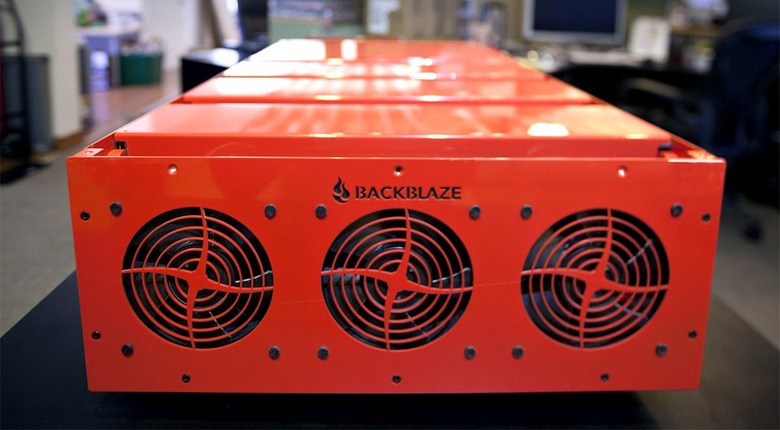
    Backblaze continues to blaze forward with its personal and business backups and cloud storage solutions. The company has experienced steady growth since its conception in 2007 with their personal and enterprise level backup solutions, and more recently with its B2 Cloud Storage options. Backblaze, who has a history of transparency with their products and numbers, has released their Q2 2016 stats for their hard drives. The results are promising, showing that their new 8TB drives are doing well, with lower than expected failure rates. HGST and Seagate make up a majority of their drives, ranging from 2TB to 8TB, but we'll be focusing on the failure rates of the new HGST and Seagate 8TB data drives. While not a definitive measurement, hard drives are typically measured by the "bathtub curve." This curve basically says that hard drives have the highest chance of failure at the beginning of their life cycle (due to manufacturing errors) and at the end of their life cycle (due to typical wear and tear of the drives). Both the HGST and Seagate drives performed exceptionally well, with failure rates of 3.2% and 3.3%, respectively. If these early indicators are any gauge of the quality of these new 8TB drives, then Backblaze is set to have extremely low failure rates through the life cycle of the drives. While the HGST hard drives have a slightly lower failure rate than the Seagate drives, Seagate continues to dominate their cloud storage racks due to the affordability and availability of the drives. Check out the graph below for an in depth look at the 2016 Q2 hard drive failures for Backblaze. Cloud storage continues to grow in popularity and usefulness, and Backblaze continues to grow, as well. But what does the future hold for cloud storage? Backblaze has put together a nice infographic, detailing interesting stats of the present and where cloud storage is going in the future. Check out the graph from Backblaze below.

    By Josiah Motley Read More
  • Interview with Jens Nylander, CEO of fleet management startup, Automile

    Automile, founded in 2013 with headquarters in Palo Alto, recently closed on a funding round totaling $6.2 million. The Swedish startup is addressing enterprise-level fleet management with their app and standalone units designed to track and manage large fleets of trucks and other commercial vehicles. The app itself offers some basic features and tracking, while the standalone unit plugs into your OBD-II (on-board diagnostic, found on almost all vehicles 1996 and newer) and lets you tap into many systems of the vehicle, with the potential to alert fleet management of issues before they arise. But who better to talk about Automile than CEO and founder, Jens Nylander. We had a chance to speak with him about his product, the recent funding round, and some insights into entrepreneurship. Check out the interview below! Thanks for taking the time to answer some of our questions! Care to introduce yourself and your role at Automile? I am Jens Nylander, 36 years old, CEO and founder of Automile located in Palo Alto with another office in Stockholm, Sweden. I founded Automile in 2013 along with two other founders Jacob and Felix. This is my third startup. I was 23 when I started my first company with no external investors. The company JOS had a mission to change how to consume music digitally with small flash based music players but I was too young and despite the overnight success reaching $15,000,000 in revenue the first year, lost control over it. My second one JAYS founded in 2005 which capitalized on the music industry market by creating premium headsets was listed on Nasdaq OMX. For those not familiar, what is Automile? Automile is transforming fleet management experience for businesses of all sizes. Businesses managing vehicles and drivers need to become more productive by making sure they take the right routes, utilize their vehicles enough, stay compliant with local regulations, increase driver safety and improve communication across drivers, management and the customer base. Automile solves all these points either using only the smartphone or using the small self-installed box that fits all vehicles since 1996 along with beautiful apps for the desktop or smartphone. What are some of the different things users can track with Automile? With Automile, businesses can track: Mileage logged by each of their vehicles and use the IRS-compliant report for audit and for maximizing tax deductions. Precise location of vehicles so that they can easily manage customer expectations on arrival time Trips that the vehicles have made so the labor hours can be accounted for Whether a vehicle has been taken outside an unauthorized zone or if the vehicle is stolen Harsh driving and speeding events to ensure the business can keep a check on driving behaviors Duration of time when a specific vehicle idles. This is important as it helps businesses save on fuel costs The vehicles that are being put to good use vs being under utilized so they can accordingly assign vehicles to projects or even get rid of it Emissions to ensure the business can be green and help the environment Automile is an enterprise solution also, right? What kind of fleet management tools can businesses expect? Right. Larger organizations are generally more challenged with increasing productivity and vehicle utilization. Optimizing the operational side of things to keep costs low and manage the large fleet of vehicles is very important to enterprise. These businesses need the tool sets to ensure that they are managing the routes efficiently, maintaining their vehicles proactively, keeping a close eye on driving behaviors, and increasing customer satisfaction. What kind of clients use Automile? Automile works with businesses across all industries and sizes. We are currently focused on supporting fleets of sizes up to mainly 250 vehicles which is the major part of the market. Businesses who use Automile vary from being in construction, manufacturing, landscaping, to plumbing, cleaning services and more. There are multiple ways to use Automile, right? There's obviously the smartphone app, but there's also a standalone unit? How does it work? Yes, that is correct. We started with offering the Automile Box which is a smart, self-installed tracking device that plugs into the OBD II port of a vehicle and is using GSM networks to communicate without the need of a smartphone. By using the sensors of the device, we are capturing all relevant data to empower the businesses and give them powerful insights about their vehicles and driving behaviors. It is a perfect option if they want 'always-on' tracking and we ship it to their door step. No installation needed and the device has an integrated SIM card and data plan is included that can be used in 54 countries. Businesses heavily using smartphones in their business can choose to use these as a replacement or complement to the Automile Box. The smartphone sensors will still deliver accurate data but the phone always have to be in the actual vehicle. You recently completed a funding round, how did that go? What do you want to highlight? We were planning to raise later during 2016 but during second quarter we started to do some pre-marketing activities for the coming funding and we got a number of investment offers already then. We did choose to work with Jason Lemkin which led the round. It was instantly over-subscribed by all other participants and we had to stop at $6.2M to minimize further dilution for the founders since we are already strong financially. Jason Lemkin and his new SaaStr Fund has led this investment along with Twitch founder, Justin Kan, Skype founder, Niklas Zennström, and Pingdom founder, Sam Nurmi. Existing investors Dawn Capital and Christoph Janz, an early-stage investor in Zendesk, and his Point Nine Capital fund also joined the round. We are very excited to have these terrific industry leaders backing us and with their support and the growth momentum we have today, Automile is well positioned to gain significant market share. Thanks for taking the time to answer some of our questions, anything you'd like to close with? As a serial entrepreneur with 13 years of experience I have been facing all kind of challenges that have converted into learnings. My most important learning can be summarized into a quote by Jason Lemkin: "a low burn rate is one of the greatest freedoms known to mankind". The last few years I have seen more and more startups that have had great ideas but very little focus and knowledge how to create sustainable revenues with a company that can show profits and survive on its own. This means these startups are eventually burning their money fast only holding thousands or millions of users but still they don't really know how these users would actually mean long-term revenue and converting the company to an actual future profitable company. It's a dangerous path, both for investors and founders and I encourage every founder to think about how to create yearly revenue and that the company one day should be profitable. We'd like to thank Jens for taking the time to answer some of our questions. If you'd like to learn more about Automile, make sure to check them out here.

    By Josiah Motley Read More
  • QA-as-a-Service, Rainforest QA, launches Rainforest Mobile

    San Francisco startup, Rainforest QA, wants to change the way app and web developers look at quality assurance. What is typically done in-house, or outsourced to dedicated teams, can be time consuming, expensive, and resource intensive. Today, Rainforest QA launches Rainforest Mobile, with a focus on iOS and Android app testing. "Exploratory and manual QA models are super slow, with painful management, turning QA into the bottleneck of development and shipping," said Fred Stevens-Smith, CEO of Rainforest QA. "Instead, we give you the framework to write test cases - and the execution engine to get results - from real devices, tested by real humans." Rainforest Mobile is powered by the Amazon Device Farm, a service that allows testing and interaction across multiple platforms, including iOS, Android, and web apps, and is hosted by Amazon Web Services. Thanks to a crowdsourced pool of over 50k testers through Amazon Device Farm, developers can test for bugs in as little as 30 minutes, helping reduce the bottleneck typically associated with quality assurance. With Rainforest Mobile, development teams will not have to write or maintain automation scripts, and it will fit right in with existing workflows, saving time and money. The subscription model allows for increased bandwidth and scalability, delivering fast results without a huge jump in pricing. Rainforest was founded in 2012 and has received $16 million in funding to date. Find about more about Rainforest here.

    By Josiah Motley Read More
  • 4 IoT Gadgets that should be on your radar

    The Internet of Things has helped take gadgets and accessories to the metaphorical next level. No longer is a gadget just a gadget, but instead a wealth of information and usefulness that can give insights to your electricity bill, your driving habits, sleep patterns, and many other things. While many industries and locations can benefit from the IoT, your own house can start seeing benefits almost immediately. We've compiled four of the best IoT gadgets for your home currently on the market, check them out below! Sense: Sense, from San Francisco startup Hello, is the smart ball that monitors your sleeping habits and gives you insights into your sleeping conditions. A night of good sleep can be the difference between having a good day and hating your life, so anything that can help you stay well rested is a gift. Sense monitors things like temperature, sound levels, and humidity to let you know what needs to be changed in order to get a great night of sleep. The main unit which monitors room conditions is used in combination with the Sleep Pill, a small sensor that clips to your pillow to monitor your movement throughout the night. Upon waking, Sense sends all of your sleeping data that it has been compiling throughout the night to an app on your phone, and gives you insights into your night. You can look at all the data individually to see what needs to change or you can look at your overall sleep number which takes into account all of the different factors. Nest Indoor Cam: One of four products in the Nest stable, the Nest Indoor Cam acts as a monitor and security system for your home. It includes a night vision mode and a speaker, as well. Using the Nest app, users can set it up to alert them of movement or sound. The camera can also be used as a livestreaming monitor, allowing users to periodically check in on their home, an especially nice feature if you have kids or animals at the house while you're away. The unit does not allow playback, however, for that you'll need to invest in the Sense Aware monthly subscription. Tado: Tado is the smart system that monitors the temperature in your house or apartment, saves you money, and makes sure it feels perfect for when you get back home. Requiring two different units, one for air and one for heat, Tado works with many existing products so there's a good chance you will not even need to update anything in order to use these. The "smart" part of Tado comes in how it uses your phone and location to turn off and on. In a rush leaving for work? No worries, Tado will turn down your heating and air when you're leaving the house, saving you money. It will even monitor your location and speed when returning home in order to turn on at the perfect time. Philips Hue system: The Philips Hue lights are nice on their own, but really excel once connected to a Philips Hue bridge and app. Using the bridge and app you can connect your whole house with the Hue system to match your mood, turn on and off at specific times, and even allows for 3rd party apps to connect with your entertainment center to give you relevant, ambient light while watching movies or gaming. And the best part? The Philips Hue system doesn't require any complicated wiring, just simply replace your current bulbs with Hue. If you're looking to take your house to the next level, these four products are a great place to start. While initial costs may seem high, they have the potential to pay for themselves in the form of lower utility bills. Sense, on the other hand, might not save you money, but a good night's sleep is invaluable.

    By Josiah Motley Read More