Galileo
Latest
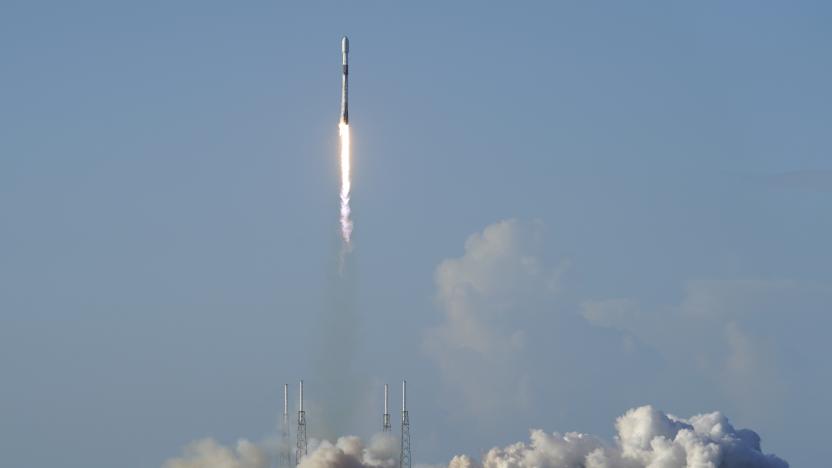
SpaceX will launch ESA navigation satellites amid delays with the EU's own rockets
SpaceX has struck a deal with the European Space Agency (ESA) to launch four of Europe's Galileo navigation satellites into orbit.
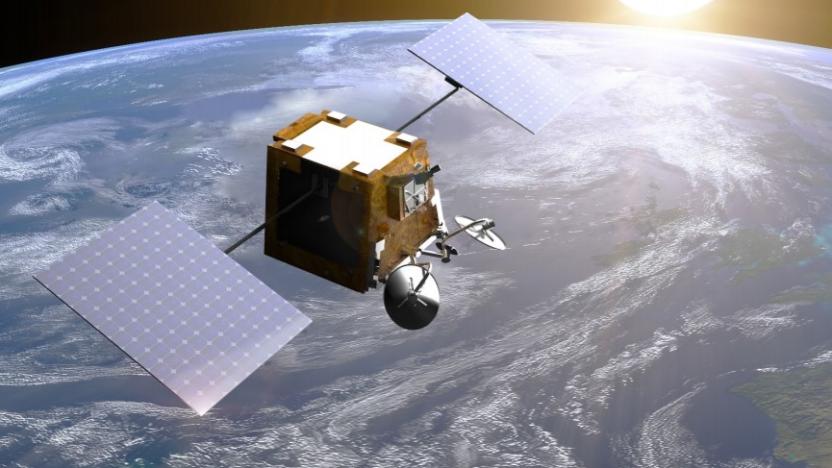
The UK buys a 45 percent stake in broke satellite startup OneWeb
It's part of the government's post-Brexit plan to replace the EU's sat-nav system.
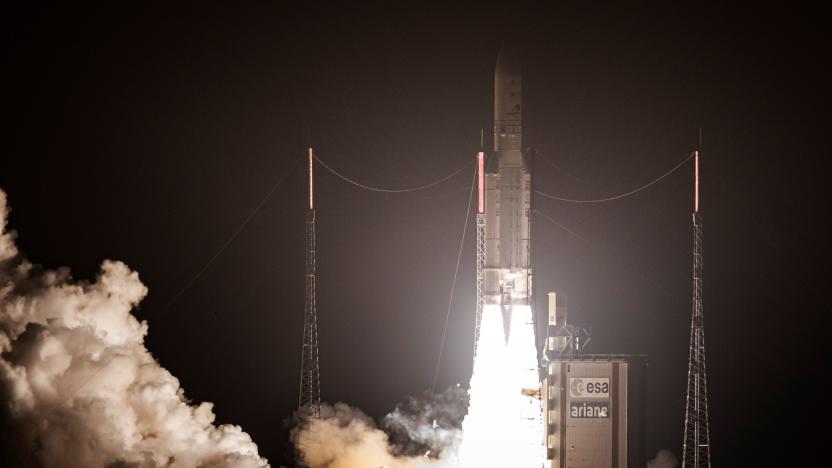
EU will speed up its spaceflight plans in response to SpaceX and China
The EU's space chief has promised to accelerate plans due in part to pressure from SpaceX and China.

Europe's sat-nav network crippled by 'technical incident'
Europe's Galileo satellite network, freshly approved by the FCC for US smartphones, has suffered a serious outage. The system has been down since Friday due to what officials at the European GNSS Agency (GSA) have described as a "technical incident related to its ground infrastructure." That means users with newer smartphones that support Galileo will be relying on GPS, Russia's Glonass or the Chinese Beidou networks for navigation, instead.
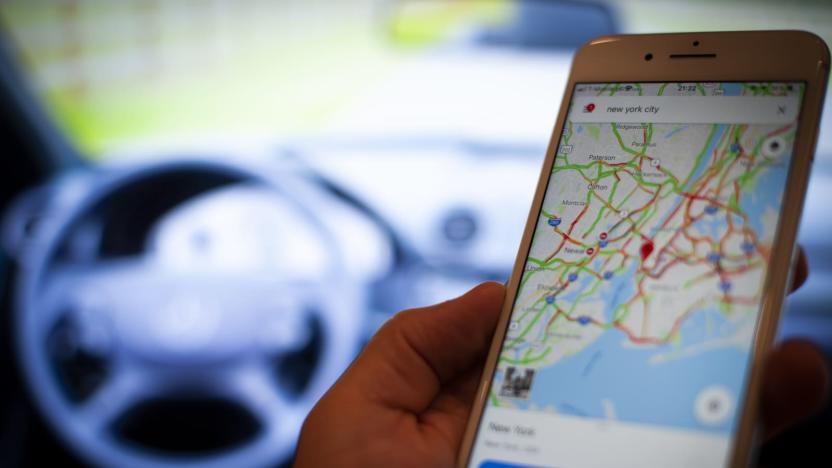
FCC ruling will help make smartphone GPS more accurate
GPS stands for "global positioning system," which is slightly ironic since it's owned and operated by the US Air Force. However, the FCC has just made a move to open up satellite navigation beyond America's borders. A new order means your smartphone can also use Europe's Galileo system, which will make sat nav faster and more accurate, the regulator said.

UK reportedly plans its own satellite navigation system
Now that the UK likely won't be involved in the EU's Galileo positioning satellites, it's in a tough spot. How does it get the most accurate navigation technology it can once Brexit is official? By building its own satellite network, apparently. Sources talking to The Telegraph claim that Prime Minister Theresa May has ordered the creation of a UK-built satellite positioning system, with up to £100 million (about $128.5 million) set aside for "mapping out" how it would work.
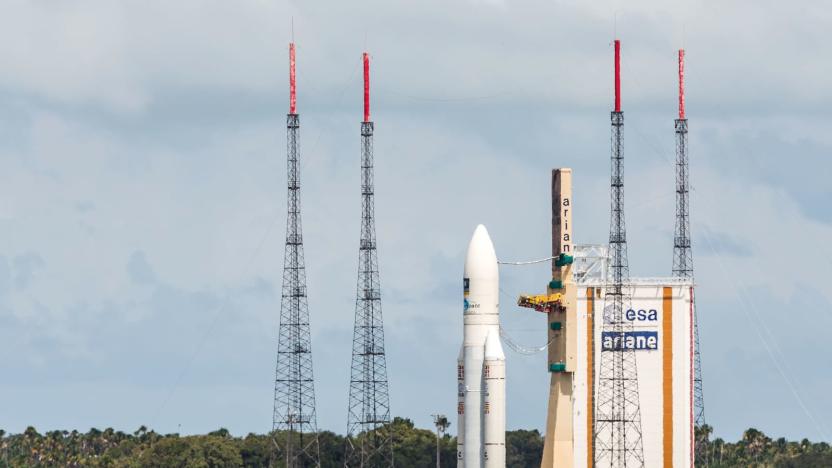
UK won't be involved in Europe's Galileo satellite navigation program
Among the many projects being shaken up by Brexit is the European Union's Galileo program, a satellite-based navigation system along the lines of the US' GPS. It's scheduled to be operational in 2020 and will be used by citizens, military and governments. Though the UK has already put £1 billion toward the project, the country's decision to leave the EU has put its involvement with the Galileo program up in the air -- the EU has been clear that the UK might be shut out from the project since fully including a non-member state would threaten the security of the system as a whole. Now EU members have voted to do just that.

UK may want a refund if it's cut out of Galileo GPS project
Earlier this year, the European Commission revealed that Brexit might jeopardize the UK's involvement in the Galileo project, which is Europe's endeavor to build a their own version of America's GPS system. Now, Reuters reports that Britain may demand its money back if it is indeed cut out of the Galileo project.
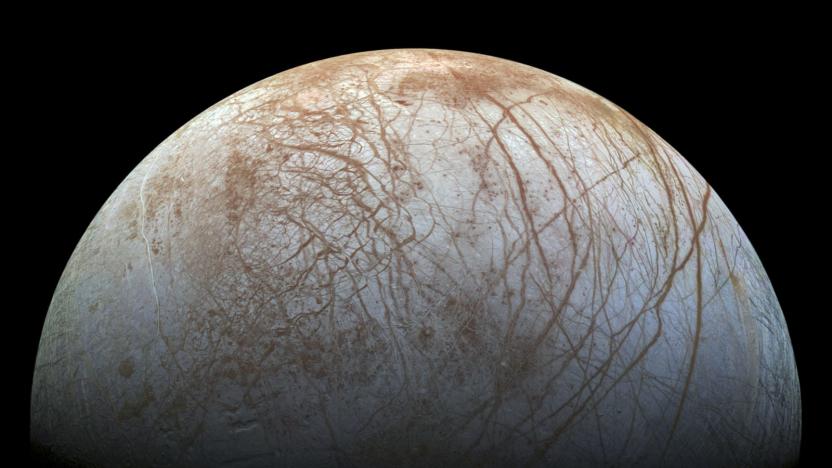
Decades-old data helps confirm Europa is geysering water into space
Over the past few years, the Hubble Space Telescope has observed what looked to be plumes of water vapor shooting from the surface of one of Jupiter's moons, Europa. Now, scientists have looked over decades-old data from Galileo and discovered that the spacecraft actually got close to one of these plumes during a flyby. This is the first up-close measurement we have of these eruptions, and the best evidence yet that Jupiter's fourth-largest moon is indeed shooting water into space. The findings are detailed in an article in Nature Astronomy, which was released today.

Brexit may exclude UK from the EU's GPS satellite program
Europe plans to exclude the UK from its GPS-like Galileo satellite program because of Brexit, and Britain isn't happy about it. In a letter to the UK government, Europe said that UK businesses may no longer be able to bid on the project and the UK military might not be able to use the system. That's because the UK will no longer be part of the EU on March 29th, 2019, so Galileo's security would be "irretrievably compromised" if it continues to participate, the EU said.
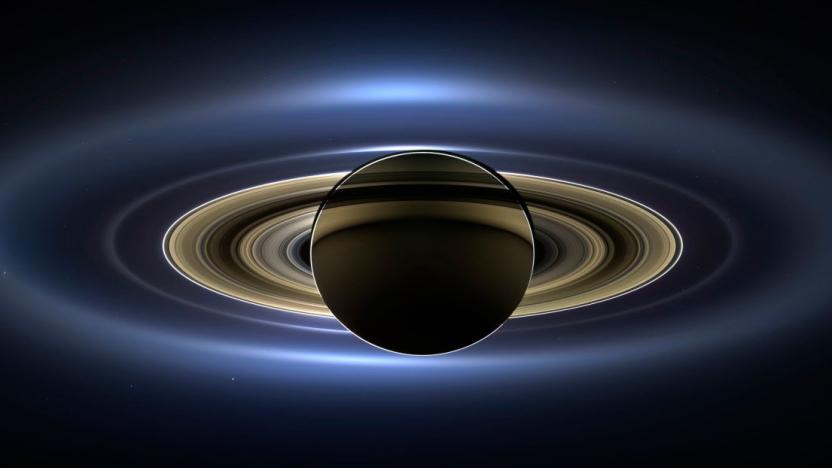
A lawsuit almost stalled NASA's Cassini mission
Capt. Scott Kelly wasn't kidding when he famously quipped that "space is hard." Even getting to the launch pad can prove to be a daunting challenge. Take the Cassini mission to study Saturn, for example. Despite an investment of $3.4 billion and nearly a decade of development, Cassini wound up being very nearly scuttled at the last minute by protesters who thought they knew better than a federal agency that has put multiple men on the moon. Geez guys, it was just 73 pounds of plutonium riding aboard that Saturn orbiter -- it wouldn't have caused that much damage had something gone horribly wrong at launch.
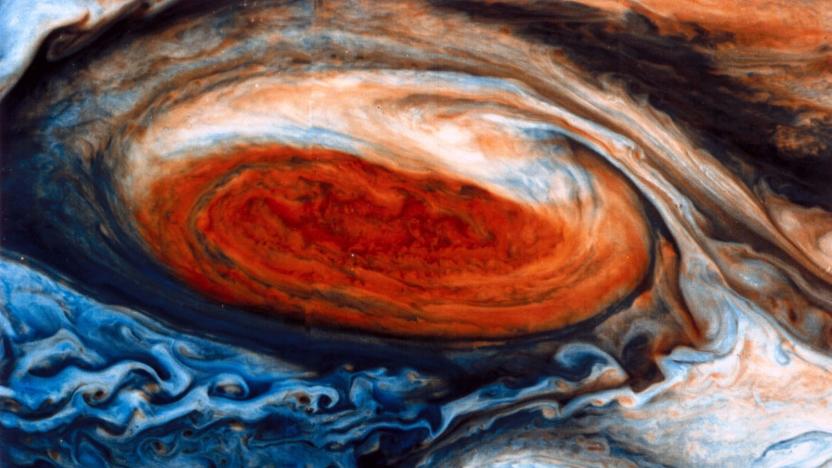
NASA seeks Jupiter's secrets with historic spacecraft flyover
Every planet in our solar system is famous for something. Saturn has its rings, Mars has its soil, Uranus has that unfortunate name, and Jupiter has the Great Red Spot: a titanic storm that has been spinning for more than 350 years. Though we've peered at the distant gas giant's iconic feature since the 1830s, we still know little about its inner workings. That could change on Monday night, when the Juno spacecraft flies directly over the Great Red Spot for the first time in human history.

Intel has less competition against Raspberry Pi
Say goodbye to Intel's Edison, Joule and Galileo compute modules. The company has unceremoniously canceled its developer kit lineup, which were meant to give it a foothold in the burgeoning Internet of Things arena, ZDNet reports. Additionally, Intel also canceled several of its Recon Jet smart glasses products, though that's less of a surprise. With Galileo, Intel wanted to compete directly against the ARM-powered Raspberry Pi, while Edison shrunk down a full development kit to the size of an SD card. Joule, which launched last year, was its most powerful compute module yet.

Saturn and Jupiter's moon burps bode well for distant life
Scientists recently took a closer look at data over a decade old and concluded that two moons orbiting Saturn and Jupiter might have environments that foster life. During an October 2015 flyby of the ringed planet's moon Enceladus, the probe Cassini was hit by gaseous plume, which was likely a hydrothermal vent breaking through the iced surface. Scientists theorize that the spray is evidence of chemical energy for life to feed on. Thanks to sporadic evidence of plumes on Jupiter's moon Europa, NASA has announced that two locations in the solar system might support living organisms.

ESA wants to know why Galileo satellites' clocks stopped working
Something strange is going on with the Galileo satellites, and the European Space Agency wants to find out what's causing it. Apparently, ten atomic clocks on board five of the 18 navigation probes already in orbit have malfunctioned, and it could force the agency to delay the scheduled launch of four more satellites in August. Satellite-navigation systems like ESA's Galileo need highly precise atomic clocks to work properly, since they have to broadcast their signals at the same time. Broken clocks will hinder Galileo's ability to "deliver real-time positioning accuracy down to the meter range" like the ESA promised.

MIT's 'Galileo' matches humans at predicting how things move
The human brain is able to quickly predict how objects will react in any given scene. When you drop a ball, for instance, you have some idea of how high it'll bounce based on its materials, size and the surface it's interacting with. Scientists are now trying to replicate this "intuitive physics engine" with technology and, in basic scenarios, are finding some success. Researchers at MIT's Computer Science and Artificial Intelligence Lab (CSAIL) have developed "Galileo," which uses a combination of videos, 3D physics modelling and deep-learning algorithms to predict simple experiments "with an accuracy comparable to human subjects."

Researchers use satellite launch blunder to test relativity
Pop quiz, hotshot. You've just launched a pair of GPS satellites into the wrong orbit, rendering them useless for navigation. What do you do? If you're the European Space Agency (ESA), you re-purpose them to precisely test Albert Einstein's theory that clocks slow down near heavy objects. Since the Galileo satellites were placed in elliptical, rather than circular orbits by Russian Soyuz rockets, they pass closer to Earth at certain points. Our planet bends the fabric of space-time, so the super-precise atomic clocks on-board the satnavs will theoretically slow during those times, then speed up again when the craft move away.

China gives its homegrown GPS rival another big push
Alibaba has teamed up with Norinco, a Chinese arms manufacturer, to roll out global positioning services using China's homegrown alternative to GPS. The two companies have sunk roughly $310 million into a new joint venture that'll harness Beidou's navigation satellites to provide mapping data to local businesses. It's another big step on the road to the country ending its reliance upon GPS, and comes two years after the service was opened up to heavy-duty transport vehicles and smartphones. It may not affect us outside of Asia-Pacific just yet, but with Beidou set to become available for all global users by 2020, it's worth keeping an eye on how good this new-fangled offering turns out to be. [Image Credit: ChinaFotoPress via Getty Images]

NASA space telescope discovers Earth's closest rocky neighbor
NASA researchers working with the Spitzer Space Telescope announced on Thursday that they had indeed found the closest rocky exoplanet to our own. It's a tiny burg called HD 219134b that's just 21 light years from Earth in the Cassiopeia constellation, near the North Star. It was first spotted with the 3.6-meter Galileo National Telescope in the Canary Islands before being confirmed with the Spitzer. Even though the planet is larger than Earth, researchers only noticed it as it transited across the face of its parent star (astronomers look for the star to dim then brighten again as evidence of an orbiting planet). Unfortunately, there's basically zero chance that we'll find aliens there as 134b orbits far too close to sustain life.
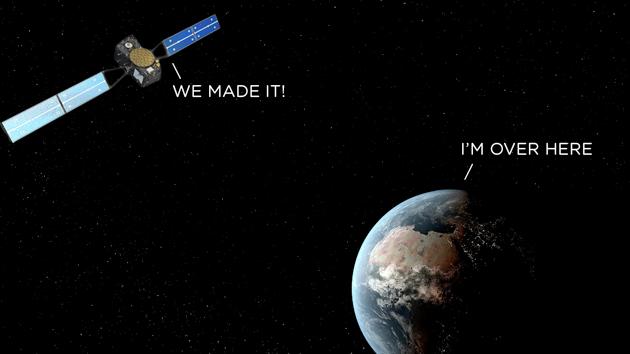
Frozen fuel lines made those European satellites go off course
Remember those two European satellites that went spectacularly off-course in August? Well, it turns out that the reason the vessels entered into the wrong orbit was due to frozen fuel lines. Space Travel reports that pipes containing the Russian Soyuz rocket's (which put the satellites into space) propellent were placed too close to some pretty frigid helium lines, which in turn restricted the flow of fuel to a pair of altitude control thrusters and subsequently caused a lack of power. The good news is that this "design flaw" is apparently fixable easily and immediately for future missions. That won't help the Galileo GPS satellites for now however, because they don't have enough fuel to reach the intended orbit. Assuming there's enough money to go around there's always next time, at least.


