Conflict
Latest
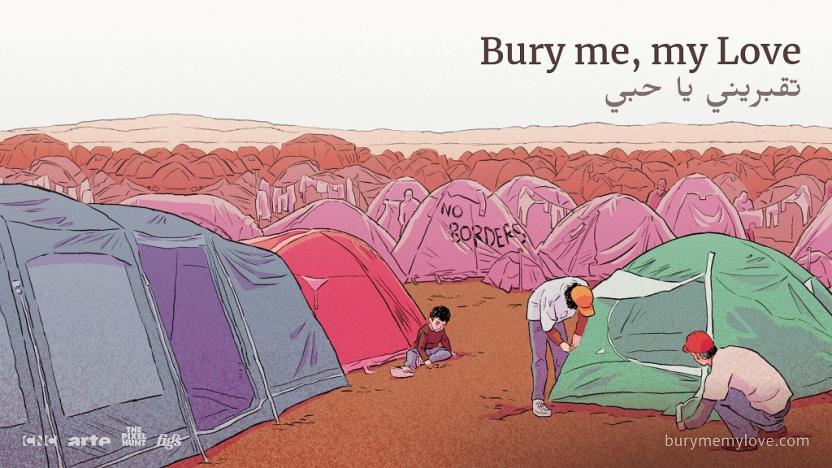
'Bury Me, My Love' brings a Syrian refugee's tale to your phone
After creating a big buzz within the indie gaming community, interactive dialogue-driven game Bury Me, My Love launches today on iOS and Android. Based on real life stories, the game tells the tale of Nour and her husband Majid, both caught up in the violent and dangerous Syrian conflict. Nour has decided to flee their war-torn country while Majid stays behind to care for elderly relatives. With only a smartphone to communicate with her husband, she begins her perilous journey, telling Majid a Syrian farewell saying: "Bury me, my love" (which means, in essence, "don't die before me").

Star Wars: The Old Republic sets the stage for Makeb
The war between the Empire and the Republic in Star Wars: The Old Republic has been two-sided thus far. Sure, there have been some minor incursions by other powers, but it's fundamentally been a conflict between those two sides. Makeb in Rise of the Hutt Cartel represents a major departure from that dynamic, and the latest development blog focuses on the changing face of the galactic conflict. And it's more complex than just the addition of the Hutts. The Hutts certainly play a major role, of course, but part of the reason for their presence is that the ongoing war makes open conflict seem more appealing to groups like the Hutt Cartel. Meanwhile, the Republic is finally in a position where it's not on the back foot compared to the Empire, meaning that the people in charge have to balance fighting the Hutts and maintaining the advantage. And amidst all of that, there's the planet Makeb itself, which is in the throes of severe ecological disaster. There's a lot going on in the expansion planet, enough to turn what seems like a two-sided conflict into a multi-faceted melee.

Storyboard: One of us is going down
You and your group of roleplaying companions need something new to do. You've grown tired of sitting around talking about problems in the outside world or engaging in a non-stop soap opera drama wherein someone is always sleeping with someone else inappropriately. By complete coincidence, you and your companions all appear to be heavily armed and armored, leading to an excellent suggestion -- you should go out and get involved in a conflict! A fracas of some kind! What a concept! Sarcasm aside, long-running conflicts are a lot of fun when handled right. While I've talked about them in brief before, today I want to look at a handful of common conflict types and offer some tips about how to run them without tears. If you think drama can spill over into OOC channels when it's just a matter of pretend romances being spurned, you don't even want to know what happens when the knives come out.

Storyboard: Community sites and what they can do
No MMO, to date, has a system to facilitate roleplayers interacting with one another outside of actual roleplaying. There are hubs you can haunt, there are things you can do, and there are addons in the games that support them, but at the end of the day, all you can do is throw your hat into the ring and hope against hope that no one is going to look at you strangely. Odds are good that you don't really want that experience outside of a high school dance and quite possibly not even then. So you need a way to know that you're getting in good with the roleplayers. In short, you need a community. I've been thinking of late about what community sites should be doing and what they actually can do. It's a point of contention because fostering a solid community relies strongly on having a central point of congregation, but trying to build a single community for an entire game's roleplayers is exceptionally difficult.

WildStar Wednesday details the split between the Dominion and the Exiles
When you're not dealing with the chaos and madness of the planet Nexus in WildStar, odds are good you'll be dealing with the game's main factional conflict between the Dominion and the Exiles. But how did this split come to pass? What are the Exiles exiled from in the first place? The latest WildStar Wednesday tackles exactly this issue, explaining how one man led a rebellion against the largest military power in the galaxy and won -- or at least came close to winning. The Exiles, as it turns out, were originally citizens of the Dominion's capital planet, Cassus. Unpopular Dominion policies led to riots on Cassus, which culminated in the retired Admiral Serrick Brightland stealing his flagship from drydock and leading several other traitors on military raids against Dominion holdings. Brightland succeeded in hurting the Dominion, but without a home base to fall back on, his fleet was forced to flee, becoming the Exile fleet scouring the fringe of the galaxy for a new home. Take a look at the full article for details about Brightland's last stand and the core of the conflict between these two factions.

Hyperspace Beacon: Roleplaying conflict in SWTOR
Like many of you, I'm eagerly awaiting the launch of Update 1.5 for Star Wars: The Old Republic, which will hopefully happen next week. Although I have been on the test server and tried out the new content, I don't want to give my impressions until it's officially launched. So this week, I've decided to address an issue I've seen crop up more and more in the roleplay community that has nothing to do with the pending game update. In any good story, there is conflict -- physical, interpersonal, or otherwise. In MMO roleplay, a good chunk of conflict turns physical. After all, most of our characters are highly skilled warriors and other combat specialists, and physical conflict is the natural course. That means that roleplayers then have to be highly skilled at PvP if their characters are to be highly skilled, too, right? Don't get me wrong, I love PvP, but this supposition always rubbed me the wrong way, especially in a game like TOR where there is a large disparity between PvE skills and PvP. So what kinds of physical conflict resolutions are there if it's not straight-up PvP? And doesn't the dueling system in TOR limit itself to one-on-one dueling? How do you resolve that issue? Excellent questions. I'm glad you asked. Let's dive in.

Know Your Lore: The final boss of Mists of Pandaria
The World of Warcraft is an expansive universe. You're playing the game, you're fighting the bosses, you know the how -- but do you know the why? Each week, Matthew Rossi and Anne Stickney make sure you Know Your Lore by covering the history of the story behind World of Warcraft. We've heard various and sundry conflicting tales about Mists of Pandaria, tales of various pandaren groups, tales of faction warfare, tales of a warchief's downfall. But in and among all of the tales, one theme pervades, one thing stands out as something people point to in dismay. This thing is the lack of a final boss that is a powerhouse in Warcraft lore, something that we've had with every prior expansion. Illidan, Kil'jaeden, the Lich King, and Deathwing were all prominent figures in Warcraft lore before we rose up to defeat them. They were terrible threats to our world, threats that had to be dealt with. But in Mists of Pandaria, we don't have the reassuring face of a villain to charge after. We don't have a major lore figure to take care of. We have no idea what we're facing other than some rumblings about the warchief's downfall -- and even then, we're not sure if those rumblings are correct. For the first time in World of Warcraft's history, we don't have an easily recognizable, high-profile figure to contend with. Or perhaps we do. We have to deal with one of the greatest threats we've ever seen. We just aren't looking closely enough.

Intel wants to have conflict-free processors by the end of 2013
Intel had already promised that it would avoid using conflict minerals, and now it's giving itself a more concrete timetable for that to happen. It wants to have at least one processor that's proven completely conflict-free across four key minerals -- gold, tantalum, tin and tungsten -- by the end of 2013. Lest you think Intel's not taking swift enough action, it wants to reach the tantalum goal by the end of this year. The effort's part of a wider array of goals that should cut back on the energy use, power and water use by 2020. Sooner rather than later, though, you'll be buying a late-generation Haswell- or Broadwell-based PC knowing that the chip inside was made under nobler conditions.

Diablo III shows off the wrath of angels
Diablo III is fast approaching release in a week, but even now it's important to remember the roots of the series. The game's lore has always been based on the conflict between the High Heavens and the Burning Hells, and rather than simply create a trailer narrating that fact, Blizzard chose a more unique route. The new video available is simply titled Wrath, but it contains some important information about the lore at a pivotal moment in the war between angels and demons. Animated by Titmouse and directed by Peter Chung (best known for Æon Flux), the six-minute video is brief, but it should leave a last impression regarding the nature of the game's conflict and the stakes involved. Even if you're not planning on grabbing the game on launch in a week, it's well worth watching just for the animation alone, and if you are grabbing the game, it jumps right up to being a must-see.

Nokia establishes stance on conflict minerals in formal policy
Recent weeks have seen a swell of interest in corporate responsibility, particularly with regard to technology manufacturing and supply chains. Last month, Apple CEO Tim Cook affirmed his company's commitment to ethically and environmentally sound practices, evoking sentiments that were echoed today in a similar announcement from Nokia. Seizing the opportunity to establish some goodwill among socially conscious consumers, the Finnish manufacturer has just released a policy outlining its philosophy on conflict minerals -- metals like gold, tungsten and tin that have played a direct role in fueling civil violence and unrest in the Democratic Republic of Congo. In the document (linked below), Nokia acknowledged that it doesn't play a direct role in obtaining these materials, but emphasized its strict traceability requirements. All suppliers, Nokia says, must provide detailed information on the sourcing of its metals, going back to the smelter phase, at a minimum, and even to the mine itself, if necessary. The company also highlighted its adherence to guidelines established by the EICC-GeSI Extractives Work Group, which both Apple and Intel have already joined. Granted, it's impossible for a single company to wipe out civil strife and human rights abuses in one fell swoop, but with this codified approach, Nokia hopes to at least "increase transparency, ensure responsible procurement by our suppliers and sub-suppliers, and drive positive change."

Microsoft showcases new copy, move, rename functions in Windows 8 (video)
Windows 8 has yet to see the light of day, but new details on the forthcoming OS continue to emerge. The most recent preview once again comes courtesy of Microsoft's Building Windows 8 blog, where the company has posted new information on the software's copy, move, rename and delete functions. With the new system, all pending copy operations will appear in one dialog, where users can pause, stop and resume any job, while monitoring data transfer rates on a real-time throughput graph (pictured above). Redmond's developers have also made it easier to resolve file name collisions, with a new dialog that displays thumbnail images of source files directly alongside preexisting documents of the same name. This allows users to decide which files they'd like to copy or replace by simply hovering their mouse over the image to see its file path, or double clicking it to open in full view. For more information, check out the demo video that's waiting for you after the break.

Metaphor recognition software aims to distinguish friend from foe
While it's only right that people be protected from bad poetry, this could be taking things a tad too far. Intelligence officials at the Office of Incisive Analysis (no, really) have determined that metaphors could be of vital significance to national security. By, well, incisively analyzing the way people use metaphors in everyday conversations, they believe they can reveal "underlying beliefs and world views" -- such as negative feelings towards a particular country. Now they're calling on civilian scientists and academics to help them do this automatically using pattern recognition and supercomputers. Of course there's always the risk that smart terrorists will switch to using similes instead.

The Daily Grind: What's your favorite PvP memory?
It's hard to compare with the excitement of PvP. Sure, a well-scripted PvE encounter is exciting, but it's scripted. The same thing will always happen under the same conditions. But in a PvP battle, anything goes. Whether you're taking part in a battle over an open RvR objective in Warhammer Online or you've just come across a hostile player in Mortal Online, playing against another human being introduces new variables and new behaviors that you can't get against a computer opponent. And while the fights can often be harder as a result, the stories stick with you longer too. Maybe you fought off a would-be ganker and lived to tell the tale. Maybe you met an equal match on the road and managed to get the upper hand. Or maybe you waited and practiced to face off against a rival player only to defeat him when it counted the most. Whether in a PvP-focused game like Age of Conan or a largely PvE environment like Lord of the Rings Online, you can have some truly memorable experiences against other players. So what's your best PvP memory? Every morning, the Massively bloggers probe the minds of their readers with deep, thought-provoking questions about that most serious of topics: massively online gaming. We crave your opinions, so grab your caffeinated beverage of choice and chime in on today's Daily Grind!

Faxion Online commercial gets to the heart of conflict
"We know conflict," a new ad for Faxion Online says, and boy do they ever! The tongue-in-cheek spot shows a fictional (or is it?) day at UTV True Games, where a frisky pirate and an arrogant ninja happen to walk into the same elevator. What happens next can only be seen, not described, although we would not blame you for weeping out of awe. The commercial highlights the spirit of PvP that lies at the core of Faxion Online, an upcoming MMO that pits angelic players vs. their demonic counterparts. The same sense of humor that comes through in this ad runs rampant throughout the game, as players war over zones themed after the seven deadly sins. Currently, Faxion is in open beta. You can watch the full carnage of this video after the jump.

Just say no: Apple and Intel stop using conflict minerals
While the US government hasn't issued an outright ban against the use of 'conflict minerals' coming from the Congo, it has passed a law that will require companies who use them to tell all of us when our gadgets have been paid for (in part) with blood. Looks like Apple and Intel weren't too keen on the bad PR that would come from such disclosures, and joined the Electronic Industry Citizenship Coalition and its Conflict-Free Smelter program. The program requires mineral processing plants either prove that they don't fund the ongoing hostilities in central Africa or peddle their war-supporting wares elsewhere. For now, that means that the folks in Cupertino and Santa Clara will have to find other sources for the three Ts (tungsten, tin, and tantalum) needed to sate our technological appetites.

Verizon Wireless CEO 'not interested' in buying Sprint, won't waste time opposing T-Mobile / AT&T merger
Well, isn't this just something. It only took Sprint a matter of hours (on a Sunday evening, no less) to push out a detailed list of gripes concerning the proposed AT&T / T-Mobile USA tie-up, but Verizon Wireless won't even be wasting its time. According to an interview with Reuters ahead of CTIA, VZW CEO Daniel Mead confessed that his company wouldn't be lobbying the FCC or any other entity to stop the inevitable, noting that "anything can go through if you make enough concessions." That's a pretty bold quote in and of itself, but of course, this is coming from the man who made an awful lot of those so-called concessions in order to pick up Alltel a few years ago. Continuing on, he blasted out this gem: "We're not interested in Sprint. We don't need them." In other words, there's nary a chance in Hades that America's current largest wireless carrier will be making a bid to keep it that way by shelling out for The Now Network. Why? Quite simply, he'd rather focus on being the most profitable US carrier rather than the largest. Not exactly what you'd expect coming from Verizon Wireless' CEO, but hey -- if he's down for the competition, we're down with watching from the sidelines.

Google and China clash again, this time over Gmail access
Last week we noted, with a growing sense of disquiet, how China was busying itself with locking out VPN access within its borders and, seemingly, preventing people from using their Gmail accounts. Google has now given a public voice to those concerns, noting that "there is no issue on our side. We have checked extensively. This is a government blockage carefully designed to look like the problem is with Gmail." Other Google tools, like the Person Finder for Japanese tsunami survivors, have also exhibited intermittent issues. China's goal in these attacks is reportedly to stifle online revolutionary chatter inspired by Egypt's successful democratic revolt, though the nation's said to be taking a more clandestine approach than previously by making its alleged sabotage appear like a software problem instead. Guess it's time to prepare ourselves for another battle of wits between these two.

Time Warner, Disney and News Corp. bigwigs speak up against FCC stipulations in Comcast-NBC deal
Hello, inevitable. It simply had to happen, and now, it is. As Comcast, NBC and the FCC attempt to work out stipulations over Comcast's proposed 51 percent buyout of NBC Universal, a smattering of major media companies are paying close attention to the play-by-play. Naturally, the precedents that are set from this deal will affect future agreements of this caliber, and lobbyists for both Disney and News Corp. (as well as Time Warner CEO Jeff Bewkes) aren't standing over on the sidelines any longer. All three outfits have reportedly been "voicing their concerns this week with the FCC, worried that such conditions could undermine their own efforts to profit from the nascent online video industry." We're told that the media mega-corps are worried that the rules -- if hammered down -- could interfere with ongoing negotiations with online video providers, and in turn, give them less leverage to monetize and control their content on the world wide web. In other words, if NBC Universal is forced to provide content fluidly to all ISPs (and not just Comcast), what's to say other content makers and internet providers wouldn't also be forced into similar deals, regardless of whether or not they're involved in takeover negotiations? Needless to say, we're nowhere near the end of this journey, and while the nuts and bolts are pretty dry to think about, the outcomes could have a serious impact on our future viewing habits.

FCC proposes rules for NBC-Comcast deal
As you can imagine, the thought of a marriage between a broadband / cable TV service provider and a content provider for television and movies has more than a few folks concerned, which is why it's taken a while for the FCC and its erstwhile chairman Julius "Caesar" Genachowski to draft the conditions under which it would let Comcast snatch up 51 percent of NBC Universal. According to the Wall Street Journal, the FCC wants to require that Comcast make any content owned by itself and NBCU available to competitors (including streaming video providers) "at reasonable, nondiscriminatory terms." Additionally, Comcast will be barred from prioritizing its own video streams above others or interfering with rival Internet traffic. Of course, without the actual announcement, it's hard to know what impact this will have on everyone involved (especially Hulu), although with any luck the actual proposal will see the light of day soon enough. Even then, it will need to be approved, which could happen early next year.

Regulators push for tough conditions in Comcast / NBC deal, aim to protect internet video
Is it the deal that'll never go through? Some might hope. For the better part of this year, Comcast has been jonesing to pick up a 51 percent stake in NBC Universal (for a cool $13.75 billion), but as you'd expect regulators have been poking and prodding the arrangement from just about every angle. The potential antitrust issues go on for miles, and now officials are paying particularly close attention to how the deal could shape the future of internet video. As you may or may not know, NBC holds a 32 percent stake in Hulu, and in theory, a Comcast buyout would enable it to limit access to other ISPs or force Comcast internet subscribers to also pay for a programming package in order to have access. A new AP report on the topic mentions that the US government is considering forcing Comcast to sell NBC's Hulu stake as a stipulation for the deal to go through, and moreover, they may insist that Comcast provide online access to NBC Universal's content library without a cable sub. Currently, Time Warner Cable requires users to sign up cable in order to access ESPN3 -- a nasty, strong-arm tactic at its finest -- and if the Fed gets its way, it could also set a new precedent for other operators. Needless to say, there's quite a bit to be sorted before NBC bigwigs take on corner offices at Comcast, and there's an awful lot at stake along the way.


