fuel
Latest
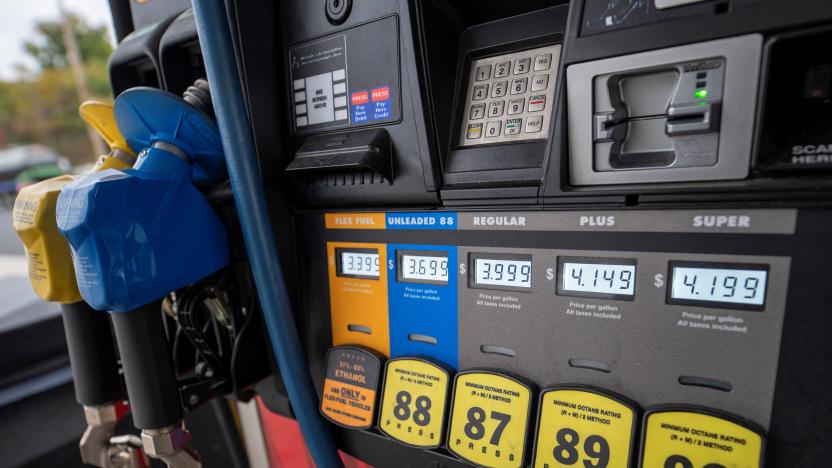
Hitting the Books: Why America once leaded its gasoline
Automakers have been fighting to eliminate Engine knock since the days of the Model T. Their initial attempts to fix it, as University of Manitoba's Professor Vaclav Smil explains in "Invention and Innovation," went over like a lead balloon.

Formula 1 says it's on schedule to switch to fully sustainable fuel in 2026
It has tested dozens of different fuel blends as it works toward a net-zero carbon footprint.

Delivery apps are stepping in to help drivers hit by high gas prices
High fuel prices brought on by Russia's war have gig workers feeling the financial strain. Now delivery and ridesharing apps are stepping up to help ease the pinch at the pumps.

Scientists turn CO2 into jet fuel
Scientists have turned CO2 into jet fuel, hinting at a future where aircraft could have net zero emissions without relying on electric motors.

Boeing's tanker drone completes first flight with refueling pod
Boeing has flown its MQ-25 mid-air refueling drone with a fuel pod for the first time, bringing it one step closer to mid-air top-ups for combat aircraft.

Scania is testing a solar truck trailer to see how much fuel it could save
A typical semi-truck trailer has the same surface as a medium-sized house. With that in mind, Volkswagen owned truck manufacturer Scania is is covering one of its trucks with 1,507 square feet of solar panels to see exactly how much fuel could be saved with its plug-in hybrid semi-tractor .

Alexa will help pay for your gas at ExxonMobil pumps
It could soon be decidedly easier to fill up if you're driving a gas-powered car. ExxonMobil and Fiserv have teamed up on an Alexa skill that will pay for gas at Exxon and Mobil stations across the US. Once you tell Alexa in your car or phone to "pay for gas," the voice assistant will confirm both the station and pump number -- do that and it'll both activate the pump and use Amazon Pay to cover your purchase. You won't have to leave your car alone when all you want is a quick top-up.

NASA spacecraft will use fuel that's safer for humans
Many spacecraft depend on hydrazine in their fuel, but it's extremely hazardous -- and that means very careful fueling processes that slow things down. NASA will soon have a safer option, however. It's about to test-fly the Green Propellant Infusion Mission, a spacecraft that ditches hydrazine in favor of a namesake "green" mix of hydroxyl ammonium nitrate with an oxidizer that lets it burn. It's safe enough that you could fuel a spacecraft while you're still building it, speeding up the launch process.
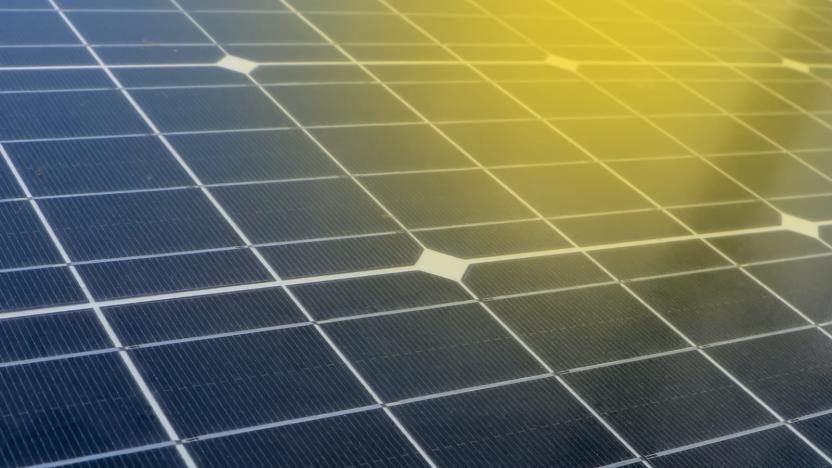
New solar cell generates hydrogen and electricity at the same time
In the ongoing pursuit of abundant, renewable alternatives to fossil fuels, scientists have produced hydrogen for fuel cells through artificial photosynthesis, which splits water into hydrogen and oxygen. Traditional processes have struggled to use optical, electronic and chemical properties in a way that makes this method efficient, but now researchers from Berkeley Lab have created a recipe that could completely bypass the limitations in current materials.

Virgin to use eco-friendly jet fuel on commercial flight this October
Virgin Atlantic is about conduct a real-world test of its greener jet fuel. The airline plans to use LanzaTech's sustainable fuel for the first time in a commercial flight this October, with a Boeing 747 relying on the low-carbon liquid for a trip from Orlando to London's Gatwick airport. The journey will both "raise awareness" for the more environmentally friendly technology and show that it's viable for more than just experimental flights.

NASA supports SpaceX plan to fuel rockets with astronauts on board
As SpaceX gears up to launch NASA astronauts to space with its Falcon 9 rockets, the agency has been debating whether to allow the company to fuel its spacecraft after astronauts have boarded. SpaceX typically fuels its rockets shortly before launch in order to prevent its cooled propellant from warming up too much, but as it moves toward crewed flights, that practice raised safety concerns. However, NASA has now decided that it will move forward with the SpaceX plan to fuel rockets after astronauts have already boarded.

Cigarette butts could be reborn as green energy storage
It's no secret that smoking is seriously bad news for your health, but the impact of the habit on the planet's health is pretty bleak, too. Every year nearly six trillion cigarettes are smoked around the world, generating more than 800,000 metric tons of cigarette butts. Something has to be done with them all, and they usually end up in landfill (or leaching into waterways). But now, scientists have discovered they may have a hidden potential: hydrogen storage.

Super-powered bacteria can harness light for fuels and plastics
Researchers have been working on improving the photosynthetic process for some time -- trying to use light to create energy but doing so in a way that's much more efficient than chlorophyll. For plants, chlorophyll works well, but to use photosynthesis to create products like fuels or polymers, we need something that works faster and generates more output. Researchers at the University of California, Berkeley have come up with a method that does just that and they're presenting their work this week at the National Meeting and Exposition of the American Chemical Society.

Scientists find cleaner, more efficient way to turn CO2 into fuel
Conventional fuel aren't going away just yet, but that doesn't mean you can't produce them in a more responsible way... and scientists might have found that way. They've developed a process that can convert CO2 into carbon monoxide (and subsequently into fuel) using solar energy with nearly flawless selection -- that is, you can get the material you want virtually every time. The trick was to create a spongy nickel-organic photocatalyst that purposefully includes a lot of defects, letting it produce adequate amounts of carbon monoxide without creating surprise molecules.

US Army wants helicopters to refuel at robotic pumps
Militaries regularly set up fueling stations at forward bases so that helicopters can get back to the fight as quickly as possible. However, requiring fuel crews creates huge risks and logistical headaches: you're sending people to a dangerous, isolated section of the battlefield for a fairly mundane role. Thankfully, the US Army might not need to take that risk for much longer. It's testing an unmanned station, the Autonomous & Robotic Remote Refueling Point (AR3P for short), that can top up a helicopter with no human involvement. Much like Tesla's robotic charger, it would use self-aligning, articulated arms to hook a fuel line to a helicopter all by itself. That, in turn, would let helicopters fly at all hours without putting footsoldiers in harm's way, and would likely refuel them faster.
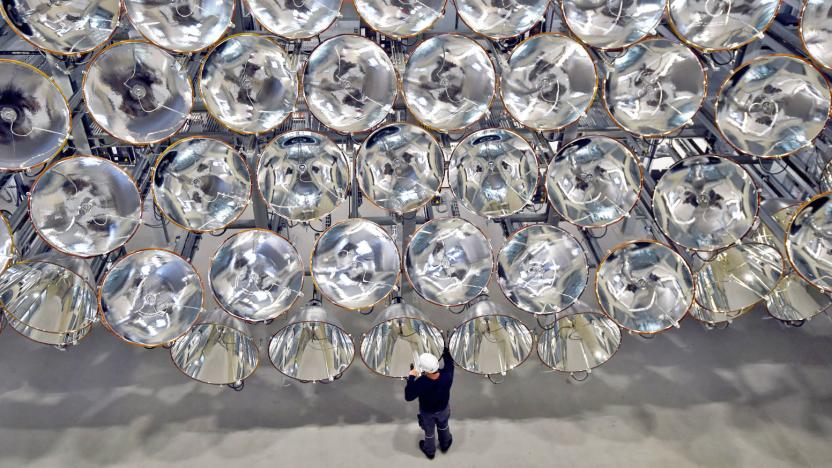
German researchers built a molecule-splitting artificial sun
Scientists from the German Aerospace Center (DLR) are testing a novel way to generate hydrogen, a potential green energy source, by using a massive array of lights normally found in movie theaters.

GM and Honda will mass-produce hydrogen fuel cells together
Just weeks after the car and energy industries began their big push on hydrogen, the first real action is being taken. General Motors and Honda have leapt into bed together to begin work on a new factory that'll mass-produce hydrogen fuel cells for their vehicles. Fuel Cell System Manufacturing (FCSM) will be based at GM's electric vehicle battery site in Brownstown, MI (pictured), and is expected to start work in 2020.

ICYMI: Getting ethanol from more than just corn
try{document.getElementById("aol-cms-player-1").style.display="none";}catch(e){}Today on In Case You Missed It: Researchers at the Oak Ridge National Laboratory created ethanol out of carbon dioxide in a way that they believe would be easy to scale up. Most importantly, the conversion happens at room temperature so it could be done nearly anywhere in the world. We are also tickled by this stop-motion music video for a new song by Dan Sultan, and enjoy the dress designer who wants to put alcohol in clothes. As always, please share any interesting tech or science videos you find by using the #ICYMI hashtag on Twitter for @mskerryd.

Russia hopes 'clean' rockets are the future of spaceflight
If you ask Russia, modern rockets are hindered by not just their engines, but their fuel -- the chemicals just aren't powerful enough to carry increasingly heavier loads and keep costs in check. To that end, the country's Advanced Research Foundation has conducted what it says is the first successful test of a full-size pulse-detonation engine (where rapid-fire detonation waves combust the fuel and oxidizer) running "clean" fuel. The oxygen-kerosene mix isn't so much eco-friendly (although it does burn more cleanly) as very efficient. Its high thermodynamic performance, combined with the extra efficiency of pulse-detonation itself, would let rockets either carry more cargo into space or reduce costs by getting vehicles into orbit faster.
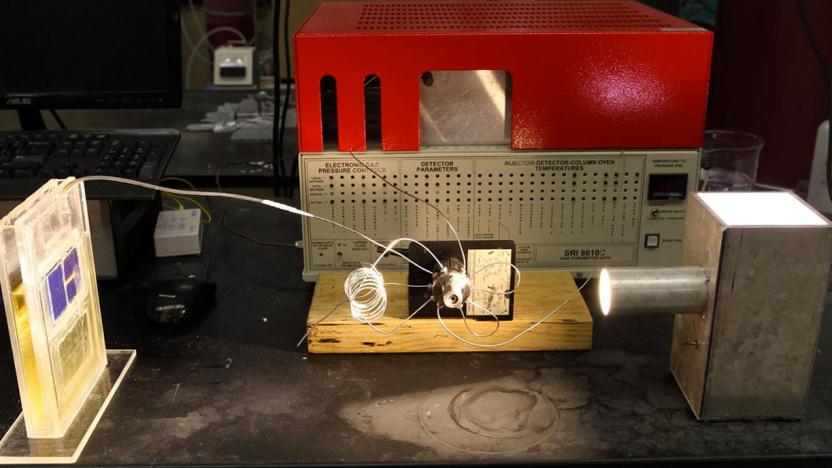
Scientists turn CO2 into fuel with solar power
Researchers at the University of Illinois at Chicago believe that they've perfected the art of photosynthetic solar cells. It's a technology that mimics a plant's ability to inhale carbon dioxide and, with water, convert it into glucose and oxygen. This system is capable of drawing in carbon dioxide and processing it into a synthetic fuel that could be used to power vehicles. Theoretically, this device could create a virtuous cycle where climate-altering carbon could be removed from the atmosphere and pumped back into cars.


