mobile posts
Because what the world needs now is yet another mobile operating system, Samsung has announced its foray into the field with Bada. Not much to reveal at this point other than some key PR speak: the name means "ocean" in Korean, the company's committed to "a variety of open platforms" in mobile industry and it plans this to be easy to integrate / customize based on carrier's experience. All real news should be coming sometime in December, when Sammy is saying it'll have a London launch event and reveal the SDK. Full presser after the break.
Ears-on with Sony Ericsson MH907 Motion Activated Headphones
What we have here today isn't just another pair of ordinary headphones: Sony Ericsson's MH907s are button-free, minimalistic headphones that activate upon the magical touch of your skin. Well, your ears to be precise. You must bear in mind that the MH907s are exclusive to Fast port-equipped Sony Ericsson phones thus excluding the forthcoming XPERIA X10 -- so chances are you're already not interested. That said, we shall see if Sony Ericsson is really going to change things forever with these gleaming buds featuring SE's SensMe Control technology, or by just stopping everyone from using their 3.5mm headphone jacks. Read on to find out how these €39 ($57) headphones fared.
Samsung and TeliaSonera bringing LTE to vikings in 2010
Scandinavian folks tend to be a pretty cheerful bunch during the summer, and now Swedes and Norwegians will have reason to smile through the cold dark winters as well, with Samsung announcing an agreement to provide TeliaSonera with "mobile broadband devices for commercial service next year." This agreement relates to Sammy's Kalmia 4G USB modem and adds to the Swedish operator's LTE push, which already counts Ericsson and Huawei among the contracted hardware providers. So that's 100Mbps mobile broadband, coming to a snow-covered nation near you within the next dozen months or so. All we would ask of our viking friends now is that they remember their world-conquering ways of the past and start spreading that goodness globally. Come on, it's our right! Full press release after the break.
LG GD900 Crystal makes a very portable fish tank, PETA magnet

Samsung InstinctQ for Sprint passes by the FCC and turns a few heads
It's been a little piece of time since we saw that photo of the G1-esque Samsung InstinctQ emerge, and we were starting to wonder what had become of our newest QWERTY cutie. Well -- the M900, as it's also known -- has just ducked through the old FCC, and though we didn't really learn anything we didn't already know, it was just nice to see its face again. The Sprint-bound, CMDA / EV-DO-loving Android slider will pack Bluetooth and Wi-Fi, and we have to say that it's looking pretty fly to our eyes. We're not sure when this bad boy's going to hit reality, but the FCC appearance makes us think it won't be too long now.
[via Unwired View, thanks Ryan]
[via Unwired View, thanks Ryan]
Windows Mobile 6.5 joins the ranks of iPhone and Android with its own app kill switch
Earlier this week the internet alarms rang loud with word that Microsoft had added an app "kill switch" to its upcoming Windows Mobile 6.5 platform. Of course, such a kill switch is not unprecedented, as both the Android and iPhone platforms have their own variant. A Microsoft rep recently relayed a message of peace to assuage fears, telling Ars Technica that the vast majority of app rejections won't cause a remote uninstall, and it'll only be used if the app "exhibits harmful behavior or unforeseen effects" -- not that we're entirely assured by the latter scenario, but wording aside, it does echo statements from the aforementioned companies that have so far been very conservative with its use (i.e. we can't recall a single instance of its use). "While we hope to avoid this scenario," he said, "we will make refunds available in such cases." Only time will tell just how trigger happy Microsoft gets, assuming they ever use it. Hey, just be happy we know about it -- remember the last time we were surprised to discover such a feature?
Windows Mobile 7 chassis concept confirmed by Microsoft, not detailed
We still don't know what it looks like or when exactly it'll arrive -- rough estimate sometime in 2010 -- but Windows Mobile 7's being given special care by Microsoft with a chassis concept of "carefully defined hardware specifications" for hardware vendors, according to James McCarthy. As for what those specs are and how strictly it'll enforce adherence, we're still in the dark. If it's anything like what we saw with the rumored "Pink" specs from back in May, we're not too worried, but it's really in Microsoft's hands to screw up. If they say it's okay to see StrongARM chips in WinMo 7 devices, someone'll do it, and we gotta imagine some negative vibes towards the mobile OS in general should someone ever have to manage with a handset like that.[Via WMPowerUser]
Video: Xperia Pureness (codename Kiki) announced
[Via Mobile Bulgaria, thanks Reggie]
Research finds iPhone hurting operators, Boy George unavailable for comment
We've long since known that Apple (as opposed to AT&T) was getting the better end of the pair's exclusive partnership here in America, but new research from Strand Consult has found that the situation is fairly similar all around the globe. According to the report, nary a single telecom operator it studied had seen a boost in market share, revenue or earnings as a result of introducing the iPhone, and some carriers even issued profit warnings due to the heavily subsidized handset. The study goes on to shed pity on firms like SingTel and TeliaSonera, both of which are purportedly seeing margins and ARPU (average revenues per subscriber) sink due to Apple's darling joining the fray. But really, we can't help but express our doubts about the all encompassing, almost sensationalized nature of this; we've watched AT&T's profits soar ever since it snagged the iPhone, and considering that every iPhone buyer also coughs up a significant monthly fee for a data plan, we can't imagine revenues tanking that severely. Or, you know, maybe we're all just getting a really good deal on our bloated iPhone plans.
Entelligence: Six is much too much
Entelligence is a column by technology strategist and author Michael Gartenberg, a man whose desire for a delicious cup of coffee and a quality New York bagel is dwarfed only by his passion for tech. In these articles, he'll explore where our industry is and where it's going -- on both micro and macro levels -- with the unique wit and insight only he can provide.
Last week, fellow columnist Ross Rubin talked about the state of mobile platforms and how the era for launching new platforms has come to an end. I tend to take a different view of the mobile market. There are currently six major platforms vying for the hearts and minds of users and third party applications developers -- RIM's Blackberry, Microsoft's Windows Mobile, Apple's iPhone, Nokia's s60, Palm's WebOS and Google's Android -- and there's simply no way the market will support that many device ecosystems. But there may yet be opportunity for other players to enter the market.
This is not a new phenomenon. In the early 80s there were a multitude of personal computing platforms. Atari, Commodore, Radio Shack, Texas Instruments, Apple and even Timex (yes, Timex) all were in the personal computing business, long before IBM entered the game. All survived for a period of time selling to an enthusiast market with a focus on out of the box featuresets. Once the target became the mass market, however, user expectations changed from the out of box experience (which essentially meant programming in Basic) to additional capabilities provided by third party software. The success or failure of each PC platform was decided in no small part by the availability of third party software. Exclusive titles, best of breed titles, and titles that appeared on a given platform first determined winners and losers. The same thing is happening today in the mobile space.
Last week, fellow columnist Ross Rubin talked about the state of mobile platforms and how the era for launching new platforms has come to an end. I tend to take a different view of the mobile market. There are currently six major platforms vying for the hearts and minds of users and third party applications developers -- RIM's Blackberry, Microsoft's Windows Mobile, Apple's iPhone, Nokia's s60, Palm's WebOS and Google's Android -- and there's simply no way the market will support that many device ecosystems. But there may yet be opportunity for other players to enter the market.
This is not a new phenomenon. In the early 80s there were a multitude of personal computing platforms. Atari, Commodore, Radio Shack, Texas Instruments, Apple and even Timex (yes, Timex) all were in the personal computing business, long before IBM entered the game. All survived for a period of time selling to an enthusiast market with a focus on out of the box featuresets. Once the target became the mass market, however, user expectations changed from the out of box experience (which essentially meant programming in Basic) to additional capabilities provided by third party software. The success or failure of each PC platform was decided in no small part by the availability of third party software. Exclusive titles, best of breed titles, and titles that appeared on a given platform first determined winners and losers. The same thing is happening today in the mobile space.
Dell working on iPod touch-esque Android MID, says WSJ
It's no surprise that Dell's been dipping its toes in Android-infested waters as of late, and now the Wall Street Journal's reasserting a previous claim from early April that the company's hard at work on a MID powered by Google's mobile OS platform. Multiple sources have reportedly likened it to a slightly larger iPod touch, while one went so far as to suggest a very tentative second half 2009 target release window, assuming the project doesn't get 187'd before then. Despite its history with Intel and the chipmaker's penchant for MIDs, the report pegs ARM as the processor of choice. As for how this jibes with rumors of Dell's smartphone plans, that's where things get interesting, as WSJ quotes a source who said Dell's thinking about selling it through cell carriers like it's currently doing with 3G-equipped netbooks. The article repeatedly calls it a MID -- meaning a phone might still be in the cards, but given past whispers, it kind of makes you wonder.
Clearwire's WiMAX ordained with official Atlanta launch
Sure, Clearwire has actually been running its WiMAX network in Atlanta for six weeks already, but that technicality isn't stopping the company from deciding now is the time to "launch" the service in the metro area, with an appropriately-sized marketing blitz to boot. Portland travelers already using the service should feel at home now with their own personal 4G network to keep them company while they engorge on the recommended dosage of Chik-Fil-A sandwiches and Varsity chili dogs. Prices are identical to what we've already heard and, yes, even though the company just quietly launched the service in Las Vegas, expect to see the delayed red carpet rollout for that city sometime later this Summer.
Clearwire sneaks WiMAX into Las Vegas, won't admit it until Summer

[Via Fierce Wireless; thanks, Zachery]
Read - Clearwire Goes Soft in Vegas
Read - Clear coverage map
North Korea to allow limited access to "the internet" on cellphones
Looks like North Korea -- a place not known for its liberal attitudes toward communication of information -- may slowly be taking another baby step toward the 21st century. The country, which only began allowing limited access to cell phones last December, has announced that now, limited access to the internet will be available on mobiles as well. Apparently about 20,000 of North Korea's estimated 23 million citizens now have cell phones, and though there is scant detail about what the internet access will constitute, an estimated 400 million dollars was spent to construct the 3G network in the country. So while there's no real bright side to the story, at least those lucky few who can look at Kim Jong Il's official website will have a decent connection.
Renesas's 1080p-decoding processor coming soon to a cell phone near you
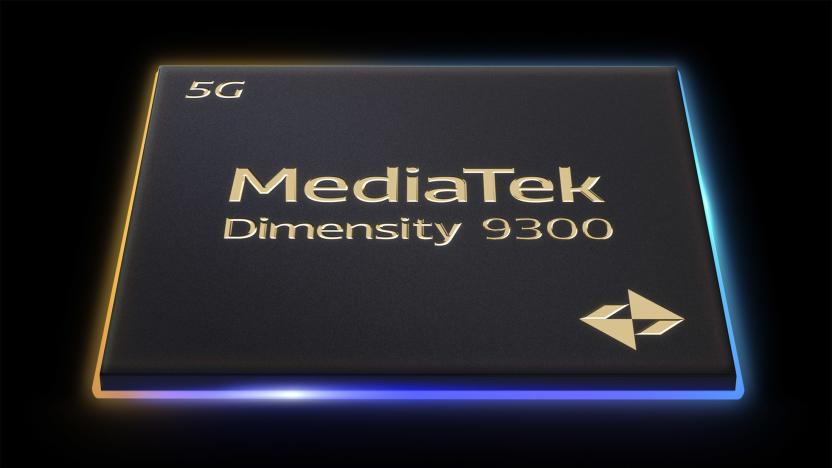
Plenty of modern cell phones have HD-quality screens on them, but few can manage any sort of high-definition video content at a respectable frame rate. That's set to change with the release of the Renesas SH7370, a chip we first got wind of back in December with its promise to offer 1080p video at 30fps in a package small (and efficient) enough to be included in a handset. The first units are now shipping to manufacturers, and while the size has increased (it's about 1cm square vs. the 6.4 x 6.5mm package previously discussed) it's still impressively small given its functionality: 1080p H.264 video decoding and encoding along with on-chip Dolby Digital 5.1-channel output. Overkill? Maybe for now, but you might change your mind when the first head-mountable satellite speakers with subwoofer seat cushions hit retail.