plastic
Latest

Scientists discover microbes that can digest plastics at cool temperatures
In a potentially encouraging sign for reducing environmental waste, researchers have discovered microbes from the Alps and the Arctic that can break down plastic without requiring high temperatures. Although this is only a preliminary finding, a more efficient and effective breakdown of industrial plastic waste in landfills would give scientists a new tool for trying to reduce its ecological damage.
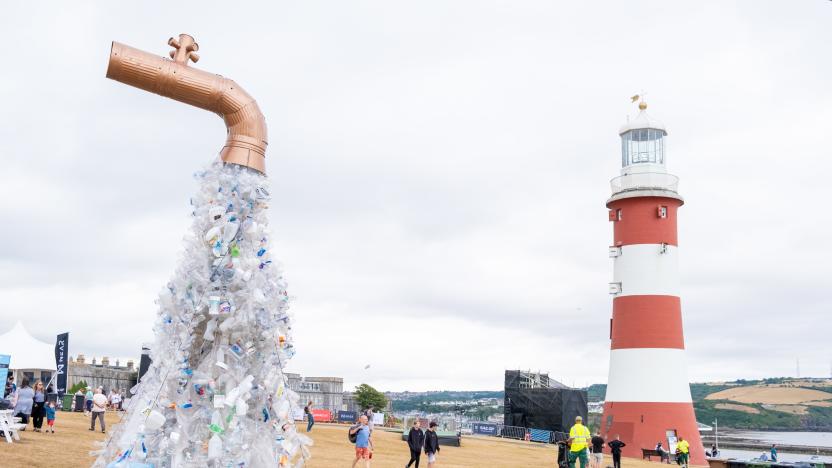
England is banning the sale of some single-use plastics
By the end of the year, England will ban the sale of many single-use plastics, including cutlery and plates.

Canada is banning the sale, production and import of some single-use plastics
Canada is banning companies from producing and importing a handful of single-use plastics by the end of the year.
UN starts working towards a global plan to curb plastic pollution
After a week of negotiations in Nairobi, the United Nations has agreed to start working on a first-ever global plastic pollution treaty.

The Ford Bronco Sport contains trace amounts of recycled ocean plastic
Ford says the Bronco Sport is the first car to use parts made solely of recycled ocean plastic, but the company still has a long way to go in 'greening' its lineup.
Amazon has eliminated single-use plastic at its Indian fulfillment centers
Amazon's fulfillment centers in India are now free of single-use plastics.

Google pledges to 'maximize' recycled material in own products
Google has been making consumer hardware under its "Made by Google" brand -- like its Pixel phones and Google Home Minis -- for three years, and dabbled in other hardware for a few years before that. Now, it's ready to make its products more sustainable. Starting in 2022, 100 percent of its Made by Google products will include recycled materials and will maximize recycled content whenever possible. By 2020, 100 percent of all shipments going to or from customers will be carbon neutral.

Nike's Joyride shoes use tiny beads to make your runs more comfortable
Nike has developed a new shoe technology for both casual and every-day runners. Today, the sportswear giant is taking the wraps off of Joyride, a responsive cushioning system designed to adapt to individual foot strikes and offer high levels of impact absorption as your feet hit whatever surface you're running on. Nike says the idea with Joyride is to "make running easy" and give you more personalized comfort, which is made possible by thousands of tiny, energy-packed beads that form the shoe's midsole. You can get a great look at them in the Joyride Run Flyknit pictured above, the first Nike sneakers to feature the visible and colorful beads.
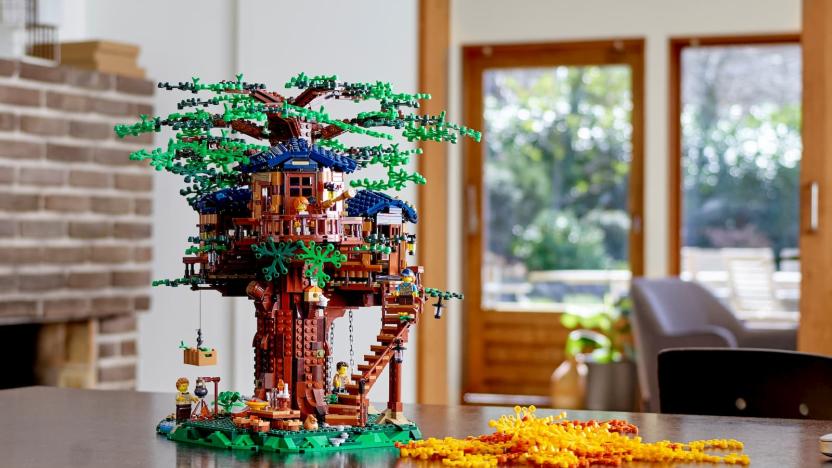
Lego's treehouse set uses plant-based bricks for the greenery
Last year, Lego revealed a new type of brick made using a type of polyethylene created with ethanol from sustainably sourced sugarcane. Though it said only a small percentage of total bricks would be made in such a way, it was a major step towards Lego's broader sustainability ambitions. Several sets have included such pieces, though Lego has unveiled perhaps its most ambitious one yet: a Treehouse kit that includes 185 of those pieces.
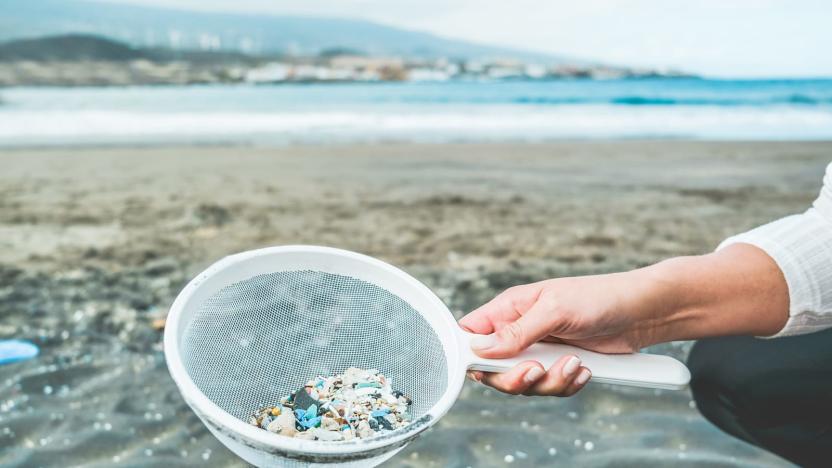
Americans consume an alarming amount of microplastics
Americans consume tens of thousands of microplastic particles every year -- and that's just from the food we eat. Microplastics are also found in the air we breathe and the water we drink. Thanks to a study published in the journal Environmental Science & Technology, we have a better idea of just how much plastic Americans consume.
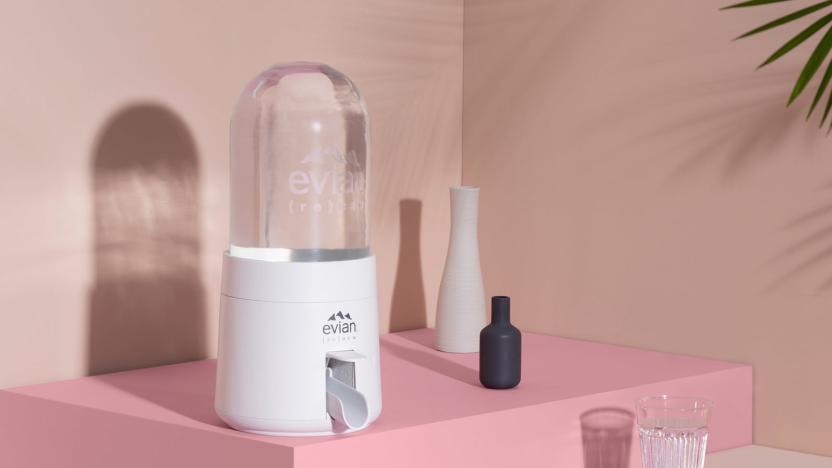
Evian's answer to wasteful plastic bottles is a smart water dispenser
Evian knows that plastic water bottles aren't terribly kind to the environment, and it has a clever solution to that problem: give drinkers a way to kick the bottle habit altogether. Its newly launched Renew water dispenser relies on unique 5L (1.3gal) "bubble" jugs that shrink as you use them, providing a hefty amount of mineral water without as much of an impact on the environment as usual. Each jug uses 66 percent less plastic than a 1.5L bottle, and they're both made of completely recycled plastic and themselves completely recyclable. You won't have to feel quite so guilty about wanting Evian for the gym or a long hike.

Giant plastic-collecting 'pool noodle' breaks apart in the Pacific
The "giant pool noodle" dispatched into the Pacific Ocean last September to catch and clean up thousands of tonnes of floating plastic has run into trouble. Invented by Boyan Slat when he was 17, the 2,000-foot-long U-shaped floating barrier was designed to travel with wind and wave propulsion collecting pieces of plastic as small as a millimetre in size from the "Great Pacific Garbage Patch" between Hawaii and California. But after just a few months at sea, the device -- called System 001 -- is heading back to land after seeing major setbacks.

A project to remove 88,000 tons of plastic from the Pacific has begun
An ambitious project to clean up the 88,000 tons of plastic floating in the "Great Pacific Garbage Patch" has begun. On Sunday, the Ocean Cleanup Project started towing its "Ocean Cleanup System 001" from San Francisco to a trial site some 240 nautical miles (260 miles) away. Once it arrives, the wind and waves will push System 001 into a U-shape and it will slowly drift along on its own. A 10-foot long skirt hanging below will collect pieces of plastic as small as a millimeter in size, and smaller boats will later scoop them up and take them to shore for recycling.

Recommended Reading: AI the music producer
How AI-generated music is changing the way hits are made Dani Deahl, The Verge The rise of streaming services is one of many challenges the music industry is currently having to contend with. In the latest installment of its "The Future of Music" series, The Verge tackles another pressing issue: AI. This piece tells the story of Taryn Southern, an artist who used AI to co-produce her debut album.

Pepsi buys SodaStream for a future beyond cola
Traditional soda brands are facing tough times right now, as consumers move away from sugary soft drinks to healthier, low-cal options. Pepsi has already tried to diversify away from its fizzy cola roots with Aquafina water, and more recently, sparkling water brand Bubly -- now it's planning on reaching customers in their homes with the acquisition of at-home carbonated drink-maker SodaStream.

Samsung's 'unbreakable' display survives UL scrutiny
Phone makers have promised unbreakable phone screens for years, but they tend to involve awkward compromises like soft, scratchable surfaces. Samsung Display might just fulfill that promise, though. Underwriters Laboratories certified an "unbreakable" Samsung panel (not yet pictured) as capable of surviving military-grade durability tests without damage. This included dropping it 26 times from a height of four feet and subjecting it to extreme temperatures. It even survived a drop test at 6 feet without any battle scars. Update: Samsung Display posted a video of its new screen, showing how its lightweight plastic cover compares to traditional glass. In the video it survives several strikes from a hammer with no damage to show for it.

Adidas pledges to only use recycled plastics by 2024
Adidas is planning to expand its use of recycled plastics well beyond its flagship shoes. The sportswear maker has promised to only use recycled polyester in its shoes and clothing by 2024. While the company's Eric Liedtke didn't provide a detailed roadmap in a chat with the Financial Times, he characterized it as a transition that will see Adidas take "right-sized bites" out of its budget to make the switch without hurting its profit margins. It's no mean feat -- about half of Adidas' material is polyester right now, Liedtke said, so an "overnight" changeover isn't in the cards.
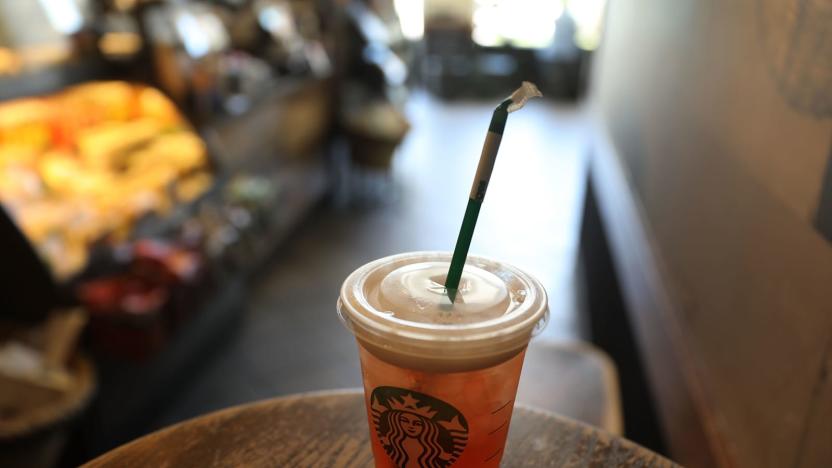
Starbucks' straw ban is a big win for the Earth's oceans
Those little plastic straws that you get at virtually every restaurant in America have become a huge problem for the world's oceans and Starbucks is finally doing something about it. The global coffeehouse chain announced on Monday that it will immediately begin phasing out plastic drinking straws from its 28,000 stores worldwide and eliminate their availability almost completely by 2020. Given that the company uses around a billion straws every year, that could make a significant difference to the health of our seas.

Scientists accidentally produce an enzyme that devours plastic
There are research teams around the world dedicated to finding a remedy for the growing plastic pollution crisis, but now it seems that one group of scientists have found a feasible answer -- and they stumbled upon it by accident. Researchers studying a newly-discovered bacterium found that with a few tweaks, the bug can be turned into a mutant enzyme that starts eating plastic in a matter of days, compared to the centuries it takes for plastic to break down in the ocean.
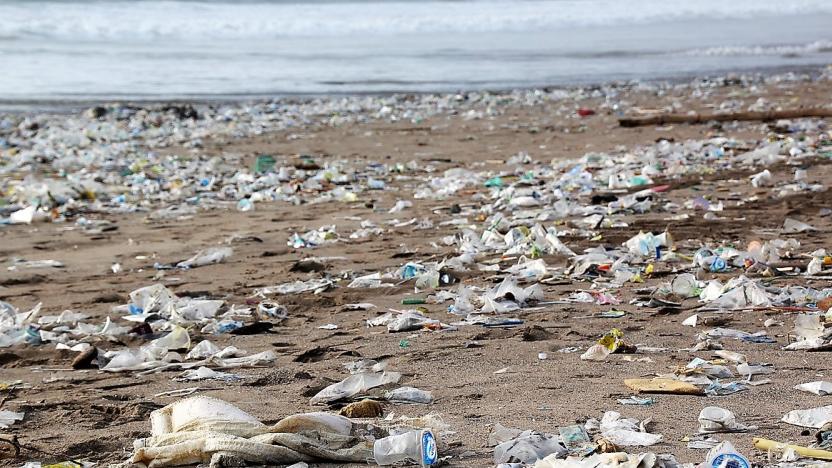
ESA plans to measure ocean plastic data from space
Scientists at the European Space Agency (ESA) are working on a technology that would allow them to identify from space just how much plastic there is floating around in oceans. Until now, researchers have used satellite maps to simulate the accumulation of marine trash, but the new project would use direct optical measurements to provide actual data on the scale of the issue.


