satelliteradio
Latest

Amazon and SiriusXM team up to offer free service and Echo Dots
Amazon and SiriumXM have partnered up to bring together streaming radio and the Amazon Echo. Echo owners can enjoy a three-month trial of SiriusXM for free. And anyone who signs up for a new SiriusXM All Access or SiriusXM Premier subscription will get an Echo Dot for free. Current customers who upgrade from SiriusXM Select to Sirius XM All Access will also receive an Echo Dot for free.

Netflix is bringing its stand-up comedy to SiriusXM radio
SiriusXM is adding another comedy channel to its satellite radio lineup: Netflix. Starting next January, the streaming service's radio station will play stand-up 24 hours a day, according to Variety. "Netflix is a Joke," the channel's working name, will also feature original programming from the service's ever-growing stable of signed comics, and things like David Letterman's talk show as well, apparently.
SiriusXM adds streaming-style features to its in-car radio service
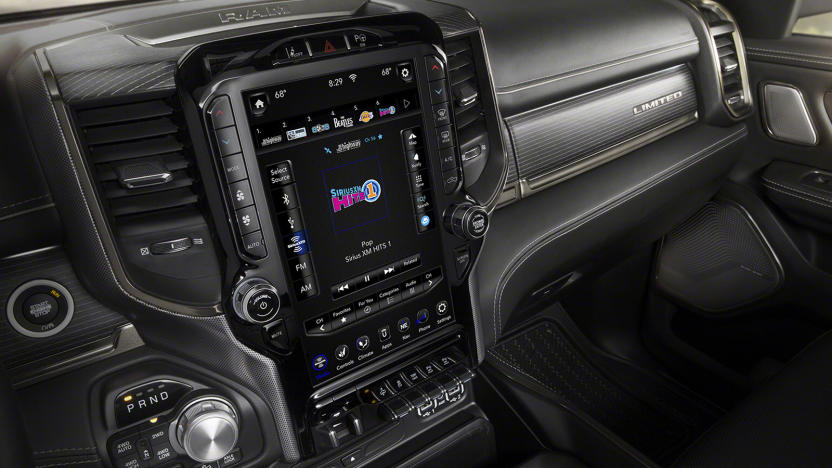
In-car listening has come a long way in the past decade. Where satellite radio used to be one of the few ways to get live digital shows in your car, it's now trivially easy to bring your phone into the car and stream virtually anything. And SiriusXM knows it -- the company has launched a new platform, 360L, that brings some of the creature comforts of internet streaming to in-car satellite radio. To begin with, there's simply more to listen to -- you can listen to on-demand shows, not to mention channels that were previously online-only.

SiriusXM will pay $210 million to use songs recorded before 1972
Before now, satellite radio company SiriusXM wasn't paying royalties on the catalog recorded before 1972 that it beamed to customers. Today, the company agreed to pay $210 million for those songs, compensating both independent and major record labels for using their material. The settlement comes after ABKCO Music & Records, Capitol Records, Sony Music Entertainment, UMG Recordings and Warner Music Group filed a lawsuit against SiriusXM in 2013. Under the terms of the agreement, the satellite radio service can "to reproduce, perform and broadcast" the library of tunes until December 31, 2017 without further payments. This means that tracks from the likes of the Rolling Stones, Gloria Gaynor and many more will be subject to agreements. Why weren't they protected before? Material recorded prior to February 15, 1972 isn't subject to the same protections as songs released after, so streaming services and radio stations weren't required to pay licensing fees.

Musicians and Congress join forces in fight for royalty reform
Fair artist compensation from internet radio and streaming services is quite the hot topic of late, and now members of Congress are joining the debate. Congressman Jerrold Nadler, D-NY, and Congresswoman Marsha Blackburn, R-TN, alongside the musicFIRST Coalition, introduced the Fair Play Fair Pay Act today that would end regulations that don't require terrestrial radio stations to pay royalties to artists and labels. As it stands, those AM/FM stations available in your car only pay licensing fees to songwriters and publishers. Organizations like ASCAP (American Society of Composers, Authors and Publishers) handle those agreements, collecting fees every time a copyrighted song is played on the radio or during a public performance. For its part in managing those agreements, ASCAP brought in over $1 billion last year.

Sirius XM Onyx EZ satellite radio pops up at the FCC
Sirius XM's first Onyx radio showed its face three years ago. For the technology world, that might as well have been eons; that makes it something of a relief to see an update, the Onyx EZ, going through the FCC for approval. The differences that justify the 1950's-era model suffix are tougher to identify, however. Both the current and future Onyx models revolve around superficially identical feature sets that include a PowerConnect FM transmitter to streamline in-car setup, station preset controls and quick access to both traffic and weather. If there's more lurking underneath the EZ, we'll have to wait for an official launch, whether it's at a Las Vegas trade show or later into the year.

FCC chairman green-lights AT&T's use of WCS spectrum for LTE with proposed order
AT&T is close to securing a major victory in its battle against the spectrum crunch. While it's not quite a done deal, FCC chairman Genachowski has submitted a proposed order to FCC commissioners that would authorize AT&T's deployment of its LTE service within a 20MHz portion of the 2.3GHz (WCS) band. The deal is unique in that the spectrum is currently reserved for satellite radio, and the reallocation would mark the first of its kind within the WCS band. As you may recall, AT&T previously conceded to a 5MHz dead zone on both ends of Sirius XM's operating frequency in order to mitigate interference concerns, and it seems the move was sufficient to gain the chairman's support. Also looming on the FCC's to-do list is the decision of whether to approve AT&T's purchase NextWave and its unused WCS spectrum. If it's any indication, however, Chairman Genachowski seems bullish on the reallocation and has suggested that the agency may authorize another 30MHz of the WCS band for mobile broadband use. AT&T has previously said that it could feasibly deploy LTE over the 2.3GHz spectrum within the next three years. One group fighting the deal is the Competitive Carrier Association, which posits that AT&T's purchase of such a significant chunk of spectrum on the secondary market is anti-competitive in nature. It'll no doubt be interesting to see if the argument gains any traction with the FCC. In the meantime, you can view remarks from the agency's spokesperson after the break.

SiriusXM for Android update brings On Demand and offline listening
If you're an Android-toting SiriusXM fan, you've probably spent the last month wondering when your smartphone would get the newfound flexibility to tune in beyond live radio. As of Sirius XM's version 2.2 update, Android is back on equal footing. The upgrade supplies On Demand streaming, both for catch-up and the occasional classic, as well as downloadable copies to keep the music and talk flowing offline. As before, the access is considered a free perk of a SiriusXM subscription; if you enjoy Howard Stern's cynicism enough to want it at odd hours of the day, your angsty fix awaits at the source.

SiriusXM launches On Demand radio, gives offline access to iOS apps
It's finally here! SiriusXM On Demand has launched, ushering the satellite radio service into the 21st century. The company's promised library of 200 shows and 2,000 hours of programming are online and available for subscribers to stream at their leisure. Access is free for existing subscribers, and available through the web or the SiriusXM apps on iOS. App users can even download shows for offline playback (which we believe makes them podcasts). Now you'll never need to miss another allegedly hilarious episode of Opie & Anthony again. Though, you might be a better person if you did. Check out the PR after the break for a few more details.

AT&T agrees to acquire NextWave for $600 million, gobbles up WCS and AWS spectrum
AT&T's making no secret of the fact it wants to snatch up as much spectrum as it possibly can, so news of the company's proposed acquisition of NextWave Wireless doesn't result in much of a shock. AT&T has agreed to purchase the company -- and all of its WCS (Wireless Communication Service) and AWS spectrum licenses and equity along with it -- for $25 million, pending FCC approval. If you count $25 million in contingency costs and the outstanding debt the big blue globe has also picked up, however, the total bill climbs to $600 million. The deal comes shortly after AT&T partnered with Sirius XM to petition the FCC in the hopes that it would allow WCS (2.3GHz) spectrum to be opened up for LTE use -- mobile data is currently restricted by the federal body to prevent any interference with satellite radio. The government hasn't given the green light for this proposal yet (additionally, the NextWave deal isn't likely to be approved until later this year), but that's not stopping AT&T from its preparations just in case -- it plans to have WCS LTE ready for deployment in three years if everything works out in the carrier's favor.

Sirius XM details GoogleTV app ahead of the I/O party
The fine folks at Sirius XM just couldn't wait for Google I/O to kick off. Yesterday the satellite radio giant tipped off Reuters (not that it was the only one "spilling the beans," mind you), and today it's offering up even more information on its upcoming Google TV offering. The app, still slated for a broad 2012 release, will be available as a free download for US subscribers via the Google Play store. The list of features includes Start Now, which lets users listen to programming from up to five hours prior, pausing / fast forwarding / rewinding and Tune Start, which brings up the beginning of an already played song. Also on-board is the Show Finder, a program guide that lets subscribers set show alerts. The company will be demoing the product later this evening at I/O. In the meantime, check out the press release after the break.

Sirius XM gives Google TV a Stern look, plans radio app for this summer
Sirius XM has long had a love affair with Android, going so far as to build an Android-powered satellite radio just a few months ago. That flame is burning for at least a little while longer with plans for a Google TV app launching this summer. Much in line with Sirius XM's more recent internet options, subscribers can soon tune into virtually anything from the satellite radio lineup, including the obligatory Howard Stern, as well as online-only bonuses like ESPN SportsCenter. The radio provider tells Reuters that it worked "closely" with Google to build the app, but what secret sauce that adds (if any) is left to the imagination: the live pausing and five-hour content storage don't exactly break the mold of what we've seen so far. We'll find out very soon just how category-busting Sirius XM can get when we get a full reveal of the Google TV app in sync with the start of Google I/O.

AT&T strikes a deal with Sirius XM to make 2.3GHz LTE a reality, pitches it to the FCC
AT&T has been a little more eager than usual to get spectrum after a certain big deal fell through, and we now know that Big Blue has been willing to bury a few outstanding hatchets to make that happen. The carrier has filed with the FCC to propose a deal with Sirius XM that would get its LTE-based 4G running on the 2.3GHz Wireless Communications Service (WCS) that, normally, satellite radio intersects. Rather than stay at an impasse, AT&T has agreed to a 5MHz dead zone on either end of Sirius XM's frequencies that would mitigate the risk of that Internet video stream colliding with Howard Stern. The provider still needs clearance to go ahead, and might not exactly get a resounding thumbs-up from WCS holder NextWave, which stands to lose more than a small piece of its airwave pie. An FCC all-clear would nonetheless raise the chances that AT&T keeps LTE flowing freely as subscribers pile on the network, even after the telecom behemoth conceded spectrum to T-Mobile.

SiriusXM Lynx satellite radio receiver hands-on
It's been a few months since we first caught wind of Sirius XM's $250 Lynx satellite radio receiver, and today at CES we finally got to see it in person. It's a solidly-built device that's about the same size as a 5th generation iPod, has an 1150 mAh battery with a microSD slot underneath a soft touch plastic back cover. The Lynx runs a heavily modified version of Android, but when we inquired about the possibility of Android Market access or non-Sirius XM apps making their way onto the Lynx, we were told that there were no such plans -- so sorry folks, no Angry Birds or Gmail to be had here. Unfortunately, Sirius XM was coy about what silicon lies beneath its touchscreen, so full specs remain a mystery. We also had a chance to see the Lynx's Bluetooth-equipped home dock and remote and a speaker dock (with remote) that works with both the Lynx SiriusXM's other sat radio units.The interface is fairly simple. There's a pair of home screens with six self-explanatory options: Satellite, Internet, My Library, Show Finder, Bluetooth Connect and Settings options. Because of all the wireless interference on the show floor, we weren't able to fully test its functionality, but we did get a tour of some of the radio's musical features. Users can have up to 25 preset stations and set up alerts attuned to recurring shows, songs and artists to receive notifications when the content you want next plays. When the Lynx has satellite signal, it can record up to 200 hours of content from your favorite stations. Additionally, your presets have a rolling buffer so that you can always start songs streaming from the beginning no matter when you tune in. Want to know more? Check out the Lynx in action in the video after the break.

Sirius XM releases Lynx radio, ensures that you never miss the beginning of another Jimmy Buffett song
Need a shiny new way to enjoy SiriusXM's revamped channel lineup? For $250, you can pick up the Lynx Portable Radio, which lets you start shows and songs (Jimmy Buffett or otherwise) from the beginning and pause, fast forward and rewind programming. The wildcat radio also stores up to 200 hours of programming and features "dynamic" presets and a show finder, which offers up a programming schedule for the next seven days. It's currently available online for $250 and will be hitting retail shops in the near future. More info on the radio can be read from the beginning in the press release and video trailer after the break. Still no word on that whereabouts of that shaker of salt.

Sirius XM Lynx strips down for the FCC, flaunts new screws
If you were wondering when you could pick up Sirius XM's latest touchscreen touting receiver, you can scoot just a little closer to the edge of your seat -- the Lynx just made its way through the FCC. An accidental Best Buy listing in October outed the satellite radio as a possible Android device. The FCC teardown didn't betray what version of the dessert themed OS the receiver might be running, but a tidy Immersion logo suggests that the radio's touchscreen might support some of the outfit's haptic feedback tricks. Rumors and scuttlebutt aside, the Lynx passed through its federal inspection with flying colors. We'll let you know if we ever get a bead on its release date.

Sirius XM app adds satellite radio 2.0 support
Sirius XM has pushed out a major update for its iOS apps to include features users have been wanting and that will give competitors like Pandora a bit of a jolt. This app really gives users control of their listening experience, something that satellite radio hasn't had. Features include: Start Now- starts shows from the beginning even if the program has been on for some minutes Tune Start- starts the currently playing song from the beginning Pause- just what it says. Pause live radio and then restart when it's convenient. Fast Forward/Rewind- move quickly forward and back through any program Show Finder- sets alerts for your favorite programming In my tests of the app it seemed to work as expected. One thing made me unhappy. The update trashed my user credentials so I had to log in again. It did preserve my favorite channels, however. So far, this software is iOS only, but it's expected to come to Android sometime next year. If you're a Sirius/SM subscriber grab it, but have your user name and password handy.

Sirius XM rolls out Edge satellite radio with expanded channel lineup
We're still waiting for some official word on Sirius XM's seemingly imminent Android-based Lynx radio, but the company has now announced another first. That would be the Edge Dock and Play Radio pictured above, which is the company's first radio to support the so-called "Xtra Channels" that are a part of Sirius XM 2.0. As for the radio itself, it can of course be used either at home in a dock or in your car, and it'll give you ten pre-sets for your favorite radio stations, along with a fairly large (non-touchscreen) color display that shows the usual song and station information. Those interested can grab this one right now for $140 -- press release is after the break.

Sirius XM Lynx receiver leaks out courtesy of Best Buy
It's since been removed, but a listing for the tidy little package you see above was on Best Buy's website long enough this week to provide most of the details on Sirius XM's still-unannounced Lynx satellite radio receiver. As you can see, it relies on a touchscreen interface for the most part and, even more interestingly, it apparently runs some sort of custom version of Android -- although we wouldn't recommend getting your hopes up about Android Marketplace access or the like. You'll also get a microSD card slot to load it up with your own music, and it can be used in conjunction with your choice of a car kit, home kit or portable speaker dock (not included). Assuming nothing's changed, you can expect this one to set you back $250, although there's unfortunately no indication of a release date.

SiriusXM app needs updating or old version will stop working
That's a tactic that should get SiriusXM customer's attention. The new version of the SiriusXM app released this week has moved to version 1.6, but the app must be updated or the older version will stop working. The satellite radio company says the app adds "required location awareness in compliance with new content provider policies". If the app is not updated, the older version will stop working, so to avoid any surprises it would be best to get the new version. In a past update, many SiriusXM apps lost the login information, but this version seems to protect it, so after you get the new one, and it downloads some graphics, you should be good to go.


