siemens posts
Oh sure, liquid cooling rigs are all the rage, but they aren't too useful within minuscule things like netbooks, MIDs and pocket projectors. The always churning minds over at Fraunhofer-Gesellschaft are already on the issue, recently conjuring up a new material designed to "efficiently dissipate heat even in devices with densely packed components and that can give increasingly miniaturized electronics a longer life." Researchers at the entity's Institute for Manufacturing Engineering and Applied Materials Research have teamed with gurus from Siemens and Plansee to create the substance as part of the EU project "ExtreMat." Unfortunately, details beyond that are few and far between, but given that demonstrations have reportedly "already been produced," we'd say it's well on its way to infiltrating things far smaller than your mind can grasp.
FSC Amilo Sa 3650 laptop and GraphicBooster tested, deemed flawed but synergistic
Having already seen it run Crysis, we've been itching to know if Fujitsu Siemens' AMILO Sa 3650 laptop and GraphicBooster had any other tricks up their sleeves. The Notebookcheck crew ran the dynamic duo through some tests and found it to be an impressive pairing, although the laptop itself takes a few jabs for shoddy case design, stiff touchpad keys and an underperforming AMD processor. By its lonesome, the integrated ATI Radeon HD 3200 GPU is better than the usual Intel GMA fare, but the GraphicBooster and an external monitor puts this machine nearly on par with a decent desktop rig. Without that external monitor, however, the GraphicBooster only provides marginal improvements to the laptop's performance, due to limitations in the bandwidth connecting the add-on to the port. The second display is connected directly to the booster via DVI-I or HDMI. An asking price of 1300 Euros (US $1,810) seems a bit steep to us, but they say it's worth the premium, calling it an "unprecedented fusion of performance and mobility." Hit up the read link for a full analysis.
[Thanks, Jamil]
[Thanks, Jamil]
German labs set new mark for energy efficient white OLEDs
BASF and OSRAM ticked the OLED progress meter up one recently, with news out of Germany about new diodes that are both efficient (60 lumens per watt) and reproduce color accurately enough to meet international Energy Star standards. The most power sipping organic light-emitting diodes ever created they aren't, but the ability to keep their color under varying levels of intensity leads to the next step, producing stable deep-blue colored emitters for increased efficiency (100 lumens per watt or more) so they can start illuminating surfaces near you. Isn't it lucky, we know some folks in South Korea BASF might want to have a chat with.[Via OLED-Info]
Video: Fujitsu Siemens' GraphicBooster plays Crysis, probably blends

[Thanks, Hero_p]
Fujitsu buys out Siemens' share of computing joint venture, logo designers rejoice
It's not the first, and certainly won't be the last, now Fujitsu Siemens Computers becomes the latest victim of corporate restructuring under the pressure of a global economic turn down. Fujitsu announced that it's acquiring beleaguered Siemens AG's 50 percent share of the joint venture for €450 million (about $580 million). The partnership established back in 1999 should be dissolved by April, assuming government approval naturally. Hey US, you're not the only country with a stake in today's presidential election -- oh you betcha.
Fujitsu Siemens ships world's first zero-watt monitor
It's been a solid tick since we've seen a new monitor from Fujitsu Siemens, but apparently it's been spending a lot of time on its SCENICVIEW Premium Line ECO range. Announced today, the 20-inch P20W-5 ECO and the 22-inch P22W-5 ECO are being hailed as the planet's first to feature power supplies that "automatically switch off completely in power-save mode." The whole zero-watt bit comes from their ability to suck down precisely no power when not in use, while the majority of LCDs continue to draw slivers of energy even in standby. Furthermore, the new devices include the DisplayView AutoBright functionality, which automatically adjusts brightness "in harmony with ambient light" in order to net even greater power savings. Both screens are available now in Europe starting at €419 ($625), though 24- and 26-inch models are arriving next month.
[Via BIOS]
[Via BIOS]
Siemens' Gigaset SE68 WiMAX ExpressCard arrives before the network
Talk about putting the cart before the horse. Without a bona fide WiMAX network for mass consumer use up and running yet here in America, Siemens is making sure you're really ready for its onset by announcing its first WiMAX ExpressCard. The Gigaset SE68 WiMAX is based on the IEEE 802.16-2005 standard and complies with Wave 2 specifications (including MIMO A / B), supports beamforming and has actually been demonstrated as functional way over in Singapore. With a network in place, users can expect mobile broadband speeds of up to 20Mbps, and while no price is given, you can just circle the entire summer of 2008 in anticipation of its arrival.
Intel and Nokia working on seamless WiFi / WiMAX switchoffs
We've seen a lot of research and even some products that promise seamless WiFi / cell roaming, but Intel and Nokia are cooking up tech that might one day bring us true uninterrupted broadband connectivity, based on automatic undetectable switchovers from WiFi to WiMAX. Intel's posted up a brief video demoing the tech auto-switching without interrupting a video conferencing session on a laptop, but it's easy to imagine the potential application on a mobile phone or UMPC -- dare to dream after the break.
[Via DailyWireless]
[Via DailyWireless]
Siemens developing call center voice-recognition software that determines age and gender
We're not certain why call center employees need even more reasons to treat customers condescendingly, but Siemens has announced that it's developing tech that will "intelligently" assign reps to callers based on determinations of age and gender. No word on how the system makes the determinations, but we're not going to be happy if we have to start doing Marilyn Monroe impressions just to get someone on the phone.[Via The Raw Feed]
Siemens rolls out ultrasound-equipped MacBook Pro
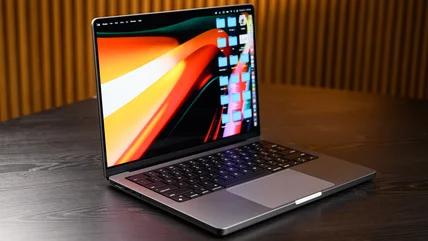
We've seen MacBooks re-purposed for various uses in the past, but never quite like Siemens new "P50" laptop, which takes a standard issue (if slightly outdated) MacBook Pro and outfits it with some ultrasound equipment to accomodate doctors that just can't be tied down. Apparently designed specifically for cardiology and vascular applications, this one boasts an "array of transducers," along with an integrated stress echo function and a range of cardiology application packages which, Siemens says, "considerably simplifies and accelerates the workflow in echocardiography and vascular diagnosis." Mac fans may not want to boast too much about this one, however, as it seems that Siemens has opted to use Windows as a basis for the platform.
[Via The Raw Feed]
[Via The Raw Feed]
Fujitsu-Siemens' tests its design chops with the AMILO Si 2636
In an upmarket move, Fujitsu-Siemens just loosed this, their AMILO Si 2636 laptop onto the cafe-posing elite. Besides sporting an interesting orb of a touchpad, it's configurable with a 2.2GHz T7500 Core 2 Duo processor, up to 4GB DDR2 memory, and 250GB of 5400rpm SATA disk. The new 13.3-inch, 1,280 x 800 (WXGA) laptop features Intel GMA X3100 graphics, HDMI-out, an integrated 1.3 megapixel webcam, 4-in-1 card reader, slot loading 8x dual-layer DVD burner, and battery capable of up to 5-hours. They even combine one of the 3x USB ports with eSATA for attaching a bit of high-performance external disk action. It weighs in at 2.3-kg (5-pounds) and 36.6 ~ 37.4-mm thick. We're still waiting for pricing and availability to be announced.
[Thanks, Joe]
[Thanks, Joe]
Germany gearing up for maglev railway
While folks living near Shanghai are already enjoying the luxuries of a maglev (magnetic levitation) railway, Germany is getting set to build a similar line to shuttle citizens from Munich's city center to its airport. The €1.85 billion ($2.61 billion) project is finally on track to become a reality after securing the necessary funding, and it should be able to whisk travelers around at nearly 310 miles-per-hour when it's complete. Sadly, there's no word as to when the Munich service will launch, but at least we're moving in the right direction, eh?[Via Slashdot]
Microsoft contracts Siemens VDO for in-car entertainment
Siemens VDO and Microsoft just announced a deal to co-develop in-car entertainment systems and navigation products. The companies will initially develop a multi-media platform to more easily integrate mobile phones and music players into automotive systems. The first products based on the Microsoft Auto Platform are expected in 2009. Now go ahead dear readers, leave us your obligatory BSOD, car crashing jokes in the comments below, mercy not required.
Fujitsu Siemens Computers bails out of PDA / PNA market
Leaving so soon, are we? Turns out Fujitsu Siemens Computers is ditching the PDA / PNA market after 2007, which means that those bulky, albeit fashionable Loox handhelds will soon be available only in closeout bins and on your favorite auction site -- and just think, things were lookin' so bright just last year. According to a statement by FSC spokesperson Amy Flécher, the decision to cut the proverbial cord was simply "due to the usual examination of the portfolios," and the firm apparently noticed that "the traditional handheld segment (PDA) [had been shrinking] for years." Essentially, the company felt that smartphones would eventually swallow the "traditional handhelds" of the world, and considering that cranking out smartphones "is not its business at all," the choice seems logical.Fujitsu-Siemens launches ESPRIMO laptop line

[Via notebookitalia]
Read -- Fujitsu-Siemens ESPRIMO U9200
Read -- Fujitsu-Siemens ESPRIMO M9400
Read -- Fujitsu-Siemens ESPRIMO D9500


-automotive-system-mockup.jpg)