ucberkeley
Latest
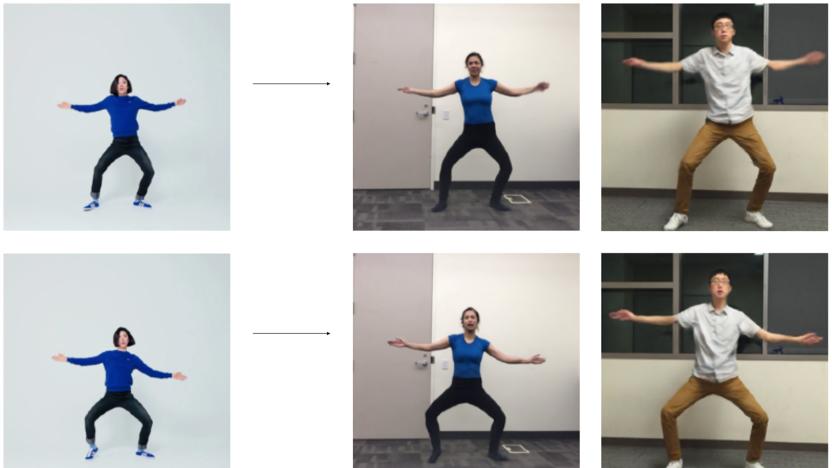
AI-altered video makes it look like you can dance
Can't pop-lock or Lindy Hop to save your life? Don't worry -- AI could soon make it look like you're a dance superstar. UC Berkeley researchers have developed a deep learning system that translates dance moves from a source video to less-than-experienced subjects. One algorithm creates a virtual skeleton to map poses, while two more algorithms square off against each other to both create the full picture and create a more realistic face for subjects as their virtual bodies twirl around. You do need the test subject to move around for a short while to get reference material, but the result is realistic enough to give an amateur the deftness of a ballet dancer.

Atmospheric harvesters will enable arid nations to drink from thin air
As climate change continues to wreak havoc upon the Earth's weather patterns, formerly lush locales like the American West are finding themselves increasingly parched. Perhaps nowhere is that abrupt arridization more pronounced than in Cape Town, South Africa. Since 2015, the region has suffered severe droughts and the coastal capital of 4 million people has struggled to maintain a steady municipal water supply.
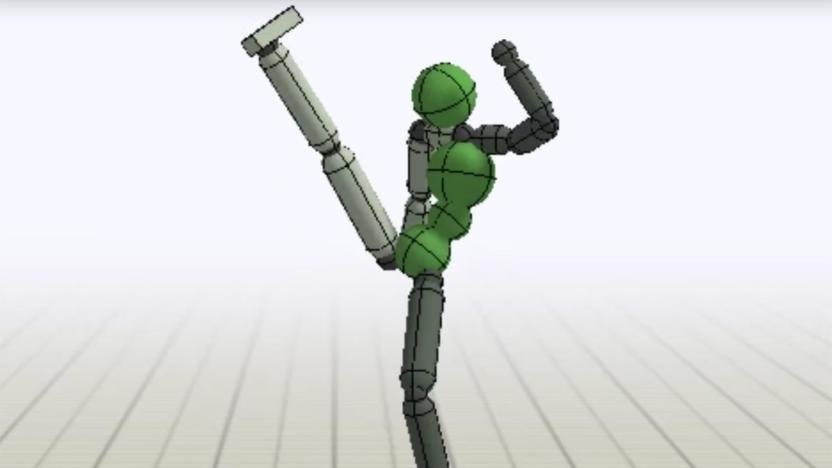
AI stuntpeople could lead to more realistic video games
Video game developers often turn to motion capture when they want realistic character animations. Mocap isn't very flexible, though, as it's hard to adapt a canned animation to different body shapes, unusual terrain or an interruption from another character. Researchers might have a better solution: teach the characters to fend for themselves. They've developed a deep learning engine (DeepMimic) that has characters learning to imitate reference mocap animations or even hand-animated keyframes, effectively training them to become virtual stunt actors. The AI promises realistic motion with the kind of flexibility that's difficult even with methods that blend scripted animations together.

Robot uses machine-learning to grab objects on the first try
Training robots how to grasp various objects without dropping them usually requires a lot of practice. But a new robot, designed by researchers at UC Berkeley and Siemens and described in an upcoming paper, can learn how to grip new objects just by studying a database of 3D shapes.
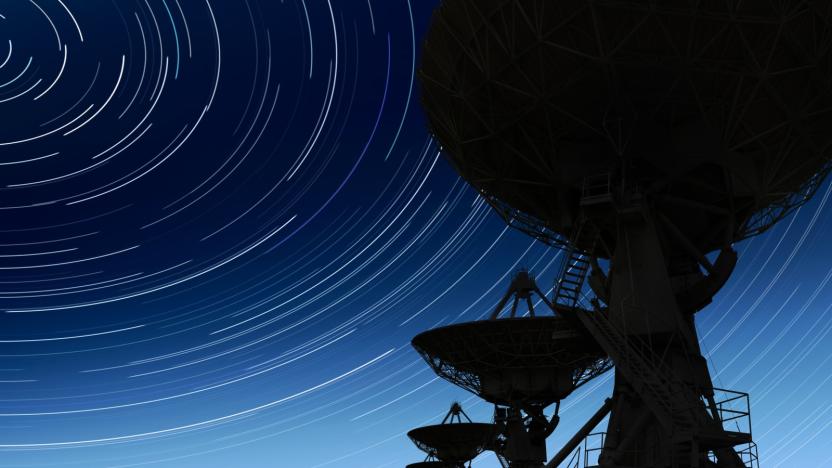
Listening to starlight: Our ongoing search for alien intelligence
Six hours a day, seven days a week, for four straight months. That's how long radio astronomer Frank D. Drake pointed the 26-meter telescope at the National Radio Astronomy Observatory (NRAO) research facility in Green Bank, West Virginia, toward the heavens, looking for signs of intelligent life beyond Earth. He dubbed his efforts Project Ozma, in honor of the Queen of Oz from L. Frank Baum's famed children's book series.

UC Berkeley researchers teach computers to be curious
When you played through Super Mario Bros. or Doom for the very first time, chances are you didn't try to speedrun the entire game but instead started exploring -- this despite not really knowing what to expect around the next corner. It's that same sense of curiosity, the desire to screw around in a digital landscape just to see what happens, that a team of researchers at UC Berkeley have imparted into their computer algorithm. And it could drastically advance the field of artificial intelligence.

'Reverse Prisma' AI turns Monet paintings into photos
Impressionist art is more about feelings than realism, but have you ever wondered what Monet actually saw when he created pieces like Low Tide at Varengeville (above)? Thanks to researchers from UC Berkeley, you don't need to go to Normandy and wait for the perfect light. Using "image style transfer" they converted his impressionist paintings into a more realistic photo style, the exact opposite of what apps like Prisma do. The team also used the same AI to transform a drab landscape photo into a pastel-inflected painting that Monet himself may have executed.

ICYMI: Using brain power to move a game character
try{document.getElementById("aol-cms-player-1").style.display="none";}catch(e){}Today on In Case You Missed It: University of Washington researchers were able to use a magnetic coil at the base of test subjects skulls to watch them play a simplified 2D computer game with just the power of their thoughts. Meanwhile UC Berkeley researchers built a small robot called the SALTO that weighs only 100 grams but is based on the jumping abilities of kangaroos. Google just created a bit of fun on its Twitter account, where users can tweet at the search engine with emojis, then get a response from the account show the nearest location for whatever taco or burger you need asap. 'Cause typing into a search bar is passé now, I guess. For your reminder that: Scientists, they're just like us!-- be sure to check out CERN's silly Mannequin Challenge. As always, please share any interesting tech or science videos you find by using the #ICYMI hashtag on Twitter for @mskerryd.
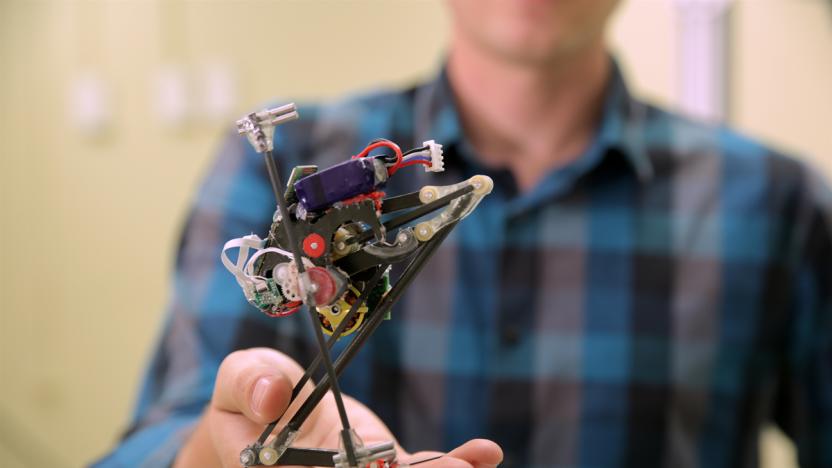
UC Berkeley researchers built a wall-jumping robot
Meet SALTO: a powerful new wall-jumping robot built by researchers at UC Berkeley. According to SALTO's makers, the diminutive, one-legged hopper not only has the "highest robotic vertical jumping agility ever recorded," but also the ability to link together multiple jumps in quick succession.
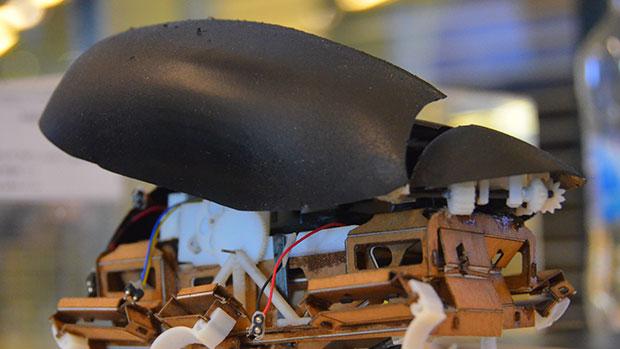
Latest robot roach can leap like the real thing
Look away entomophobes: a collaboration between South Korea's Seoul National University and UC Berkeley has created an unholy robotic cockroach that can not only crawl around to gross you out, but can also jump a solid five feet in the air and then prop itself up and keep on walking.

We're getting closer to real invisibility cloaks
We've been inching closer to real-life invisibility cloaks for a bit now, but going full on Harry Potter in the Hogwarts library is probably still a ways off. The latest advancement in metamaterial-based vanishing tech from Iowa State University guards whatever it's placed on from cameras, according to a paper published in Nature. The naked eye? Not so much. And even those cameras can't hide it from a human viewing a video feed, only other machines or perhaps radar. The researchers achieved this by embedding split ring resonators filled with galinstan into silicone sheets. Stretching those sheets is a form of tuning of sorts, and allowed the scientists to suppress certain radar waves up to about 75 percent. This type of tech could be used in a stealth fighter jet for example, as everything RF notes.
UC Berkeley warns 80,000 people over potential data theft
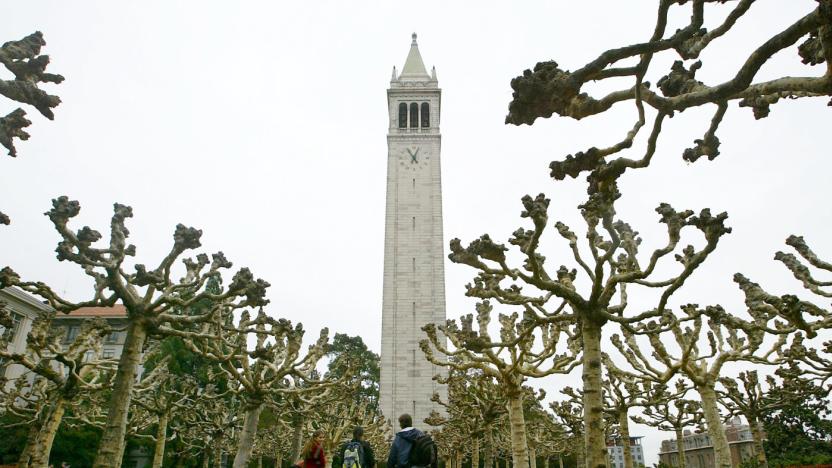
The University of California, Berkeley is warning 80,000 people -- including current and former students, faculty and vendors -- that hackers have accessed a computer system that stored their Social Security and banking information. The university says it has not found evidence hackers "accessed, acquired or used any personal information." Regardless, the school is warning people to keep an eye on their credit and is also offering free credit protection services for those impacted.

Inhabitat's Week in Green: Tesla's most affordable EV, and more!
Tesla just announced plans to launch its most affordable electric car next month. The Model 3 is expected to cost $35,000 and is set to debut on March 31st -- but it already has competition. Chevrolet showcased the Bolt EV at the start of the year, and Volkswagen confirmed that it's working on the world's first mass-market electric car. Meanwhile, Google is developing electric cars that drive themselves, and soon they'll be able to charge wirelessly. In aviation news, Easyjet announced plans to trial the first hybrid hydrogen plane, and Elon Musk is considering building a vertical take-off and landing electric jet.
Android app turns your phone into an earthquake detector
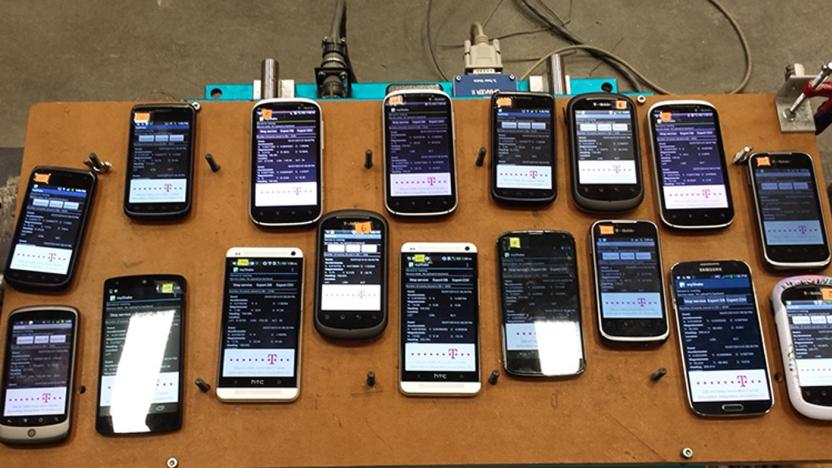
Your smartphone can already warn you about earthquakes. UC Berkeley, however, is going one step further: it wants your phone to help detect those quakes. The school has released an Android app, MyShake, that uses your phone's motion sensors to detect the telltale signs of tremors and combine that with the data from every other user. For all intents and purposes, you become part of a crowdsourced seismic station network -- you can confirm a quake just by leaving your phone turned on. That could be a big help when there aren't enough fixed stations to trigger an alert through conventional apps.

ICYMI: Smart sweat detector, AI for gaming and more
#fivemin-widget-blogsmith-image-261450{display:none;} .cke_show_borders #fivemin-widget-blogsmith-image-261450, #postcontentcontainer #fivemin-widget-blogsmith-image-261450{width:570px;display:block;} try{document.getElementById("fivemin-widget-blogsmith-image-261450").style.display="none";}catch(e){}Today on In Case You Missed It: Berkeley researchers developed a wearable sensor that can track the chemicals inside your sweat. The idea is that it can help identify dehydration, muscle fatigue and stress, though it could also help spot disease flare-ups for the diabetic.

Data-mined photos document 100 years of (forced) smiling
Here's an odd fact: Turn-of-the-century photographers used to tell subjects to say "prunes" rather than "cheese," so that they would smile less. By studying nearly 38,000 high-school yearbook photos taken since 1905, UC Berkeley researchers have shown just how much smiling, fashion and hairstyles have changed over the years. The goal was not just to track trends, but figure out how to apply modern data-mining techniques and machine learning to a much older medium: photographs. Their research could advance deep-learning algorithms for dating historical photos and help historians study how social norms change over time.

UC Berkeley to study climate impact of Uber and Lyft
Researchers at UC Berkeley's Transportation Sustainability Research Center (TSRC) have announced that they are pairing with NRDC Urban Solutions to study the climate impact of ridesharing schemes like Uber and Lyft. The study will examine whether such "ridesourcing" services have a positive impact, by replacing privately owned automobiles, or whether they actually put more cars on the road by competing with existing public transportation systems.
ICYMI: Giant air purifier, true invisibility cloak and more
#fivemin-widget-blogsmith-image-798641{display:none;} .cke_show_borders #fivemin-widget-blogsmith-image-798641, #postcontentcontainer #fivemin-widget-blogsmith-image-798641{width:570px;display:block;} try{document.getElementById("fivemin-widget-blogsmith-image-798641").style.display="none";}catch(e){}Today on In Case You Missed It: A 23-foot tall HEPA filter that looks like a building is running in Rotterdam, costing $1,000 a year to operate while cleaning up to 1 million cubic feet of air per hour. Scientists at UC Berkeley have hit on the tech that could lead to a true Cloak of Invisibility. For the first time, a 3D object has been hidden from visible light, using nanoantenna blocks which are usually found in solar panels. And the fastest human-powered bike on the planet just hit 85 miles per hour at a competition in Nevada.
First 3D map of Earth's interior shows where volcanoes come from
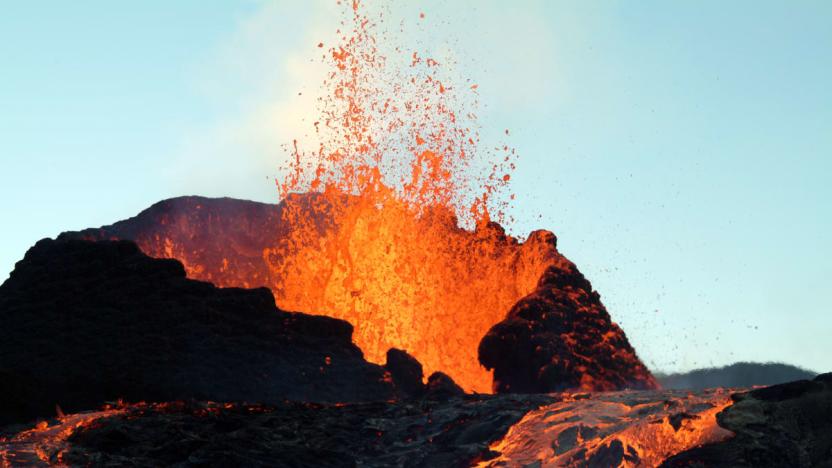
It's no secret that Earth's volcanoes are the result of magma rising through the planet's mantle, but have you wondered just where those 'roots' run? UC Berkeley can provide an answer. It just created the first-ever detailed 3D map of the Earth's interior by studying the path of seismic waves. The model shows mantle plumes (where the hot rock flows) starting at the bottom of the core-to-mantle boundary and climbing to the top, where they connect to volcanic hotspots in the Earth's crust. As it turns out, the plumes don't take a straight path -- they often spread out as they merge with the colder upper mantle. It's also clear that most of the world's volcanoes (such as those in the Pacific's island chains) ultimately come from two large "blobs" of hot rock at the core boundary.

Internet investor pours $100 million into the search for alien life
The hunt for extraterrestrial life just got a big leg up. Internet investor Yuri Milner and his Breakthrough Prize Foundation will spend $100 million supporting Breakthrough Listen, a project that will use radio telescopes, lasers and other equipment to search for alien signals. The cash will not only guarantee equipment time, but lead to dedicated processing equipment that could dramatically improve the discovery process. Researchers should not only cover several times more sky and radio wavelengths, but inspect both in greater detail and at higher speeds -- the radio telescope searches should run 100 times faster, even as they tackle five times as many wavelengths.


