ultra-wideband
Latest
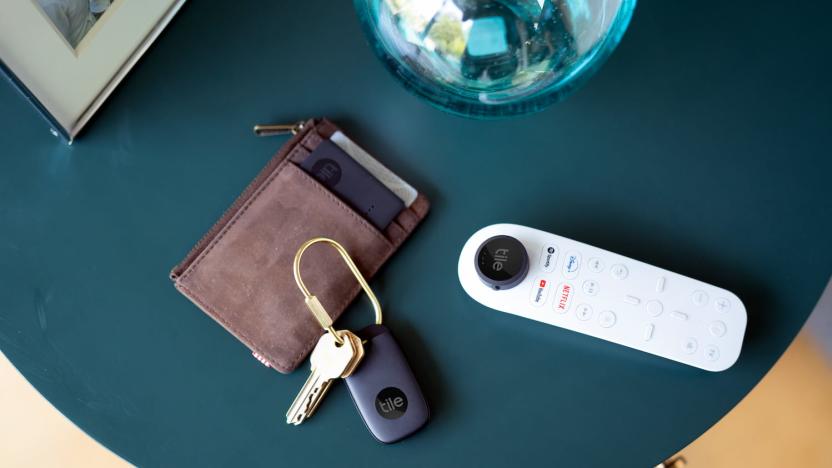
Tile's first ultra-wideband tracker will use AR to help you find lost items
The company has upgraded the rest of its lineup and introduced its most powerful model yet.
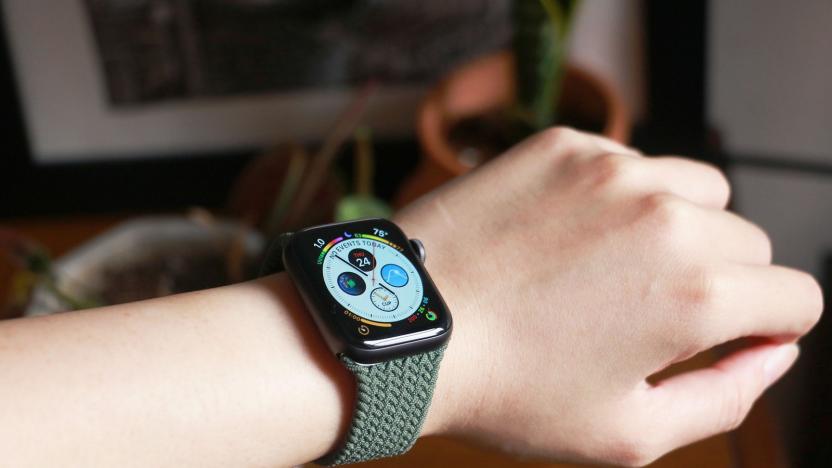
Apple Watch Series 7 could include a new screen and updated ultra-wideband tech
Future Apple Watch models could track your body temperature, although this year's models might focus on upgrades like the screen and a faster chip.
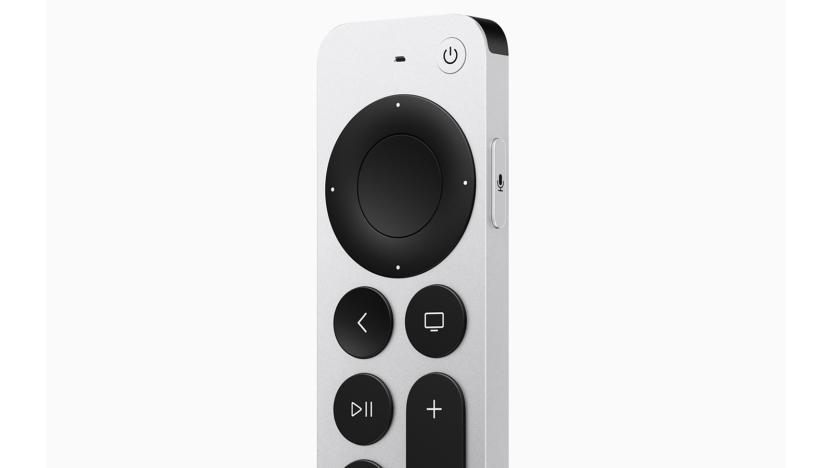
Here's why the new Apple TV remote doesn't have AirTag-style tracking
Apple says its latest TV remote doesn't have much need for AirTag-style tracking because it stays at home and is less likely to fall between seat cushions.
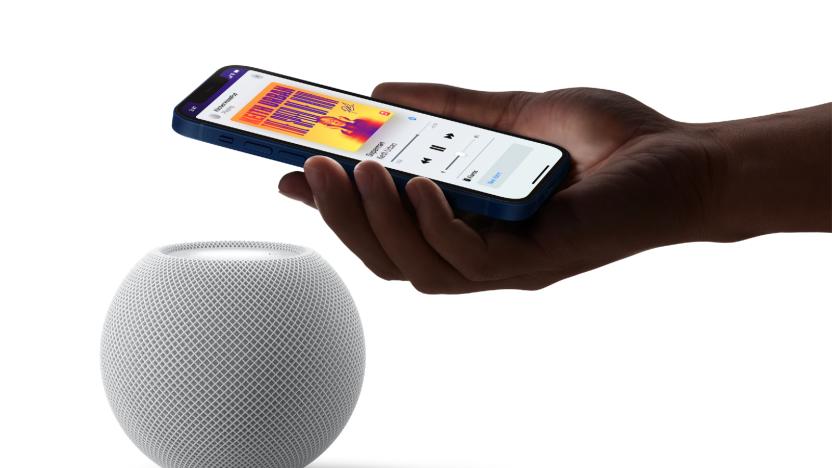
HomePod mini update adds UWB-enhanced handoff features
The new feature builds on the handoff functionality that’s already available on the company’s smart speakers.
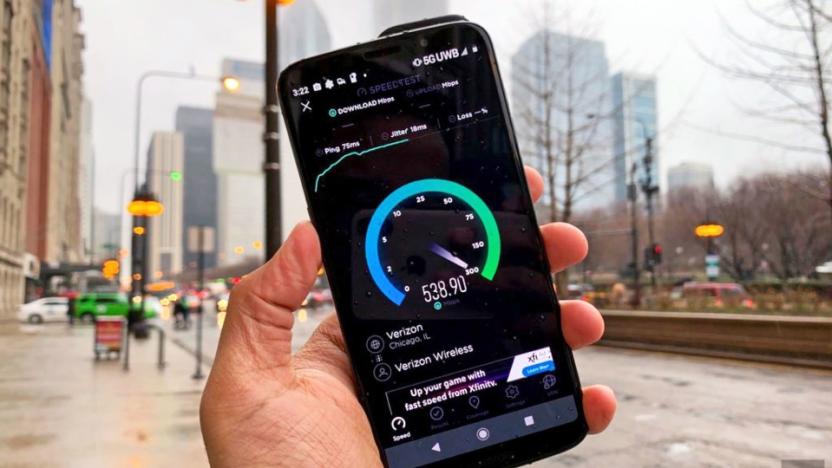
Verizon's latest prepaid service offers mmWave 5G for $75 per month
You can now access Verizon’s 5G Ultra Wideband service with a prepaid plan. The company has launched Verizon Prepaid Unlimited, a $75 per month option that includes access to its mmWave network. If you need a refresher, Verizon effectively offers two forms of 5G — basic 5G Nationwide, which is only slightly faster than 4G/LTE, and mmWave, which is harder to find but offers dramatically higher speeds.

BMW drivers will be able to unlock cars without touching their iPhone
The automaker is upgrading the BMW Digital Key with ultra-wideband tech.
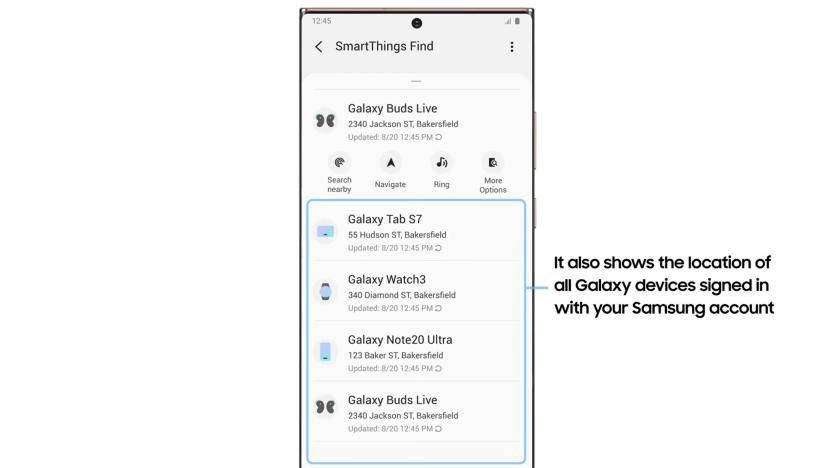
SmartThings Find app can track down lost Samsung Galaxy devices
Samsung has unveiled SmartThings Find, an app that uses a variety of technologies to locate your phone even if there’s no cell or WiFi signal.
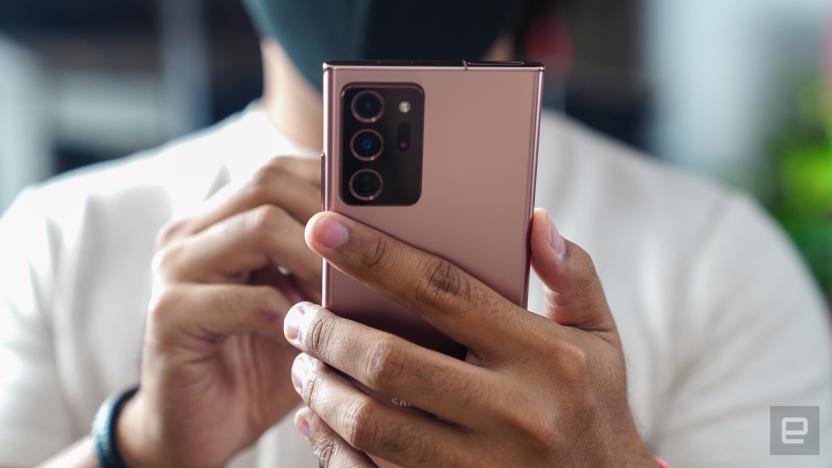
Samsung's UWB tech will let you use a Galaxy Note 20 Ultra as a digital key
As rumored, the flagship Galaxy Note 20 Ultra is Samsung’s first phone with newfangled ultra wideband (UWB) technology first seen on Apple’s iPhone 11. Samsung calls it Nearby Share, and it lets you point your Galaxy Note 20 Ultra at another Note 20 Ultra or future Samsung UWB device. It’ll then list all of those other devices or people at the top of a sharing panel.
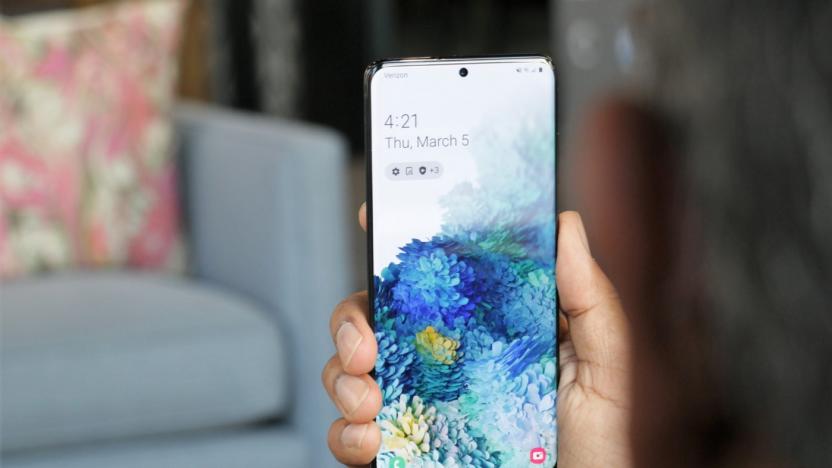
Verizon adds the standard Galaxy S20 with 5G to its lineup
Verizon is adding the Samsung Galaxy S20 to its lineup. The phone now supports millimeter wave 5G.

The base Galaxy S20 for Verizon won't arrive until the spring
The 'entry' Galaxy S20 doesn't have support for millimeter wave 5G, and it's now clear that will be a pain for some would-be early adopters. Verizon (Engadget's parent company) quietly mentioned in its press release for Samsung's phones that the base S20 won't be available until the second quarter of the year, when a model with support for Verizon's Ultra Wideband network will arrive. Verizon didn't have more to add in a response to Engadget (we've asked Samsung for comment), but the frequency support appears to be the only major functional difference. It'll still start at the $1,000 mark like at other carriers.

Verizon 5G goes live in parts of Los Angeles
Verizon (Engadget's parent company) is still rushing to meet its 5G coverage goals for the year, and it just crossed another big city off its list. The carrier has launched 5G ultra wideband access in Los Angeles, including areas in downtown, Chinatown, Del Rey and Venice. As elsewhere, though, you'll have to stick to certain major locations to have a hope of getting those promised speeds. The initial rollout focuses on landmarks like the LA Convention Center, Staples Center, Grant Park and the Venice Beach boardwalk. You may notice the speeds if you're attending a Lakers game or E3, then, but you won't have much luck keeping a signal as you walk to get your morning coffee.
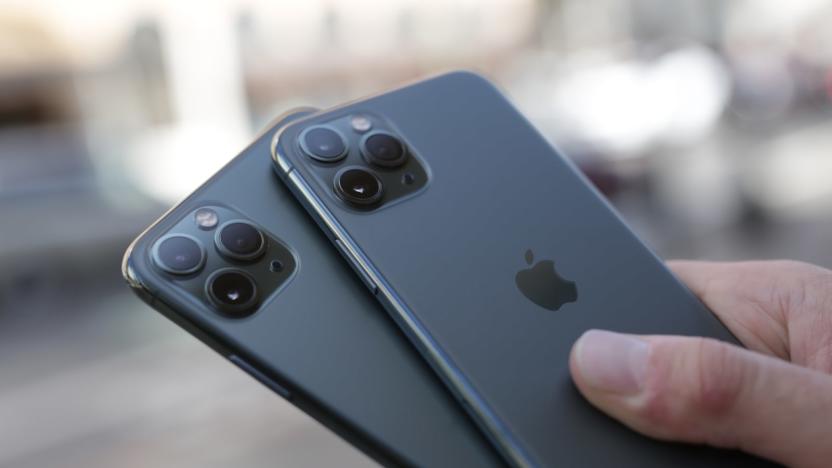
Apple explains why the iPhone 11 is always checking your location
Security researcher Brian Krebs recently raised eyebrows when he discovered that the iPhone 11 Pro (and by extension, the iPhone 11) is constantly checking for your location, even if you've disabled Location Services. Is Apple tracking your every move? Not really, it turns out. The company told TechCrunch in a statement that its newer iPhones need to perform location checks to legally use their ultra wideband chips. "International regulatory requirements" force Apple to turn off UWB in certain places, a spokesperson said, and the location checks are necessary to do that while making the technology available most of the time.

Verizon expands 5G to 'parts of' Boston, Houston and Sioux Falls
Verizon (Engadget's parent company) is continuing its ever-so-gradual 5G rollout in three cities. The ultra wideband wireless is now live in "parts of" Boston, Houston, and Sioux Falls -- notably, the carrier's 5G deployments in each state. As usual, though, there are catches. In addition to needing a supporting phone, you'll have to venture to some very specific areas if you hope to take advantage of that extra speed.

Verizon’s 5G network is available in (parts of) Dallas and Omaha
Verizon (Engadget's parent company) has expanded its 5G Ultra Wideband coverage to Dallas and Omaha, Nebraska. The service is now available in 15 cities, including Denver, Atlanta, DC, Detroit, Indianapolis and New York.
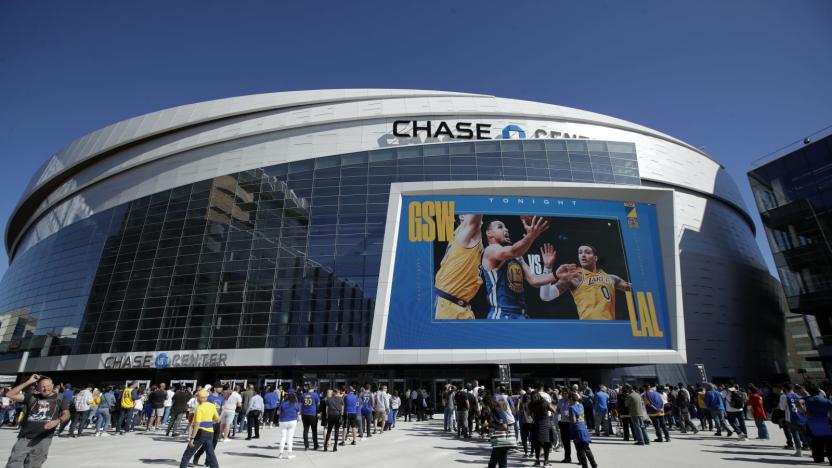
Verizon adds 5G coverage to three basketball and hockey arenas
You don't have to watch football if you want 5G coverage from Verizon (Engadget's parent company) while you're attending live sports. The carrier has switched on 5G coverage at three major basketball and hockey arenas, including San Francisco's Chase Center (home of the Golden State Warriors), Denver's Pepsi Center (Colorado Avalanche/Denver Nuggets) and Phoenix's Talking Stick Resort Arena (Phoenix Suns). Madison Square Garden is also on deck, although 5G is only slated as "coming soon."
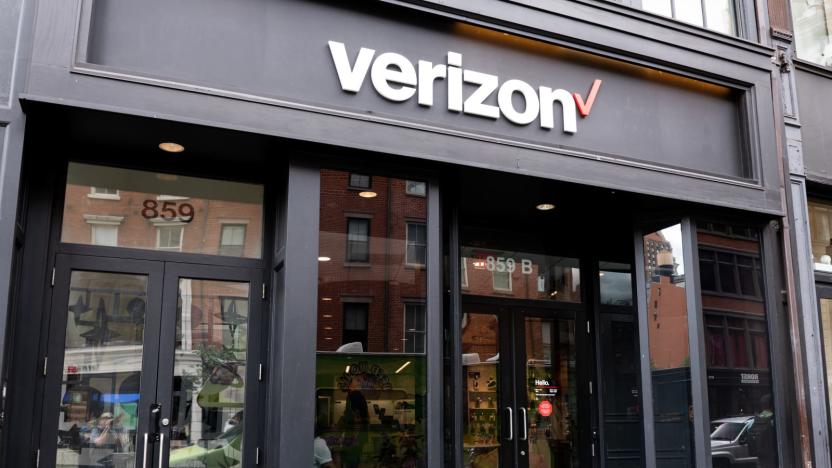
Verizon 5G goes live in parts of New York City
It took ages, but Verizon (Engadget's parent company) finally has 5G service available on its home turf. The carrier has switched on ultra-wideband 5G in "parts of" New York City that largely focus around heavily trafficked areas. In Manhattan, you'll find it in the Financial District, Harlem (including East Harlem), Hell's Kitchen, Midtown and Washington Heights. Brooklynites can find it downtown, while Bronx residents will find it in Fordham Heights, Hunt's Point and Pelham Bay. There are also pockets of 5G around major landmarks like Bryant Park, Madison Square Garden and the Theater District on Broadway.
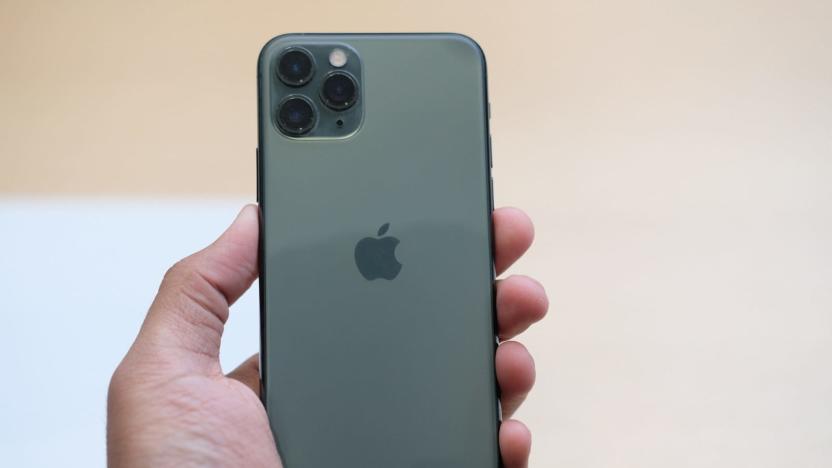
iPhone 11's ultra-wideband chip helps you AirDrop with the right person
Apple introduced the iPhone 11 and iPhone 11 Pro with nary a mention of its rumored tracking tags, but the underlying technology appears to be present and accounted for. True to earlier reports, all iPhone 11 models include an ultra-wideband chip, the U1, that should eventually have a variety of uses for highly precise location finding. Apple's product pages mention one feature that will be available very shortly, on September 30th: point your device toward someone else with a U1-equipped iPhone and AirDrop will prioritize them to share files faster. This won't make a night-and-day difference, but it could be helpful if you're trying to swap photos with a gaggle of iPhone-toting friends.

Verizon enlists Boingo to help it bring 5G indoors
Sure, real 5G is up to three times faster than LTE, but there are a few caveats. As we discovered in Chicago, 5G doesn't always hold up when you're trying to use it indoors. Even a pane of glass can cause your signal to flicker between 5G and 4G. Verizon (Engadget's parent company) and Boingo are hoping to change that. The companies are working together to bring 5G Ultra Wideband service to indoor public spaces, like airports, office buildings and stadiums.

Sony and Samsung resurrect ultra-wideband to improve location tracking
When it comes to short range wireless technology, there are certainly a couple of stand-outs. WiFi and Bluetooth, for example, are an integral part of everyday life. Others have come and gone, with some serving niche purposes or fading into oblivion entirely. Now, one that got a lot of hype in the 2000s but didn't quite have a breakthrough moment -- ultra-wideband (UWB) -- is having a resurgence thanks to a consortium of major names hoping to give it a new lease of life.
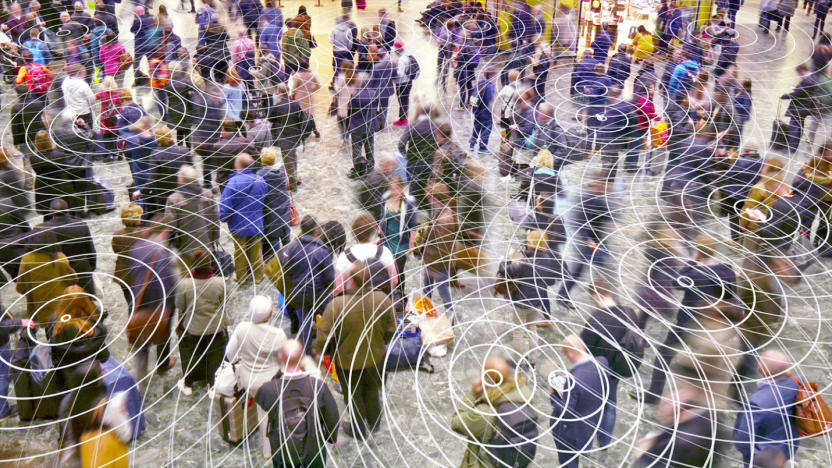
Your future devices might not need wireless radios
Seemingly every connected device has at least one wireless radio in it. However, that often requires some big compromises. Those radios often chew up a lot of power, which isn't always practical with Internet of Things gadgets that may not have much room for a battery. Disney Research may have a solution to that problem: ditch the radios entirely. Its scientists have developed technology that uses ambient radio waves to communicate. The approach uses very low-power sensor nodes to reflect radio waves from virtually any background source, whether it's a distant tower or the phone in your pocket. RFID tags already use a similar approach, but the use of many more sources and multiple channels gives you a much longer range -- in tests, the researchers achieved data links at distances up to 164 feet.


