

From the Royole FlexPai to the iPhone Duo: How the modern foldable phone has evolved
Are foldables finally ready to go mainstream?
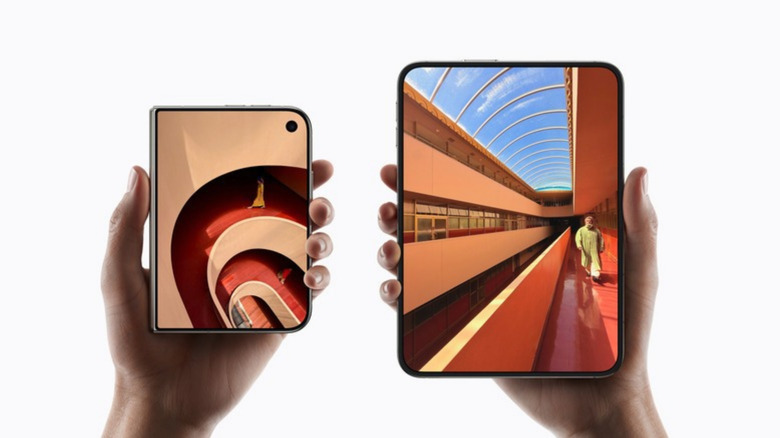
Technological advances often come with growing pains. This is no less true of phones. The 1984 "brick" phone (DynaTAC 8000X) required users to carry over 1.7 pounds of weight for only half an hour of talk time, at a hefty price tag of $3,995. Foldable phones are not so troublesome, but I still struggled to fit the Samsung Galaxy Z Fold 4 in my pocket when I first got it. What's more, the size of it kept prompting friends to ask why I was carrying two phones around. I wish I had been, for at least it would mean one would have a decent camera. Still, the moment when the phone unfolded and the screen adjusted to the larger size was as awe-inspiring back then as it is now.
Today, after having gotten my hands on some newer models, I have become very impressed by the lengths foldable technology has reached. Models including the Google Pixel 11 Pro Fold and the Samsung Galaxy Z Fold 8 have propelled the technology forward. Even Apple has decided to enter the market, with the iPhone Duo launch that has everyone talking. Suddenly, the future uptake of foldable phones is almost a certainty. Apple might well end up having everything to do with this change, but it would not have been possible without the long list of breakthroughs — and failures — that came before it.
The first stumbles: Royole, Samsung and Huawei
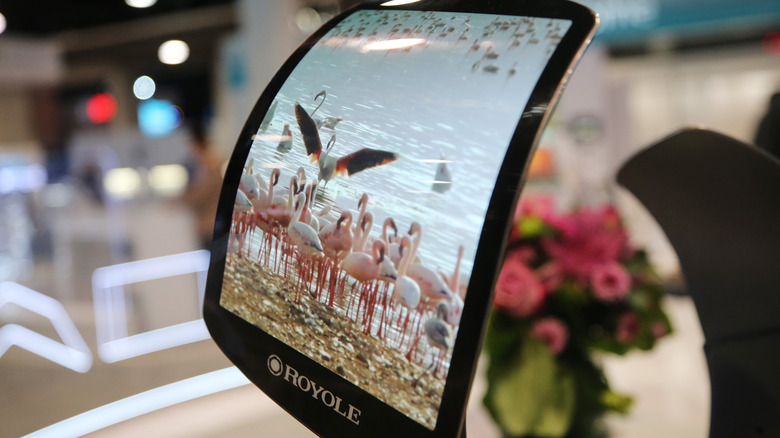
Trend pieces declared 2019 the "year of the foldable." It was not, though those 12 months did provide the first meaningful strides in the technology. The first device of this type to make a splash in the headlines was designed by an unknown Chinese display manufacturer: Royole. The company presented the FlexPai at CES 2019, with all the pomp and circumstance that "the world's first commercially available foldable smartphone" required. It was a feat of technology. It captivated the audience, if only momentarily. For all its charms, Engadget's reporters at the time found the Royole FlexPai to be "rough around the edges," strangely sized and, overall, "janky." Regardless, it demonstrated that flexible OLED could ship in a real product.
Later that year came a second attempt. Samsung's first Galaxy Fold was released in February 2019, kick-starting a series of unfortunate events for the phone manufacturer. If you were there, you might remember the influx of terrible reviews that followed. Despite a high price (just under $2,000), many reviewers complained that their phone screens had broken after little use, and it was revealed that most of them had peeled off a layer of plastic that was acting as a screen protector. The phone's fragility forced Samsung to delay the public launch and recall all units sent to reviewers so it could re-engineer the product. The new version was, however, only "somewhat" more sturdy. Overall, those first Samsung phones showed the importance of perfecting the crease, hinge durability and screen resistance as key to the success of foldable phones.
The next step showed the route not taken. Huawei's Mate X, presented at MWC 2019, folded outward instead of inward. It used a single high-resolution display that wrapped around the outside of the phone. The resulting design was extremely elegant. The problem? The screen could easily be scratched and damaged. On top of that, the phone was never sold in the United States due to the sanctions imposed by then-President Donald Trump on Chinese technologies. Still, for as striking as the Mate X was, the company's next foldable, the Mate X2, used the inward fold introduced by Royole and Samsung, showing that different does not necessarily mean better.
The Android maturity years
The years between 2020 and 2025 gave way to an avalanche of foldable phone models, pushed by Android phone makers. Almost every phone released over these years came with a significant advance. It was all this hard work that has made the foldable phone viable. Still, no specific model achieved what the manufacturers truly wanted: to make the foldable phone mainstream.
At first, foldable phone makers were mainly concerned with protecting the screens against pressure, water and dust. In 2020, Samsung's Galaxy Z Flip introduced ultra-thin glass in the inner screen, making it more robust. The Z Fold 3 and Z Flip 3, released in 2021, came with IPX8 water resistance. Dust was harder to protect against than water, but still the Fold 6 came with partial dust protection (IP48). In 2025, Google's Pixel 10 Pro Fold reached full IP68. The other big battle was how to address the crease. It was Oppo, with its 2021 Find N, that achieved a near-invisible crease. After that, Honor's Magic V series kept cutting thickness until Samsung answered with the slim Galaxy Z Fold 7.
The other element that needed to change for the technology to be widespread was pricing. Over this period, clamshell phones like the rebooted Motorola Razr and the $999 Galaxy Z Flip 3 brought prices down to regular flagship levels, making foldable phones better for everyone's physical and figurative pockets.
Apple comes to town
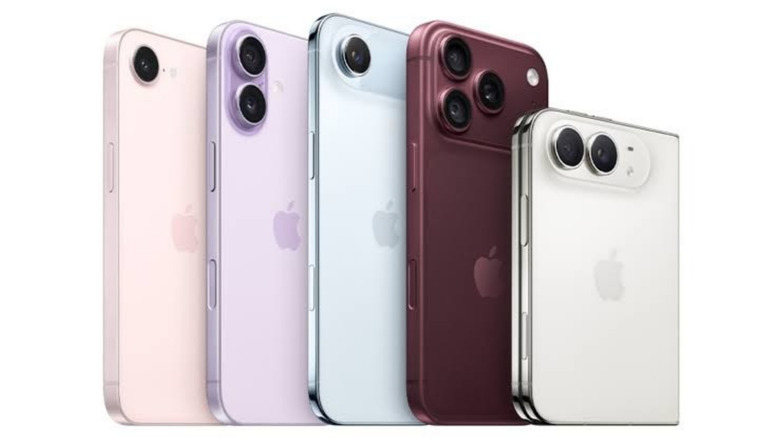
Can Apple make the final push that will take foldable phones into the mainstream? It has done it before and could, no doubt, do it again if the iPhone Duo is everything that has been promised.
During its history, Apple has mastered the ability to wait until the first hiccups of a technology have passed before entering a market and disrupting it. The company did it with touchscreens, and again with foldable phones, waiting until the crease problem that Samsung struggled with had been resolved before putting out its own model. In 2026, the announcement finally arrived in the form of the iPhone Duo. Folded, the phone is passport-sized. It has a 7.6-inch internal display and a 5.4-inch external display, at a starting price of $1,999. Overall, it has all the ingredients to be a huge success, with reviewers deeming the iPhone Duo Apple's "most exciting device in a decade." Counterpoint even told Bloomberg the phone's sales are expected to reach 6 million units in 2026 alone. Taking Apple's history as a guide, we could be about to witness the exact moment when foldable phones finally become fashionable.