Sean Cooper

Engadget Editorial Policies

The unique content on Engadget is a result of skilled collaboration between writers and editors with broad journalistic, academic, and practical expertise.

In pursuit of our mission to provide accurate and ethical coverage, the Engadget editorial team consistently fact-checks and reviews site content to provide readers with an informative, entertaining, and engaging experience. Click here for more information on our editorial process.

Stories By Sean Cooper

  • The Ecobee3 Lite is a decent smart thermostat that costs less than most

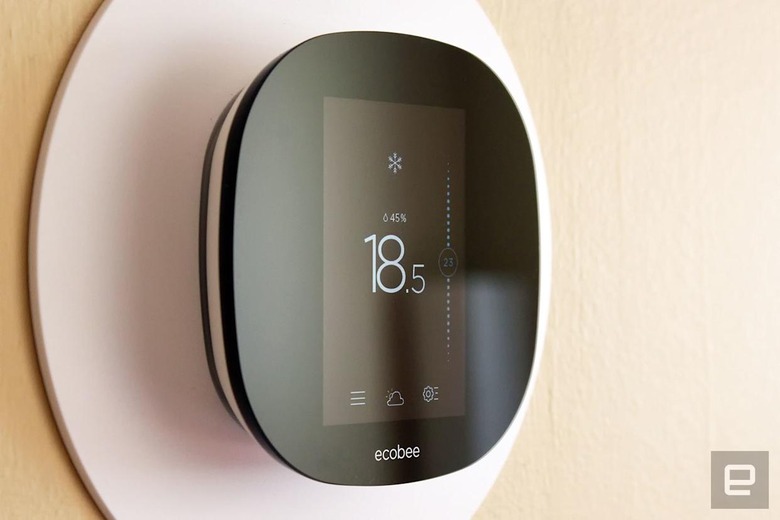
    Most thermostat makers now have at least a single entry in the smart-home category, with some already on their second- and even third-gen products. All are vying to provide consumers with smarter, simpler controls for home heating and cooling. The new Ecobee3 Lite isn't the company's first such device, but it does mark the brand's attempt to hit a much lower price point. With a $169 MSRP, it costs $80 less than the original Ecobee3 as well as the Nest, and is $30 less than the Honeywell Lyric. But in order for the company to hit that price and still keep the flagship model relevant, some features had to go.

    By Sean Cooper Read More
  • How modern tech saved my 'Dragon's Lair' arcade game

    In the early 1980s, the arcade was still the place to play the newest and best video games. Sure, consoles existed, and were just starting to give arcades a run for their money -- and were even starting to shed their wood-grain home-furniture look for a more modern feel. But home play still lacked the arcade's mystique. As attendance began to dwindle, game makers started looking for a hook; something incredible and new that would lure people back to the arcades to spend their quarters.

    By Sean Cooper Read More
  • Watson's melt-in-your-mouth Moroccan almond curry

    'Cognitive Cooking with Chef Watson' is a collaboration between IBM and the Institute of Culinary Education in New York City. As part of an ongoing series, we'll be preparing one recipe from the book until we've made all of them. Wish us luck.While it's no great surprise to see Watson conjuring up unusual flavor blends, I was surprised to find such subdued in this Moroccan almond curry. On paper the recipe looked to be leaning toward bland, but its clever combination of all the elements worked. Traditional Moroccan lamb curries have intense flavors highlighted by garlic, onion, sometimes ginger, cinnamon and then sweetened with honey and dried apricot to balance lamb's strong taste. Here, though, Watson prescribes small amounts of cardamom, cumin, turmeric. All told, the recipe is comprised of four separate parts, which you'll later pile together. These include: the curry-braised lamb, a pea puree, green salad and plain old basmati rice. This is a great choice if you want to show off for guests, and yet it's easy too: Because the meal is broken up in stages, much can be done the day before. It's also mild enough that even the pickiest eater will find some joy in the dish. I fed it to a couple kids under ten and they both ate it up.

    By Sean Cooper Read More
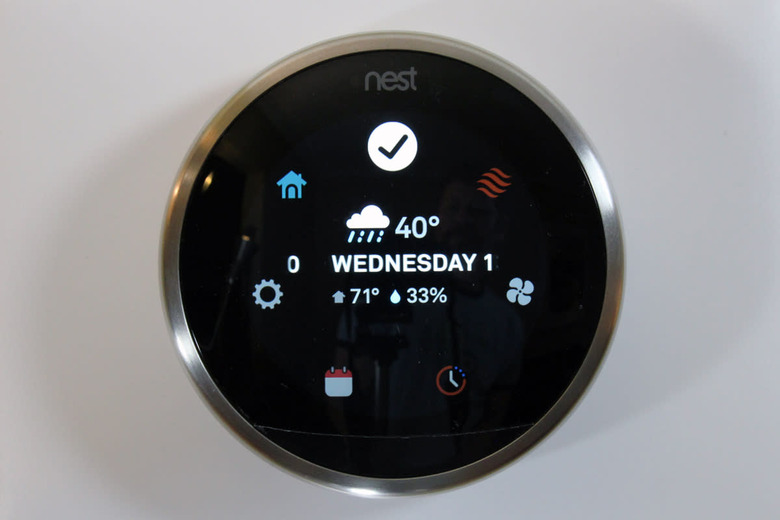
  • A month with Nest's latest smart thermostat

    Nest's programmable thermostat has just turned four, and the company marked the anniversary with the debut of its third-generation device. Four years ago, thermostats were still boring blocks stuck to your wall and while programming them was already possible, it was always a painful process. Once you'd fixed your temperature schedule with an endless collection of up- and down-arrow keypresses for Sunday through Monday, that selection remained fixed, with the very thought of changing the schedule leading to cold sweats. Typical configurable settings included a schedule for cool, heat and occasionally vacation mode. I've lived with one for ages and it has run faithfully, always following the schedule I made when I first set it up many seasons ago. I've coveted the Nest thermostat since launch and so, when I was recently offered an opportunity to use the newest version at home I jumped at the chance to see if it would really make a noticeable impact on my world.

    By Sean Cooper Read More
  • How I nearly became hooked on a $335 laptop bag

    When I was first approached about checking out the WaterField Designs $335 Rough Rider messenger bag, it occurred to me that I've never written about something as decidedly non-technical before. Let's face it: When I plop down my case and begin unloading my work stuff, my focus has always been on the contents, not the vessel. But once the bag arrived, I realized this San Francisco outfit doesn't just peddle any old type of gear; its handmade leather goods (crafted in the US, to boot) are something truly special. Still, coming from a world of ultra-padded messengers, I was worried if it would be quite good enough to do the job. So I broke up with my cushy day-to-day bag and switched to this all-leather interloper to see how I'd fare.

    By Sean Cooper Read More
  • CES 2015: The year cars got truly smart

    CES 2015, like last year's event, had a very large auto presence, perhaps even a banner year for CES. Expect it to grow again next year; in fact we wouldn't be surprised to see it start to run over into other halls. Not only did the likes of Ford, GM, BMW, Audi and Hyundai have a presence, but we also saw a new prototype launch and the very first glimpse of the new Chevy Volt. Imagine that, a week or so before the Detroit Auto show, the North American International Auto Show, and yet we got a very significant car teaser. Of course, it's no surprise that CES is getting so much attention from automakers; cars have become synonymous with tech and CES is still the pre-eminent tech show. Jump in to the post and let us walk you through the highlight reel.

    By Sean Cooper Read More
  • Toshiba's Virtual Fitting Room doesn't have menswear

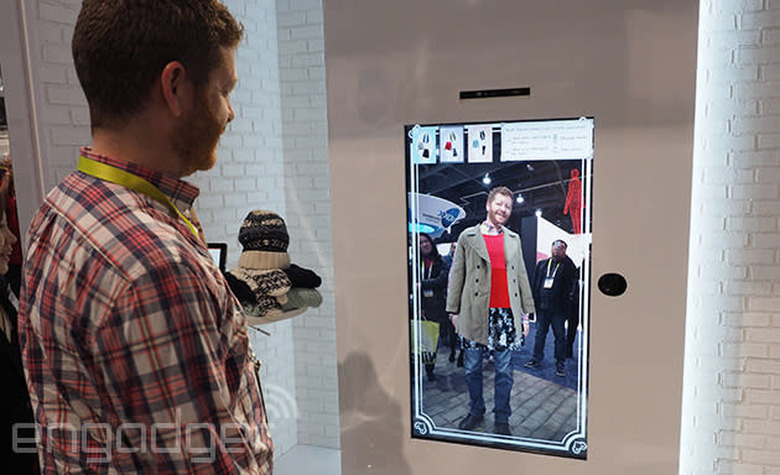
    Toshiba was demoing its Virtual Fitting Room at CES this year. The premise is simple: Stand in front of a large display while your image is projected on it. Using a Kinect for motion tracking, Toshiba's software is able to superimpose various outfits onto your reflected self. Hold your right hand up to change outfits and your left to snap a selfie, which the software then throws up as a QR code so you can grab your pic. Typical of this type of virtual thing, the clothes tended to wiggle about and were a bit ill-fitting, but they were women's outfits, so we'll give them a break there. We can see practical applications for trying clothing combinations without having to use a dressing room if you're in a hurry, for example. Though, we don't think using it for sizing would be useful at all, which is a large part of a fitting room's job.

    By Sean Cooper Read More
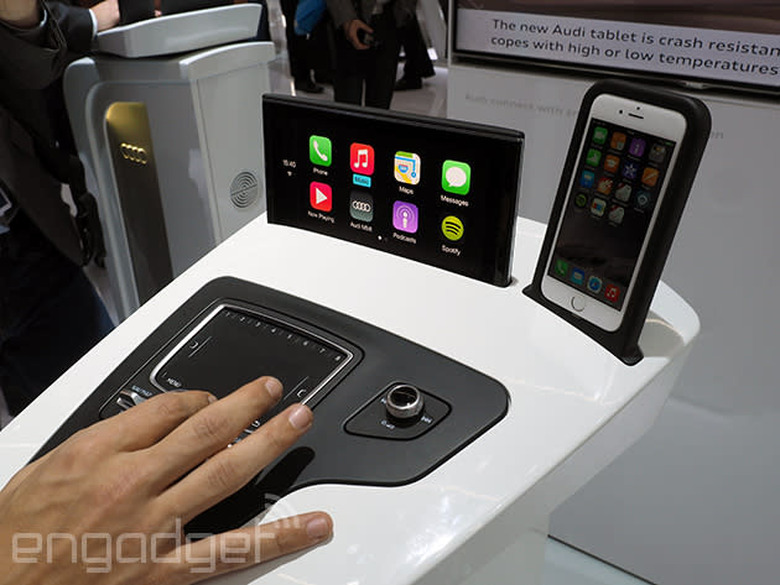
  • Audi's latest Q7 supports Android Auto and CarPlay

    It seems Audi's Q7 is brand agnostic, at least in the Android vs. Apple battle: It hasn't yet chosen between Android Auto or CarPlay. The demos at CES this week are set shoulder to shoulder with Audi's HMI (Human Machine Interface) connected to either an Android device or an iPhone. Using the MMI knob -- if you've been in an Audi before -- is as intuitive as you remember, but instead of navigating through the factory system, you're now going to be using your phone interface. Once you've selected either CarPlay or Android Auto from the main menu, the phone's interface takes over. The steering wheel includes a button to activate Siri or Google Now for voice input and the wheel will scroll you through either system's menus. No surprises here as far as functionality, but the fact that the carmaker began to support both almost as quickly as heavyweights like Pioneer is an impressive feat. Look for this in Audi cars starting with the 2016 Q7 when it starts hitting showrooms this year. We look forward to couples everywhere finally settling the "Apple is better/Android is better in a car" question once and far all.

    By Sean Cooper Read More
  • The Maserati of the future has cameras and displays instead of mirrors

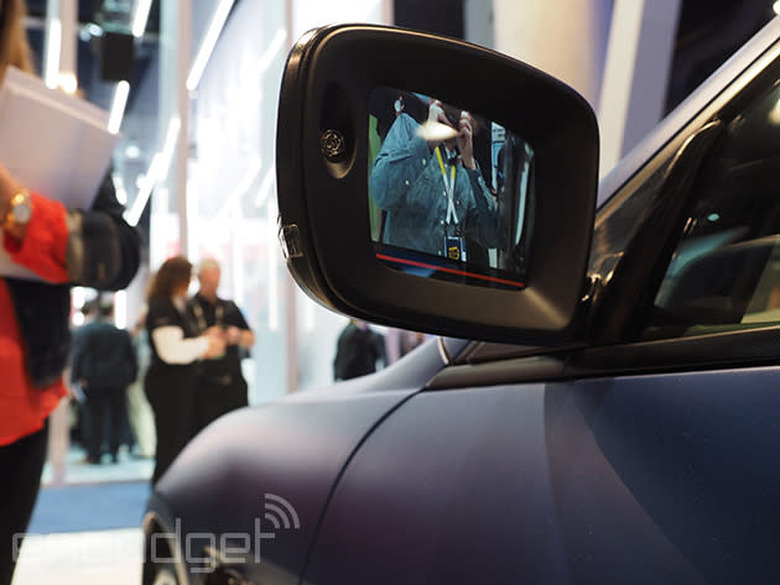
    QNX has become something of a staple for us here at CES, wowing us each time with new and more compelling auto gear packed inside the finest cars. This year's no different, as QNX has shown up with a flat blue Maserati Quattroporte GTS that has received a complete technological overhaul. What's most impressive to us is that the rearview and side mirrors have been completely gutted and replaced with cameras and displays as part of its ADAS (advance driver assistance systems) demonstration. Unlike typical car mirrors, the cameras on the QNX car are able to easily reposition when reversing, for example, offering you a safer view.

    By Sean Cooper Read More
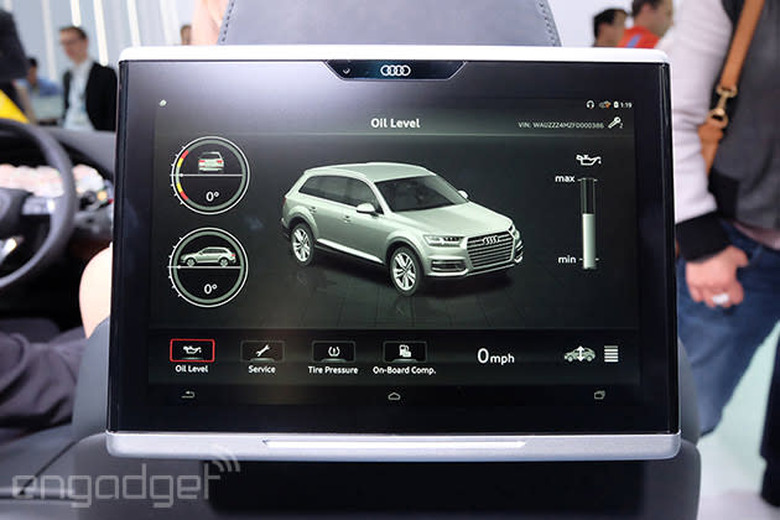
  • The most beautiful tablet you'll ever own comes with an Audi Q7

    Audi teased its tablet at last year's CES, but then went completely quiet until its press event at this year's show. The quick demo we were treated to focused on how well the tablet is integrated into the Q7; the specs were clearly an afterthought. Audi has this dead right: Sure it's a 10.1-inch tablet being driven by a Tegra 4, but we didn't care about that at all. We were wowed by its beautiful design, and how well thought-out every little thing is. For example, the matte display is designed to reduce micro vibrations passing through the car -- and as we saw in a demo, they are incredibly distracting. The display was also tested to ensure that during an accident, it wouldn't shatter -- from your face hitting it -- and have the shards cause further injury to the people in the car. The tablet's housing is a solid piece of beautifully sculpted aluminum with curved corners and smooth edges.

    By Sean Cooper Read More
  • BMW's autonomous i3 learned how to park and forgot how to crash

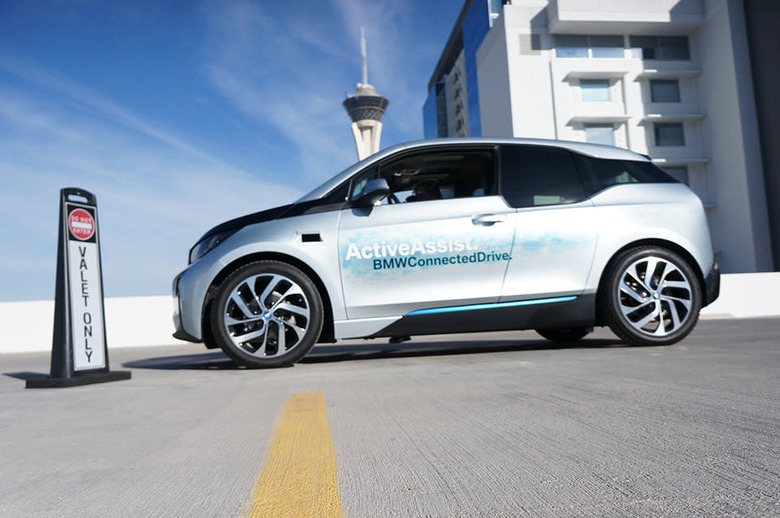
    BMW is at CES this week demonstrating some of its newest advances in the field of highly autonomous driving. If you remember, last year we were taken to the Las Vegas Motor Speedway and sped around the track in a tricked-out driverless 4 Series. This year's theme remains essentially the same, though rather than focusing on high-speed driving and drifting, the German automaker has slowed everything down. We were invited to a hotel's rooftop parking area where a couple BMW i3s were parked at either end of the space. One would demonstrate 360-degree collision avoidance and the other fully automated parking. They both did a very impressive job.

    By Sean Cooper Read More
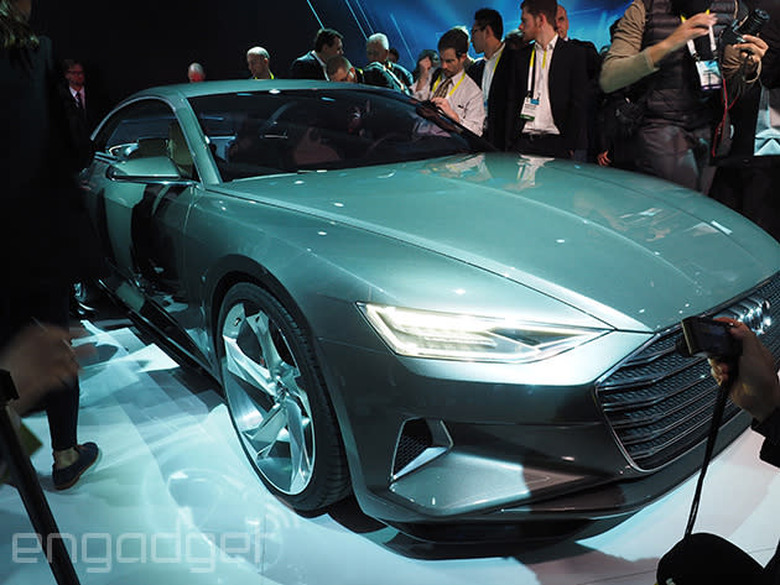
  • Audi's vision of the future includes watch-controlled cars

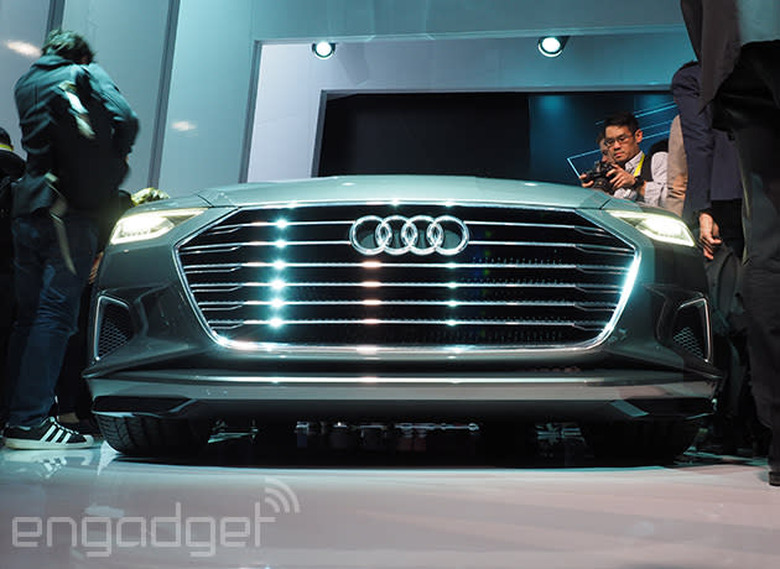
    Audi's press event this morning began more like a best-of tour or a walk down memory lane covering every year Audi has been at CES. This year's showing then rolled on to focus on its Prologue concept car, which appeared dramatically onstage at the touch of an as-yet-unannounced LG smartwatch. Audi's Ulrich Hackenberg then went on to discuss the A7 piloted-driving car that drove itself from San Francisco to this show; that's more than 550 miles. If you were around for Audi's event last year, you'll likely remember the Audi tablet, which was announced, but never really shown or detailed in any meaningful way. That tablet will finally make a real appearance in the 2016 Q7 and enable passengers to control car functions and infotainment while driving. We'll have more details on everything Audi has to show soon, so in the interim, have a peek at the gallery for a few more shots.

    By Sean Cooper Read More
  • Charge your phone while you jam out on Phaz's headphones

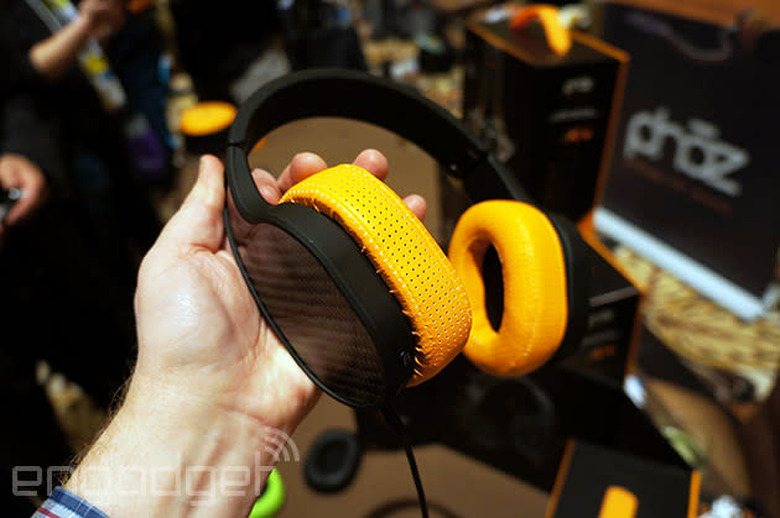
    Phaz is hoping to grab some of your dollar's music-listening attention with its newly launched P2 headphones. This over-the-ear headset is powered -- while in active mode -- by a 1,200mAh battery that'll also charge your phone via a USB port while you're listening. The controls are dead simple: On the bottom of one earpiece is a button that fires up the headset's amplifier to ramp up the sound output and on the other is a button for 15dB of bass boost, though neither are necessary to listen to music. These cans are surprisingly light and come wrapped in carbon fiber from the housing to the head strap, and while that look is often reserved for the automotive world, it works well here. The perforated leather-material cups are soft, comfy and come in orange, purple, green or black. We only had a quick demo at the show and while the Phaz P2s did sound fine, the ridiculous level of the background sound means we'll need another listen to really judge them. The headset is available for $249 on pre-order now and should start shipping in April.

    By Sean Cooper Read More
  • mamaRoo's electric baby rocker can now soothe by Bluetooth

    While baby care gear isn't what you'd traditionally expect from CES, 4moms was on hand to demo a new version of its mamaRoo baby rocker. Gone are the days of having to sneak up on your resting child commando-style to switch modes or slow the device down. The mamaRoo rocker now packs Bluetooth connectivity, a snazzy display and an improved rocking mechanism to help keep junior snoozing while you sip a glass of red... for heath benefits. The iOS and Android apps will also let you select from a variety of white noise presets or enable play of your media player via a 3.5mm connector. Devices cost between $239 and $269 depending on your plush fabric choice and are slated to ship soon.

    By Sean Cooper Read More
  • Toyota shares its fuel cell patents to help its hydrogen dreams come true

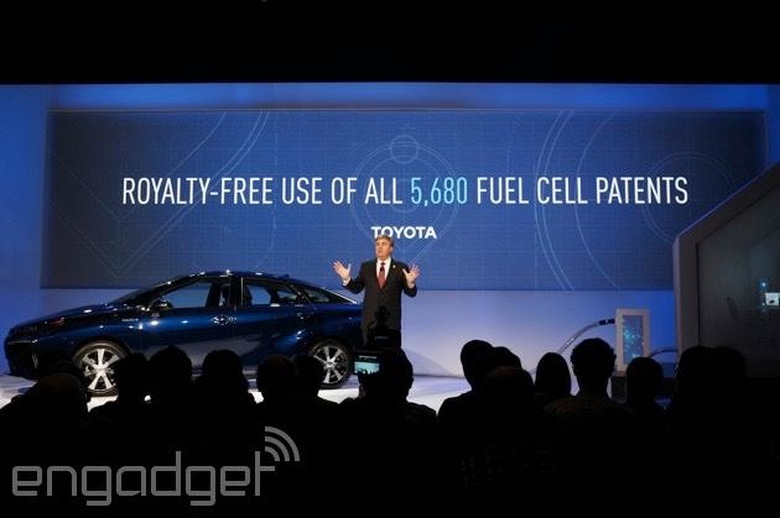
    Toyota's apparently hedging it's bet in the hybrid world by also gambling on a hydrogen-powered future. In an apparent attempt to drum up some development support, all 5,680 or so of Toyota's FCV (Fuel Cell Vehicle) patents developed for and in support of the Mirai are being tossed out to the world for use royalty-free. Included are some 1,970 patents related to fuel cell stacks, 290 to high-pressure hydrogen tanks, 3,350 involving the software to manage the system and a further 70 for production and supply. The fuel cell patents around the actual cars will remain royalty-free until 2020, while the others around production and supply will stay royalty-free for an unlimited time.

    By Sean Cooper Read More
  • The key to unlocking this smart luggage lock is NFC

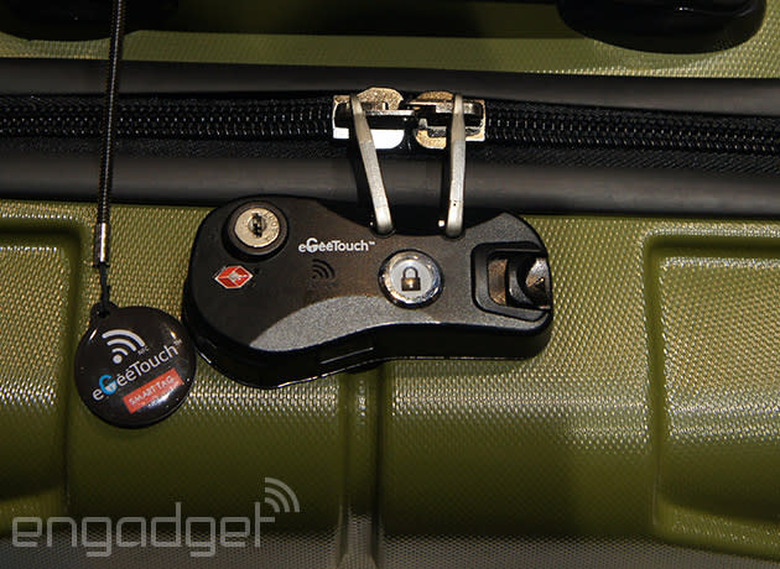
    eGeeTouch seems to have solved a travel problem we weren't even aware we had. Rather than having to fumble with a dial code or a key that's been TSA approved, the company's keyless smart lock uses NFC and a battery that should perform for 30,000 cycles between changes. Push the unlock button to activate, swipe the included NFC badge or your phone over the lock, and then slide the catch to unlock the lock. Battery die mid-trip? No worries: You can still use the device's physical key or a USB port on the side that will power it while you activate the lock to open it. While the eGeeTouch's developers don't have any immediate plans to sell the lock as a standalone device, they're already in talks with luggage vendors to have this on the market by the second quarter of the year.

    By Sean Cooper Read More
  • Kwikset's Kevo lets you lock your home while on vacation in Tahiti

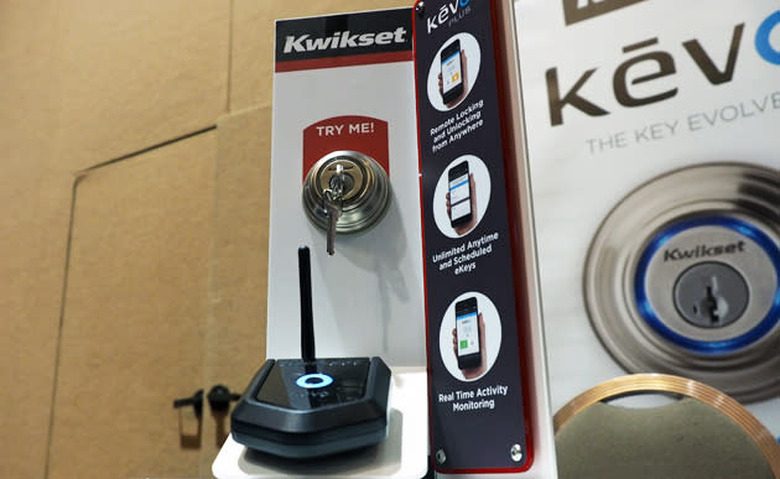
    Kwikset launched its Kevo Plus service today, which finally brings its number-one-requested feature to life: remote locking and unlocking. Launching in spring of this year, the service will enable new and existing Kevo lock owners to upgrade their systems via a Bluetooth-enabled gateway shipped with their introduction package. The Plus platform will come with unlimited Scheduled (for a home cleaning service for example) and Anytime eKeys, remote locking and unlocking and real-time monitoring. The gateway connects to your home's internet router and interacts with the Kevo lock via Bluetooth Low Energy to either track activity or activate the lock itself. Apple products are supported across the board, though Android support is currently limited to Lollipop on the Moto X, Moto G and the Nexus 6. No word on pricing for the Plus service, but with a bit of shipped hardware attached to the deal, we suspect it'll cost more than $20.

    By Sean Cooper Read More
  • Engadget is live from CES 2015!

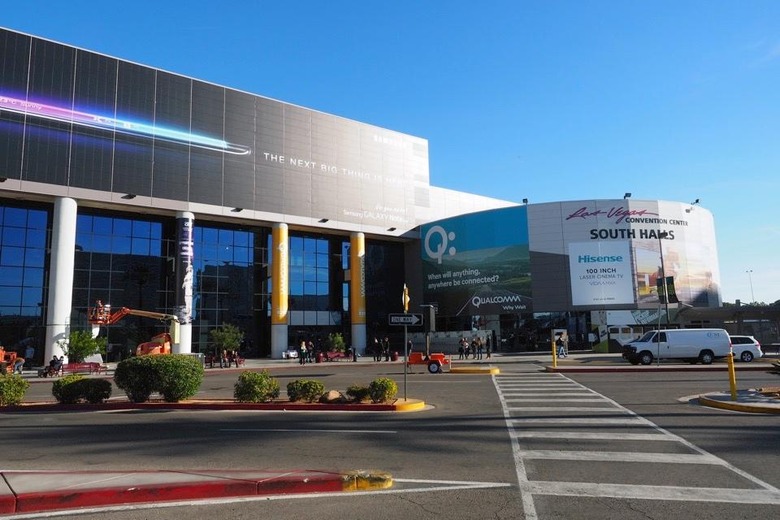
    The team's slowly making its way to Las Vegas for the 2015 edition of the Consumer Electronic Show. Samsung's massive banner is already boasting that the next big thing is here, though, with the official start of the event still a few days off, only time will tell. Each year's show produces a darling category that garners all the media attention and this year's event will likely be no different. 4K sets? Wearables? Something Sony? Perhaps the connected home or even a complete surprise could be what everyone ends up buzzing about this week. The fun is just starting so keep your eyes glued to the site as we fill these pages with all that we see. We're about to start our yearly sift through nearly 2 million square feet of exhibit space and the unending crush of the faithful to bring you the very best of this year's CES. For a closer look at what to expect at this year's show, check out our CES previews after the break.

    By Sean Cooper Read More
  • What you need to know about dashboard-mounted car cameras

    We've all had it happen while out walking, cycling or driving. Somebody does something foolish and it results in an accident or a near miss, a giant meteor comes streaking through the sky or we catch a rare glimpse of a hoverbike-riding robot. Something memorable always happens when your phone is cached safely in your pocket. This typically leaves you shaking your fist at the missed opportunity. Victim of road rage? An accident? Ever had your car dinged while parked in a public lot? These are all great reasons to invest in a dash cam. And with prices for decent units at well under a hundred bucks, the cost of admission is easy for just about any budget. While the technology may not appeal to everyone, the payoff in the unfortunate event of an accident might just make it a must-have. So if you're in the market for a dash cam or you're just plain curious what they're for, here's what you need to know.

    By Sean Cooper Read More
  • What you need to know about card skimming

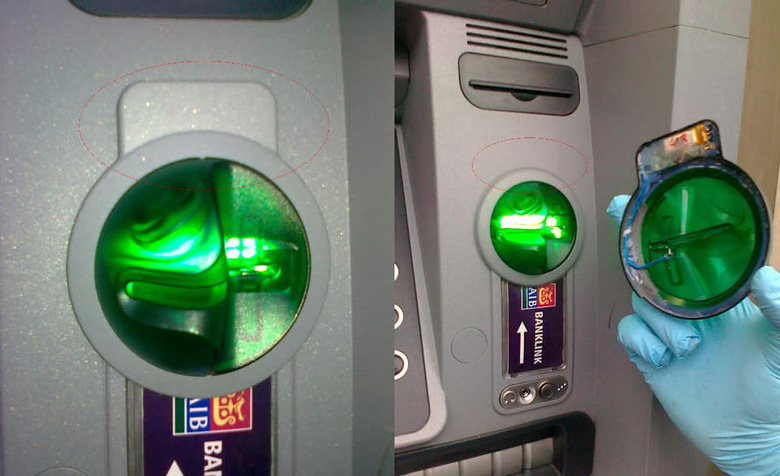
    "Skimming" is a blanket term used when referencing a crime where you take small amounts of money. It literally means to take cash off the top, as if money were the sweet cream floating atop a cauldron of lesser riches. Fifty years ago, skimming might have meant stealing a handful of dollars from your employer, or even millions in elaborate scams we've seen in countless Hollywood films. Today's skimming, however, employs tricks and hardware that are absurdly complex and yet sneaky enough to elude detection. Unless you know what to look for, of course. Today's world of skimming is high-tech, and it wants your credit card and banking info. Though we can't help you catch every conceivable method that crooks are using to try to rip you off, being armed with a bit of knowledge on the topic could save you major hassle down the road. No matter what you take away form this read, at a minimum you'll never look at an ATM or POS terminal the same way again.

    By Sean Cooper Read More
  • This is what Plex looks like on Android TV

    Hot on the heels of all the Google I/O announcements today, the good people at Plex have let us know that a new version of its app is on the way for the newly launched Android TV. Plex for Android TV isn't a rehash of the Google TV app, but a whole new creature built for the new system. Coupled with Android TV's lovely new UI and features like voice control, Plex says users will have access to all-new ways to enjoy their media. We have to admit we're seriously excited to get our hands on yet another way to get Plex into our lives. None of this is available just yet, of course, so while we wait, have a peek at some screens of what the new system will look like.

    By Sean Cooper Read More
  • Google boosts in-car connectivity with Android Auto

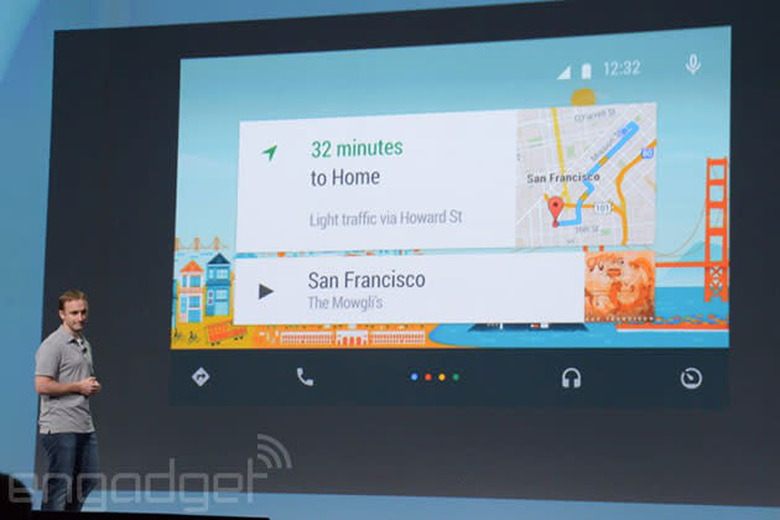
    The Open Automotive Alliance finally shows a product at Google I/O after its launch back in January of this year: Android Auto. Members including Google, Audi, Honda, GM, Hyundai and chipmaker NVIDIA have been collaborating to bring Android safely to the car in 2014. Rather than the more traditional model that sees smarts baked into the car's head unit, your phone will project its OS and the app in play onto the car's screen -- much like AppRadio does now. The big benefit here is as your phone updates, your car's center stack gets better without you needing to fiddle with it.

    By Sean Cooper Read More
  • What you need to know about self-driving cars

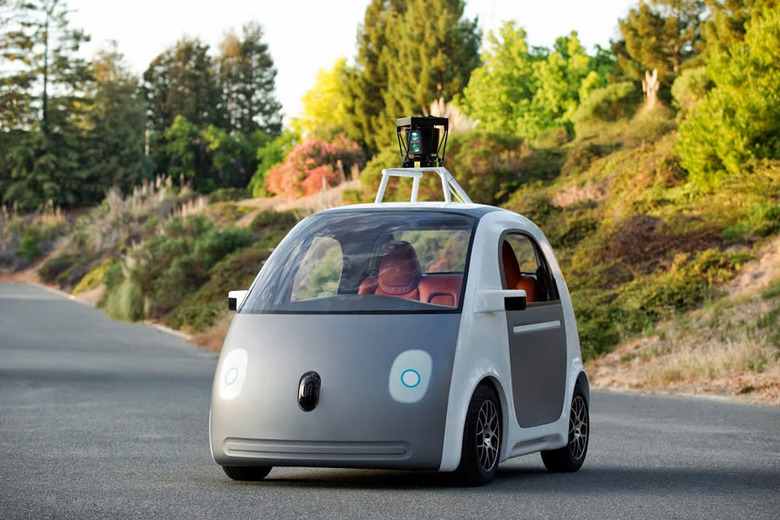
    A few months back at CES, I found myself at the Las Vegas Motor Speedway as a guest at BMW's "Highly Autonomous Driving" demo. While our cameraman set up his gear and I pondered what I was going to say about BMW's mystery kit, I watched one of the carmaker's drivers hooning through a wet section of the track drifting an M235i. Little did I know at the time that the driver wasn't actually driving: He was a passenger. That night, BMW suggested self-driving cars were years off, maybe as many as 10. But Google's just shown us its vision, and the "when" is much, much closer. Despite my racing-heavy introduction earlier this year, the automakers want to sell self-driving cars as a safety blanket. And if they can prove its ability to save lives, it'll become a reality in short order.

    By Sean Cooper Read More
  • University of Michigan will open fake city to test self-driving cars this fall

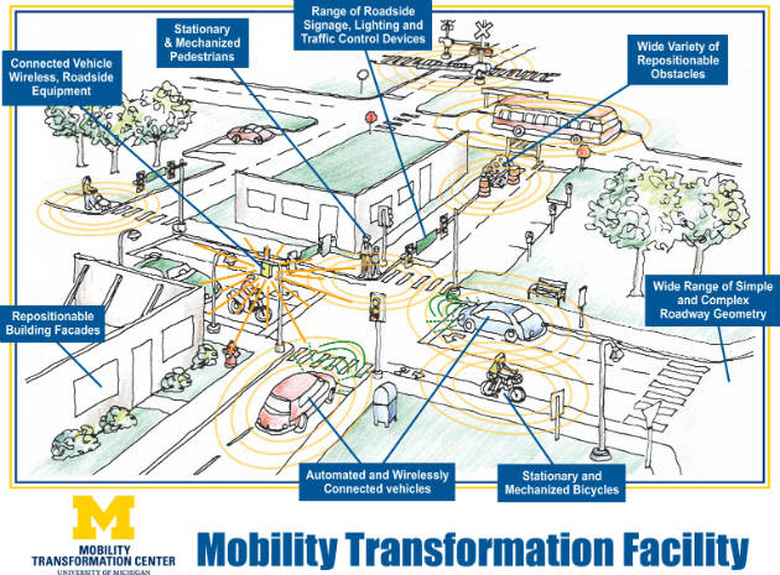
    The University of Michigan will open the doors to its unique Mobility Transformation Facility this fall to test automated and wirelessly connected vehicles. The 32-acre research center will give researchers at the school access to roadways, a four-lane highway, city streets with road signs and street lights, roundabouts and all manner of road surfaces. For a dash of fun, pop-up pedestrians and mechanized bikes add a bit of motion to the mix to simulate any of a million worst-case scenarios. Street lights, for example, could be programmed to turn completely off and bicycles could unexpectedly roll out from between parked cars.

    By Sean Cooper Read More
  • Volvo building an electric roadway to wirelessly charge buses

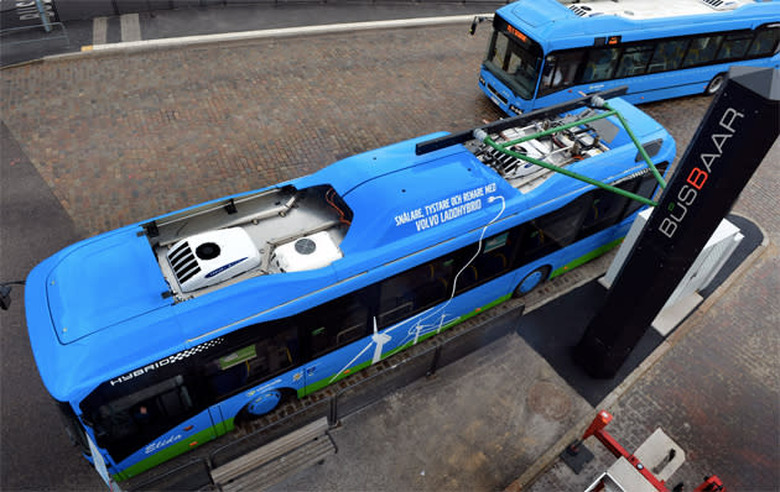
    Not content with its energy-sipping plug in hybrid buses, energy-friendly Gothenburg, the Volvo Group and Swedish Transport Administration have announced grand plans to hopefully augment its Hyper Bus fleet with inductive charging. Hyper Bus, or Hybrid and Plug-in Extended Range Bus system, recharges its power supply with a quick charging rig that takes only five to eight minutes to top up power at the end of the line. This quick charge enables the bus to run most of its route on electric power alone because it doesn't need to stop for hours to juice up. One-upping itself, the program is now looking at creating a test route dubbed: ElectriCity -- clever, right? -- which will feature a 300 to 500 meter (roughly 1000 to 1500 feet) inductive charging pathway. Aimed at replacing those quick charging stations, the test route will zap the bus' power source wirelessly while it's in motion. The group hopes to have a system up and running in central Gothenburg sometime in mid-2015. Bonus? If your stop happens to be near the wireless charging area, someday laying a phone down on the road could help boost your battery life -- or melt the handset -- while you wait.

    By Sean Cooper Read More
  • What you need to know about vaporizers

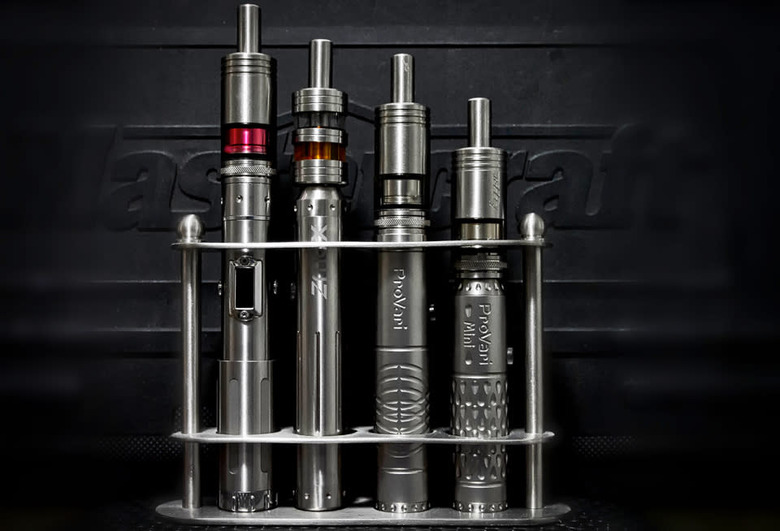
    Smoking is bad for you. There! We said it right up front. There's no reasonable line of argument that can lead to any other conclusion: smoking kills lots of people, around 50 percent of its long term users. But with all that said, people love to smoke. Heck, I smoked for many, many years and I still would if it had a few more vitamins. But bottom line, tobacco products smell awful, give you bad breath, have become socially unacceptable, cause all kinds of cancer and, ultimately, kill people. What if we were to tell you we've found a new way to get all the nicotine into our bodies with technology, and none of the harmful smoke? Well, good news, we can! Let's talk about vaporizers.

    By Sean Cooper Read More
  • An autonomous octo-copter transport truck is as amazing as you'd expect

    Advanced Tactics' (AT) autonomous Black Knight Transformer may not be small enough to get eaten by an aircraft's engine, but it still falls under the purview of the FAA after completing its first flight. The large and unwieldy-looking beast is lifted by eight motors that swing out from the frame for flight -- though sadly, we don't get a glimpse of the transformation. Designed as a transport system for modular payloads, AT dreams of someday seeing its creation floating a boat by attaching to an amphibious hull, or hauling cargo without the need for a human pilot. In the video after the break, the Transformer slowly putters about and then demonstrates a low altitude hover. Future iterations could see the Black Knight hovering on station for up to 19 hours carrying 150lb (68kg) of ISR gear or delivering up goods with up to 1.75-ton weight limits.

    By Sean Cooper Read More