Discovery
Latest

Sony won't take away your PlayStation-bought Discovery shows after all
Sony has announced that it's no longer removing shows from Discovery by December 31 like it had previously planned, thanks to updated licensing agreements.
The Discovery+ ad-free plan now costs an extra $2 per month
Discovery+ is increasing prices for the first time in the US and Canada.

Hitting the Books: How to build a music recommendation 'information-space-beast'
As of October, music makers are uploading 100,000 new songs every day to streaming services like Spotify. That is too much music. It's a monumental problem that data scientist Glenn McDonald is working to solve.
HBO Max is removing 36 shows ahead of Discovery+ merger
HBO Max is pulling 36 shows ahead of its union with Discovery+, and creators aren't pleased.
HBO Max finishes rolling out its much-needed app redesign
HBO Max has finally finished rolling out its much-improved app — in time for Discovery to render it obsolete.

HBO Max and Discovery+ to combine into one streaming platform in 2023
Warner Bros. Discovery is planning some major changes for its media properties.

WarnerMedia finalizes $43 billion merger with Discovery
Warner Bros. Discovery will eventually combine HBO Max and Discovery+ into a single streaming service.
Discovery will combine HBO Max and Discovery Plus following TimeWarner merger
Months after announcing their purposed $43 billion merger, WarnerMedia and Discovery have answered what will happen to HBO Max and Discovery Plus.

'Star Trek Discovery' is taking an unexpected break as 'Star Trek Prodigy' returns
Star Trek: Discovery is taking an unscheduled break in the season after its next episode on December 30th.

HBO Max and Discovery+ might merge into a single platform
WarnerMedia and Discovery executives discussed their plans for their streaming services in an earnings call.
WarnerMedia and Discovery’s post-merger name is… Warner Bros. Discovery
While those involved don't expect the deal to close until partway through next year, the proposed entity already has a name.
AT&T's WarnerMedia is merging with Discovery
AT&T has announced that it's spinning off its WarnerMedia division and merging it with Discovery in a $43 billion deal.

AT&T and Discovery may combine content to take on Disney+ and Netflix
AT&T and Discovery are reportedly in talks to combine their content in hopes of taking on streaming rivals like Netflix and Disney.

The new season of 'Star Trek: Discovery' debuts later this year
'Star Trek: Discovery' season four will debut later this year on Paramount+.
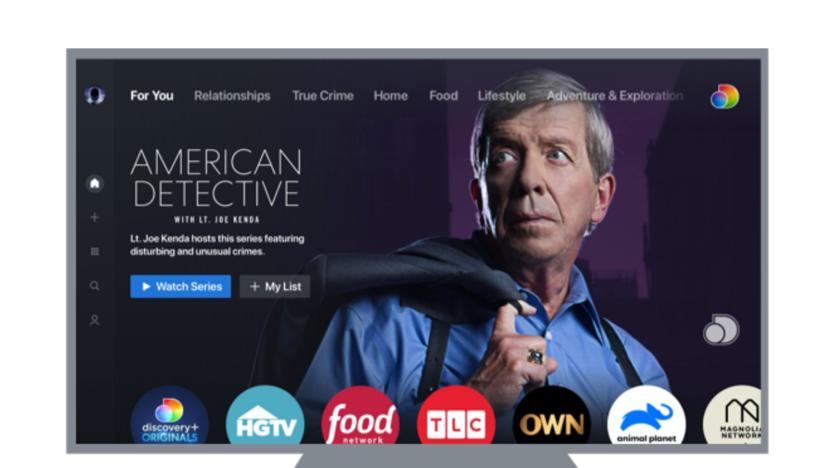
Discovery+ launches today, and it's available on Fire TV, Roku and more
Discovery+ is available today in the US and you can basically access it on almost any major platform.
Discovery+ starts streaming in the US on January 4th for $5 per month
Discovery+ is launching its on-demand streaming on January 4th at a starting price of $5 per month.

Eurosport follows ESPN in airing an esports racing championship
Eurosport has signed a deal to air Torque Esports' The Race All-Star Series now that conventional sports aren't available.

Smithsonian opens up 2.8 million images to the public
The Smithsonian Institution is releasing a whopping 2.8 million high-res, two- and three-dimensional images from its collections to a new Open Access online platform. The material comes from all 19 Smithsonian museums, nine research centers, libraries, archives and the National Zoo, and it's available for free to anyone with a web browser.

Food Network's cooking classes begin on Echo Show and Alexa devices
At Amazon's big Alexa event last month, Discovery revealed its Food Network Kitchen service, which is now live across its iOS and Android apps and Alexa-powered devices. It includes live, interactive cooking classes featuring the network's star chefs, on-demand courses, recipes and Food Network TV shows as well as grocery ordering and delivery for all the ingredients you'll need to prepare the dishes you see on the service.

Food Network's cooking instruction service lets you ask Alexa for help
Discovery wants to be your one-stop shop for cooking classes, and it's enlisting Amazon's help to make that happen. The broadcaster has unveiled a Food Network Kitchen service that offers a mix of live classes from celebrity chefs, on-demand classes, TV shows and recipes. It'll be available on a raft of Amazon devices (including Echo Show and Fire TV gear) in addition to the virtually obligatory Android and iOS apps, but the real attraction may be the deep tie-ins with Alexa -- Food Network Kitchen may effectively become the go-to option for cooking on Alexa-equipped devices.


