amsterdam
Latest

TwitchCon San Diego returns October 7th
Twitch hasn't confirmed whether attendees will need to be vaccinated against COVID-19.

In-person TwitchCon events will return in 2022
It all depends what the COVID-19 situation looks like by then, of course.
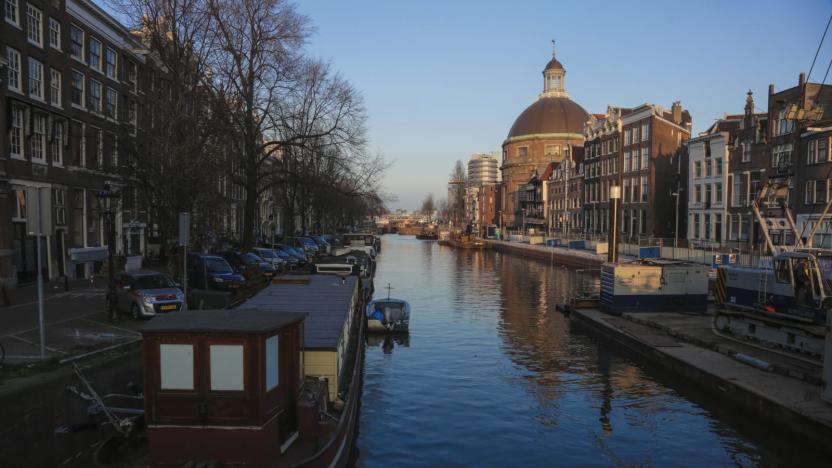
Amsterdam will limit Airbnb rentals to 30 days per year
Last year, Amsterdam limited Airbnb rentals to no more than 60 days in a calendar year but that is about to be halved according to a report from DutchNews.nl. The city's executive board agreed to the proposed shortened limit today and housing alderman Laurens Ivens said, "I recognize that reducing the length of time is not the solution to city congestion but it will reduce the problems caused by tourists in some areas and will make it less inviting to use your home as a way to earn money."

Airbnb will limit Amsterdam rentals to 60 days a year
One of the sticks that is used to beat Airbnb with is that the company cares nought for social cohesion or its effect upon communities. That's why it's big news to see that the home-sharing firm will comply with property rental regulations in the Netherlands. From January, homeowners in Amsterdam will only be able to sell time in their place for 60 days in a calendar year, unless they already have specific permission to offer more. The Wall Street Journal believes that the move could be the solution to the on-going war it's fighting with cities across the globe.

A fleet of self-driving boats will ply Amsterdam's canals next year
Amsterdam's 60 miles of canals cover about a quarter of the city and have helped its citizens get around since the 17th century. While they've matched other trials in self-driving public transportation with their own buses, they aren't ignoring their historic waterways. Next year, the Dutch city's Institute for Advanced Metropolitan Solutions (AMS) will start experimenting with an entire fleet of autonomous boats to haul people and goods while cleaning up the water.

World's first 'gamer hotel' opens in Amsterdam
The first hotel dedicated to serving gamers has opened for business in Amsterdam. The Arcade Hotel, as it is named, is located in the city's De Pijp area. Each of its 36 rooms include gratis consoles and games. Guests can also use loaner handhelds for multiplayer adventures in the hotel bar -- there's even a comic book library that you can peruse. And for those who actually do leave their rooms, the hotel also offers a fleet of borrowable bikes (because that's how real Amsterdamians get around).

Gogoro rides its battery-swapping electric scooter into Amsterdam
After launching in the scooter-drenched city of Taipei, Taiwan, Gogoro is setting its sights on Europe; Amsterdam specifically. Today the company announced that it's headed for the capital of the Netherlands in the first part of 2016 and that it will expand to other cities in the second part of the year. Unlike other electric scooters that charge via a wall outlet, Gogoro has a series of GoStation battery swapping stations. When the charge on a bike runs low, riders pull into a station and swap their one or both of their nearly dead batteries with a fresh ones and carry on. That entire ecosystem is coming to bike-centric Amsterdam along with the company's Smartscooter.

The Big Picture: Telescope tech shines a rainbow on a train station
To celebrate Amsterdam Central Station's 125th anniversary, Dutch artist Daan Roosegaarde has transformed one of its facades into a rainbow-colored wonder using telescope technology. Roosegaarde has partnered with University of Leiden astronomers to conjure up a projector that floods the station's 45-meter arched roof with lights resembling a rainbow. These lights fit the semi-circular roof perfectly, thanks to a new type of liquid crystal technology being developed by the Leiden University astronomers for exoplanet observation. According to Glass is more, the Leiden team is using the same technology on the components it's building for the European Extremely Large Telescope, which has recently begun construction. Want to see the rainbow light show for yourself? If you're going to Amsterdam within the next year, head over to the east side of the Central Station, where the rainbow is visible everyday for one whole hour right after sunset. [Image credit: Studio Roosegaarde]

Dutch police arrest four Uber drivers in Amsterdam
Despite working with authorities to legally launch its private and luxury car services in Amsterdam, Uber's regular taxi service, uberPOP, hasn't enjoyed a very warm welcome. Bloomberg reports that Dutch police yesterday arrested four drivers for using the Uber app to provide taxi services in the city, leaving them with a possible fine of €4,200 euros ($5,300) each. To bring them down, a Ministry of Environment & Infrastructure spokesperson said that four inspection officials posed as passengers and found they were not operating with the correct permits. The company, of course, isn't new to all of this, having been targeted in London, Brussels and numerous German cities in recent months. While Uber believes the action is "unjustified and disproportional," Dutch authorities certainly aren't willing to hang around -- those first four arrests came just four days after uberPOP officially launched in the city.

Nokia's co-developed high-amplitude mics retain 10-month exclusivity, HTC has to look elsewhere (updated)
Nokia's injunction yesterday has now been made a little more concrete. The Amsterdam district court has handed down a 10-month ban on STMicroelectronics selling its high-amplitude mics to anyone other than the Finnish phone maker. The same dual-membrane microphone is used in both the Lumia 720 and the HTC One, but Nokia (which co-developed and designed the component) had signed a 12-month exclusivity deal with the chipmaker -- a deal that STMicroelectronics apparently thought was only six months long. According to All About Phones NL, the ruling won't halt sales of One devices already out there, with the court stating that HTC was "blameless" and that it couldn't have known about the contract between Nokia and STMicroelectronics. In short, you'll still be able to buy HTC's flagship in the Netherlands with those dual high-amp mics in tow -- at least for now. We've reached out to both companies for comment, but it's shaping up to be another parts supply woe for HTC's new smartphone. Update: We've just heard from HTC on this, and its response is largely the same as yesterday's: "HTC is disappointed in the decision. We are consulting with STM and will decide whether it is necessary to explore alternative solutions in due course. In the meanwhile, we do not expect this decision to have any immediate impact on our handset sales."

Unity 4 bringing code together on Windows 8 and Windows Phone 8 as well
Stop being all worried that the Unity development engine won't support Windows 8 and Windows Phone 8 devices – it totally does. Er, it will at least, whenever Unity 4 launches (currently unknown). Unity Technologies announced intentions to support Microsoft's flagship operating systems during this week's Unite 2012 conference in Amsterdam, and only said it would become available "during the Unity 4 release cycle."Unity is supported by pretty much everything that can play a game – from your browser window to Android devices to the Nintendo Wii and everything in between – so it's not entirely unexpected that Unity's next upgrade will work with Microsoft's next big OS."Our mission at Unity has always been to provide solutions for developers to effortlessly bring their work to as many different platforms as possible," Unity CEO David Helgason said of the move. Microsoft is similarly stoked. "We are excited that the Unity community will now be given the opportunity to develop world class titles for Windows 8 and Windows Phone 8."Unity developers are hopefully also stoked, but they didn't get a blurb in the press release. Perhaps you're a prolific Unity developer who thinks this is just the worst? The best? Just okay? Let us know!

Alan Turing's breakthrough machine gets a loving Lego tribute (video)
In the world of technology, having one of your inventions rendered in Lego form is the equivalent of a musician being parodied by Weird Al -- it's a sign you've truly made it and tribute to your influence. So, we're more than a little surprised to see that it's taken this long for the Turing Machine to be lovingly built from plastic bricks. The heart of this simple logic device is a Lego Mindstorms NXT set, but the soul is in Alan Turing's genius -- a man who was before his time and unjustly persecuted for failing to properly fit into society's molds. Dutch researchers Jeroen van den Bosand and Davy Landman built the device as a tribute to Turing, who would have celebrated his 100th birthday this Saturday. If you're in Amsterdam you can see the machine yourself at Centrum Wiskunde & Informatica's Turings Erfenis exhibit. Or, you can watch the short explanatory video after the break.

Photos from the new Amsterdam Apple Store opening
The new Apple Store in Amsterdam, Netherlands is a work of art. The exterior has a classic European look and the inside is filled with Apple's gorgeous mix of glass, metal and minimalist design. Two of our readers were on hand at the opening today and sent us links to their photos. You can check out a selection from our gallery below and head over to Flickr to see the rest of the set taken by Rick van Overbeek. There's also two remarkable 3D panorama photos from Henri Smeets that show the outside and the inside of the store. %Gallery-149385%

Apple's new Amsterdam Apple Store is stunning
Apple has been doing an amazing job at making new Apple Stores really stand out, but photos from Dutch Apple site OneMoreThing.nl show that the first Apple Store in the Netherlands is a stunner. The Amsterdam Apple Store opens this Saturday at 10 AM, and Apple has updated the Apple Store app so that those in the Netherlands can make appointments and use EasyPay from day one. The store also features one of the largest Genius Bars I've ever seen, with more than 20 stools appearing in a photo in a gallery published by iPhoneClub.nl. TUAW readers attending the Amsterdam Apple Store opening on Saturday are invited to upload their images to Flickr for everyone to see. Just tag 'em with "TUAW".

Amsterdam Apple Store to open March 3
Apple will open an Apple Store in Amsterdam on March 3, bringing the number of countries with an Apple Store up to 12. It will occupy two levels of the historic and beautiful Hirsch Building in Amsterdam city center. Rumors of the store's construction started in November of 2010. The store's windows have been covered with orange (orange is the national Dutch color) barricades for the past few weeks, with three stacked apples inspired by the Amsterdam coat of arms. If you attend the opening, please send us your photos and stories, we'd love to check them out.

Wall coverings appear at forthcoming Amsterdam Apple Store
Apple is prepping a new retail store in Amsterdam, and MacRumors has collected pictures of the orange and white window coverings that have shown up at the location. They're pretty unique and striking, with the bright orange modern look really standing out in the colder, more traditional buildings of the city. The orange in the coverings represents the Netherlands' national color, and the three Apple logos above are standing in for the three crosses in Amsterdam's coat of arms, the official symbol of the city. Messages on the covering say in Dutch that the store will be "opening soon." Originally, the store was rumored for an opening later on this week, but the latest looks inside the store say that ceremony has probably been delayed. Not too big an issue -- with those coverings on, this is probably the best looking "store under construction" around.

First Apple Store in the Netherlands to open in February
A strong windstorm gave some bloggers in the Netherlands a chance to view the progress of construction at the new Apple Store on the Leidseplein in Amsterdam. The wind blew away part of the barriers around the new store, and Apple fans in the city quickly took advantage by shooting some great photos. According to iPhoneclub.nl, the store is expected to open next month. The bloggers are thinking that Saturday, February 18 may be the opening date. That speculation is based on finding out that a company that will take care of the building cleaning is expected to start work at the site in mid-February, and that training of employees has been scheduled. Like the Apple Store at the Louvre in Paris, the Leidseplein Apple Store has a pyramidal glass roof. A circular glass staircase (see photo at top) will connect the two floors of the store, which will be the first Apple Store in the Netherlands. And now, a picture of Dutch Apple Pie to go along with the Dutch Apple Store -- after all, who doesn't love pie?

Tetris played on microscopic level with lasers, thanks to Amsterdam's rigorous curriculum (video)
Ostensibly speaking, it appears that university goers in the Netherlands have a bit too much time on their hands. You see, in between visits to coffee shops, students at VU University Amsterdam have developed a way to play Tetris with lasers, or in this case, a light-trapping device known as optical tweezers. With blocks constructed of microscopic glass spheres, university physicist Joost van Mameren explains, "The focus of this beam acts as an attraction point for small particles: they get sucked into the focus and cannot escape." The end result is transformed into a rousing experience of the Soviet Union's greatest creation ever, now played out on the microscopic level -- be sure to check the action after the break. For gamers who get in a bit of a jam, the laser can be turned off, which will prompt each of the beads to scatter into chaos. A fitting conclusion, indeed.

Joli Original: the perfect iPad sleeve
My long search for the perfect iPad sleeve has come to an end. That's because I've found the Joli iPad sleeve. And it's a sleeve I'll use as long as I own my iPad 2. The Joli iPad sleeve is handmade, which probably accounts for its excellent quality. The sleeve is made by the Amsterdam-based artistic team of Jolien and Harold. Its exterior is made from Italian soft leather that came from cows who were allowed to roam in open pastures their whole lives. The interior of the sleeve is made of 100% Spanish wool felt. Though the quality of the materials used in the sleeve are excellent, the main reason I'm in love with this sleeve is because it fits my iPad so snugly. Once the iPad is inserted, there isn't one millimeter of wiggle room. Also the sleeve is so thin it hardly adds any bulk to your iPad. And because of the quality of the leather when I slip my iPad into the sleeve I feel as if it's encased in an armored skin. I've got no worries about my device when I throw it into my backpack with my laptop and books and go on a cycle to my local cafe. Despite its deceptive thinness, the sleeve gives you iPad all the protection you'll ever need. My Joli sleeve is made of black leather with an orange felt inside, however you can customize what your sleeve looks like. Choose between black, brown, or purple leather and green, orange, red, or pink wool felt. You can also have the sleeve customized to fit an iPad 2 or an iPad 2 with a Smart Cover. If you're looking for a sleeve for your iPad, get this one. Or, if you're looking for a gift for an iPad owner, this sleeve makes an excellent choice. Not just because of its quality either. A lot of love goes into each handmade Joli sleeve and that love doesn't stop with the sleeve itself. When you (or your recipient) receives it it will be wrapped in tissue paper with a hand drawn sketch by one of the artists on it (check out the gallery below). Presentation counts and it's that unique presentation that adds to the "giftability" of this iPad sleeve. The Joli iPad sleeves cost €45.00 EUR (about US$60). Joli Original also makes MacBook Air and iPhone sleeves of the same fit and quality. You can check out their entire range of handmade sleeves on their website, JoliOriginals.com. %Gallery-134917%

HTC Ignite and Prime surface on Dutch e-tailer, may indeed be coming soon
Second time's a charm? Here's hoping. Just months after seeing the so-called HTC Ignite and Prime surface alongside the Pyramid (which already launched as the Sensation 4G), it seems as if the remaining duo have found a home over at The Phone House. For those unaware, that's the Dutch version of the UK's Carphone Warehouse, a top-tier mobile shop that doesn't steer folks wrong too often. The Ignite looks to be a Windows Phone 7 handset with an 800MHz processor, 3.7-inch display and an otherwise understated motif. The Prime, on the other hand, sports a slide-out QWERTY keyboard, a 5 megapixel camera and Microsoft's homespun OS. There's no mention of a price tag on either (nor any other specifications), but that whole "coming soon" thing most certainly has our interest piqued. [Thanks to everyone who sent this in]


