bendable
Latest
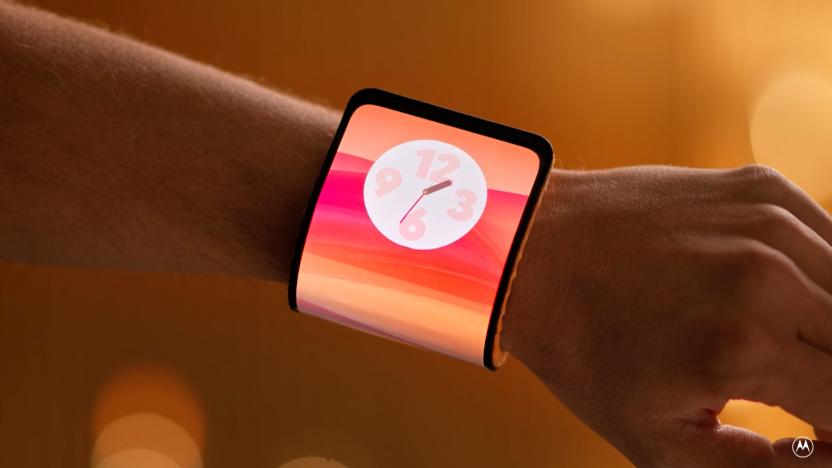
Motorola is back with another slap bracelet phone concept
Motorola showcased an “adaptive display” prototype that can be rolled into a phone, stand or smart bracelet. The company also highlighted several potential AI-powered features for the devices you can already buy.

LG's OLED Flex is a flat panel and a curved display in one
You can manually adjust the display, which has 20 levels of curvature to to choose from.
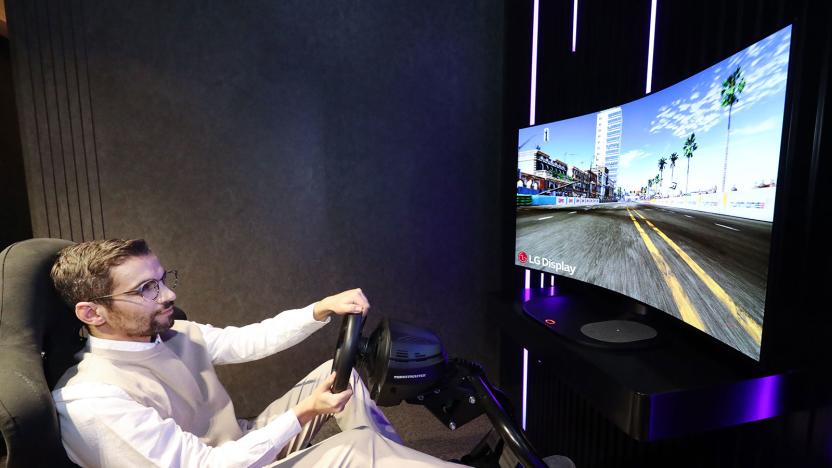
LG will demo a 'bendable' OLED gaming TV at CES 2021
At CES 2021, LG Display will be showing off a 48-inch “Bendable CSO (Cinematic Sound OLED) display” that can switch between a flat screen and a curved screen.

Samsung's Galaxy Fold could lead to two more folding phones soon
If you, for some unknown reason, thought Samsung's flexible device rollout would stop with the Galaxy Fold then we have bad news. Bloomberg cites unnamed sources saying that the company is already working on a pair of follow-up smartphones, with one shaped like a clamshell (folding vertically so that the top meets the bottom) and another that folds away just like Huawei's impressive Mate X. The rumors suggest that the vertically folding device could appear late this year or early next year, while the one that folds out is due after that.

Formlabs pushes the boundaries of what 3D-printing can do
When 3D-printing burst onto the scene, its mouth was writing checks its capability had almost no chance of cashing. For all of its grand promises, the results the machines produced were useful for prototyping and very little else. Fast forward a few years, however, and companies like Formlabs have found ways to make the technology far more useful.
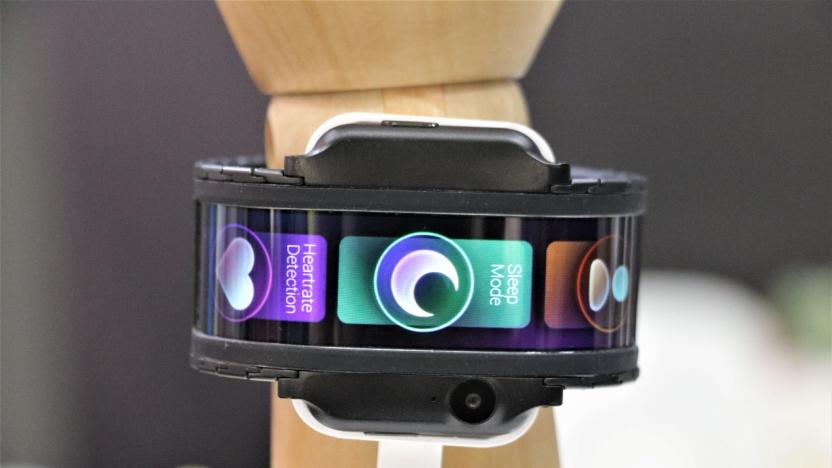
This audacious curved-screen wearable has a gaudy camera
Just as Google is making Wear OS feel less like a smartphone system squeezed onto a watch, ZTE spinoff Nubia wants to slap a full phone on your wrist. At IFA 2018, the company unveiled a prototype device called the Nubia-A, which it's touting as a "wearable smartphone". That, to me, means smartwatch, but given the way companies like Apple, Google and Qualcomm seem to be moving away from wrist-worn smartphone wannabes, my definition might be inaccurate soon. Feast your eyes on this fascinating oddity, though you might want to avoid looking directly at the monstrous onboard camera.

Lenovo laptop concept flexes like a yoga mat
Lenovo isn't done making exotic concept devices... far from it. The PC maker has unveiled a laptop concept whose centerpiece is a flexible screen that runs right up to the keyboard. It's not joined by a hinge, it is the hinge -- you'd fold it up like a yoga mat, or maybe Microsoft's Surface Book. It wouldn't have a trackpad, but you could write on it and speak to it. There's no guarantees that Lenovo will build it (the company tells us that there's no hands-on time "yet"), but we wouldn't rule it out at some point in the future, either.

Samsung files patent for a bizarre folding smartphone
Samsung has filed a patent with the Korean Intellectural Property Office for a smartphone with a that could be folded in half like a flip phone. The device would also have a secondary screen, presumable on the outside, that's activated when it's folded shut, according to the claims. The screen even has a complex "semiautomatic" powered folding action as one of the options. Of course, patents don't usually lead directly to products, but this one stands out because Samsung is reportedly working on smartphones with bendable OLED screens.

Samsung might have bendable, foldable smartphones ready for 2017
Bloomberg sources say that Samsung is thinking of introducing phones with bendable screens. In fact, Samsung said that it would have that technology ready by 2017 itself, just a few years ago at its investors conference. However, this goes some way to proving that Samsung has developed the tech enough to bring it to consumer product. A pair of devices will have flexible OLED screens, with one folding like a cosmetic compact and another that transforms from a 5-inch smartphone-sized screen to a display roughly eight inches large; so... a tablet.

Flexible phone concept bends to control apps
This phone has a bendable screen, and it isn't just for show: it's equipped with a bending sensor and can actually be used as a form of input, like a stylus or your fingers on touchscreen displays. Our colleagues at Engadget Chinese got a chance to check the concept out at Touch Taiwan 2015, where it was being showcased by local manufacturer AUO. The company claims the device and its 5-inch, 1,280 x 720 AMOLED screen is unbreakable -- true or not, it does look a lot more pliable than, say, the LG G Flex 2, as you can see in the GIF after the break.

Samsung's new UHD TV is the first to go from flat to curved on command
Samsung's new TVs have pressed 4K and curved frames as features, but what if you want one that's only curved sometimes? That's where a bendable TV comes in, and Samsung says it will release the industry's first one on August 1st in Korea. We got a peek at an 85-inch version in January at CES (check after the break for video of the demo unit), but the one going on sale is 78-inches. We're not sure how much it will cost, but we're betting the feature isn't cheap. As usual, Samsung is dueling with its Korean counterpart LG, which showed off a flexible OLED TV at CES. Both recently announced 105-inch Ultra HDTVs for sale, and are furiously chasing the title of "best screen almost no one can afford to buy." If this one gets a US release date, we'll let you know which store window to look at it through.

Samsung's 105-inch curved UHD TV and 85-inch bendable screen hit retail this year
If you dug the 105-inch curved Ultra HD TV and bendable 85-inch UHD screen (above) Samsung debuted this week, we have good news. They'll both hit retail sometime in the second half of this year, according to the tech giant. If you were expecting pricing info, well, you're going to have to wait a little longer because we don't have that just yet. However, it's going to be at least six months before these sets hit stores, so we suggest you start saving your pennies right about now -- unlike other options, we have a hunch that these beauties won't be cheap.

Daily Roundup: LG's bendable displays, Fox News' revamped newsroom, FiLIP smartwatch and more!
You might say the day is never really done in consumer technology news. Your workday, however, hopefully draws to a close at some point. This is the Daily Roundup on Engadget, a quick peek back at the top headlines for the past 24 hours -- all handpicked by the editors here at the site. Click on through the break, and enjoy.

Samsung exec admits Galaxy Gear smartwatch 'lacks something special'
In an unusual bout of frankness, a Samsung official has acknowledged that the Galaxy Gear smartwatch lacks, you know, whatever the Korean is for je ne sais quoi. As reported by the Korea Times, the unnamed official said: "We've acknowledged that our Gear lacks something special. With more investment for user interface and user experience, Samsung devices will be better in terms of customer satisfaction." We're not sure if the source of the quote is Samsung's VP of strategic marketing, Lee Don-joo, but this exec is quoted in the same Korea Times article as saying that the watch is "definitely receiving a warm response" and that improvements would stem from software tweaks and the hiring of new UI experts, rather than from the development of a whole new device. He described the Gear as part of Samsung's drive to create new categories of "wow product" and, in virtually the same gasp, he also reiterated that Samsung would launch some sort of heavily curved -- or perhaps even partially bendable -- smartphone in Korea next month.

LG gets patent for mobile UI that reacts to flexible displays, encourages origami
As often as companies love to toy with flexible displays, we're seldom told how we'd control that newfound freedom. Are we supposed to make e-paper cranes? Credit LG for some forward thinking -- it's just receiving a US patent for a 2008-era user interface invention that would use a bending screen to its advantage. The implementation includes two displays, one of which flexes while the other accepts touch; bend or fold the first display, and the touchscreen changes to suit the context. Having two closely linked displays would also let the panels run either in unity or independently. Suffice it to say that the technology is unlikely to roll out as-is on a smartphone, if ever: LG's attention has swung towards having one big touchscreen as of late. However, the interface does give the Korean firm a place to start if it develops devices to match its new flexible batteries.

LG Chem develops very flexible cable batteries, may leave mobile devices tied up in knots
The world is no stranger to flexible batteries, but they've almost always had to be made in thin sheets -- that doesn't amount to a long running time if you're powering anything more than a watch. LG Chem has developed a flexible lithium-ion battery that's not just better-suited to our bigger gadgets but could out-do previous bendable energy packs. Researchers found that coating copper wires with nickel-tin and coiling them briefly around a rod results in a hollow anode that behaves like a very strong spring; mating that anode with a lithium-ion cell leads to a battery that works even when it's twisted up in knots. Join multiple packs together, and devices could have lithium-ion batteries that fit many shapes without compromising on their maximum deliverable power. Some hurdles remain to creating a production-grade battery, such as a tendency for the pack to shed a small amount of capacity whenever it's put under enough stress. LG Chem is fully set on turning these cable batteries into shippable technology, however, and could ultimately produce mobile devices and wearables that really do bend to their owners' every whim.

Insert Coin: Twig, the tiny iPhone cable that's also a tripod (video)
In Insert Coin, we look at an exciting new tech project that requires funding before it can hit production. If you'd like to pitch a project, please send us a tip with "Insert Coin" as the subject line. Imagine an iPhone cable that was only four-inches long, doubled as a tripod and could bend to your every whim? That's the idea behind Twig, designed by former WIMM engineer Jason Hilbourne, who wanted something sturdier, smaller and more portable than Cupertino's "limp noodle." In partnership with an iOS accessory maker, the cable's three sturdy prongs will transform into a dock, wrap around objects or create a free-standing tripod for your FaceTime needs. It needs $50,000 to turn from dismembered action-figure prototype to reality, with an $18 pledge enough to secure you one of the first to leave the factory. After the break we've got the pitch footage, which includes what happens when you start prototyping with your Speed Racer dolls.

Nokia Morph patent application raises hope well beyond expectation
Remember Nokia Morph? It's the Finnish manufacturer's long-standing project to build a transparent, flexible phone that you can contort to your hearts content. Now the company's submitting a second missive to the Patent and Trademark office in the hope of claiming dibs on the IP contained therein. While it's very broadly written (and doesn't commit to anything), it's interesting to note that the phone would switch between the leaf-shaped candybar (we played with it at MWC) and a wristband you can wear on the go. The patent also talks about a "remote processing unit," in a nearby device or in the cloud, so, if the company can ever turn the dream into reality, the real action will be handled elsewhere. Then again, it's equally as likely to never appear in our lifetimes, you just never can tell with patents.

Nokia's Humanform concept phone, not shaped like us (video)
We barely recovered from Nokia's futuristic concept buffet at Nokia World, but a new video has unearthed the deceptively named Humanform. Fortunately not shaped like a dolly, this teardrop device cooked up Nokia's in-house labs supposedly uses some as-yet unexplained nanotechnology, with a bendable transparent display and a fully touch sensitive casing. The segmented design also channels some Wiimote-esque gesture features and twist controls seen on the phone behemoth's Kinetic Device. An inert Humanform shell was also on show alongside it last month, although it didn't do much aside from bending. See if you agree with Nokia's vision of the mobile future after the break.

Nokia's kinetic future: flexible screens and a twisted interface (video)
Hidden within Nokia's Future Lounge, this very flexible display offers up a glimpse of what sort of thing we could possibly be dealing with when we roll up to Nokia World in 2021. The prototype Nokia Kinetic Device, including its display, can be flexed across both the vertical and horizontal planes -- with bending and twisting motions controlling the interface. If you bend the screen towards yourself, it acts as a selection function, or zooms in on any pictures you're viewing. In music mode, you can navigate, play and pause with the tactile interface. It's still a way off from arriving on phones, though Nokia is aiming to whet developers' appetites with this prototype. We may have seen some twisty interfaces already, but nothing packing a four-inch screen and built-in functionality like this. Nokia couldn't confirm the screen technology being used. Could that be a flexible AMOLED display? See those impressive viewing angles and contortions after the break and judge for yourself.%Gallery-137602%


