docomo
Latest
Flying, spherical displays are coming to a halftime show near you
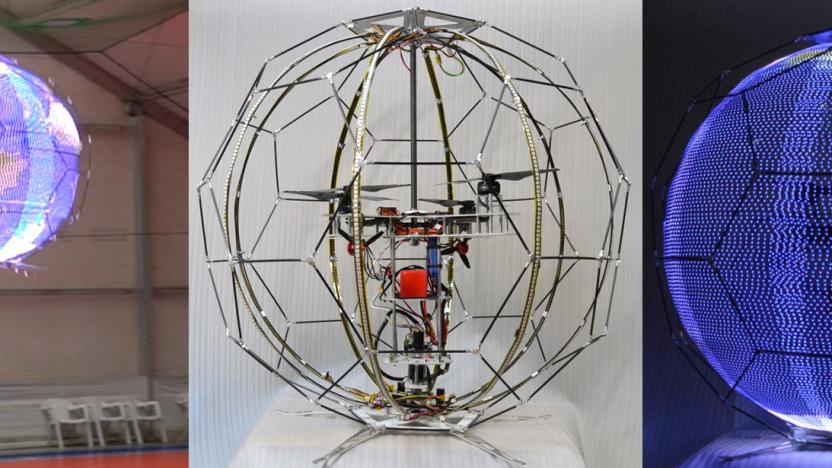
Pepsi's drone show at the Super Bowl this year was impressive, sure, but imagine what those UAVs would've been capable of with more than one pixel. To wit, Japan's Docomo has designed a 144 x 136-pixel spherical LED screen that can display images while in flight. And to give the illusion that the image onscreen is holding still while the drone zips about, "the LED frame spins on its axis in a rapid horizontal motion, forming an afterimage effect to create the illusion of a solid sphere of motionless LEDs," according to a press release.

Japanese smartphone gets iris-scanning for mobile payments
The common objection to using your phone for purchases is that any sufficiently-motivated criminal could lop off your thumb and go on a spending spree. That's one of the reasons why Japanese carrier NTT DoCoMo and Fujitsu have teamed up to unveil the Arrows NX F-04G. The pair say that it's the world's first smartphone with iris recognition technology that can be used to both unlock a device and certify mobile wallet payments.

NTT Docomo and Huawei want to augment LTE networks with WiFi spectrum
Love LTE data speeds, but fear the bane of network congestion? Researchers at NTT Docomo and Huawei may have a solution. The two firms just announced that it has successfully broadcast LTE service on the unlicensed 5GHz spectrum -- a frequency typically used for WiFi. Potentially, the 5GHz band could be used to enhance LTE service in high-use areas, a practice researchers are calling License-Assisted Access (LAA). LAA isn't an official standard yet, but Huawei and NTT Docomo plan to continue working together to support it. The specifics are a little granular, sure, but we're not about to scoff at getting better reception. Check out the duo's official statement at the source link below.

Japanese carrier Docomo wants to move your phone's SIM card into a wearable
The Portable SIM, as Japan's Docomo is calling it, will combine your tiny mobile card with Bluetooth and NFC to make a standalone authentication device, allowing users to 'wave' the portable over tablets and smartphones to connect and login to phone networks, transferring information, like phone numbers and login details and opening up the possibility of multiple devices with a single SIM card. (Android and iOS, all at once!) It will even store multiple online logins for shopping sites and social networks, according to the Japan's largest phone carrier. The current prototype is around the size of a WiFi hotspot, although Docomo plans to shrink the tech down to a size that would fit into a wearable device, likely to be around the size of current wearables like Acer's Leap band we've used in the mock-up above.

Samsung, Nokia join 5G trials in Japan, but crazy speeds still far away
We hope you're happy with 4G, because 5G's magical land of unicorns and 10Gbps speeds still isn't coming until 2020 or so. However, Japanese carrier DoCoMo is still hard at work developing the tech and has now begun trials with some formidable hardware allies. Those include Samsung (who already tested 1Gbps 5G hardware in Korea), along with Nokia, Ericsson and Alcatel-Lucent, to name a few. The group aims to see if high frequency bands (greater than 6GHz) can support speeds up to 10Gbps, even if masses of devices in a small area are vying for bandwidth. The first tests will be limited to an indoor research facility in Japan, then move to outdoor field trials next year. DoCoMo hopes standardization will come in 2016, but there's a lot of hurdles to clear before the mythical 1-second wireless movie download is upon us.

Japanese phones will soon get alerts for inbound missiles and other attacks
The Japanese get phone alerts for natural disasters, but they have more than that to worry about these days with an occasionally belligerent North Korea just a stone's throw away. Accordingly, Japan's Fire and Disaster Management Agency says that it will soon warn phone owners when there's a hostile missile launch, a terrorist attack or a similar human-made threat to their region. The new alerts will use the disaster technology from before, so residents won't have to worry about software upgrades when the warning system takes effect on April 1st. Locals hopefully won't ever see the system put to use, but it's good to know that it exists. [Image credit: Ignat Gorazd, Flickr]

Japanese 'smart clothing' uses nanofibers to monitor your heart-rate (video)
Japanese mobile carrier NTT Docomo and materials developer Toray have been working on joint projects for a while and now they're publicly announcing one. Welcome Hitoe (Japanese for "one layer"), cloth that contains Toray's nanofibers that are coated in a transmittable layer. It's not the orange cloth (that's just standard material), but the nicotine-patch sized square you attach to it that does the sensing. Place two of these on you and they'll act as electrodes, measuring your heartbeat and even offering metrics resembling a cardiogram. The plan is to connect this cleanly non-invasive health monitor to NTT Docomo's health app platform that's already on its smartphones, developing practical... soft... hardware for sale alongside it. The pitch didn't just include sports clothing, however, with pajamas and other sleepwear planned for launch. Look! There's even a little hat! The sensors will apparently survive tumbles in the washing machine and, having seen an earlier prototype late last year, we can confirm that the patches are suitably lightweight and flexible -- now the work is down to reducing that lumpy hub sensor that we also spotted. Wearable gadgets might finally be going subtle. There's a quick video from our allies at Engadget Japanese after the break.
Japanese carrier says it's 'not the right time' for Tizen OS smartphones, delays launch plans
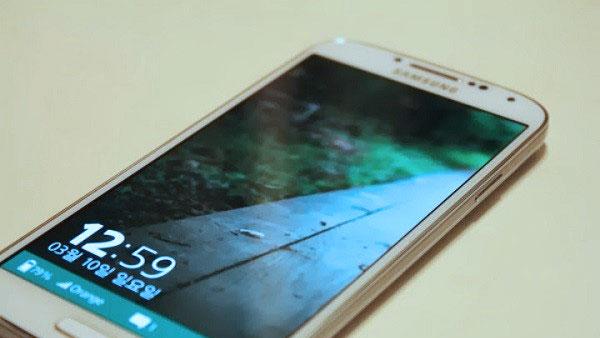
Tizen is trying to make all the right moves when it comes to getting its Tizen mobile OS off the ground and into people's hands. However, to the surprise of... not many people (probably even Samsung), it's going to be a struggle. NTT Docomo has canceled its plans for launching a Tizen smartphone early this year, citing timing as the issue. A spokesperson, talking in a briefing yesterday, told Engadget Japanese that its smartphones sales hadn't increased substantially since the year before (despite this being the first year the carrier has started selling iPhones), stating that there wasn't space for three mobile OSes in Japan's current smartphone climate. It's not ruling out the eventual arrival of Tizen hardware, however. Maybe Docomo is waiting on those new handsets promised to appear in Barcelona. MWC is just a month away.

iPhone scores big in Japan for October
Apple has scored a huge win in Japan in October with the release of the iPhone 5s and 5c, according to a note from research firm Kantar Worldpanel. In that month, Apple's two latest handsets took a whopping 76 percent of smartphone sales in the country. As Japan and the rest of Asia are increasingly becoming the most important market for America's technology giants, this is sure to be news Apple will be thankful for this Thanksgiving. But perhaps the biggest winner is Japan's DoCoMo, the country's largest carrier, which, until this fall, had never offered the iPhone. DoCoMo had been shedding customers for years because it wasn't carrying Apple's device, but now the company has seen a massive boost in sales, with 61 percent of its handsets sold in the month of October being the iPhone.

Daily Update for November 11, 2013
It's the TUAW Daily Update, your source for Apple news in a convenient audio format. You'll get all the top Apple stories of the day in three to five minutes for a quick review of what's happening in the Apple world. You can listen to today's Apple stories by clicking the inline player (requires Flash) or the non-Flash link below. To subscribe to the podcast for daily listening through iTunes, click here. No Flash? Click here to listen. Subscribe via RSS

NTT Docomo's winter lineup arrives, includes Sony Xperia Z1 mini and Samsung Galaxy J
As is tradition this time of year, NTT Docomo's annual winter/spring lineup has just fallen in our laps, unveiling a slew of devices that includes ten smartphones, a tablet, two feature phones, a photo panel and two mobile WiFi routers. On the smartphone front, several standouts include the new LG G2, the Galaxy Note 3, the Sony Xperia Z1, the Sony Xperia Z1 f and the odd Japan-only Samsung Galaxy J. The latter two are of particular interest, as this marks their first official unveiling. The Xperia Z1 f is essentially a miniaturized Xperia Z1 -- it has a 4.3-inch screen instead of a 5-inch one -- and packs in specs that are similar to its bigger brother, such as a 2.2GHz MSM8974 Snapdragon 800 processor and a 20.7-megapixel camera. The Galaxy J, meanwhile, has a 5-inch 1080p Super AMOLED display, a 2.3GHz Snapdragon 800 processor and a 13.2-megapixel camera. Also of note is the Fujitsu Arrows NX-F01F, which has a 5-inch full HD screen, a 2.2Ghz quad-core processor, a 3,200mAh battery, a 13.1-megapixel rear shooter plus a fingerprint scanner. For fans of Disney and Square Enix, there's a special Disney branded phone from Fujitsu plus a Dragon Quest handset that's really just a rebranded Sharp Aquos Zeta. The latter is pre-installed with Dragon Quest VIII: Journey of the Cursed King and is limited to just 30,000 units. The lone tablet on the list is a 10.1-inch Fujitsu Arrows Tab, which happens to be both water- and dust-proof. All smartphones and the tablet are compatible with Docomo's high-speed Xi LTE service, several of which are capable of hitting the 150Mbps maximum download speed. They also come equipped with long-lasting batteries, quad-core CPUs and the docomo LIVE UX home screen application. Though not listed as part of the 16 devices in the release, NTT Docomo also added a couple of wearables to its winter lineup -- the new Samsung Galaxy Gear and a wrist device called "move band" that tracks steps, calorie consumption and sleep hours. All of them are slated to arrive on or after October 11th, though we should note that the Xperia Z1 mini won't arrive until the end of December. If you wish to find out more details on what the Japanese carrier has to offer this holiday season, go on and hit the source link below. Update: We've included a promo video of the Sony Xperia Z1 f below as well.

DoCoMo blames lack of iPhone supply for record subscriber loss
Just a few weeks ago, NTT DoCoMo, Japan's largest mobile carrier, began carrying the iPhone for the first time. Concurrently, DoCoMo this September lost a record number of subscribers to other carriers, 66,800 to be precise. Meanwhile, rival carriers like SoftBank and KDDI added 270,700 and 232,700 new users, respectively. Oddly enough, DoCoMo attributed its subscriber churn to Apple's inability to keep its store shelves stocked with iPhones. Bloomberg reports: DoCoMo attributed the subscriber loss to customers who delayed purchases until after Apple's new mobiles went on sale Sept. 20 and insufficient stock of those handsets, said Atsuko Suzuki, a company spokeswoman. Rival carriers' marketing strategies also hurt sales, she said. Of course, seeing as Apple's new iPhones didn't launch until September 20, it seems like a stretch to attribute DoCoMo's recent subscriber exodus to iPhone supply problems.

NTT DoCoMo to demonstrate its version of 5G at CEATEC in October
NTT DoCoMo's LTE-Advanced network may still be in its infancy, but the company's already preparing for when 150 Mbps is considered slow. Many are looking towards the next-generation of mobile broadband, and DoCoMo has said its ready to reveal its very own 5G "concept" at the CEATEC conference in Japan next month. We don't know if the company is referring to the monstrous 10 Gbps link that has competitor KDDI scratching its head, but "incredible speed, high capacity and low latency" are promised features. In addition, DoCoMo will preview its "winter 2013 / spring 2014" handset line-up and show off work it's been doing in the augment-reality and wearable spaces. We'll be around to browse the booth, of course, and dream of a time when streaming native 4K content over 5G to 21-inch smartphones will be standard. [Thanks, Erwan]

NTT DoCoMo outs Raku-Raku F-09E smartphone for 'beginners'
It's been more than a year since NTT DoCoMo unveiled its F-12D Raku-Raku handset, so it's only natural the company would follow up with a successor in 2013. The Japanese firm just introduced the F-09E, an easy-to-use, Android-based device tailored for folks looking to get their feet wet on the smartphone craze. Hardware-wise, this Fujitsu-made, 4.3-inch (qHD) F12-D will be running Android 4.2.2, while a 1.7GHz Snapdragon 600, 2GB RAM, 16GB of built-in storage and a 2,100mAh battery round out the spec list. Don't get too attached to what's under the hood, though: NTT DoCoMo notes the new member of the Raku-Raku family is still in development and things could change by the time it launches, sometime in "between late September and early October."

Japan's NTT DoCoMo sees users jump ship without iPhone
In June we reported that NTT DoCoMo, one of Japan's largest cellular providers, was ambivalent about carrying the iPhone. In an interview with the Wall Street Journal, Senior VP Kazuto Tsubouchi told the paper his company was "not necessarily against the idea of selling the iPhone. It just depends on the conditions. What's the procurement cost? What kinds of obligations do we have if we sell the iPhone?" The stance has left DoCoMo as one of the few carriers in the the country that doesn't offer the iPhone. Today Reuters is reporting the company has seen 3.2 million users leaving the company over the last four and a half years. DoCoMo built its massive user base by offering a number of services like the country's first mobile web service and TV streaming via cellphones. As these features have become available on a wider range of phones thanks to the rapid evolution of apps, the company has lost customers to other providers who offer the iPhone. According to analysts, their proprietary services are having a hard time competing with services like Instagram. With the iPhone's wild popularity in Japan, reaching a 42 percent share at the end of 2012, the company's refusal to sell the phone is a limitation on their business. Still, their overall numbers are up in the first six months of the year, with 630,000 new subscribers due to strong sales of other smartphone models. The company appears to be holding out for more favorable conditions with the strict contract Apple requires to sell the phone. Head over to Reuters for their full coverage.
Japan's NTT DoCoMo not eager to carry iPhone
That's the word from DoCoMo Senior VP Kazuto Tsubouchi in a chat with the Wall Street Journal. The telco giant has about half of Japan's cellular business, but the iPhone has never been offered by DoCoMo, despite many customers who have migrated to competitors that carry the iPhone. In the published interview, Tsubouchi said the company is "not necessarily against the idea of selling the iPhone. It just depends on the conditions. What's the procurement cost? What kinds of obligations do we have if we sell the iPhone?" "What we gain would be a boost to our marketing. Having such an attractive item in our lineup would help. However, you also have to ask: What are the conditions that come with the iPhone? Other Japanese carriers are selling iPhones at very low prices, and that means their sales expenses must be very high." Instead, DoCoMo has been pushing high-end Android phones from Samsung and Sony. DoCoMo also offers services that go along with the phones, and they like the customization options they have with Android. Those are things Apple, of course, does not allow.

Aquos Pad SH-08E flaunts 7-inch high-res IGZO display, 1.7GHz quad-core processor
Amid the bevy of phones outed in NTT DoCoMo's summer lineup, the Japanese carrier snuck in a tablet: Sharp's Aquos Pad SH-08E. A 7-inch 1,920 x 1,200 IGZO display dominates the front of the Android 4.2 device, while a 1.7GHz quad-core Snapdragon 600 processor and a 4,200mAh battery are tucked inside. When it comes to imaging, the slab totes an 8.1-megapixel shooter on its rear, and wears a 2.1-megapixel cam on the front. The hardware's also been kitted out with WiFi, NFC and TV tuning capabilities, along with waterproofing and dustproofing, to boot. As the slate's outfitted to work with DoCoMo's Xi LTE network, it's capable of sucking down 100Mbps and uploading at 37.5Mbps. There's no word on how much it'll empty wallets, but it's penciled in to be available in Japan by the end of July.

Aquos Phone Zeta SH-06E packs a 1080p IGZO Screen, 1.7GHz quad-core Snapdragon 600
The folks at NTT DoCoMo have just paraded out their roster of handsets for the summer season, and tucked in among the phones is the waterproof Aquos Phone Zeta SH-06E, which packs a 1080p IGZO display. Behind the 4.8-inch screen, the Android 4.2 handset totes a 1.7GHz Snapdragon 600 quad-core processor, NFC, WiFi, a TV tuner and a 2,600mAh battery. As for cameras, the Sharp-made hardware -- which comes in blue, red and white hues -- packs a 13.1-megapixel rear shooter and a 2.1-megapixel front-facing cam. Since the device operates on the network's Xi LTE service, it's rated to pull down 100Mbps and upload at 37.5Mbps. As for a release date, the smartphone is slated to hit Japanese streets on May 24th. There's no telling when this cellphone or its 1080p IGZO display will arrive in other territories, but our eyes sure hope it's soon.

NTT DoCoMo announces 12 new mobile devices for the spring, launches Smart Home initiative
Change of season? You can bet NTT DoCoMo has an armload of new devices to announce -- it's almost a tradition. This time around, the Japanese carrier has revealed 10 new smartphones, two tablets and a mobile WiFi hotspot. Large, 4.5 to 5-inch displays and quad-core processors pepper the entire spring smartphone line, but there are a few notable standouts, including the previously leaked LG Optimus G Pro, Huawei's Ascend D2 and the NEC Medias W -- a curious dual-screen smartphone we first saw at MWC 2012. DoCoMo fills its tablet quota with the Sony Xperia Tablet Z and a carrier branded device called the dtab, a 10.1-inch WiFi slab apparently built for DoCoMo's Smart Home initiative. Don't let the name run away with your imagination -- the Japanese carrier is focusing on sharing music, video and digital content between smartphones and other home electronics, not automating your apartment. The dtab is compatible with a handful of carrier exclusive services, such as the dmarket and DoCoMo cloud. It's not technically part of the carrier's mobile line, but DoCoMo had one more announcement for spring: an HDMI dongle. The SmartTV dstick gives HDTVs access to the carrier's dvideo, danime store and dhits services, and can be controlled with via smartphone or a similarly named tablet. Spring hardware will start hitting Japan on January 25th with the Aquos Phone EX, and continue to roll out through March. Read on for the official press release. Update: Apparently, we're looking at a different Ascend D2 than the one we saw at CES, one with a smaller screen (4.7-inch 720p vs. 5-inch 1080p) and battery (2150mAh vs. 3000mAh).

NTT DoCoMo unveils winter lineup, pushes big displays, LTE, quad-cores and NFC payments
Just as the air begins to chill, NTT DoCoMo has announced its forthcoming lineup for release in November and December, including nine smartphones, four feature phones and a tablet. As the Japanese populace would no doubt demand, all of the bigger smartphones -- from the 4.7-inch Arrows V F-04E through to the 5.5-inch Galaxy Note II -- come with 1,280 x 720 displays, a healthy degree of water- and dust-proofing, plus decent quad-core credentials. The new Aquos Phone Zeta SH-02E stands out for its low-power 4.9-inch IGZO panel and 16-megapixel camera, while the Arrows Tab F-05E 10-inch tablet packs a 1,980 x 1,200 display and what sounds like the latest 1.7GHz iteration of Tegra 3 (as seen in the HTC One X+). It's also interesting to a see a Korean-style variant of the Galaxy S III (the Alpha SC-03E) packing a souped-up 1.6GHz Exynos chip and 2GB RAM. In related news, NTT has also announced that it's partnering with Mastercard PayPass and will offer the contactless payment system for Japanese customers travelling abroad by fall next year -- and indeed all the new smartphones are NFC-equipped. Click the first source link below for the full run-down.


