dutch
Latest
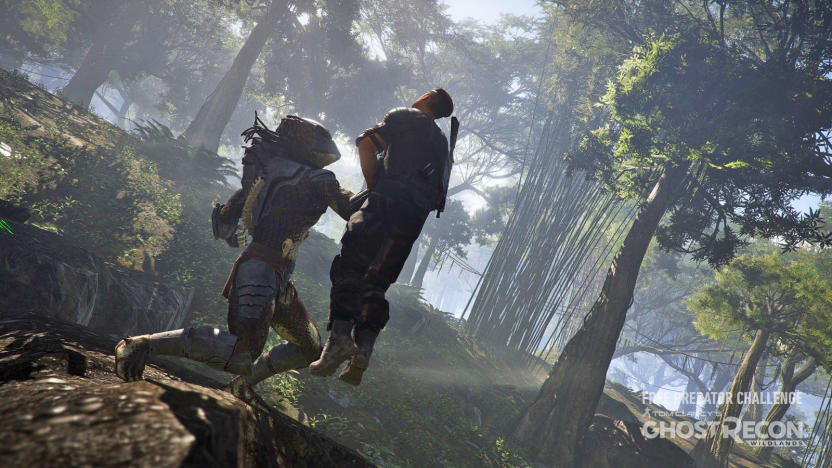
The Predator is coming to Ubisoft's 'Ghost Recon Wildlands'
It's been 30 years since Arnold Schwarzenegger's Dutch headed into the jungles of Central America, only to find himself hunted by a stealth alien warrior nicknamed the Predator. Now players of Ghost Recon Wildlands, Ubisoft's open-world tactical shooter, will fall under the watchful eye of the Predator in an all new special event running from December 14th through early January.

All electric trains in the Netherlands now run on wind energy
The Netherlands has been harnessing the power of the wind to drain bodies of water, saw timber and to produce oil for centuries. Now, the country is also using it to run all its electric trains. The Dutch railways network (NS) started using wind energy generated by the turbines owned by electric company Eneco two years ago when they signed a ten-year agreement. They planned to power all of the country's electric trains with wind-generated energy by 2018, but they're clearly a shining example of Dutch efficiency and reached their goal a year earlier than planned.
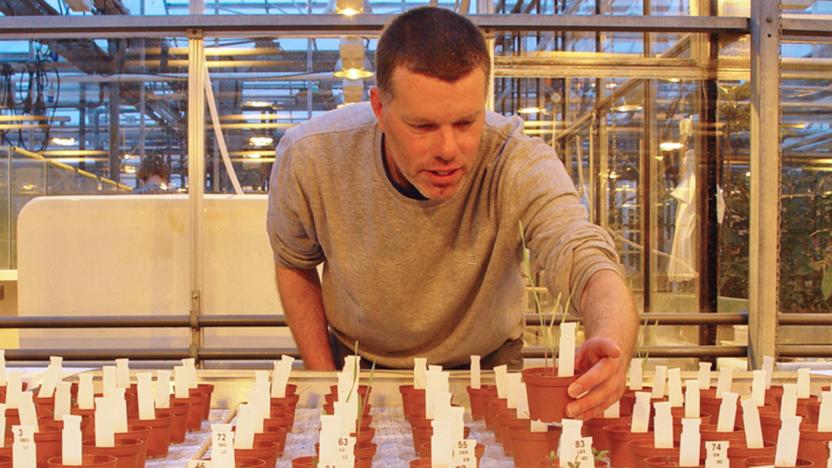
Four crops grown in simulated Martian soil are safe to eat
We're still not sure if we can Mark Watney our way through a Martian mission, because soil on the red planet contains heavy metals toxic to humans, including lead and arsenic. A team of scientists from the Wageningen University in the Netherlands, however, found out that radishes, peas, rye and tomatoes grown in Martian soil are safe to eat after years of research. The scientists have been growing different types of plants in soil that NASA developed to simulate what's found on the red planet since 2013. While they haven't exactly eaten any of them yet -- and team leader Wieger Wamelink admits radishes are still best grown on Earth -- they confirmed that these four can grow on Mars without absorbing dangerous levels of heavy metals.

ICYMI: Robot news round-up, 3D hand scanner and more
#fivemin-widget-blogsmith-image-439685{display:none;} .cke_show_borders #fivemin-widget-blogsmith-image-439685, #postcontentcontainer #fivemin-widget-blogsmith-image-439685{width:570px;display:block;} try{document.getElementById("fivemin-widget-blogsmith-image-439685").style.display="none";}catch(e){}Today on In Case You Missed It: iRobot sold its line of military robots to a US-based firm to focus on Roomba and a new chameleon robot changes color to blend in; a student built a 3D scanner with cameras and Raspberry Pi that is much cheaper than any other scanner; and a new pedestrian detection software from the University of California, San Diego, is nearly as fast as the human brain.
ICYMI: Animal vs. drone, 3D-printed living bone and more
#fivemin-widget-blogsmith-image-69230{display:none;} .cke_show_borders #fivemin-widget-blogsmith-image-69230, #postcontentcontainer #fivemin-widget-blogsmith-image-69230{width:570px;display:block;} try{document.getElementById("fivemin-widget-blogsmith-image-69230").style.display="none";}catch(e){}Today on In Case You Missed It: Dutch police are training eagles to attack drones in areas deemed off-limits while simultaneously being way more rad than other antidrone solutions that use nets.

Bounden, Fingle studio closes its doors in April
Game Oven Studios, the independent Dutch team behind body-morphing mobile games Bounden, Bam fu, Fingle and Friendstrap, will be disbanded in April, studio co-founder Adriaan de Jongh announced in a blog post today. Game Oven will release its final game, Jelly Reef, in March on iOS and Android. Game Oven developers de Jongh and Bojan Endrovski will continue to support Bounden, Fingle, Bam fu and Jelly Reef, but they will remove Friendstrap from stores on February 1. De Jongh and Endrovski founded Game Oven in November 2011 with their first game, Fingle, which was nominated for an IGF Nuovo award. Bounden, a two-player dancing game for mobile, is nominated this year for an IGF Nuovo prize and a GDC Innovation Award. Game Oven received financial support for Bounden from the Dutch grant program, Game Fund, and worked with the Dutch National Ballet to create the choreography. And, despite Game Oven's closure, Bounden is doing "really well," de Jongh told me today. "We're not making millions, no, but Bounden's profit is larger than the development costs, so maybe awards are not that disconnected from the financial success of the game," he said. "With Fingle, IGF helped us build an audience, helped us reach that critical mass, and even though we no longer do any marketing effort for Fingle, we still make one minimum wage from the game every month. The way things look now, it seems like Bounden is on that same road."

Fancy ash tray rewards smokers for not littering with a song and light show
Some places impose hefty fines to prevent cigarette littering, but a group of Dutch designers believe that the answer lies in rewarding smokers for doing the right thing instead. So, the team designed a souped up trash can called Fumo that lights up like a disco ball and plays music like a jukebox when you toss in a cigarette butt. It even starts blinking the moment you step close, just so you know it's not some boring receptacle before you even get the chance to try it out -- and no, check the calendar if you must, it's not an April Fool's joke. The designers say the trash can can also be tweaked depending on the purpose: for instance, it can incorporate interactive elements for festivals or play solemn music if it's meant to be installed in front of a hospital. According to a recent research, around 4.5 trillion cigarette remnants end up as trash every year, so it really is a big issue that might only be solved by banning filters altogether. As to whether Fumo has the potential to minimize cigarette litter or if it's just a gimmicky idea whose novelty will wear off quickly, you tell us after watching it in action after the break.

Netflix streaming is coming to the Netherlands later this year
Netflix mentioned another European country was in its sights for this year and tonight it's announced the new region it will service is the Netherlands. As is its custom, it will be offering Dutch viewers a package of movies and TV shows for one low price, including its ever-growing slate of original series. There's no word yet on what that price will be, an exact launch date or what devices will be supported, but interested residents can sign up for alerts at Netflix.nl starting today.

WhatsApp's data collecting violates Canadian and Dutch privacy laws
According to the Office of the Privacy Commissioner of Canada (OPC) and the Dutch data authority College Bescherming Persoonsgegevens (CBP), the popular cross-platform messaging application WhatsApp violates privacy laws. A joint investigation between the two groups revealed that, with the exception of devices running iOS 6, the app requires access to a customer's address book in order to use the software. This stipulation results in non-user contact information being recorded to WhatsApp servers without permission, which contravenes Canadian and Dutch privacy laws. In September of 2012, the company added encryption to its services as a response to these investigations, but both the OPC and CBP remain concerned about unauthorized data collecting. As it stands, both organizations will continue to monitor WhatsApp's progress toward compliance, with the Dutch agency reserving its right to impose fines against the firm if necessary.

Dutch court says Samsung Galaxy tablets don't copy iPad
Apple hasn't had a lot of success in proving that Samsung's products infringe on its designs, in Europe at least. Last year Apple lost a suit in the United Kingdom accusing Samsung's Galaxy Tab of infringing on its popular iPad design. As a result, the UK judge ruled that Apple had to advertise that Samsung did not copy Apple on its homepage at Apple.com/uk. Now comes news that Apple has lost another case where it alleged Samsung's Galaxy tablet infringed on the iPad's design, this time in the Netherlands, according to AllThingsD: "On Wednesday, a district court in the Hague ruled that Samsung's Galaxy Tab 10.1, Galaxy Tab 8.9 and Galaxy Tab 7.7 don't infringe Apple's registered design for the iPad. While the devices might share a similar rectangular shape with rounded corners, the overall impression they present is different, the court said." Apple has had more luck in the US where it won a $1 billion compensation verdict from Samsung in August.

Dutch court bans sale of some Samsung products
According to an IDG news service report published by Computer World, a Dutch court has banned the sales of Samsung Galaxy products that infringe on an Apple patent. The patent in this case describes a method for scrolling through a photo gallery on a touchscreen device. The ban applies to Galaxy phones or tablets that run Android 2.2.1 and don't use Samsung's own photo gallery software. Samsung claims all its products in the Netherlands use the company's proprietary photo gallery software, but failed to provide the judges with evidence to support this claim. The Court of The Hague granted the ban and will fine Samsung 100,000 Euros (US$129,000) daily if it continues to infringe on Apple's patent. According to IDG, Samsung PR said the company was disappointed with the ruling, while Apple did not respond when asked about this decision.

Dutch court finds Samsung does not infringe on Apple multitouch patent
Apple faced a legal setback in the Netherlands when a Dutch court ruled that Samsung's tablets and smartphones do not infringe on Apple's multitouch patents. This decision reaffirms an earlier, preliminary non-infringement ruling in a case that was heard in August 2011. The Dutch legal decision also mirrors those made in Germany and the UK. In the UK case against HTC, the judge found that there was no infringement and ruled that the multitouch patent was invalid.

Dutch court rules that Samsung didn't infringe on Apple multi-touch patent
Once again, a decision has been made on an Apple versus Samsung patent dispute. This time, it's a Dutch court in the Hague, ruling that Samsung does not infringe on a Cupertino patent relating to certain multi-touch commands that the Korean firm implements in some of its Galaxy phones and tablets. This isn't the first time that the Netherlands-based court has found in favor of Samsung, and Apple had already lost a preliminary injunction on this same patent last year. Reuters also reports that the Hague court's decision comes in the same week that the International Trade Commission is expected to decide about further patent disputes between the two firms, which went in favor of Apple the last time around. At the very least, this long and bumpy ride isn't over yet.

This talking Domino's Pizza scooter will make your day infinitely more awesome (video)
Dearest RIM, Microsoft, Intel and Sony: Stop spending millions on mildly successful advertising campaigns. Just modify a delivery scooter to shout your brand name between gear shifts. Respectfully, A now-loyal Domino's Pizza customer.

PAL-V ONE makes maiden voyage, gives new meaning to 'Flying Dutchman' (video)
The Netherlands made a lot of noise in the tech world last year for stuff like net neutrality and the legal herping and derping between Apple and Samsung. Now it's making some noise of the whirly kind after the successful maiden flight of its very own flying car. Dutch company PAL-V christened its flying car the, uh, PAL-V ONE -- short for Personal Air and Land Vehicle. Like the Terrafugia Transition flying car, the PAL-V ONE also sports a push propeller, which it uses for forward speed. The Dutch flying car, however, doesn't have side wings and relies on an auto-rotating rotor to create lift instead. The vehicle -- which supposedly complies with all air and road traffic regulations in major markets -- chugs good, old regular gas (biodiesel and bio-ethanol versions are planned as well) for a range of 350 to 500 kilometers in the air and about 1,200 kilometers on the ground. For more adventurous land drivers, the PAL-V ONE also features a "cutting-edge system" for tilting at windmills, allowing it to power through curves like a motorcycle. See it in action in the video after the break, along with some company PR.[Thanks, Barry]

RuneScape: Seventh anniversary retrospective
Although RuneScape officially launched in 2001, today marks the seventh anniversary of the end of the RuneScape 2 beta. This was a complete gameplay and graphics overhaul that signaled the rebirth of the game, and it's a date well worth celebrating. The past year has been filled with massive content updates that added clan support, upgradeable clan citadels, a new website, and countless new quests. Player-made battlefields put game design in the hands of players, who have used the system to produce ton of content. Understandably, most people will likely remember this year for one thing: This was the year that RuneScape beat the bots. Following the momentous Bot Nuking Day, players logged in to find a distinctly emptier world but one filled with real people. RuneFest 2011 was a success, with presentations from the game's developers and a special focus on breaking the bots. This year also saw the interesting story that the Dutch Supreme Court ruling that stealing RuneScape items is the same as theft of real life goods. In this anniversary retrospective, I look back at some of RuneScape's top news stories and game additions of the year.

The Hague to Samsung: no injunction for 3G patent infringement if Apple's willing to FRAND license
Since it's been more than 24 hours since the last bit of news in the ongoing legal battle between Samsung and Apple, we figured you could do with another litigation revelation. Late last year, the Hague shot down Sammy's request to prevent iPads and iPhones from being sold in the Netherlands. Today, the Dutch court went a step further, telling the Korean company that it can't pursue any other injunctions based upon its FRAND 3G patents as long as Cupertino's willing to talk about licensing them. Not only that, it went on to hold that those patents don't apply in Sammy's case against the iPhone 4S due to the theory of patent exhaustion. The allegedly infringing bits in the handset are made by Qualcomm, who licensed the technology directly from Samsung -- granting Apple protection under the license as a third party beneficiary -- and Apple prevailed using arguments not unlike those it made in a suit it recently filed against Motorola. Score one more legal victory for Tim Cook and company, but as you already know, the war is far from over.

Dutch court rejects Apple appeal, says Samsung Galaxy Tab 10.1 is legal
A court in the Hague has just cleared the Samsung Galaxy Tab 10.1 for sale in the Netherlands, rejecting Apple's requests for a nationwide ban. As NU.nl reports, a different Dutch court had already issued a similar ruling in October, which Cupertino promptly appealed, claiming that Sammy's slate was too similar to its own iPad 2. Today, though, the Court of the Hague shot down Apple's arguments, determining that there are enough differences between the two products to legally justify their coexistence. Granted, this is only one of many patent battles that the two companies are currently waging, but for today, at least, it looks like Samsung has come out on top. [Thanks, Rolfski]

Dutch officials contemplate barring KPN, T-Mobile and Vodafone from spectrum auction
A spectrum auction looms on the horizon in the Netherlands, but three of the country's largest players may be excluded from participation. As you know, earlier this week, Dutch authorities raided the offices of KPN Mobile, T-Mobile Netherlands and Vodafone Netherlands in a price-fixing investigation. The Netherlands Competition Authority (NMa), which carried out the raid, stressed that its visit does not mean the operators are guilty of collusion or hint at the outcome of its investigation. Now, Dutch lawmakers and the country's Minister of Economic Affairs must come to a decision about the auction that's set to take place in the spring of 2012 -- which is likely to be well in advance of any final report from the NMa. One option tossed around has been to postpone the auction, though, as lawmakers point out, this could hinder the development in the mobile space and further limit competition. Alternately, had any of the named companies actually profited from the alleged collusion, there's a risk that these monies could be used to purchase additional spectrum and further extend their dominance. Those discussing the matter hope to move quickly, though it certainly seems difficult to make any decision of this magnitude lightly.

T-Mobile, Vodafone and KPN raided in Dutch price-fixing probe
Details are pretty slim at the moment, but it appears that Vodafone, KPN and T-Mobile are among the companies that have been raided by Dutch regulators in a price-fixing investigation. The country's competition authorities, NMa, swept through the carriers' offices as part of a probe into alleged "cartel agreements" exposed by whistleblowers. All three of the companies have agreed to cooperate with the investigation and have denied wrong doing but, they're starting with a dark cloud of suspicion hanging over their heads already. It was only ten years ago that the same three mobile operators were fined for illegally coordinating on pricing and fees. Obviously, it's wrong to jump to conclusions, but what are the chances these huge corporations just haven't learned from their past mistakes?


