nanotube
Latest
Blood-repellent metal could lead to safer implants
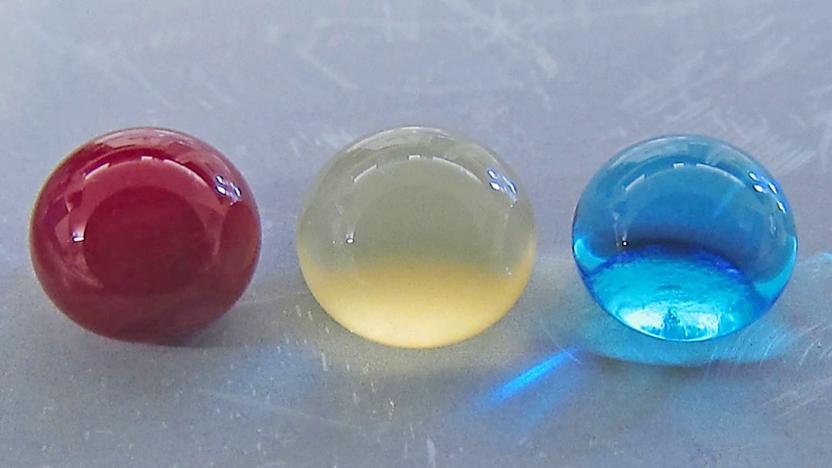
If you have to get an implant in the future, you may not have to worry quite so much about your body rejecting that life-enhancing technology. Colorado State University scientists have developed a titanium surface that's so blood-repellent that it fools your body into believing that there's no intruder at all. The team grew chemically modified layers that serve as barriers between the metal and organics, blocking any real contact. Fluorinated nanotubes were the most effective method of repelling blood in the experiments.

Nanotubes can turn water solid when it should be boiling
Scientists have long known that under the right conditions, small amounts of water can be coaxed into changing its boiling or freezing point. A pot of water takes less energy to boil on the top of Mount Everest, for instance, and liquid under pressure takes a little more heat to convert into steam. A group of researchers at MIT has recently taken this effect a step further -- observing that water in nanotubes can actually freeze into a solid at temperatures well beyond its natural boiling point.
Carbon nanotube transistors promise faster, leaner processors
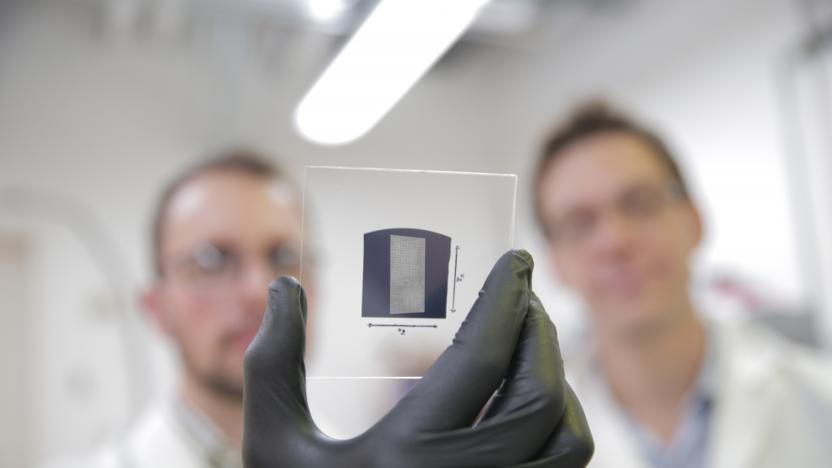
The computing industry sees carbon nanotube transistors as something of a Holy Grail. They promise not just faster performance and lower power consumption than silicon, but a way to prevent the stagnation of processor technology and the death of Moore's Law. However, their real-world speed has always lagged behind conventional technology... until now, that is. University of Wisconsin-Madison researchers have created what they say are the first carbon nanotube transistors to outpace modern silicon.

Microscopic gold tubes can both detect and destroy cancer cells
There's no doubt that doctors would prefer to treat cancer as soon as they spot it, and it looks like nanotechnology might give them that chance. Researchers at the University of Leeds have successfully tested gold nanotubes that are useful for both imaging and destroying cancer cells. Since the tubes absorb near-infrared light frequencies, which both generate heat and render human skin transparent, you only need to zap them with lasers of varying brightness to achieve multiple ends. You can use a relatively low brightness to reveal tumors, while high brightness will heat the tubes enough to kill nearby tumorous cells. The shape also has room for drugs, so you can deliver medicine at the same time.

MIT's bionic plants could be used as energy factories and sensors
In many ways, plants are ideal technology hosts -- they're outdoor-friendly, self-healing and pollution-free. It only makes sense, then, that MIT scientists want to harness that potential by augmenting our leafy friends with nanotechnology. The researchers have found that injecting nanoparticles and carbon nanotubes into a plant can extend its natural abilities, or add functions that would be tricky to replicate with purely synthetic devices. One lab test supercharged photosynthesis, extracting much more energy than normal; another introduced gas sensors that could detect the nitric oxide from a car's exhaust. There's a lot of necessary refinement before bionic plants are practical, but we won't be surprised if our gardens eventually double as energy sources and air quality monitors.

Heat-sensitive solar cell could lead to much more on-demand energy
It's tough to build solar cells that capture both heat and light -- most of these multi-talented devices can't trap more than one percent of the energy they receive. However, MIT has just blown past that limitation with a prototype chip that absorbs warmth through an outer layer of carbon nanotubes. The tubing heats up photonic crystals so much that they glow with an intense light, giving an attached solar cell more energy than it would collect through sunlight alone. The technology is already efficient enough to extract 3.2 percent of the energy it gets, and MIT believes that it could reach 20 percent with more development. While that's not necessarily more effective than conventional technology, it's much easier to store heat than electricity; a future nanotube-based panel could provide a lot more on-demand energy than we typically get today. There's no estimate for when a finished product might reach the market, but it might not be long before solar panels have plenty of reserve power.

University of Georgia stops plant photosynthesis to generate solar power
There's a more efficient way to harvest energy from the backyard than by wiring up hapless critters. Researchers at the University of Georgia have proof: they've discovered a way to generate electricity from plants through hijacking the photosynthesis process. By altering the proteins inside a plant cell's thylakoids, which store solar energy, scientists can intercept electrons through a carbon nanotube backing that draws them away before they're used to make sugar. While the resulting power isn't phenomenal, it's still two orders of magnitude better than previous methods, according to the university. The protein modification method may have a rosier future, as well: the team believes that it could eventually compete with solar cells, producing green energy in a very literal sense.

MIT pencils in carbon nanotube gas sensor that's cheaper, less hazardous (video)
Carbon nanotube-based sensors are good at sniffing out all kinds of things, but applying the cylindrical molecules to a substrate has traditionally been a dangerous and unreliable process. Now, researchers at MIT have found a way to avoid the hazardous solvents that are currently used, by compressing commercially available nanotube powders into a pencil lead-shaped material. That allowed them to sketch the material directly onto paper imprinted with gold electrodes (as shown above), then measure the current flowing through the resisting carbon nanotubes -- allowing detection of any gases that stick to the material. It works even if the marks aren't uniform, according to the team, and the tech would open up new avenues to cheaper sensors that would be particularly adroit at detecting rotten fruit or natural gas leaks. For more info, sniff out the video after the break.

New process for nanotube semiconductors could be graphene's ticket to primetime (video)
In many ways, graphene is one of technology's sickest jokes. The tantalizing promise of cheap to produce, efficient to run materials, that could turn the next page in gadget history has always remained frustratingly out of reach. Now, a new process for creating semiconductors grown on graphene could see the super material commercialized in the next five years. Developed at the Norwegian University of Science and Technology, the patented process "bombs" graphene with gallium, which forms droplets, and naturally arranges itself to match graphene's famous hexagonal pattern. Then, arsenic is added to the mix, which enters the droplets and crystallizes at the bottom, creating a stalk. After a few minutes of this process the droplets are raised by the desired height. The new process also does away with the need for a (relatively) thick substrate to grow the nanowire on, making it cheaper, more flexible and transparent. The inventors state that this could be used in flexible and efficient solar cells and light emitting diodes. We say forward the revolution.

All-carbon solar cell draws power from near-infrared light, our energy future is literally that much brighter
What's this orange-like patch, you ask? It's a layer of carbon nanotubes on silicon, and it might just be instrumental to getting a lot more power out of solar cells than we're used to. Current solar power largely ignores near-infrared light and wastes about 40 percent of the potential energy it could harness. A mix of carbon nanotubes and buckyballs developed by MIT, however, can catch that near-infrared light without degrading like earlier composites. The all-carbon formula doesn't need to be thickly spread to do its work, and it simply lets visible light through -- it could layer on top of a traditional solar cell to catch many more of the sun's rays. Most of the challenge, as we often see for solar cells, is just a matter of improving the energy conversion rate. Provided the researchers can keep refining the project, we could be looking at a big leap in solar power efficiency with very little extra footprint, something we'd very much like to see on the roof of a hybrid sedan.

Invisibility cloak made of carbon nanotubes uses 'mirage effect' to disappear
If the phrase "I solemnly swear I'm up to no good" means anything to you, you'll be happy to know that scientists have come one step closer to a Potter-style "invisibility cloak" so you can use your Marauder's Map to the fullest. With the help of carbon nanotubes, researchers have been able to make objects seem to magically vanish by using the same principle that causes mirages. As anyone who's been especially parched along Route 66 knows, optical illusions occur when heat changes the air's temperature and density, something that forces light to "bend," making us see all sorts of crazy things. Apply the same theory under water using nanotubes -- one molecule carbon coils with super high heat conductivity -- and scientists can make a sheet of the stuff "disappear." Remember, it only works underwater, so get your gillyweed ready and check out the video after the break.

Bee venom used to create ultra-sensitive explosives sensor
We knew that well-trained bees were capable of sniffing out dynamite and other explosives, but researchers at MIT have now come up with a slightly less militant way to use our winged friends as bomb detectors. A team of chemical engineers at the school recently developed a new, ultra-sensitive sensor that's sharp enough to detect even one molecule of TNT. Their special ingredient? Bee venom. Turns out, a bee's poison contains protein fragments called bombolitins, that react to explosive compounds. To create the detector, researchers applied these bombolitins to naturally fluorescent carbon nanotubes. Whenever an explosive molecule binds with the protein fragments, the interaction will alter the wavelength of the carbon cylinder's fluorescent light. The shift is too small for the naked eye to pick up on, but can be detected using specially designed microscopes. If it's ever developed for commercial use, the sensor could provide a more acute alternative to the spectrometry-based detectors used at most airport security checkpoints. At the moment, however, the technology isn't quite ready to be deployed on a widespread basis, so feel free to keep on living in fear. Full PR after the break.

MIT's genetically modified viruses boost solar-cell efficiency by herding nanotubes
The wizards of MIT have done it again. Having checked artificial leaves and Operabots off the to-do list, they've moved on to improving the efficiency of solar cells. Their technique combines a genetically modified version of the M13 virus with carbon nanotubes, which have already been shown to increase efficiency. Unfortunately, some nanotubes enhance solar cell performance, while others inhibit it – and both types tend to clump together, negating their benefits. The modified M13 virus, however, can separate the two types as well as prevent clumping; we've seen similar use of the Tobacco mosaic virus to build better electrodes. Adding virus-built structures to dye-sensitized solar cells increased power conversion efficiency by almost one-third and, with only one additional step in the manufacturing process required, the new approach could be rapidly taken up by existing production facilities. MIT: proving once again that viruses are good for more than just smiting your enemies.

Researchers build synthetic synapse circuit, prosthetic brains still decades away
Building a franken-brain has long been a holy grail of sorts for scientists, but now a team of engineering researchers have made what they claim to be a significant breakthrough towards that goal. Alice Parker and Chongwu Zhou of USC used carbon nanotubes to create synthetic synapse circuits that mimic neurons, the basic building blocks of the brain. This could be invaluable to AI research, though the team still hasn't tackled the problem of scope -- our brains are home to 100 billion neurons, each of which has 10,000 synapses. Moreover, these nanotubes are critically lacking in plasticity -- they can't form new connections, produce new neurons, or adapt with age. All told, the scientists say, we're decades away from having fake brains -- or even sections of it -- but if the technology advances as they hope it will, people might one day be able to recover from devastating brain injuries and drive cars smart enough to avert deadly accidents.

Carbon nanotubes used to more easily detect cancer cells, HIV
Cancer's not slowing its march to ruining as many lives as it possibly can, so it's always pleasing to hear of any new developments that act as hurdles. The latest in the world of disease-prevention comes from Harvard University, where researches have created a dime-sized carbon nanotube forest (read: lots of nanotubes, like those shown above) that can be used to trap cancer cells when blood passes through. A few years back, Mehmet Toner, a biomedical engineering professor at Harvard, created a device similar to the nano-forest that was less effective because silicon was used instead of carbon tubes. Today, Toner has teamed up with Brian Wardle, associate professor of aeronautics and astronautics at MIT, who together have redesigned the original microfluid device to work eight times more efficiently than its predecessor. The carbon nanotubes make diagnosis a fair bit simpler, largely because of the antibodies attached to them that help trap cancer cells as they pass through -- something that's being tailored to work with HIV as well. Things are starting to look moderately promising for cancer-stricken individuals, as hospitals have already began using the original device to detect malignant cells and ultimately prevent them from spreading -- here's hoping it's qualified for mass adoption sooner rather than later.

New phase-change memory gets boost from carbon nanotubes, puts PRAM claims to shame
We've been hearing about the potential flash killer for years, and now a team of University of Illinois engineers is claiming that its new phase-change technology could make the PRAM of our dreams look quaint by comparison. Like so many groundbreaking discoveries of late, carbon nanotubes are at the heart of the this new mode of memory, which uses 100x less power than its phase-change predecessors. So, how does it work? Basically, the team replaced metal wires with carbon nanotubes to pump electricity through phase-change bits, reducing the size of the conductor and the amount of energy consumed. Still too much technobabble? How 'bout this -- they're using tiny tubes to give your cellphone juice for days. Get it? Good. [Thanks, Jeff]

New carbon nanotube aerogel is now the world's lightest solid material
Frozen smoke (read: aerogel) -- not to be confused with the stuff your Grandma uses to flavor her turkey -- is the world's lightest solid material, and it just keeps getting lighter. Researchers at the University of Central Florida have created a new form of the super material, known as multi-walled carbon nanotube (MWCNT) aerogel, that has a density of just four milligrams per cubic centimeter and can be used in sensors to detect pollutants and toxic substances, chemical reactors, and electronic components. Aerogels, which are known as the world's most effective insulators, have been around since the early 20th century, but most of these are fabricated from silicon dioxide. In order to produce the new aerogel, researchers removed the liquid from a "wet gel of well-dispersed pristine MWCNTs," creating a honeycomb structure with walls just 100-nanometers thick. The resulting material is an impressive and resilient electrical conductor that looks and acts less like frozen smoke and more like a burnt marshmallow. And now, you know. Check out the coverage link below for video.

World's smallest battery uses a single nanowire, plant-eating virus could improve Li-ion cells tenfold
When it comes to building better batteries, building electrodes with greater surface area is key, and scientists are looking to exotic methods to attract the tiny particles they need. We've already seen graphene and carbon nanotubes soak up those electrons, but the University of Maryland has another idea -- they're using the Tobacco mosaic virus (TMV) to generate usable patterns of nanorods on the surface of existing metal electrodes. By simply modifying the germ and letting it do its thing, then coating the surface with a conductive film, they're generating ten times the energy capacity of a standard lithium-ion battery while simultaneously rendering the nasty vegetarian bug inert. Meanwhile, the Center for Integrated Nanotechnologies (CINT) at Sandia Labs was more curious how these tiny charges actually work without confusing the forest for the trees, so to speak, so a team of scientists set about constructing the world's smallest battery. Using a single tin dioxide nanowire as anode, a chunk of lithium cobalt dioxide as cathode, and piping some liquid electrolyte in between, they took a microscopic video of the charging process. See it in all its grey, goopy glory right after the break.

Carbon nanotubes run into magical polymer, become 'tougher than Kevlar'
Much like graphene, carbon nanotubes seem to be hitting on all cylinders in the lab. Of course, we can count on one hand finger how many instances we've seen them making a difference in "the real world," but we aren't giving up hope just yet. Researchers from a cadre of universities have come together to solve one of the most nagging issues when dealing with carbon nanotubes -- in prior studies, the bundling of these tubes resulted in a marked decrease in strength, which in turn led to a profuse outpouring of tears. But thanks to a new approach, which mixes in a nondescript polymer, they've managed to conjure up a "a high performance fiber that is remarkably tough, strong, and resistant to failure." More specifically, the resulting material is said to be "tougher than Kevlar, meaning it has a higher ability to absorb energy without breaking." Notably, this material isn't stronger than Kevlar, as it's resistance to failure isn't quite up to snuff, but you can bet the gurus working on this won't stop until it is. And then, friends, we will have officially arrived in The Future.

Stanford University shows that clothes make good batteries too
Remember when Stanford University turned mere paper into a proper battery? That was just the beginning. The same team, led by Yi Cui in the Department of Engineering, now wants your pants to be an electrical storage device. They've managed to dye fabric with carbon nanotube ink, still allowing the cloth to stretch and move like normal but also giving it the supernatural ability to hold a charge. Imagine the day when hipster jeans charge Droids, when booty pants juice up iPhones, and when your wristwatch is powered by the very band you use to strap it to your person -- assuming, of course, the whole "asbestos-like effects" thing turns out to be false.


