rescue
Latest
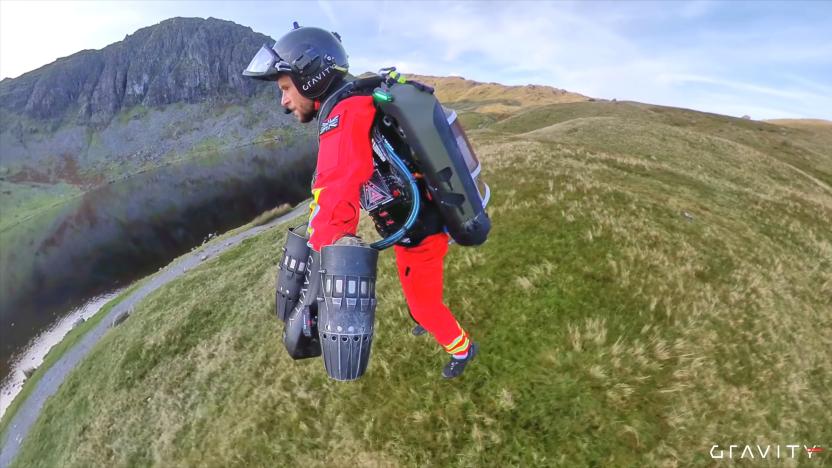
UK ambulance services are testing a rescue jet suit
The “Iron Man” jet suit we first saw back in 2017 might be less crazy than we first thought. Inventor Richard Browning and his company Gravity Industries have demonstrated that it may be a viable option to get quick medical help to victims in remote areas.

Elon Musk painted as 'thin-skinned billionaire' in court documents
The fallout from Elon Musk's ill-advised "pedo guy" comments -- made last year about British cave rescuer Vernon Unsworth -- is not going away. In new court documents, Unsworth didn't hold back when it came to his opinion of the South African tech billionaire, accusing him of orchestrating "a malicious, false and anonymous leak campaign in the UK and Australian press."
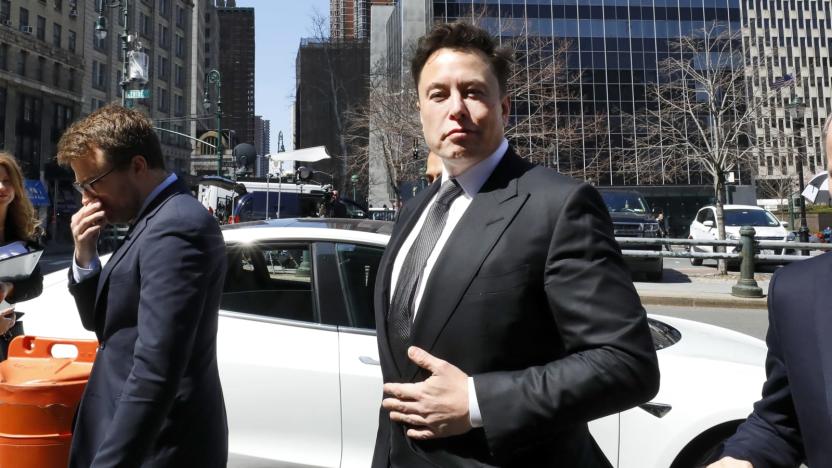
Elon Musk will go to court over 'pedo guy' comments
Elon Musk hasn't had success avoiding a trial over his accusations that cave rescue diver Vernon Unsworth was a "pedo guy." Judge Stephen Wilson has determined that the defamation lawsuit is strong enough to go to trial, with the court battle due to start on October 22nd. While Musk's attorneys argued that he was just stating his "opinion," the judge pointed to emails Musk sent to BuzzFeed where he made detailed (and unsupported) claims that Unsworth had a child bride. In the context, the judge said, an observer would likely conclude that Musk was making "assertions of objective fact" rather than sharing his thoughts.
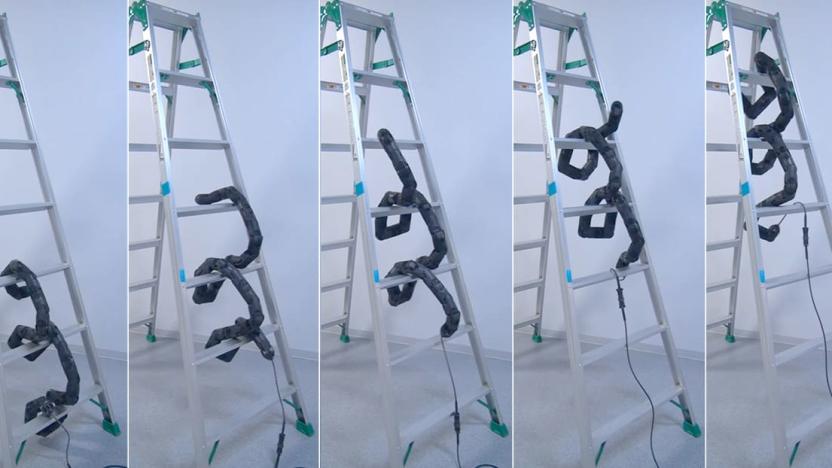
Robot makes 'Snakes and Ladders' horrifyingly literal
Robots can't yet think for themselves, but if they ever do, you'll have nowhere to hide. Researchers from Kyoto University and the University of Electro-Communications unveiled a snake-like robot that can climb up a ladder in a terrifying version of the children's board game. It's not the first robot snake we've ever seen, but this latest model, unveiled at the 2018 IEEE/RSJ International Conference on Intelligent Robots and Systems, looks like the most agile one yet.
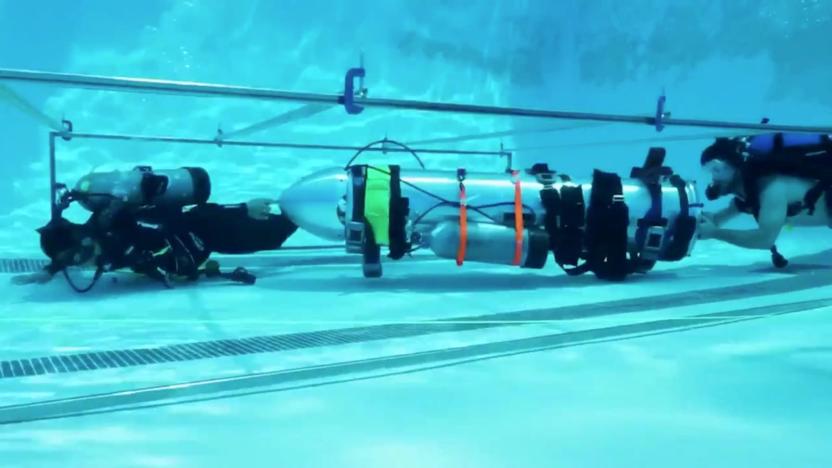
Elon Musk apologizes for calling cave diver a 'pedo guy'
SpaceX and Tesla CEO Elon Musk has apologized to a British cave diver for calling him a "pedo guy" in a Twitter rant over the rescue of children trapped in a cave in Thailand. "My words were spoken in anger after Mr. Unsworth said several untruths and suggested I engage in a sexual act with a mini-sub," he tweeted this morning. "Nonetheless, his actions against me do not justify my actions against him, and for that I apologize to Mr. Unsworth and to the companies I represent as leader. The fault is mine and mine alone."

Elon Musk's mini-sub was 'not practical' for Thailand cave rescue
The Thai cave rescue is over, with all 12 boys and their coach safely above ground. Elon Musk's miniature submarine clearly arrived too late. However, it's now clear that it wouldn't have seen use regardless. In the last few hours of the operation, joint command center lead Narongsak Ostanakorn told Musk that his tech was "good and sophisticated," but that it was "not practical" for the rescue. While officials haven't provided detailed reasoning, a look at the logistics of the rescue might explain why.

Elon Musk's Thailand cave rescue would use a 'kid-size' submarine
Elon Musk is quickly solidifying his offer to help rescue a boys' soccer team trapped in a Thailand cave, and in just the way you would expect from a technology entrepreneur. He has revealed that the "primary path" for his attempt will involve a "kid-size submarine" that uses the liquid oxygen transfer tube of a SpaceX Falcon 9 rocket as its hull. He added that it be "extremely robust" and would support many as four air tanks, with four handles that could be used as hitching points for ropes and cables.

Elon Musk is sending teams to assist with the Thailand cave rescue
Elon Musk has offered assistance in the rescue of the boys' soccer team trapped in a cave in Thailand. Engineers from SpaceX and The Boring Company will travel to the country on Saturday to help with what is becoming an increasingly perilous rescue effort. As CNN reports, conditions are becoming life-threatening, with a former navy diver involved in the operation losing his life after a sudden drop in oxygen levels underground.
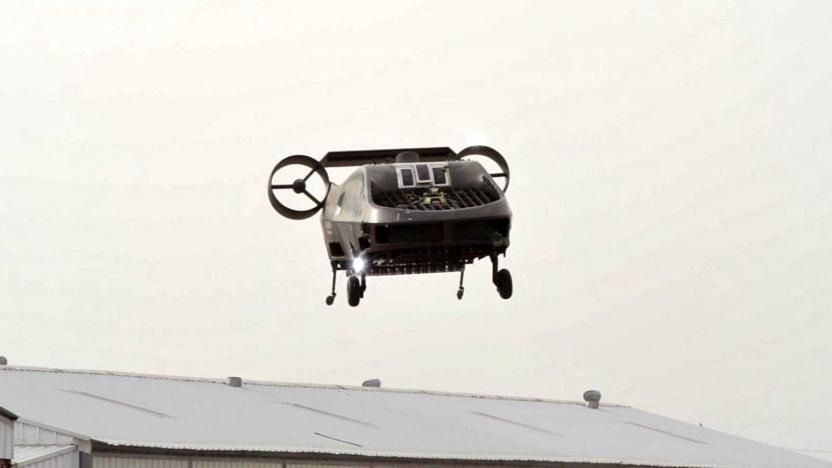
Watch a medevac drone perform a simulated rescue
Medevac missions won't have to put more humans in danger if Tactical Robotics has its way. The Urban Aeronautics-owned firm has successfully completed its first "mission representative" demo of the Cormorant, an autonomous VTOL (vertical takeoff and landing) drone that can pick up two casualties without requiring a crew. The only people directly involved are those loading the victims -- there's a video camera for talking to conscious patients, but the machine otherwise flies on its own.
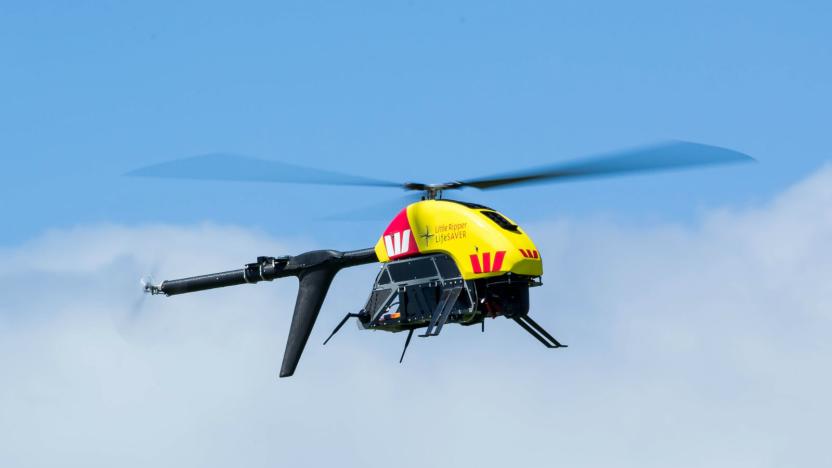
Lifeguard drone completes world-first ocean rescue
Australia's 'Little Ripper' drone has saved a pair of swimmers caught in rough seas in what's thought to be a world-first rescue operation. Lifeguards were busy testing the UAV off Lennox Head as part of New South Wales' $250,000 shark-spotting strategy when the distress call came in. Within 70 seconds the aerial helper had tracked down the stranded duo and dropped them a flotation pod, which they used to safely make their way to shore, according to The Sydney Morning Herald.
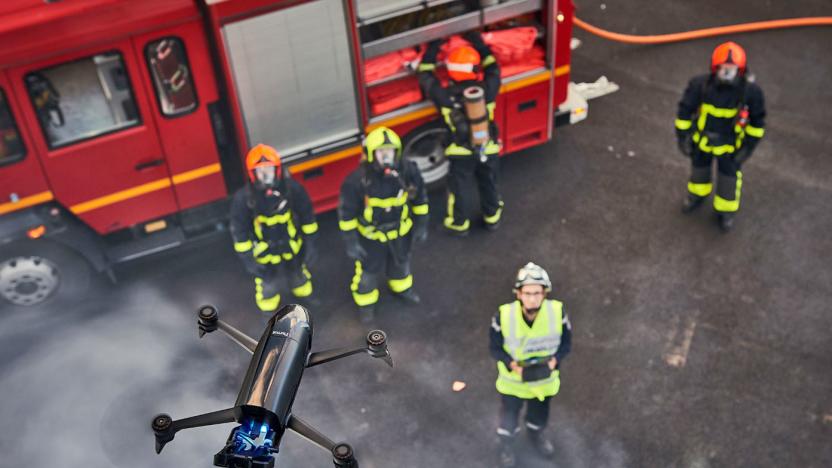
Parrot's latest drones are for farmers and firefighters
It's been a tough year for Parrot. The drone maker cut 290 jobs after sub-par sales, and it wasn't shy in admitting that its lineup was both unfocused and (for personal drones) unprofitable. However, it has an idea as to how to recover: by targeting the professional crowd. Its new Bebop-Pro Thermal and Bluegrass drones include equipment tailored to specific needs. The Bebop, as its name implies, includes a thermal imaging camera and matching software alongside the usual video cam. It's meant to help firefighters and rescue crews pinpoint sources of heat, whether it's a blaze or a person trapped under rubble. There's also a long-range remote control in the box to keep pilots well out of harm's way.

Watch the world’s first skydive from a drone
Unlike typical consumer-aimed quadcopter drones, Latvian company Aerones specializes in big UAVs that can carry hefty loads. Last year, they showed off one of their big lifter's prowess by towing YouTuber Kaspars Balamovskis on a snowboarding run. Today, they released another stunt video spotlighting one of their heavy lifters hauling a man a thousand feet in the air -- before he let go to skydive back down to earth.
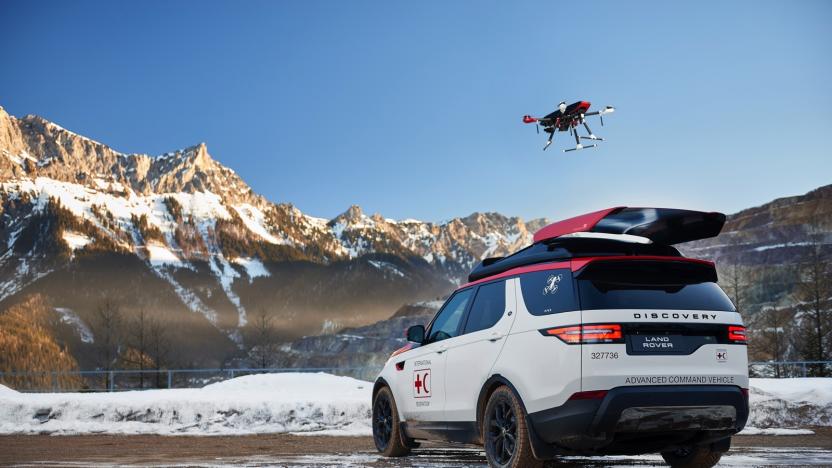
Land Rover's Project Hero SUV launches a drone to aid rescue workers
It's no secret that drones are useful for surveying situations where it might be too dangerous for a human to tread. This includes tough terrain that search and rescue teams encounter and Jaguar Land Rover built a vehicle to lend a hand. The company's Special Vehicle Operations (SVO) unit designed and built a unique version of its Discovery SUV for use by the Austrian Red Cross. Officially called Project Hero, the vehicle features a roof-mounted drone landing system.

Italian earthquake victims asked to disable WiFi passwords
Early Wednesday a 6.2 magnitude earthquake struck central Italy, killing at least 120 people and trapping countless others under debris. To help ease communications for search and recovery, multiple disaster relief institutions are urging locals to temporarily remove their WiFi passwords.
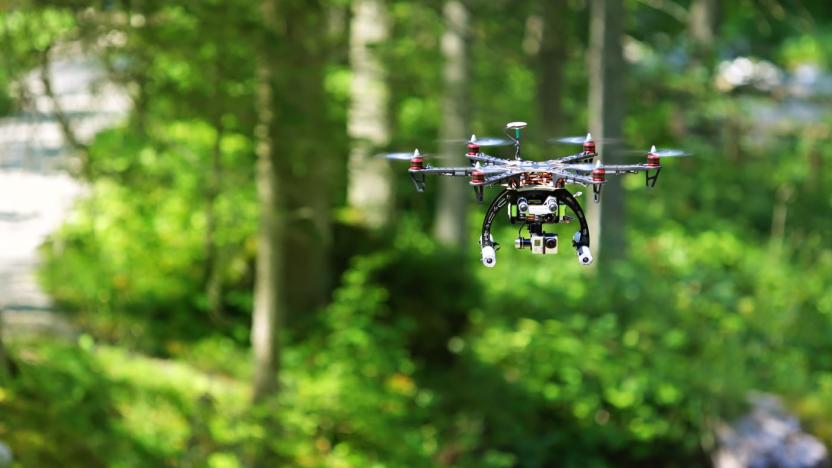
Hiker with head-mounted cameras taught drones to fly through forests
Researchers in Switzerland have developed a drone that can navigate forest trails in search of missing hikers. According to EPFL, around 1,000 people get lost in Swiss forests every year and often need to be rescued. Rather than enlisting a search party, which are limited by the number of warm bodies on hand, a fleet of drones could cover the main trails with ease. Unfortunately, while getting a drone to fly through dense wooded forests was reasonable enough, letting it navigate the territory on its own was another thing altogether.

Drone helps rescue trapped rafters
Drones aren't just useful as scouts and signalers during rescue operations -- they can play a hand in the actual rescue, too. When the Auburn Fire Department went to help recover two young men stranded in the middle of rapids in Mechanics Falls, Maine, Fire Chief Frank Roma used a DJI Phantom 3 to deliver a tag line that carried a much-needed life jacket. It also doubled as an observer while emergency crews sent an inflatable boat to bring the men back to shore, as you can see in the video below. While Roma notes that the Phantom 3 was his personal machine rather than official equipment, he's eager to see drones used more often in the field. This only "scratch[es] the surface," he tells TV network WMTW. It'll be a while before robots are carrying you out of danger, unfortunately, but that key role in a river rescue offers a glimpse of what's possible.

Rescue drone that can search buildings wins $1 million prize
A clever, bizarre-looking drone that may one day save your butt has won a million bucks in the UAE's Drones for Good competition. Flyability's GimBall has the unusual ability to squeeze into tight indoor spaces and search for potential disaster victims, thanks to its geodesic design. The entire UAV is effectively a two-prop, electronically stabilized gimball surrounded by a tough, lightweight carbon fiber cage. Instead of trying to pull off the daunting task of avoiding obstacles, the GimBall can just plow right into them, bounce off and then carry on to its destination. It can even roll along the ground or a ceiling like Parrot's MiniDrone.

BlackBerry's surviving, but not as a smartphone company
It's been almost a year since John Chen was appointed to save Blackberry and it's clear that his grand plan has, at least, stopped the company losing money hand over fist. In the Canadian outfit's latest three month report, it reveals that losses have been trimmed from $4.4 billion last year to a much more manageable $148 million. Of course, it's clear that as the business reinvents itself as a software-and-services company, manufacturing smartphones has increasingly become a side project.

Tiny tethered drone gives soldiers a view of the dangers ahead
Drones already give troops valuable data about enemies and devastated areas, but the existing vehicles have their limits; big aerial drones can't see inside buildings, and their ground-based counterparts can't get over rough terrain. Well, CyPhy Works might just have reached a happy balance between those two extremes. It recently signed a deal with the US Air Force to produce the Extreme Access Pocket Flyer, a very tiny UAV (it weighs just 2.8oz) that sends HD video to soldiers for up to two hours. The key to its portability is a 250-foot microfilament tether that delivers both power and data -- bulkier gear like batteries will stay with the soldier. This has the upshot of adding reliability and security, since there's no wireless signal subject to interference or jamming.

Battlefield Hardline gets car, hostage multiplayer modes
Battlefield Hardline comes with two new multiplayer modes, Hotwire and Rescue, EA announced at its Gamescom press conference today. Guess which one involves cars and which is about a hostage situation? Hotwire has cops and criminals riding around in shiny, fast cars, attempting to capture and incapacitate marked vehicles. Rescue is an eSports mode where five police officers must save a hostage from a group of five bad guys. It emphasizes the planning phase and trap-laying, rather than the more spontaneous, explosive vibe of Ubisoft's hostage game, Rainbow Six: Siege.


