supremecourt
Latest
Supreme Court rules generic website names can be trademarked
Justices determined in an 8-1 ruling that Booking.com is eligible for a trademark.
Apple: The App Store isn't a monopoly 'by any metric'
This morning, the Supreme Court decided to allow iPhone owners to proceed with a lawsuit against Apple. The plaintiffs claim that Apple has a monopoly through the App Store. Apple tried to argue that developers are the ones who pay Apple's commission, so they would need to file a lawsuit on the issue. But the Supreme Court has ruled that the case may continue as is. In a statement, released to CNBC this afternoon, Apple says it is confident it will prevail when the facts are presented.

Supreme Court rules against Apple in App Store price fixing case
The Supreme Court has ruled against Apple in a long-standing case over price fixing in the App Store, in a decision that allows iPhone owners to proceed with a lawsuit against the company. The court heard arguments in the case in November, and the decision was expected sometime this spring.
YouTube searches for 'RBG' led to slew of bogus conspiracy videos
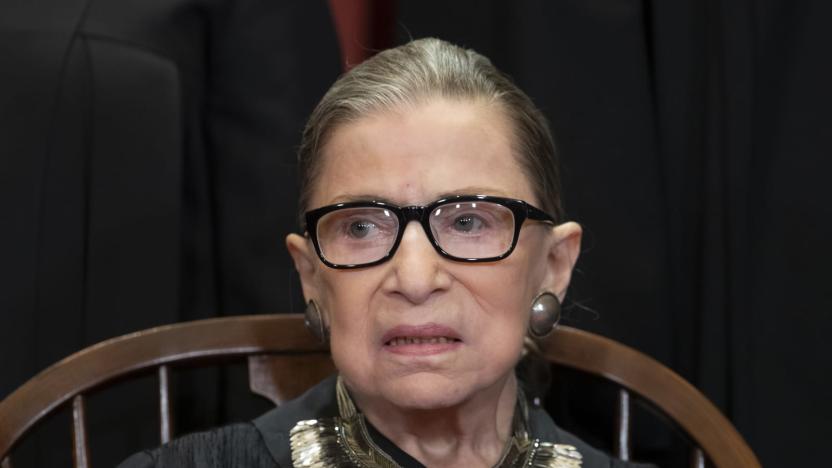
As much as YouTube has done to counter hoaxes and fake news in its searches, it still has room for improvement. The Washington Post discovered that "more than half" of YouTube's top 20 search results for "RBG," the nickname for US Supreme Court Justice Ruth Bader Ginsburg, were known fake conspiracy theory videos. In fact, just one of the results came from a well-established news outlet. And if you played one of those videos, the recommendations quickly shifted to more extreme conspiracies.
Uber's fight over worker status is headed to the UK Supreme Court
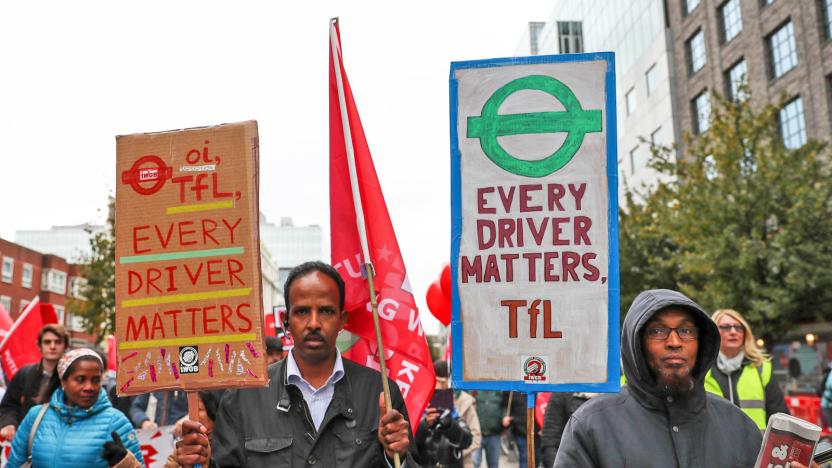
Uber is about to face a definitive battle over its classification of ridesharing drivers. The UK Court of Appeal has upheld a 2016 ruling that Uber drivers are considered employees and thus qualify for holiday pay, the minimum wage and other protections. As Uber told Wired it planned to appeal the decision in the country's Supreme Court, the company now faces a definitive battle over worker status.

Supreme Court hears arguments in Apple App Store price fixing suit
Apple now has its last chance to fend off a lawsuit accusing it of price fixing on the App Store. The US Supreme Court is hearing arguments from Apple on November 26th as the company rejects claims that it uses its absolute control of iOS app downloads to keep prices high and take a 30 percent cut of each sale. In a filing, Apple portrayed itself as just a "sales and distribution agent" and said that developers were ultimately the ones who set the final price. It also said that objections to the 30 percent cut should come from developers, since they're the ones who pay directly rather than users.

Supreme Court won't hear appeal over Obama-era net neutrality rules
Net neutrality just secured a court victory... unfortunately, it won't make much of a difference in the near future. The US Supreme Court has declined to hear an appeal of a 2016 DC court ruling that upheld the FCC's Obama-era net neutrality rules, leaving the earlier decision intact. The brief notice didn't explain why the Supreme Court had rejected the request, but noted that conservative Justices Alito, Gorsuch and Thomas would have overturned the lower court's verdict. Chief Justice Roberts and newly sworn-in Justice Kavanaugh weren't involved in the decision due to respective conflict of interest issues and past involvement.

Canada court says ISPs can charge studios for hunting pirates
It could soon prove expensive for media makers to chase online pirates in Canada. The country's Supreme Court has unanimously ruled that internet providers are entitled to "reasonable" compensation when asked to link pirates' IP addresses to customer details. Voltage Pictures (the production firm behind The Hurt Locker) intended to sue roughly 55,000 customers of telecom giant Rogers for allegedly bootlegging movies, but balked when Rogers wanted to charge $100 per hour to comply with the requests for information. Rogers won the initial Federal Court case, but had to defend itself at the Supreme Court when Voltage appealed the case.
Our (likely) next Supreme Court justice doesn't get the internet
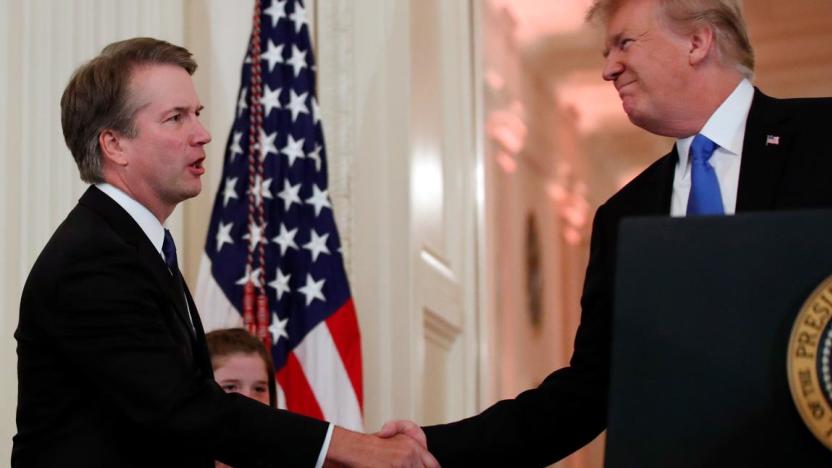
Barring some serious Democratic finagling, Judge Brett Kavanaugh is going to be our next associate Supreme Court justice. The problem is, he doesn't really get the internet. He made as much clear in a dissenting opinion he wrote in the thick of last year's net neutrality debate. Long story short, a panel of judges from the D.C. Circuit Court of Appeals upheld the FCC's 2015 Open Internet Order in 2016 after it was challenged by a coalition of telecom and cable companies. Those organizations then petitioned for a second hearing in front of the entire court, and were shot down again (.pdf here) in 2017. Kavanaugh disagreed with the court's decision, and then proceeded to lay out arguments for why the FCC's net neutrality rules were "unlawful."

Supreme Court won’t hear ‘Making a Murderer’ appeal
In 2015, Netflix introduced the world to Steven Avery and Brendan Dassey in its hit series Making a Murderer. The two were convicted of murdering Teresa Halbach in 2006, but Avery has insisted that he was framed and questions about law enforcement's interrogation of Dassey have persisted. Courts have gone back and forth over Dassey's conviction, but it looks like his defense has hit a major roadblock as the Supreme Court has now declined to consider the case.

Supreme Court ruling lets states collect sales tax from online purchases
It's not unheard of for internet retailers to collect sales tax regardless of where their customers are located, but they might not have much choice before long. The US Supreme Court has ruled that states can force online stores to collect sales tax, reversing a 1992 precedent that let companies avoid sales tax when they didn't have a physical presence. South Dakota (with the support of 41 other states, two territories and DC) had taken action against Newegg, Overstock and Wayfair after enacting a tax collection law in 2016, arguing that the presence rule was "arbitrary." The state put enforcement of the law on hold until it could definitively establish that it was constitutional.
Supreme Court will hear Apple's bid to stop price fixing suit
Apple will have one more shot at avoiding a proposed class-action lawsuit accusing it of price fixing with the App Store. The US Supreme Court has agreed to hear Apple's appeal of a ruling that would resurrect the antitrust case, which asserted that the company was abusing its App Store-only requirement to keep prices higher and take a 30 percent cut. It's not yet clear when the court will handle the challenge.
Esports betting just got a whole lot easier. Now what?
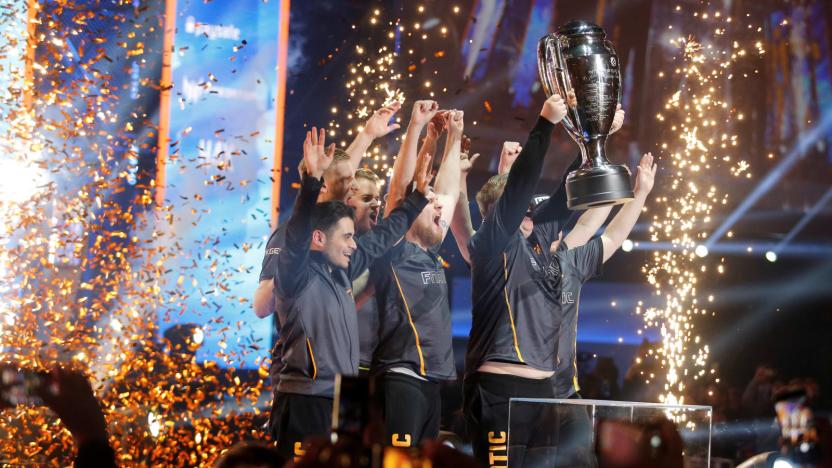
On May 14th, the United States Supreme Court eliminated a 26-year-old law prohibiting states from sponsoring sports gambling. Today, states are free to establish their own sports-betting laws, and a few governors are acting fast. New Jersey, the state at the heart of the Supreme Court decision, should have sportsbooks live any day now, while Pennsylvania, West Virginia, Delaware and Mississippi have already passed bills allowing gambling. A handful of other states have legislation in the pipeline, and meanwhile, the NFL, NBA, NHL and other national leagues are calling for some form of federal regulation in sports betting. "In the wake of the Supreme Court's decision, the volume of sports betting in the US is poised to explode -- and esports betting will inevitably follow suit," says Bryce Blum, attorney and founder of Electronic Sports and Gaming Law.

SCOTUS will hear a case on internet sales tax
One of the benefits of internet shopping for many consumers is not having to pay sales tax. But the Supreme Court has just agreed to hear South Dakota v. Wayfair, which may reverse the 1992 ruling that prevents state and local governments from requiring retailers to collect sales tax for online purchases.

Supreme Court considers if your privacy rights include location data
With all the attention focused on the FCC's upcoming vote to dismantle net neutrality protections, it's easy to have missed an upcoming hearing that has the potential to reshape electronic-privacy protection. Today, the Supreme Court is hearing arguments in Carpenter v. United States — and at issue is cellphone-tower location data that law enforcement obtained without a warrant. Defendant Timothy Carpenter, who was convicted as the mastermind behind two years of armed robberies in Michigan and Ohio, has argued that his location data, as gathered by his cellphone service provider, is covered under the Fourth Amendment, which protects citizens against "unreasonable searches and seizures." Thus far, appeals courts have upheld the initial decision that law enforcement didn't need a warrant to acquire this data, so the Supreme Court is now tasked with determining whether this data is deserving of more-rigorous privacy protection.
Supreme Court denies Samsung's appeal in Apple lawsuit
Samsung has been fighting tooth-and-nail against Apple's victory in a key smartphone patent lawsuit, but it may have little choice but to pay up at this point. The US Supreme Court has refused to hear Samsung's appeal in the case, upholding a circuit court decision reinstating a $120 million penalty for allegedly infringing on Apple's patents for technology like slide-to-unlock and autocorrecting text. Samsung had argued that the lower court didn't consider additional legal material, and supposedly changed laws for both issuing injunctions and invalidating patents.

Apple and Samsung are headed back to court... again
The case that never ends is going back to court. Back in 2012, Apple won a lawsuit against Samsung that sought damages for a handful of patent infringements involving smartphone functionality and design. At the time, Apple was awarded $1 billion, but that sum has been whittled down and in December of 2015, Samsung agreed to pay Apple a lesser $548 million. However, last December, the Supreme Court issued a ruling that overturned the 2012 decision, which ultimately led to yesterday's District Court decision to retry the case.

Supreme Court will hear challenge to Microsoft's data privacy case
Microsoft may have won its fight to protect overseas data from American search warrants, but it can't rest easy. The Supreme Court has agreed to hear the Department of Justice's petition to review the case, virtually guaranteeing that the case will set the basis for how US law enforcement can access data abroad. We don't have a court date as of this writing, but the arguments on both sides are already well-established.
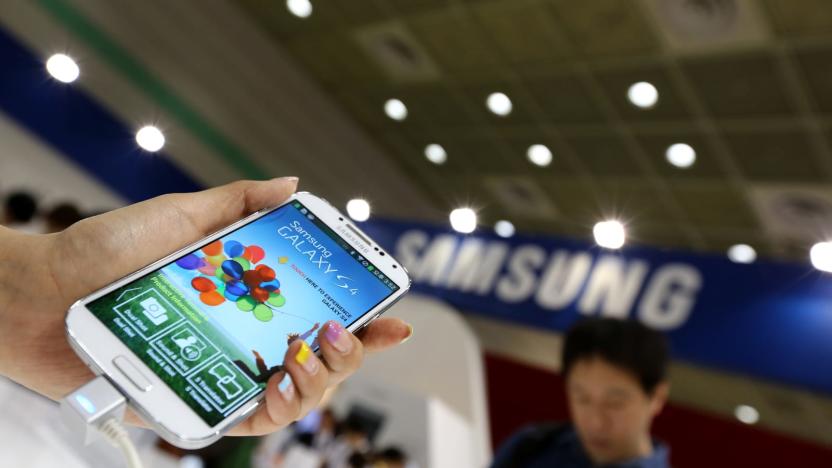
Supreme Court: Samsung's in-box warranty can't kill lawsuit
Samsung can't force a closed-door proceeding to settle a lawsuit filed by a customer who felt misled about the capabilities of his Galaxy S4, the Supreme Court has ruled. The Korean tech giant has been trying to quash the lawsuit since it was filed, arguing that any customer who buys the S4 agrees to private arbitration, since it's a clause in its warranty booklet. The plaintiff, Daniel Norcia, fought back by pointing out that he bought the device from a Verizon store, where an employee set it up for him. He said he left the phone's box and warranty booklet in the store.
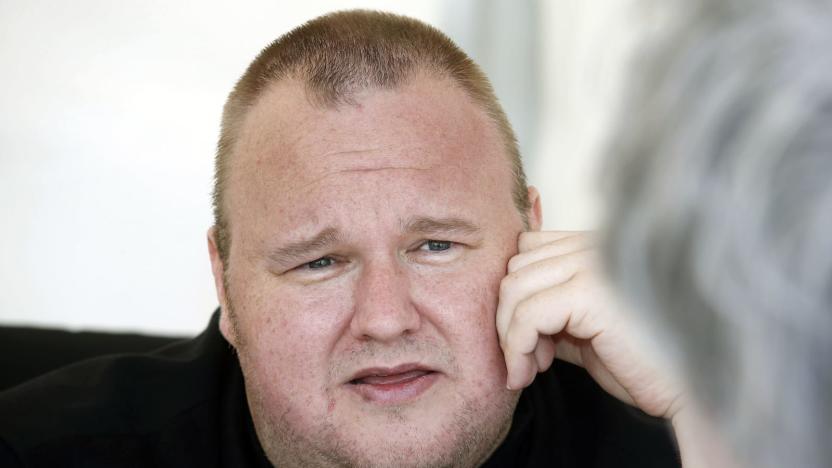
Supreme Court denies Kim Dotcom petition to keep $40 million in assets
Kim Dotcom, the founder of illegal file-sharing site Megaupload, was arrested in 2012 by New Zealand authorities on behalf of the US. He still has not been extradited to the US, however. In April of this year, the file-sharing maven asked the US Supreme Court to overturn a 2014 ruling that let US authorities keep $75 million in assets seized during the original raid on his house. The petition was denied on October 2nd, which allows the seizure order to remain intact.


