

Advertisement
Advertisement
Advertisement

Earth's orbiting observatories and their literally awesome images
Former Homepage Editor

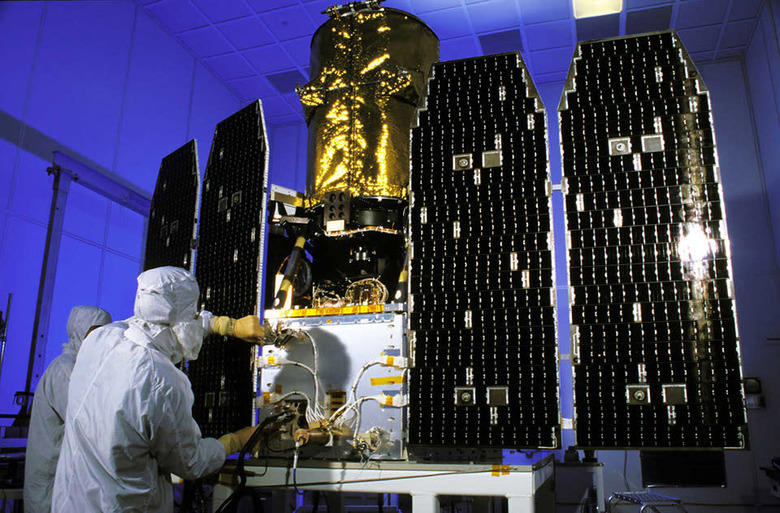
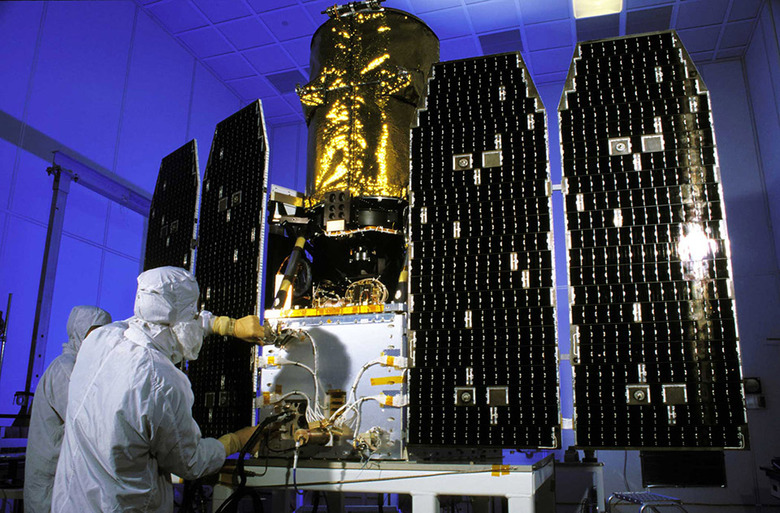
While the Voyager 1 probe, launched in 1977, cruises into interstellar space (the farthest man-made object from Earth) and missions like New Horizons capture snaps from the outskirts of the solar system, we've been keeping the heavy hitters close to home. Massive space telescopes that scan the cosmos with augmented eyes have been orbiting the Earth for years to get a clear view of the universe without atmospheric distortion. The Hubble Space Telescope's 1990 launch set a new precedent for these space-based observatories in terms of scale and abilities. These new instruments have helped scientists gather an incredible amount of data and mind-bending photos from deep space. With Pluto hogging the spotlight lately, we decided to take a look back at some of these powerful orbiting eyes and their visual achievements.

[Image credit: JPL]

The Hubble Space Telescope hitched a ride aboard the space shuttle Discovery in 1990, making it the first major optical telescope to be placed into orbit. It’s 43.5 feet long, weighs 27,000 pounds and circles the Earth at about 17,000MPH, with its eye pointed out into space. Its location 340 miles above the surface spares it from the atmospheric distortion and light pollution that Earth-based observatories suffer. 

Hubble, a collaborative effort between NASA and the ESA, has been integral in expanding our knowledge about phenomena such as dark energy, dark matter and black holes. The data gathered over the years has informed more than 12,800 scientific papers. It’s also presented us with an incredible tapestry of images, mostly in the visible light spectrum, from our own solar system to deep space. With the shuttle program offline, the Hubble won’t be returning to Earth, but its successor, the James Webb Space Telescope, is scheduled to launch in 2018.

Advertisement
Advertisement