

Don't throw away your old router — Do this instead
Your old router has a lot of potential on your network, so give it a new job.
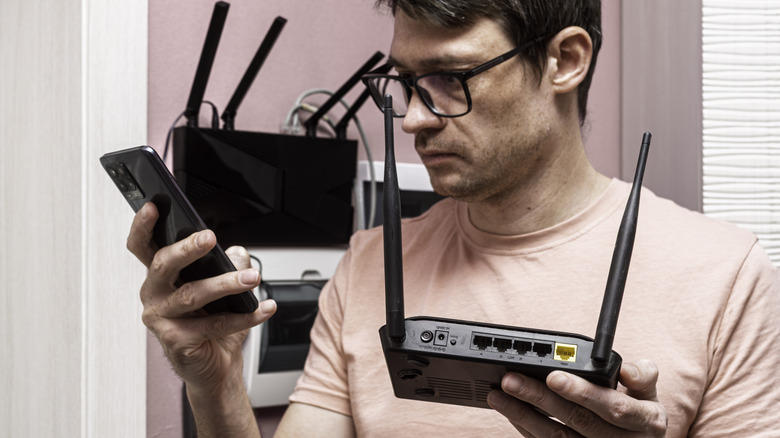
Unlike many devices in your home, you probably don't think much about upgrading your router. Routers can work for a long time, and it's easy to overlook when one isn't getting firmware updates anymore or doesn't support the latest Wi-Fi standards. This can make upgrading to a new Wi-Fi router more difficult, since throwing away a perfectly functioning piece of equipment feels wasteful.
Thankfully, this doesn't need to be an issue. Old routers can easily be repurposed to have use even as a secondary or tertiary device. While newer models offer better security, range, and performance and are thus the best for your primary device, old routers can take advantage of the fact that most networking fundamentals haven't changed in decades. You have many ways to repurpose an old router instead of sending it off to the landfill or for recycling.
Turn your old router into a Wi-Fi repeater or mesh node
If your new Wi-Fi router struggles to reach corners of your home, consider using your old router as a dedicated access point. With this method, you don't need to buy a wireless extender or another single-purpose piece of tech.
There are two approaches you can take: wired or wireless. A wired connection brings stable connectivity and fast speeds, but you need an Ethernet line running back to your primary router. This might not be possible several rooms away unless you're comfortable pulling cable through your walls.
I recommend against broadcasting two Wi-Fi signals in close proximity, since this can lead to wireless interference and worse performance. The good news is that you can disable specific frequencies on both routers to avoid congestion. A good option is configuring the old router to broadcast on the 2.4GHz band, while disabling that frequency on the newer router. This is because 2.4GHz signals penetrate walls better, while most of the Wi-Fi improvements over the past decade have applied to higher frequencies like 5GHz and 6GHz.
Many routers support wireless repeater or bridge functionality, so check the admin panel or manual for those terms. On my older TP-Link router, this feature is hidden within several sub-menus under the WDS bridging label. The downside with this approach is that your router has to use part of its limited wireless capacity to communicate with your router. This translates to slower real-world speeds when you're connected to the secondary router.
A small number of routers can also double up as a mesh Wi-Fi node. Asus calls this feature AiMesh on its routers, and it allows you to mix different models to create one unified network. If you haven't chosen a new router yet and your old one offers this, buy one in the same family to take advantage of it.
Use the LAN ports for an easy network switch
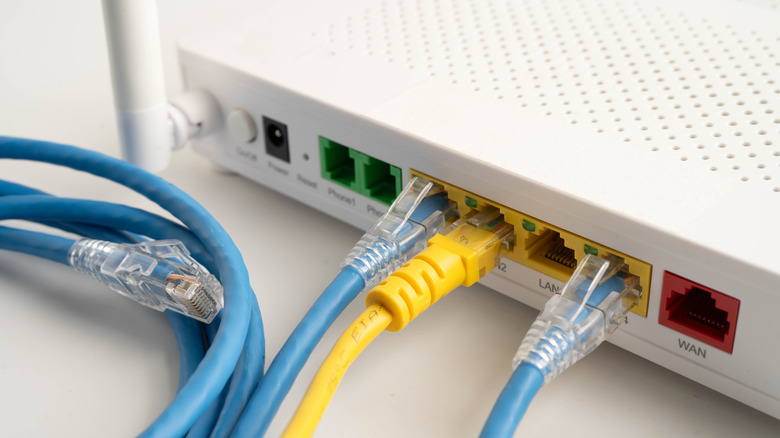
If your new router doesn't have enough LAN ports to connect high-bandwidth devices like smart TVs, computers and gaming consoles, you can use your old router as a switch. A basic network switch typically costs between $10 and $20, and is yet another single-use device you don't need to buy if you have an old router lying around.
Setting up a router in switch mode is relatively easy. Simply run an Ethernet cable from your new router to the old one, using LAN ports on each, and connect your devices to the remaining ports on the old router. Make sure you don't plug anything into the old router's WAN port.
Many routers offer Access Point (AP) or Switch modes in their administrative settings, which you'll have to enable by accessing the router's admin panel. If you don't see one of these modes, you'll have to disable the router's DHCP server, along with any other routing options like firewall and NAT, manually.
The same warning about wireless interference applies here as well. You should disable all wireless functionality on the old router if you only care about the onboard Ethernet ports.
Create file and print servers for wireless convenience
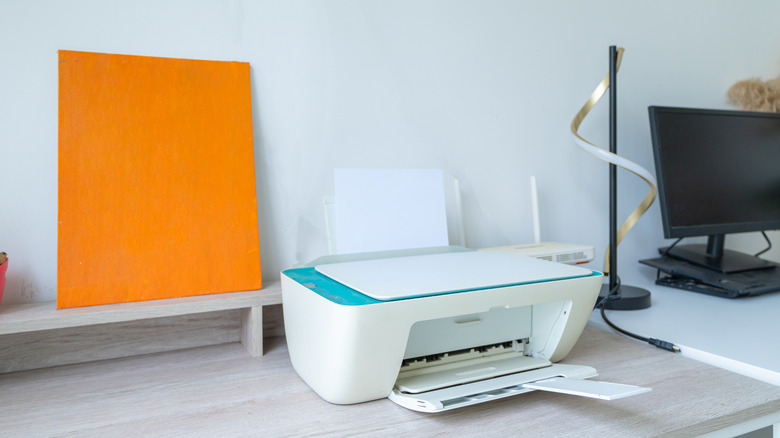
Many routers have a USB port that's easy to overlook. But you can use this in many ways, including to connect a storage device or printer. The latter allows you to initiate print jobs from any device connected to your router, even wirelessly. If you have an old printer that lacks Wi-Fi support, this can be an easy workaround.
Connecting a storage device like an external hard drive or thumb drive can turn your router into a rudimentary storage server. In other words, you can read and write to the storage device from any device on the network. Dedicated network-attached storage (NAS) machines and the drives for them cost a fair bit, so this is an inexpensive way to get started. Just keep in mind that routers don't include any reliability or backup features, which is where actual NAS devices shine. And the USB port on your router is likely not the fastest, so performance will be limited.
After connecting the device, poke around in your router's admin panel to check its USB device sharing settings for the best experience.
Turn it into a dedicated VPN router
Many modern routers support VPN functionality, but enabling this feature means routing all traffic through the tunnel. You can install your VPN app on individual devices instead, but that might lead to battery drain over long periods. This is where repurposing an old router into a VPN client makes a lot of sense. Using a dedicated router for the VPN that operates independently from your primary network means you can connect to it when you want, without running all traffic through it or forcing your mobile devices to handle the workload.
The exact instructions vary by VPN provider and router manufacturer, but you'll generally start by connecting your old router to the new one and enabling access point mode. Then, look for VPN settings in the router's administration panel, turn on the feature, and provide your VPN credentials.
Install custom firmware for maximum flexibility
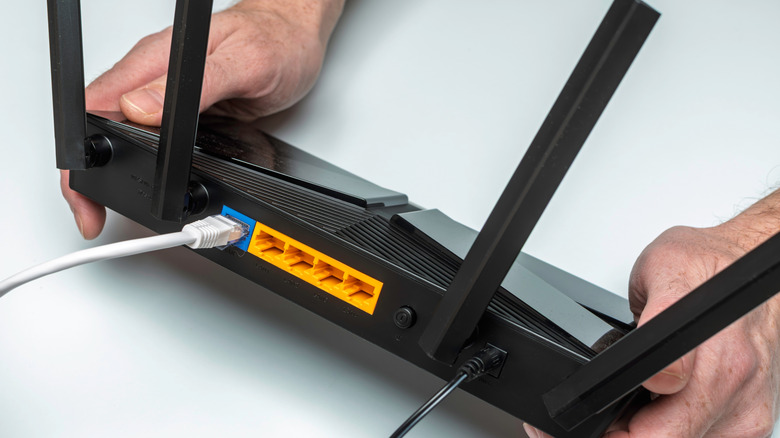
While we don't always think about them in this way, routers are essentially low-power computers, typically pairing an efficient CPU with small amounts of RAM and memory. They accordingly ship with lightweight operating systems designed for their intended purpose: routing network traffic and everything else associated with that task. This creates problems when manufacturers stop providing the latest firmware for your router, or when its limited nature prevents you from doing what you want.
Luckily for us, entire enterprising open-source communities have built custom firmware designed specifically for routers. Projects like OpenWRT replace a router's manufacturer-provided software with a more flexible OS that gives you greater control over the device, including the ability to install third-party apps like torrent clients.
These are a great option to keep your old router going for longer. Many of the suggestions above are also easier to set up on custom router firmware like DD-WRT or FreshTomato. I use OpenWRT, as I find it less restrictive than many routers' default operating systems.
The downside to custom firmware is that not all routers are supported. Given the sheer number of models, you'll have to read through each project's documentation to narrow down compatibility for your specific device.