

Engadget's best of 2026
The highest-rated devices that we reviewed this year in a variety of categories.
By the end of the year, Engadget writers will complete over 150 product reviews. From Apple's iPhones to Google's Pixels, the AirPods to Sony's 1000X series and MacBooks to Dell's XPS, our reviews team covers a wide range of devices from a wide range of companies. During the course of the year, products that receive a score of 90 or higher earn Engadget's Editors' Choice, while other category-topping devices score in the high 80s.
Now that the year is coming to an end, we've compiled the highest-scoring products (so far) across a range of categories, along with commentary on each one from our writers, for our best of 2026.
Best Android phone: Google Pixel 11
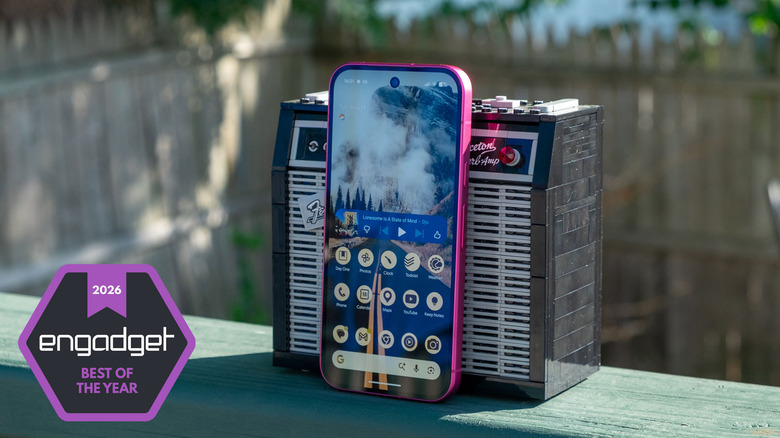
Google's Pixel 11 is the definition of an iterative update. It looks essentially the same as the Pixel 10, and it has a similar camera array, a new Tensor G6 process, double the starting storage and a $100 price bump. But the Pixel 10 was so good that Google didn't need to reinvent the wheel this year. Refinements to a winning formula, some intelligent software updates and a gorgeous set of colors was enough to win me over.
The Pixel 11 is one of few smartphones in its class to have three camera lenses on the back, including a capable 5x telephoto. That's something you can't get in the otherwise-comparable iPhone 17, and it bests the 3x camera on Samsung's Galaxy S26. Getting a telephoto camera on a phone that costs less than $1,000 is a trick Google may have first pulled last year, but it's still a big deal.
Many of the software tricks Google added this year, like Rambler (which turns your, well, rambling dictation into clearer and more concise text) and Proactive Suggestions (which nudge you to do things like add items to your calendar based on your conversations) are genuinely useful as well. Add in outstanding build quality, fast performance and long battery life and the Pixel 11 does just about anything that most smartphone buyers could want. — Nathan Ingraham, Deputy News Editor
Best iPhone: Apple iPhone 18 Pro
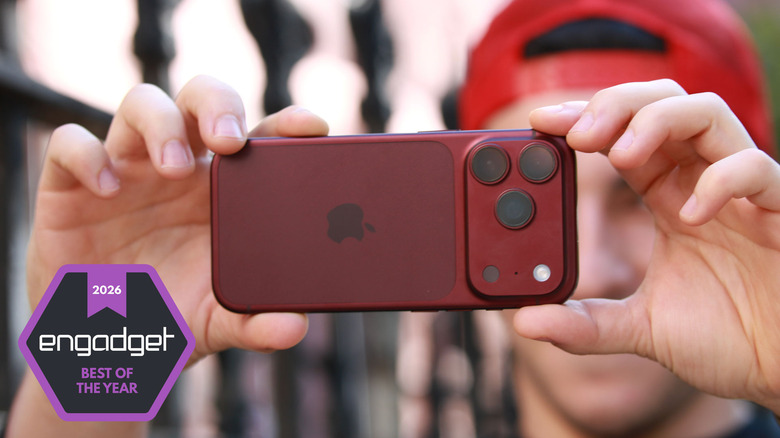
Of all the iPhones introduced in 2026, the iPhone 18 Pro was the clear choice. Due to a change in Apple's product release strategy this year, there were only three iPhone models to consider: the iPhone 17e, iPhone 18 Pro (and Pro Max) and the iPhone Duo. We haven't been able to review the last one yet, so it's not eligible. Plus, the fact that it's a first-generation product with a hefty price means it's unlikely to be the right device for most people, anyway.
That said, though the iPhone 17e is a solid phone for the cost, the title of best iPhone almost by default goes to the iPhone 18 Pro. It simply offers the top-tier combination of features for the money.
Its overall package of updates seems incremental, but the iPhone 18 Pro served up some compelling new hardware. Variable aperture and pro camera controls are useful for manual photographers, while things like the sensor-signed Apple Reference Image authentication are a convenient and simple addition that can help educate a larger audience on how to tell if a photo has been manipulated.
Throw in a smaller, more functional Dynamic Island, improved thermal management and faster battery charging, the iPhone 18 Pro starts to look more beefy. Plus, the new burgundy and blue color options are quite droolworthy. If you're looking for an Apple handset with the best performance and cameras, the iPhone 18 Pro is the easy pick. — Cherlynn Low, Executive Editor
Best affordable laptop: Apple MacBook Neo
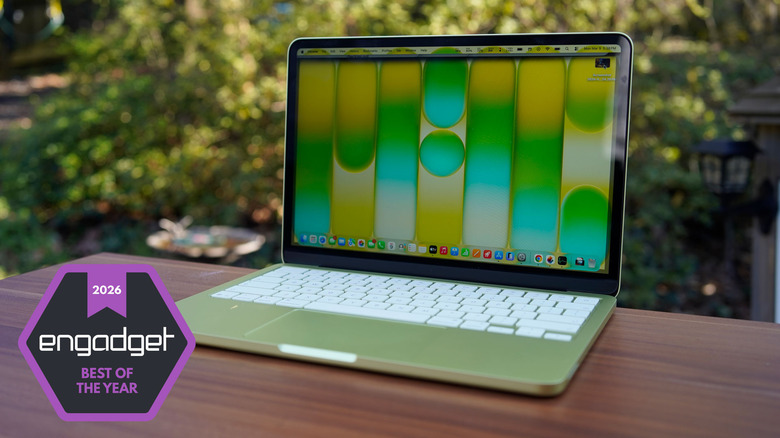
Apple seemingly did the impossible with the MacBook Neo: It somehow delivered a $600 budget laptop that didn't feel too different from a premium notebook like the MacBook Air. Even though it's $100 more now, thanks to the ongoing AI-induced RAM crisis, the MacBook Neo is still a tremendous deal. It's fast enough for everyday computing tasks (even with just 8GB of RAM), its screen is bright enough to use in direct sunlight and it features an excellent keyboard and trackpad.
The MacBook Neo is such a trendsetter, now every PC maker is rushing to copy Apple's formula. But there's still nothing else that offers the same combination of premium build quality and components on the Windows side. — Devindra Hardawar, Senior Reporter
Best macOS laptop: Apple MacBook Air M5
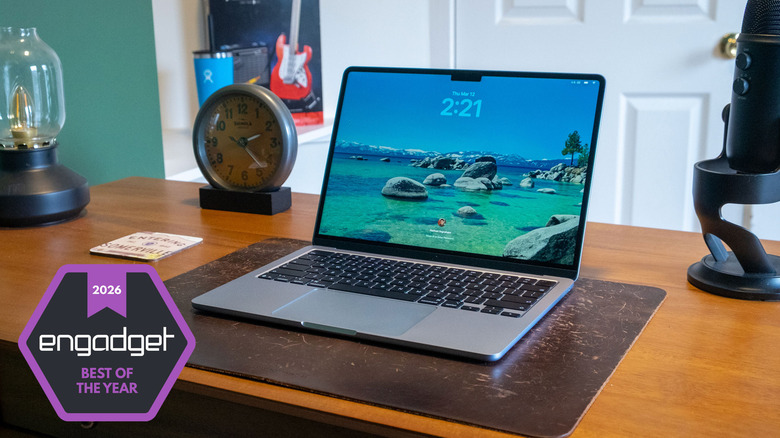
The MacBook Air remains one of the best ultraportables on the market thanks to its combination of speed (now with Apple's M5 chip), premium build quality and portability. Sure, there are lighter Windows laptops now, but they're not as performant as Apple's hardware, and they often deliver a worse user experience.
The MacBook Air is the complete package. It's fast enough to handle just about everything you throw at it, including light gaming and video editing. It's sturdy enough to last years. And it's also completely silent, since it has no cooling fan. While Windows notebooks are now offering sleek OLED screens at this price range, PC makers still struggle to match the quality of the MacBook Air's keyboard, trackpad, speakers and battery life. — D.H.
Best gaming laptop: ASUS ROG Zephyrus Duo
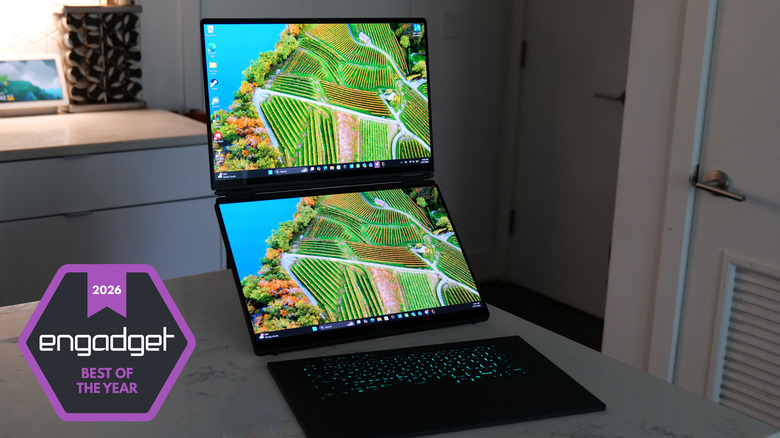
The ASUS ROG Zephyrus Duo is big, heavy and has one of the most bombastic designs we've seen on any gaming laptop in recent history. But that's exactly what makes it so awesome. Sure, it's ridiculously expensive starting at — wait for it — $4,500, but it has everything you could want in a bleeding edge gaming PC, and then some. It features not one but two 3K OLED displays, a fully detachable keyboard, as much as 64GB of RAM and support for up to an RTX 5090 GPU.
You also get surprisingly punchy speakers and a ton of ports, including a total of four USB slots, a full-size HDMI jack and an SD card reader. And for something this powerful, its battery life isn't half bad either. Really, this thing is closer to a portable battle station than a basic gaming notebook, and if you can stomach its price, there isn't really anything else like it on sale today.
That said, we also wanted to call attention to the Alienware 15, because when we reviewed it, it started at just $1,000 (or $1,200 with an RTX 5050). In a year when the price of everything with RAM has gone through the roof, the Alienware 15 felt like a gift to gamers on a budget. Sadly, it seems Alienware's first truly affordable gaming PC has since been hit with the same price hikes we've seen wreck the rest of the industry, as it now starts at $1,450. — Sam Rutherford, Senior Reporter
Best desktop: Apple Mac mini M6
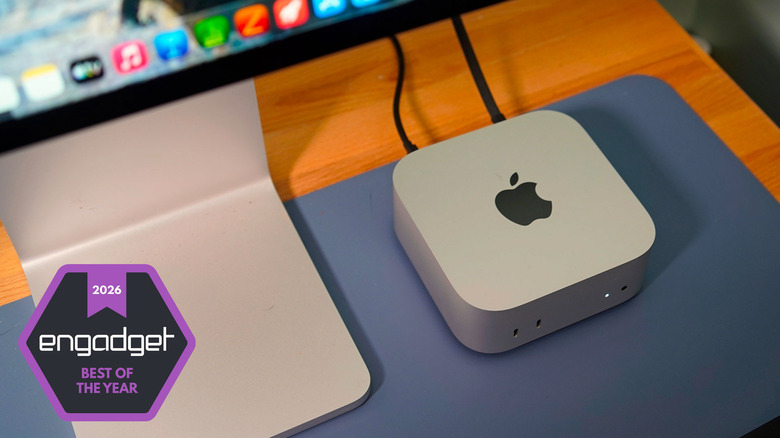
The Mac mini is still the compact desktop to beat, even though its $899 pricing is well above the $599 earlier models sold for. Its tiny 5-inch by 5-inch case makes it easy to squeeze onto any desk, but that tiny frame belies its power. Apple's new M6 chip is yet another milestone for the company, delivering some of the best benchmark scores we've seen on any computer.
It's unfortunate that the Mac mini is no longer a truly affordable device for small projects, but rising costs are something the entire PC industry is dealing with right now. As it stands, the Mac mini remains a fantastic desktop, delivering style and performance that's tough to find with any similarly-priced Windows system. — D.H.
Best display: Alienware 39 5K
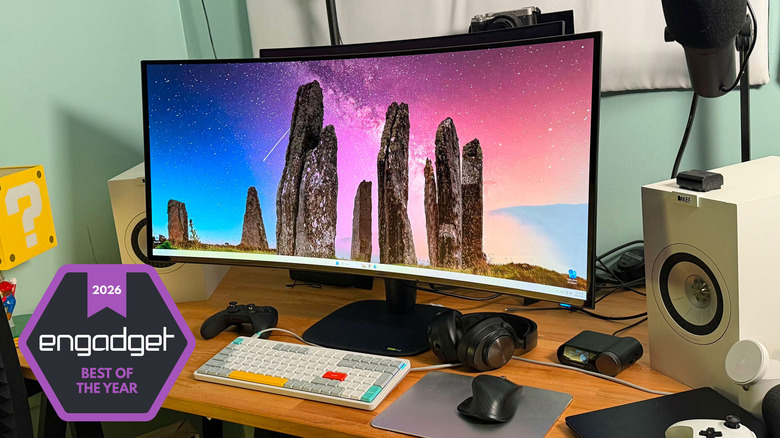
The Alienware 39 5K takes the idea of ultrawide monitors to the next level, making it one of the best gaming displays we've ever reviewed. It's basically a 32-inch screen with the sides stretched out a bit, giving you an expansive 39 inches of real estate. It makes games like Control Resonant all the more immersive, and it's perfect for multitasking with multiple full-sized windows open.
The Alienware 39 features the latest OLED technology around: Its four-stack tandem OLED panel delivers far more brightness than earlier versions of OLED, while its three-subpixel RGB stripe makes text and other fine detail sharper than before. It also has the ability to swap between 5K 165Hz for high-resolution gaming and 1080p+ 330Hz for faster e-sports titles. It's truly one of the most versatile displays available. At $1,100, it's mainly meant for ultrawide fanatics, but it's also an investment you'll appreciate every time you flip it on. — D.H.
Best wearable: Apple Watch Series 12
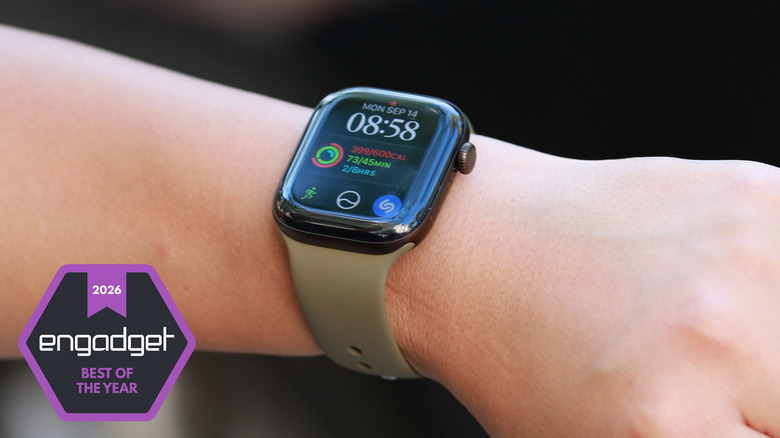
We're used to iterative Apple Watch updates, but with the Apple Watch Series 12, there's much to discuss. The company completely overhauled the health sensing system, which now takes heart rate measurements every five seconds instead of every five minutes. There are other heart-rate-based features that contribute to a new Readiness score that's calculated based on activity, sleep and cardio-related vitals.
Apple also expanded the gesture support for controlling the Watch, and added new complications for more convenience. The company brought back the ceramic case option as well, which provides a pricey aesthetic upgrade. Of course, the biggest news may be what's not available yet: Audio Intelligence. Privacy implications abound there, but a related feature called Sound Recognition is available already and works well. Only time will tell if Apple's marquee audio tool is ultimately deemed useful or creepy, but the fact remains that the Series 12 is an excellent wearable device. — Billy Steele, Deputy Reviews Editor
Best gaming accessory: Valve Steam Controller
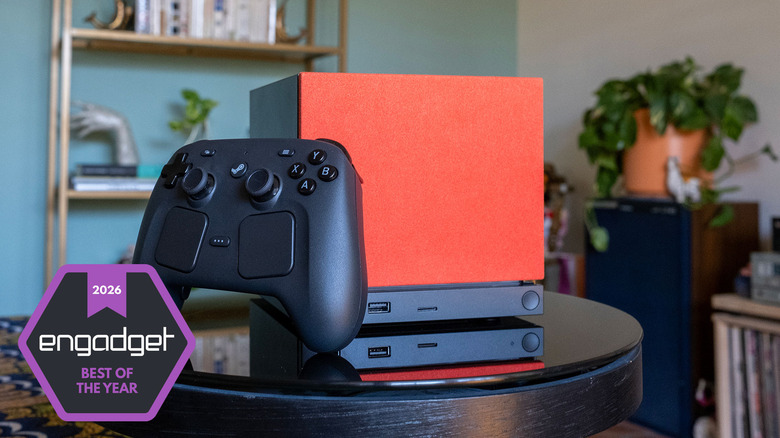
Nearly 13 years after the original, Valve brought us a second iteration of the Steam Controller. It's packed full of features, including tunnel magnetoresistance joysticks that won't drift, high-end rumble, four programmable rear buttons and two trackpads. Oh, and it might scream if you drop it. Think of it like a Steam Deck, just without a screen in the middle.
One of the nicest touches is the pad's puck. It connects to your PC via USB and then acts as both a wireless (2.4G) transmitter and charger. The puck has built-in magnets, so when you hover the gamepad's connection point over it, it jumps up and latches on like a cute little sucker fish.
The Steam Controller is not a PC controller. It's made solely for Steam, so you'll have to add any non-Steam games to Valve's client in order to play them. At $99, the Steam Controller offers a level of polish and functionality that you'll find from significantly more expensive controllers. If your primary platform is Steam, it's a great choice. — Jessica Conditt, Senior Reporter
Best home theater: Sonos Beam Ultra
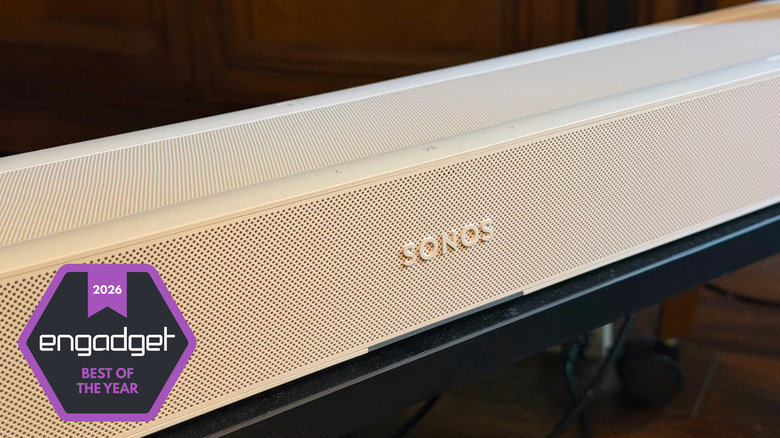
If you can stomach its $699 price, the Sonos Beam Ultra is one of the best investments you can make in your home theater. It's no longer a slightly compromised midrange soundbar like the previous Beams. Instead, Sonos is aiming for premium territory with upward-firing Dolby Atmos speakers, additional bass and revamped sound design.
The Beam Ultra will turn any living room into a mini-cinema while playing movies, but it's also excellent at music playback (especially spatial Dolby Atmos tracks). Add a few other Sonos speakers as rears, along with a Sonos subwoofer, and you'll have a home theater that'll rock the house (and make your neighbors very angry). — D.H.
Best overall camera: Sony A7R VI
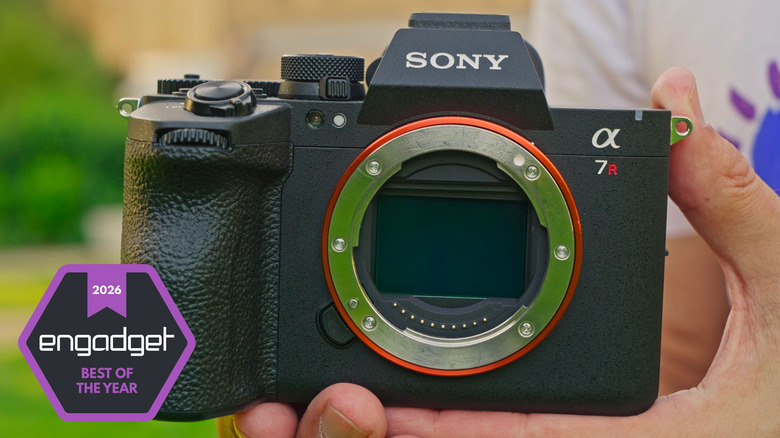
With a new 67-megapixel stacked sensor, Sony's A7R VI blends high resolution and speed in a way no camera has done before. The new mirrorless model can shoot RAW bursts at up to 30 fps with accurate autofocus and reduced rolling shutter distortion, making it a surprisingly good wildlife or sports camera. The improved in-body stabilization also helps reduce camera shake to ensure sharper photos.
At the same time, the 67MP resolution provides incredible detail for portrait or landscape photography, while giving photographers more options for cropping in post production. The A7R VI is better than ever for video users as well, offering 8K 30 fps video with accurate autofocus. The camera really doesn't have any weaknesses for photography, but does lack the RAW video found on rival models like Nikon's Z8. Due to pixel binning, video also isn't as sharp as rivals at 4K resolution. — Steve Dent, Associate Editor
Best vlogging camera: DJI Osmo Pocket 4
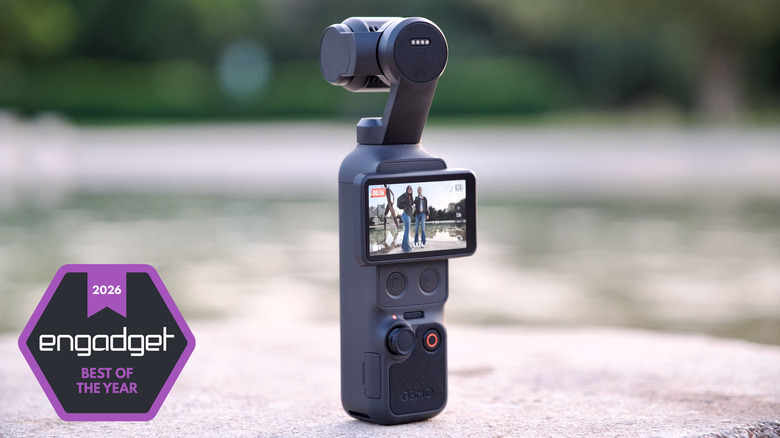
DJI's Osmo Pocket 3 owned the gimbal camera market for years before rivals like Insta360 finally came on the scene. It responded with the Osmo Pocket 4, a camera that improves on the original in important areas. With an updated sensor and new D-Log capture, it now offers 14 stops of dynamic range (two more than before), making it better in tricky situations like low light and contrasty sunny days.
Though it still only shoots up to 4K video, you can now capture in that resolution at up to 240 fps. It also comes with 107GB of internal storage (the previous model had none) and much improved battery. On the software side, the Pocket 4 now offers Gesture Control to start and stop video, a function first found on DJI's drones.
The main problem for Americans, however, is that the Osmo Pocket 4 is unavailable in the US due to FTC import restrictions. — S.D.
Best drone: DJI Lito X1
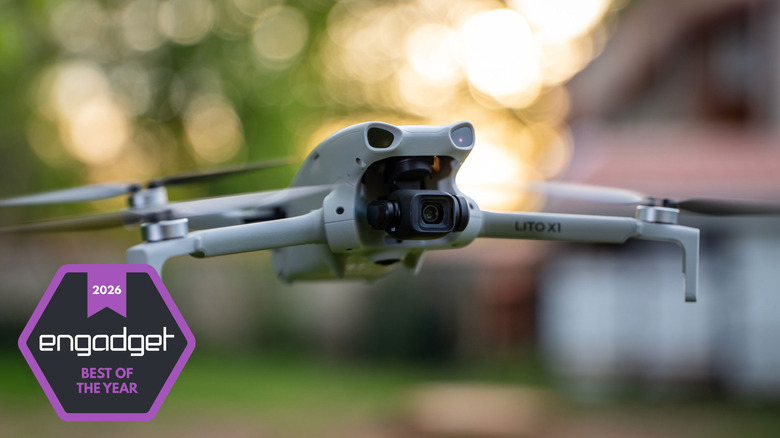
For buyers looking at DJI's Mini 5 Pro who don't want to pay the high price, the DJI Lito X1 is a great alternative. It's like an updated Mini 4 Pro (with the same excellent 1/1.3-inch camera), with new features like a front LiDAR sensor for obstacle detection and 42GB of onboard storage. It lets you shoot 4K video at 100 fps with D-LogM and HDR recording, or 40-megapixel photos.
With good low-light capability and excellent stabilization, the Lito X1 allows you to shoot near-professional video for high-contrast scenes and nighttime cityscapes, even at slow shutter speeds. It's equipped with all of DJI's latest flight features like subject tracking, obstacle detection and social media-ready QuickShots. It offers an excellent 36 minutes of flying time between charges, while letting you transmit high-quality full HD video up to 10 miles away.
It's not the best choice for indoor use due to the open propellers, but the main problem for US buyers is that it's blocked for sale in that country. — S.D.
Best kitchen tech: Breville Eye Q Toaster
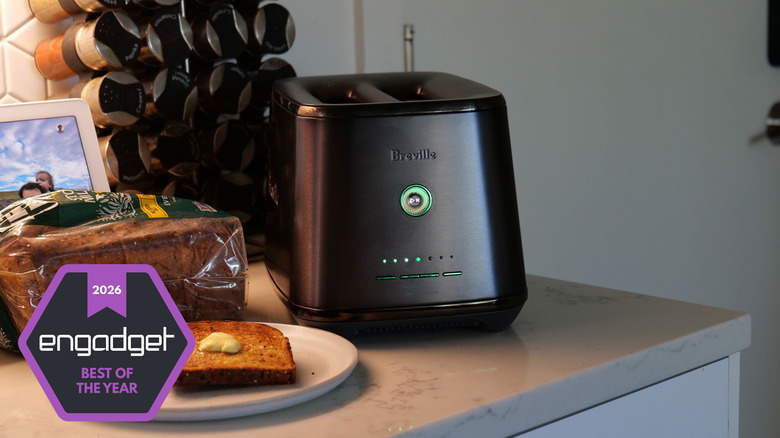
How much would you pay to get perfectly golden brown toast every single time? That might sound like a theoretical question, but with the arrival of the Breville Eye Q, you can now spend $300 and make that wish a reality.
Instead of using a basic timer to determine how long to cook your bread, the Eye Q features built-in optical sensors that watch your toast as it's browning so it knows exactly when it's done. No need to guess if you should set it for 30 seconds or one minute. Just press the button and off it goes. There are even dedicated modes for sourdough and bagels, though if you have a fat NYC-style bagel, you might need to trim it down to fit it inside. And if you want your toast a little lighter or darker, you can simply adjust the little meter left or right to suit your tastes.
The Eye Q is basically what a toaster would be if you reinvented it with today's cutting edge tech. Now the question you need to answer is if that luxury is really worth three Benjamins. — S.R.
Upcoming categories
Due to anticipated product launches before the end of the year, we've withheld a few categories until those devices arrive. Those categories include:
- Best accessory
- Best earbuds
- Best headphones
- Best headset
- Best foldable phone
- Best smart glasses
- Best Windows laptop
- Best tablet
Our list of awards will be updated as devices in those remaining categories are reviewed and scored.
How we picked the Engadget Best of 2026 awards
Engadget has been reviewing devices for over two decades. In 2026, we've reviewed over 130 products (so far), from phones and laptops through to smart rings and even a toaster. After comprehensive testing, we categorize products on a 100-point scale, with the range this year falling between 67 and 94 points so far. For Engadget's Best of 2026 awards, our reviewers and editors ran through our testing database to pick the products that impressed us the most.
Deciding on our final awards involved more than just picking our highest-scoring products. The first step was to narrow down the field by only considering products that met our baseline for our Editors' Choice award — 90 out of 100. We then looked at what categories those products fell into, and put some items head-to-head to figure out which came on top for a given award. For example, six laptops earned our Editor's Choice award this year, but only three have made the cut for our Best of 2026 awards so far.
We also considered products that fell just short but still stood out as the best in their field — none of the kitchen tech we reviewed this year may have earned an Editor's Choice award, but we still felt comfortable crowning one of the products the Best of 2026.
Before finalizing the list, we revisited each product to ensure it still met the standards it did at launch, and factored in any price changes (it is 2026, after all) to see if a product was still recommended at its current rate. In some cases, we have decided to delay giving an award in categories where we know significant releases will happen in the final quarter of the year. This article will be updated in the near future to include our final decisions on the best earbuds, headphones, tablet, Windows laptop, foldable phone, smart glasses, and potentially even more categories.