

Apple iPhone Duo vs Google Pixel 11 Pro Fold: The differences beyond foldable style
Everything you need to know before buying a foldable phone from Apple or Google.
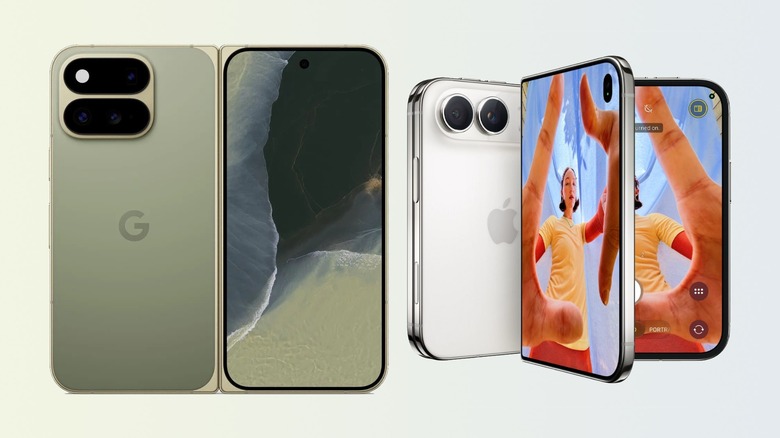
The iPhone Duo and the Google Pixel 11 Pro Fold are two of the most premium foldable smartphones on the market, but they prioritize different things. Apple opts for a "passport-style" design, while Google sticks with a more traditional squarish foldable screen. The specs differ significantly, so you'll want to consider a lot before buying either. From screens to cameras to performance, here's how the iPhone Duo differs from the Google Pixel 11 Pro Fold.
Size, screens and build
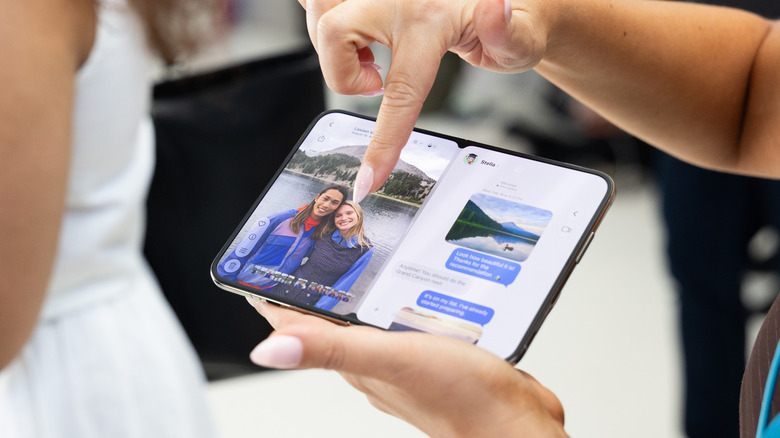
The iPhone Duo's wider, passport-sized design is not exactly a new form factor — Samsung also embraced it with its Fold 8 this year — but it still stands out. When closed, its outer screen is 5.4 inches across. Unfold it, and you get a large 7.6-inch screen, approaching the size of the iPad mini's display. The Pixel 11 Pro Fold is different, with an 8-inch inner display and a 6.5-inch outer display.
There's no right or wrong answer, so consider what's best for you. The Duo's wider aspect ratio makes it better equipped for consuming content when it's open, but the external screen may seem small. The Pixel 11 Pro Fold is the opposite. The square aspect ratio makes some content — like vertical or widescreen videos — look a bit odd, but the external screen is much closer to what you'd find on a conventional smartphone. Speaking of screens, each one has its own unique features. The Pixel 11 Pro Fold has brighter screens, peaking at 3,600 nits. The Duo only reaches 3,000 nits, but its foldable screen has a nano-texture layer to reduce glare and minimize the crease.
The iPhone Duo is also heavier and thicker, weighing almost 9 ounces (254 grams) and measuring 11.3 mm when closed. The Pixel weighs 8.4 ounces (239 grams) — it may not sound like much, but you can feel the difference after holding it for a long time.
It's also thinner than the iPhone, at just 10.1 mm. Even so, Engadget's review of the Pixel 11 Pro Fold notes that it also feels significantly bulkier than Samsung's foldables. Neither is really thin by today's standards. The materials differ, too: Apple uses a titanium frame and Ceramic Shield glass on the back, while Google opted for a fiberglass composite back and its own ceramic glass on the outer screen. Both are IP68-certified for water and dust protection, which is still relatively rare among foldable phones.
Software, cameras, battery and price
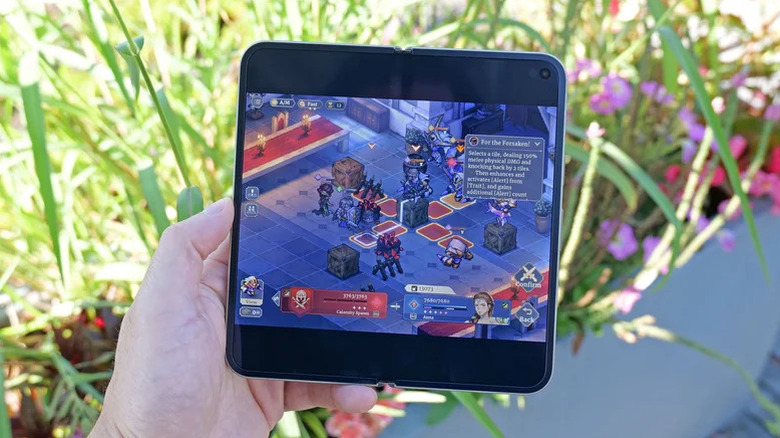
Apple has attempted to optimize iOS 27 for the iPhone Duo's form factor, adding unique Duo-only features like split-screen mode. The interface also adapts to any orientation you choose — from closed to open and even in "tent" mode when it's half-folded and propped open on a table.
Despite Google's optimizations and several years' head start, Android still doesn't always take full advantage of foldable phones. Many apps simply stretch their interface to fit the larger screen, rather than displaying additional controls or different actions when you open or close the screen. It'll be interesting to see what proportion of iOS developers adapt their top apps for the iPhone Duo once buyers have it.
The Pixel 11 Pro Fold has a big advantage in the camera department. In addition to a 48-megapixel main camera, it also features an ultra-wide and a telephoto sensor for optical zoom, each with 10 megapixels. Engadget's review called it the best camera system on any foldable, despite its ultra-wide and telephoto sensors having lower resolution than those on the standard Pixel 11 Pro. The iPhone Duo has two 48-megapixel cameras—wide and ultra-wide— but no optical zoom or variable aperture like the iPhone 18 Pro.
It's still hard to compare battery life, especially since the iPhone Duo hasn't hit stores yet. Apple claims it lasts up to 31 hours of video playback on the inner screen and up to 44 hours on the outer screen. The thing is, real-world usage figures can be quite different. Google's foldable lasted about 27 hours during review testing, playing video on the external screen, more than the 24 hours the company promises. However, on charging, the Duo has the edge, reaching 50 percent in about 20 minutes. That is, of course, with a 60W power adapter. The Pixel 11 Pro Fold is limited to 30W max charging and takes 30 minutes to reach 50 percent.
Then there's the price: the iPhone Duo starts at $1,999 with 256GB of storage, but it can go as high as $3,199 for the 2TB version. The iPhone Duo hits stores on October 23 — though you can already set up your pre-order it on Apple's website. You can already buy a Pixel 11 Pro Fold, which starts at a slightly lower price of $1,899 with 256GB of storage. The prices are pretty close, so the decision will come down to your priorities for foldables. Do you want a killer camera, or do you already prefer iOS? That will make your decision easier.