CMOS
Latest
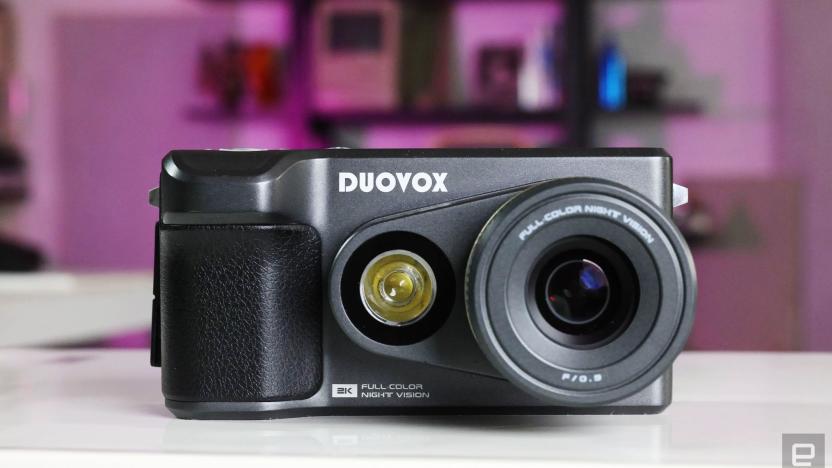
DuoVox Mate Pro: A fun but imperfect night vision camera
The DuoVox Mate Pro features a Sony STARVIS 2 CMOS surveillance camera sensor that’s a thousand times more sensitive than the latest smartphone sensors.

Sony's latest smartphone camera sensor gathers twice as much light
Sony has unveiled a new type of stacked CMOS sensor that uses "two-layer transistor pixels" to double the light gathering capability.

How are camera sensors still improving?
In the latest episode of our Upscaled series, we explain how camera sensors work, and how they'll improve in the near future.
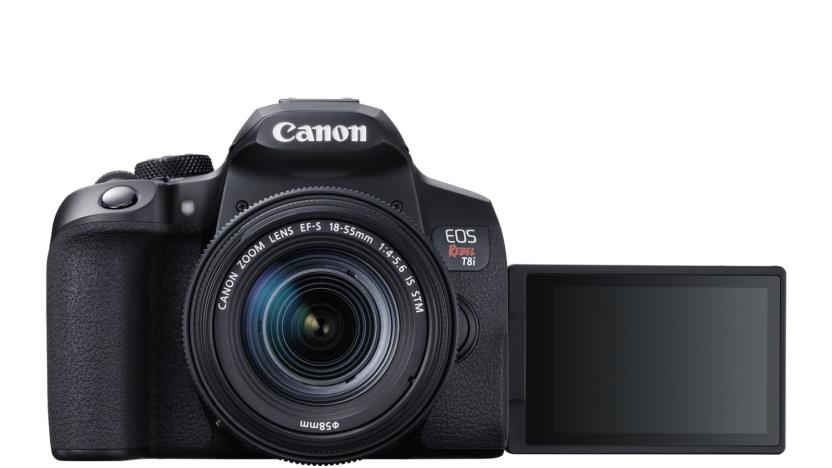
Canon's EOS Rebel T8i reaffirms its commitment to DSLRs
Canon just unveiled its most powerful mirrorless camera yet, but it isn't quite done with DSLRs. The company also announced the EOS Rebel T8i (the EOS 850D in Europe), a camera with very slight improvements over the Rebel T7i. While it packs a sensor with the same resolution as before, it can now shoot a bit quicker at up to 7 fps thanks to the new Digic 8 processor.
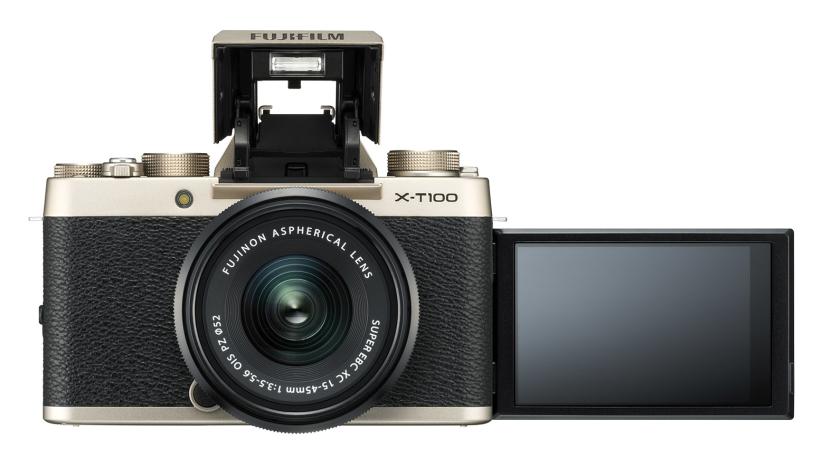
Fujifilm's entry-level X-T100 brings classic style for $600
Fujifilm has unveiled the X-T100, an interesting mirrorless camera that's quite similar, spec-wise, to the entry-level X-A5, but looks more like the X-T20. It's one of the few inexpensive mirrorless cameras out there with an electronic viewfinder, great for serious photographers on a budget. Unfortunately, it's not as great for video, as Fujifilm crippled the 4K by limiting it to 15 fps.

Sony's autonomous concept would make a great party bus
Sony's concept vehicle is all about entertainment on the go. Naturally. Its SC-1 (translated) is more or less a shuttle outfitted with high-res image sensors, displays, AI, 5G data connectivity via Docomo, alternative fuels, LIDAR and a bevy of ultrasonics onboard. It can be operated autonomously, or driven, and Sony claims that the image sensors placed around the car are sensitive enough (and the displays inside high-quality enough) that you could drive the buggy at night without headlamps.

Panasonic's new image sensor could help cars see in the dark
Panasonic's new image sensor tech is designed for taking shots in the dark. Literally. The company has made an advancement that provides "electrical control of the near infrared (NIR) light sensitivity of the same pixel in an organic CMOS image sensor." In English, that means it can take photos in near pitch-black without losing detail or resolution -- and it does so without the need for a mechanical IR cut filter.

Sony's latest sensor shoots ridiculous slow-mo video
Sony has unveiled a sensor that could bring some impressive camera tricks to your next smartphone. The 3-layer CMOS sensor does super slow motion at up to 1,000 fps in full HD (1,920 x 1,080), around eight times faster than any other chip. That's possible thanks to a 2-layer sensor married with high speed DRAM that can buffer images extremely rapidly. Specifically, it can capture 19.3-megapixel images in just 1/120th of a second, "four times faster than conventional products," Sony says.

Sony's 4K security camera can spot intruders in the dark
What do you give to the person who has everything? The world's best security camera to watch over it, we guess. Sony's latest Alpha product, the 850,000 yen ($7,500) SNC-VB770, may fit the bill. It's a 4K mirrorless, E-mount network camera that can capture "clear color video at 30fps, even when the subject is almost invisible to the naked eye," according to Sony. It features a full-frame 12.2-megapixel sensor that sounds a lot like the one Sony uses in its crazy Alpha A7S II mirrorless camera. As such, it can capture 4K in dark night conditions as low as .004 lux.

Sony buys Toshiba out of the sensor business for $155 million
Sony has purchased Toshiba's image sensor business for 19 billion yen, or around $155 million, confirming rumors from October. It recently re-organized its sensor division into a wholly-owned subsidiary called the Sony Semiconductor Corporation. The move will bolster the new company and remove Toshiba as a primary competitor in the smartphone and camera image sensor business. Sony manufacturers such chips for its own smartphones along with models by the likes of Apple and Xiaomi. Its chips are also used in DSLRs made by Nikon and its own Alpha models.

Canon has a 250-megapixel sensor that fits in a DSLR
Canon has announced a "250-megapixel" image sensor that would fit into a consumer-grade DSLR camera. The Japanese camera maker says the new APS-H CMOS sensor enables "distinguishing of lettering on the side of an airplane flying at a distance of approximately 18 km [11 miles] from the shooting location." As well as being the densest sensor of its size, it's also extremely fast. It has a readout speed of 1.25 billion pixels per second, meaning it can shoot its super-high-res images at up to five frames per second.

Samsung sensor puts 16-megapixel cameras into slim phones
Wondering how Samsung manages to cram a 16-megapixel camera into seemingly wafer-thin phones like the Galaxy A8? By developing a brand-spanking new sensor that fits, that's how. The Korean company has built an ISOCELL-based CMOS imager that uses extremely tiny 1.0-micron pixels instead of the 1.12-micron units from the previous model. That may not sound like much of a difference, but it amounts to a sensor that's 20 percent thinner, at a scant 5mm (0.2 inches) deep. In short, you won't have to accept an unsightly camera hump just to get high-resolution shots.

Lens-free microscope lets almost anyone spot cancer
High-powered microscopes are useful for spotting cancer and other diseases in cells, but they're expensive and complicated. Your local physicians probably won't have a microscope on hand, and you'll probably need at least some skill to use one. However, UCLA scientists have developed a lens-free microscope that could put this tissue scanning power in the hands of many more people. The device creates a holograph-like image of your sample using a CCD or CMOS sensor (like that from your camera) to detect shadow patterns cast by a light source, and reconstructs them in software to present what you'd actually see. The result is a microscope that's just as effective as its conventional optical brethren, but should also be much cheaper and simpler.
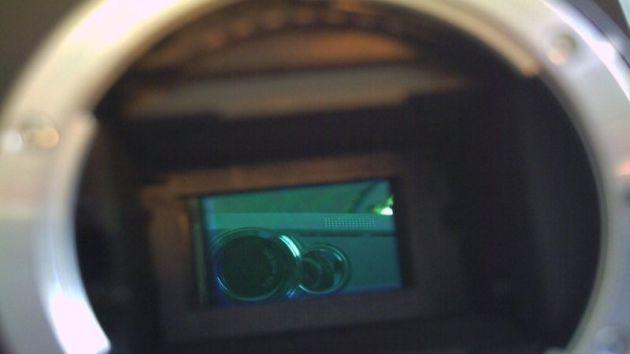
DARPA taps IBM to help create self-destructing gizmos for the battlefield
When you look at DARPA's newest project, it almost feels like the agency's recent breakthroughs have left it a little drained, creatively. The government's research wing has announced that IBM is helping it create non-incendiary self-destructing devices for use in the field. Yawn. The new VAPR (Vanishing Programmable Resources) program would use a CMOS sensor attached to a piece of glass that, when triggered by an RF-signal, would shatter on command and destroy the sensor in the process. As the outfit tells it, this would ensure that these "transient electronics" -- such as sensors for monitoring an area for a specific time-period -- don't fall into the wrong hands and give away classified information. These sound pretty handy to be sure, but they aren't nearly as cool as robo-beetles. [Image credit: Kenno_mcdonnell/Flickr]

Canon's targeting new parents with VIXIA R52, R50, R500 camcorders
Your smartphone can shoot video; your tablet can shoot video; and, if you even still own one, your point-and-shoot can shoot video too. So why, then, might you pick up a mid-range camcorder? Fortunately for manufacturers, there are still a few perks to owning a dedicated video camera. If top-notch image stabilization is what you're after, you'll probably turn to Sony, but if you're a new parent looking to document your young child's early years, Canon wants your business. The company's latest VIXIA camcorders sport a variety of family-friendly features, from livestreaming to your smartphone with the R52 and R50 (think expensive baby monitor), to an "Advanced Baby Mode," which can register up to three babies and track their height, weight and age over months and years of shooting. Internally, all three cams are quite similar. They include 3.3-megapixel CMOS sensors, 32x optical zoom lenses with optical stabilization and 1080/60p video capture. The $450 R52 and $400 R50 also include internal storage -- 32GB on the pricier model and 16GB on the other -- letting you capture footage simultaneously to the embedded storage and a standard SD card, with archival-quality AVCHD recorded on one and upload-ready MP4 on the other, if you'd like. The $300 R500 excludes built-in storage, so you'll need to add an SD card to store captures there. The pricer pair also packs WiFi, with support for livestreaming and recording directly on a connected smartphone or tablet. Finally, you can also use the R52 and R50 with Canon's new Pan Table accessory, adding to their practicality as a home-security appliance. Expect all three VIXIA camcorders in stores this March.
[1].jpg.cf.jpg)
The Jony Ive-designed limited edition Leica M for (RED) camera
Last month we told you that Jony Ive was working on a limited edition Leica M camera to be auctioned off for The Global Fund to fight AIDS, Tuberculosis, and Malaria. Well, that very limited edition camera -- there is only one -- has been unveiled. According to Leica's Google+ post, the camera took 85 days to create and required a total of 561 models and nearly 1,000 prototype parts. Ive was assisted by his good friend and fellow designer Marc Newson on the project. The camera "features a laser-machined aluminum body and an anodized aluminum outer shell," and has "a full-format CMOS sensor, high performance processor and new Leica APO-Summicron -M 50mm f/2 ASPH lens." Provided you have very deep pockets, you can participate in the auction at Sotheby's on November 23, 2013 and the one-of-a-kind camera could be yours.

Toshiba's new dual camera module brings 'deep focus' imaging to smartphones
Remember when dual camera modules on smartphones were all the rage? Toshiba is bringing them back -- only this time with technology that you're much more likely to use. Its new module uses two 5-megapixel cameras to record depth and images at the same time, producing a "deep focus" picture where everything is sharp. The technique offers a Lytro-like ability to refocus, even after you've taken the shot; it also provides gesture control and very fast digital autofocusing. You'll have to wait a while before you're snapping deep focus vacation photos, though. Toshiba doesn't expect to mass produce the sensors until April, and finished products will likely come later.

Visualized: Canon 35mm CMOS sensor captures fireflies in HD (video)
Canon impressed us back in March when it unveiled its 35mm full frame CMOS sensor, which is capable of recording footage in extremely low-light situations. This time around, the company set its sights on the Yaeyama-hime fireflies on Ishigaki Island off the coast of Japan. Shortly after sundown, the Canon team managed to capture a forest full of lightning bugs in full HD in near-dark settings. To watch the video in all its bioluminescent glory, mosey on past the break.

OmniVision details 10.5-megapixel Clear Pixel sensor inside Moto X
Motorola has been hyping up the 10.5-megapixel Clear Pixel camera inside the Moto X, but it's been shy on the sensor's technical details and origins. We now have both: it's the OmniVision OV10820, a 1/2.6-inch sensor with a video-friendly 16:9 aspect ratio and large 1.4-micron pixels. Its strong low-light performance comes through a two-chip approach. The sensor captures RAW images using a sensitive RGBC (red / green / blue / clear) color filter, and a companion chip automatically converts the resulting shots into the Bayer format that most imaging processors expect. The result is a high-performance camera that slots inside the Moto X without requiring any special effort. Whether or not we see the OV10820 used outside of Motorola is another matter. OmniVision can't comment on the sensor's exclusivity, but it does note that RGBC is an "extremely viable option" for the future. [Thanks to everyone who sent this in]

Fujifilm and Panasonic's organic CMOS image sensor boosts dynamic range and sensitivity
We've all been enjoying the benefits of AMOLED displays for several years now -- high contrast ratios, wide viewing angles and vivid colors -- so it was only a matter of time until organic films ended up in image sensors. Fujifilm and Panasonic have been working on organic CMOS image sensors and just showed the results of their collaboration at the 2013 Symposium on VLSI Technology in Kyoto. By replacing the traditional silicon photodiode with an organic photoelectric conversion layer, researchers have created image sensors with a dynamic range of 88dB (the industry's highest), a 1.2-fold increase in sensitivity (compared to traditional designs) and a 60-degree range of incident light (vs. 30-40 degrees, typically). What does this mean in practice? Less clipping in bright scenes, better low-light performance and richer colors and textures. The companies plan to promote these new organic CMOS image sensors for use in a wide range of imaging applications, including next generation cameras and phones. We can't wait!


