encryption posts
pureSilicon's original Renegade family just started shipping in Q1 of this year, but as it looks to stay one step ahead of the competition (and provide us all with a version big enough to hold all of our, um, family photos), the company is already introducing its Renegade R2 family. Designed to meet MIL-STD-810F standards while still offering 255MB/sec sequential read rates and 180MB/sec sequential write rates, these low-height (9.5 millimeter) 2.5-inch SSDs should fit perfectly within the bulk of laptops on the market today. The crew -- which is comprised of 4GB, 8GB, 16GB, 32GB, 64GB, 128GB and 256GB models -- will soon be joined by PATA and 1.8-inch siblings. If you're looking to get your hands on one, most all of 'em are shipping today, though the 256GB flavor and encrypted models won't leave the dock until Q1 of next year.
Origin unveils 750GB and 1TB Data Locker encrypted external HDDs
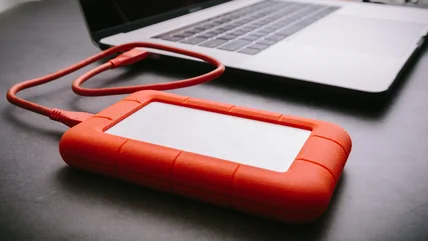
Questionably christened the world's first 1TB portable hardware-encrypted hard drive, Origin Storage's extra-capacious Data Locker Secure Drive is certainly the one to get if you're paranoid about whatever it is you'd keep on such a large platter. Also available in 750GB, 500GB and 320GB models, the drives are secured by AES hardware encryption and a 6 to 18 digit PIN number which must be entered directly onto the device itself before the contents become accessible. Think James Bond, but for real. The USB-powered unit also packs rubber shoulders in case things get a little crazy between you and Mr. Data Thief, though we wouldn't try running this thing through the rain forest if at all possible. The 1TB edition will be available soon for £399 ($652), while the others are priced at £299 ($488), £239 ($390) and £180 ($294) from largest to smallest.[Via Slashgear]
Clickfree adds hassle-free migration, other features to C2 backup drive (video)
Quite a lot has happened in the world of Clickfree since it went a little crazy at CES, but we're pretty jazzed about its latest effort. The predictably titled C2 is little more than a tweaked and refreshed version of the original backup-inclined external hard drive, but the boost in features makes this one worth considering. Available with a built-in USB cable and an even easier backup interface, the C2 can now handle automatic iPod music / playlist imports, direct-to-DVD burning, improved media sharing and a lovely migration feature that makes the arduous process of moving from Windows XP to Windows 7 a lesson in simplicity. The drive will be available in 250GB (C2 227; $139.00), 500GB (C2 527; $199.99) and 350GB sizes, with the latter to be made available in January 2010. So, are you finally done pushing aside the need to back your digital life up? Has Apple's increasingly lackadaisical software team taught us anything? Bizzare promo video is after the break.
iPhone OS 3.1 enforcing Exchange device encryption, only supported by iPhone 3GS
Noticing a "Policy Requirement" error when trying to use your Microsoft Exchange account after upgrading to OS 3.1? Then there's a good chance you're not using an iPhone 3GS, as Apple has just confirmed via a support page that the upgrade can now enforce the Exchange ActiveSync mailbox policy requiring encryption on the device, which just so happens to only be supported by the 3GS (guess that "S" stands for more than just speed). Not surprisingly, the only solution for non-3GS users is to contact their Exchange Server administrator and hope that they're willing to change the policy to no longer require device encryption.
WPA networks cracked in just under a minute, researchers claim
To think it was just a few months ago that we thought taking 15 minutes to crack WPA encryption was a feat. Researchers from Kobe University in Japan are claiming they can best that by a wide margin by cracking any WPA-protected connection using the TKIP algorithm within just one minute flat. The details will be revealed at a tech conference on September 25th. Feeling paranoid? Bump up your encryption to the still-secure AES algorithm or WPA2... and if you're just wanting to live life on the edge, consider downgrading to WEP -- it's as good as open at this point anyway.
Buffalo HDS-PH500U2 gives you 500GB of rugged, encrypted storage
Buffalo's MiniStation DataVault series of drives is focused on data protection, from hackers and clumsy owners alike, with features like automatic full disk encryption and ruggedized shock-resistant design. The latest model, identified in Japan by the dry alphanumeric title you see above, sticks to the security-centric formula but bumps the storage to a sweet 500GB. ¥23,200 ($244) will be enough to snag the USB-powered 5,400RPM device in mid-August, and a prompt US / European release also seems highly likely. Judging by what's already available in the US, you can expect a three year warranty plus preloaded auto-backup software and mobile versions of Firefox and Thunderbird for avoiding the scourge of IE wherever you may roam.
[Via PC Watch]
[Via PC Watch]
Hackers scoffing at iPhone 3GS' hardware encryption
There were other features taking higher billing in the iPhone 3GS' announcement than its hardware-level encryption -- hell, even the magnetic compass was getting more play -- but it's there, and Apple's actively marketing the bit-scrambling capability to enterprise clients. Problem is, hackers are apparently having a field day with it, rendering it useless in all but name. One iPhone dev (who teaches courses on pulling data off iPhones, coincidentally) goes so far to say that he doesn't "think any of us have ever seen encryption implemented so poorly before," noting that it's no more difficult for him to pull data off a 3GS than it is off an encryption-free 3G. He goes on to point out that RIM -- which has far more experience dealing with enterprise-class mobile fleets than Apple does -- offers a far more robust remote wipe solution that doesn't necessarily need to rely on an active wireless connection to clear a phone. The lesson? As overwhelmingly popular as the iPhone may be across every market segment, these guys are still the new kids on the enterprise block -- and RIM (and heck, Microsoft, too) would be wise to stand their ground here.IronKey boasts 'world's most physically and cryptographically secure' thumb drive

This isn't the first time we've seen one of IronKey's encrypted USB thumb drives 'round these parts, but if you're an enterprise user, government contractor, or some sort of renegade corporate spy you'll want to take note of this next item. The S200 is being touted as the world's first and only USB flash drive certified for FIPS 140-2, Security Level 3, and features: hardware-based AES 256-bit encryption in CBC mode, a tamper-resistant and tamper-evident rugged metal case, hardware-based malware protection, trusted network restrictions (which prevent the device from unlocking on untrusted PCs), and all the other goodies you expect from the company. Of course, this level of protection doesn't come cheap -- with their consumer grade products starting at $79.99 and ascending pretty quickly from there, we can only imagine what enterprise customers are shelling out. Then again, if you have to ask what it costs, this one is probably not for you. PR after the break.
Wearable ECG uses patient's posture for encryption, transmits data over Body Area Network

Though its fun to think of the Body Area Network as another way for cheap employers to get out of paying for properly wiring your workspace, the most obvious uses for this technology would seem to be in the realm of health care. To this end, the National Institute of Information and Communications Technology (NICT) in Japan has developed an ECG that can be worn 24 hours a day, wirelessly transmitting electrocardiographic data as well as measuring changes in body surface temperature and posture. The data can even be transmitted securely using cryptographic keys dynamically generated by the patient's posture and biological data (which are unique to each user). We'll let you guys ponder the cypherpunk ramifications of this technology in the comments -- and be sure to check out the additional pic we have for you after the break.
Quantum cryptography: now ready for space travel
It's been awhile since we've heard of any major advancements in the world of quantum cryptography, but at long last the silence is being broken by a squad of jubilant Austrian physicists. As the story goes, a team from Austria's Institute for Quantum Optics and Quantum Information (IQOQI) managed to send "entangled photons" 90 miles between the Spanish islands of Las Palmas and the Balearics. Calling the ephemeral test successful, the crew has boldly asserted that it's now feasible to send "this kind of unbreakable encrypted communication through space using satellites." Funny -- last we remember, quantum cryptography still had a few kinks to work through here beneath the stratosphere.Samsung comes clean with self-encrypting SSDs

Dell adding Samsung's encrypted SSDs to its arsenal

Major storage vendors agree to disk encryption standards
We've seen quite a few hardware-encrypted disks hit the scene lately, but to be honest, we've always thought they were a risky investment, since all the systems were proprietary -- we wouldn't want to store our encryption-worthy data on a disk that can't be read at all in a few years, after all. That's happily about to change, though -- the Trusted Computing Group has just announced that virtually every drive maker has agreed on a set of 128-bit encryption standards covering SSDs and HDDs. That's Fujitsu, Hitachi, Seagate, Samsung, Toshiba, Western Digital, IBM, Wave Systems, LSI, and ULink Technology, if you're keeping score at home (and we know you are). Ideally this means that we'll see easy cheap disk encryption filter onto mainstream consumer storage, which would basically invalidate all those "I'm stealing this hard drive out of your laptop and using it to log into your Facebook account" crimes of passion we know the kids are into these days. Best part? Fujitsu, Seagate and Hitachi are all already shipping drives that support the TCG standards.[Via Digg]
IEEE 1667 pledges secure portable storage for all
If you use a thumb-drive sans security your data is just a vacant USB port away from being thrown up on the internet, assets exposed to the world like some drunken heiress. Even secure devices, whether they use biometric scanners, hardware encryption, or even more extreme measures, all leave a lot to be desired: no standards means limited compatibility, and secure data you can't reliably access might as well be random strings of binary digits. The answer could be IEEE 1667, the "Standard Protocol for Authentication in Host Attachments of Transient Storage Devices." Among other things it would enable you to restrict where your thumb drive will work and, conversely, what thumb drives your machine will accept. If it becomes the standard it was born to be you'll be able to apply the same policies whether you're opening Windows 7, cuddling with Snow Leopard, or making jazz-hands with something a little less mainstream. Will it succeed? CNET's Jon Oltsik thinks Microsoft's support for the standard is a good omen and says "Let's all follow Redmond's lead in this case for the greater good." That's certainly not something you hear every day, but this time we're game.
Hitachi joins 500GB laptop disk party, brings encryption and a bit of whine
It's all here: 2.5-inch, 9.5-mm thick form factor; 3.0Gbps SATA interface; 250GB per platter for a 500GB total capacity; 5,400 RPM spin; and hardware-based data encryption using a 128-bit key (we presume, they don't say). That puts Hitachi's new 500GB Travelstar hard disk drives on par with pretty much everyone else. Even the 1.4 watt read/write power draw that Hitachi says, "is lower than any other 500GB 2.5-inch hard drive on the market today" was just matched by Fujitsu who goes even further with 256-bit encryption. No use crying Hitachi, that's what happens when you show up late for a party. Expect to see the 5K500.B disk ship worldwide in December while the 1.4 watt E5K500.B ("E" for Eco) is expected by the end of March 2009.