Skip to Content

AOL Tech

medicine posts

China bans corporal punishment in internet rehab, UK and USA open up their own clinics

China's, how to say this, unorthodox rehabilitation methods, which involve "beating and confinement" of internet addicts, have finally been fully outlawed. Following the death of one teenager due to the treatment he received at an addiction camp, the Chinese Health Ministry has come out with a statement to say corporal punishment and methods restricting personal freedom "are strictly forbidden." In the meantime, the UK and USA are playing catch-up by opening up their own computer addiction camps, which have been described as residential internet detox clinics. Their genius ploy to get you off the web juice has been to go cold turkey and teach people to do chores as a distraction (really, chores and boredom are the cure and not the disease?). The British version even has a 12-step program, but we advise doing what we all did -- if you find yourself spending most of your time on the internet, just become a full-time blogger.

Read - China bans tough treatment of young Web addicts
Read - Britain's first computer rehab clinic opens
Read - Clinic for internet addicts opens in US

Optogenetics hold the key to future brain disease cures, still creep us out

Those mad neuroscientists, they'll never learn, but maybe in the end we'll all be better off for it. Wired has put together an extremely intriguing write-up of the short history of optogenetics -- featuring a German pond scum researcher, a Nobel Prize winner, and rat brains controlled by beams of light. Optogenetics is a relatively new technique for communicating with the brain, which involves the implantation of particular light-sensitive genes into animals with the purpose of repairing neurological ailments through light therapy (no, not that kind). By hooking up fiber-optic cables to the affected area of the brain, researchers have been able to completely restore movement in mice with Parkinson's disease and their current efforts revolve around developing a less invasive method that doesn't go deeper than the outer surface of the brain. Most revolutionary of all, perhaps, is the eventual possibility for two-way traffic (i.e. a machine being able to both send and receive information from the brain), which brings all those cyborg dreams of ours closer to becoming a reality than ever before. Hit up the read link for the full dish.

'Spider pill' bowel scanner will be ready within a year

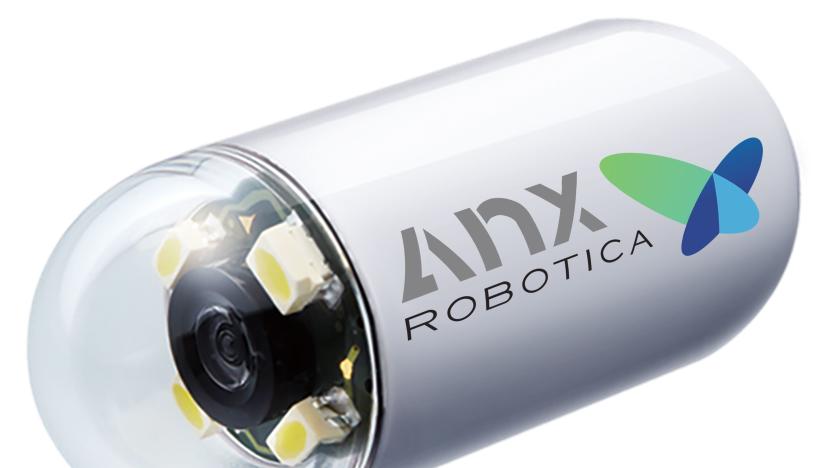
Endoscopy, or the examination of a person's bowels via a tube-mounted camera, is not exactly the most pleasant medical procedure one could undergo. In 2004, we noted the early stages of a project to alleviate the (literal) pain of the procedure with a spider pill, which -- once swallowed by the hopefully willing patient -- can be remotely controlled and positioned inside the human body. Yes, it's a tiny, wirelessly communicating robot with a camera for a head crawling inside you. Hit the read link for the full BBC report, it really is worth seeing, and start your Innerspace jokes ... now!

Computer scientist mods Xbox 360 to detect heart attacks, girls still mysteriously elusive

We've seen so many mods around here that sometimes it's truly hard to get excited over the minor stuff. Well, this doesn't fall into that category in any way. A computer scientist at the University in Warwick has developed a method to use Microsoft's Xbox 360 to detect heart defects and help prevent heart attacks. Based on a demo created by Simon Scarle a few years back when he worked at Rare studio, it's based on a modded chip that -- instead of producing graphics for the game -- now produces data tracking how the electrical signals in the heart moves about damaged cells, creating a model of it. The model can then be used to help doctors to identify defects and disturbances in the heart's beating. This significantly decreases the costs and complications of creating a model of the heart, which is currently done by supercomputers and is very expensive. Scarle's project and findings were just published in the August issue of the Journal of Computational Biology and Chemistry. Looks like we'll all have a response the next time someone tells us that gaming is good for nothing, right?

USB iriscope is just what you need for your next date


When you simply have $120.69-too-much in your bank account, you can thank Uxsight for being there. You may already be entertaining guests with your variety of USB endoscopes, but to really make the picture complete (pun only slightly intended), you're going to want this succulent USB iriscope. That's right, now you can peer deeply, digtally into the eyes of your... er, "clients" (their words, not ours) as you check their health and generally freak everyone out. When you're done, you can "compare the irises pictures when your client comes back to see their progress." Now, we don't know exactly what kind of procedure you're going to be performing on said clients, but you'll finally have a way to show them just what kind of mess you've made. We think Uxsight says it best about their product: "Natural image, attractive or charming." Who can argue with that kind of logic?

[Via Coolest Gadgets]

Video: doctors implant tooth into eye, restore sight, creep everyone out

Osteo-odonto-keratoprosthesis. It's a real procedure that really does revive people's ability to see, yet we get the feeling that people will be more, um, excited about how it's done than why it's done. The seemingly Mary Shelley-inspired doctors extract a tooth from a blind person and drill a hole through it, where a prosthetic lens is placed, and the resulting macabre construction is implanted into the blind person's eye. The tooth is necessary as the body would reject an artificial base. It's not at all pretty, and it cannot repair every type of blindness, but it's still a major step forward. To hear from Sharron Thornton, the first American to have undergone the procedure, check the video after the break, but only if you can handle mildly graphic content -- you've been warned.

[Via Daily Tech]

Bloodbot draws blood, inspires fear


We've seen our fair share of scary robots in these parts, and we're not going to mince words here: there is no way we are going anywhere near one that's armed with a hypodermic needle -- and we sure as hell aren't going to sit still and let it draw blood! Currently being developed by a team at Imperial College in London, the Bloodbot is designed to probe your arm for the presence of a vein, stick you with the needle, puncture the vein, and then stop short of rupture. The system, which has thus far only been tested on one patient (sounds like we're not the only ones with reservations regarding the device) has been accurate about 78 percent of the time, meaning it only resulted in screaming fits 22 percent of the time -- unlike your friendly neighborhood nurse or medical technician, who is accurate nearly 100 percent of the time (and still inspires the occasional fit, but that's another story).

[Via Switched]

Injectable brain gel may save soldiers' lives, zombify them, or both

When they start selling brain fertilizer, you'll know you're living in the crazy century. Didn't Nostradamus predict that? The ongoing Military Health Research Forum is discussing the use of an injectable hydrogel for the treatment of traumatic brain injury, which -- unlike our ability to do push-ups -- is no joke. The fertilizer part comes from the gel's ability to stimulate the growth of neural stem cells within the brain, which are then capable of repairing damaged nerves and preventing the spread of harm to other cells. "Brain tissue regeneration" might not be the wisest name for it, but tests on rats have shown sustained functional recovery, and we understand that with enough Igors on the job, this could be put into use within the next three years.

[Via Digg]

Two-mic system detects fetal heart rate anomalies, prenatal beat sampling

Patel Institute of Engineering and Technology's A.K. Mittra and associates have devised a clever and inexpensive early warning detection system for monitoring the fetal heart rate of that bun months-long in the oven. With two microphones -- one placed on the pregnant soon-to-be mother's abdomen and one inside the bedroom -- hooked up to a nearby computer, the two audio feeds are used to estimate and subtract the ambient room noise for a better read on the baby's vitals just before the woman goes to bed. Converted to a wav file, if anomalies are detected it's immediately compressed to MP3 and sent to the doctor for further testing. An efficient plan, to be sure, and we can only hope the baby is healthy and hyper-intelligent enough to give normal heartbeats and start recording his or her first LP.

Littmann Electronic Stethoscope lets docs record, analyze heart rhythm

We didn't even know there was such a thing as an "auscultation workflow" until we first encountered the FreedomScope, a Bluetooth-packing untethered stethoscope. The 3M Littmann Electronic Stethoscope also relies on Bluetooth for wireless communications, but its purpose is somewhat different. While it looks (and for the most part acts) just like a normal stethoscope, it also has noise canceling / sound augmenting technology alongside the ability to record heart and lung sounds, which may then be analyzed using the bundled Zargis StethAssist software. It's a bit on the pricey side at $379, but should be welcomed with open arms by collaborating diagnosticians and avant-garde concert bootleggers.

[Via MSN Money; Thanks, Will]

BrainPort lets you see with your tongue, might actually make it to market

We first saw the crazy BrainPort in 2006, but the intervening time hasn't been wasted by its developers, who've brought the quirky visual aid to the cusp of commercial viability. If you'll recall, the device translates signals from a head-mounted camera to electrical pulses that lightly zap your tongue in response to visual stimuli -- early results have shown people can regain a good bit of their spatial awareness and even read large writing. The next step is FDA approval, which is expected by year's end, meaning that the BrainPort could arrive as early as 2010. There is a steep entry fee though, with prices expected to begin at $10,000, but the very fact you'll be able to buy it is a milestone in our book. Edifying video after the break.

[Thanks, Toy]

World's first 'wireless' pacemaker talks to your doctor daily, whether you like it or not (though you probably do)


In the past we've been clued in to both deadly pacemaker hackers and the development of a cloaking device to deal with that sticky situation. Now, according to Daily Tech, a woman in New York has become the first in the world to receive a pacemaker that communicates wirelessly with a monitoring service, which is in turn accessed daily by her doctor. "If there is anything abnormal," says Dr. Steven Greenberg from St. Francis Arrhythmia and Pacemaker Center, "it will literally call the physician" and notify him or her. In addition, most of the tests that were done in the doctor's office are now automated, saving everybody time and effort. There is no word yet on possible Twitter integration, but we're sure "Biz" Stone is already on it.

[Via Switched]

DNA computer solves logical problems, inches closer to practical use

The world of biomolecular computing is hardly a lonely place: bacteria, enzymes, and all manner of chemicals have already been used to perform basic automated tasks. DNA computers are arguably the most advanced organic form of "autonomous programmable computing devices," with one already boasting a pretty tight game of Tic-Tac-Toe. The latest, put together by the Israeli Weizmann Institute, advances things with its ability to correctly respond to problems of logic. By feeding molecular rules and facts into the system, the researchers are able to program DNA strands to produce yes and no answers to basic questions. Programming is said to be technically identical to that used in electronic devices, with a robot compiler converting the programming language into molecular-level information. The ultimate aim of the project is to produce miniscule disease-fighting bots that can battle infections within the human body -- provided the DNA-programming drones don't go all Yul Brynner on us.

[Thanks, Karl]

Microfluidic chip does 1,000 parallel chemical reactions, looks glorious


We'd never considered a career in biochemistry until we saw this wild beast of a chemical microprocessor. Microfluidic chips, used to test chemical reactions and properties, have been known to be smaller, but they've never before been quite this powerful. The result of a joint study between California State University, UCLA and China's Wuhan University, the "integrated microfluidic device" is capable of performing 1,024 in situ chemical reactions at a time, making the researcher's life, oh, about 1,024 times easier. Most importantly though, costly enzymes previously used for a single test can now be split up into hundreds and tested simultaneously, which should pave the way for exponentially faster and easier medical research. It's not clear when these will be widely available, but we're sure PhDs around the world are trying to order one as we speak.

[Via medGadget]

PRIME hand injury diagnosis system takes hold of innovation prize

It may look like little more than a pegboard and a force meter at present, but the PRIME hand-strength measuring device has already won first place at the IShow innovation showcase. Its magic lies in the custom software loaded onto the appended PDA, which makes it possible to accurately and repeatably diagnose hand and wrist injuries that doctors currently test for by squeezing and prodding. The Rice University students responsible for the Peg Restrained Intrinsic Muscle Evaluator have applied for a patent and are planning to commercialize the device, so we'll be looking for it on the next episode of House.

[Via Physorg]
Zune HD ExposedHTC Hero: Android Evolved
Follow us on TwitterEngadget Video


AOL News

Joystiq

Download Squad

TUAW

Daily Finance

Asylum

Autoblog

Switched.com

FanHouse

Autoblog Green