ucsd
Latest
Solar System 'superhighway' could speed up space travel
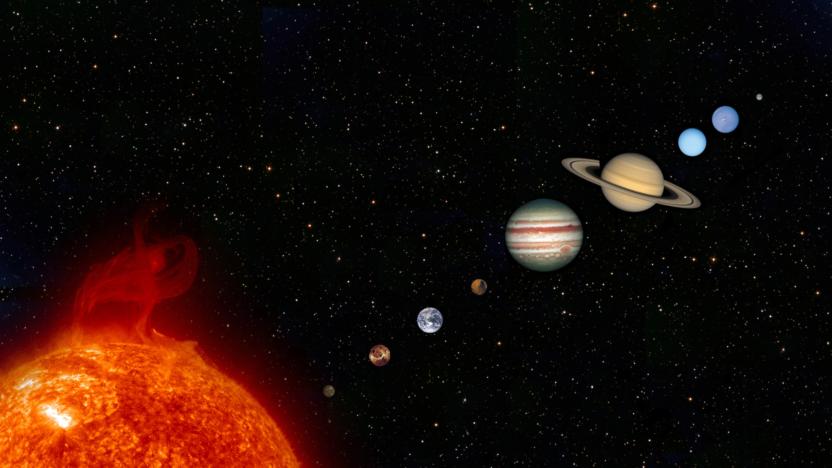
Scientists have discovered a Solar System 'superhighway' that could lead to faster, more efficient space travel.
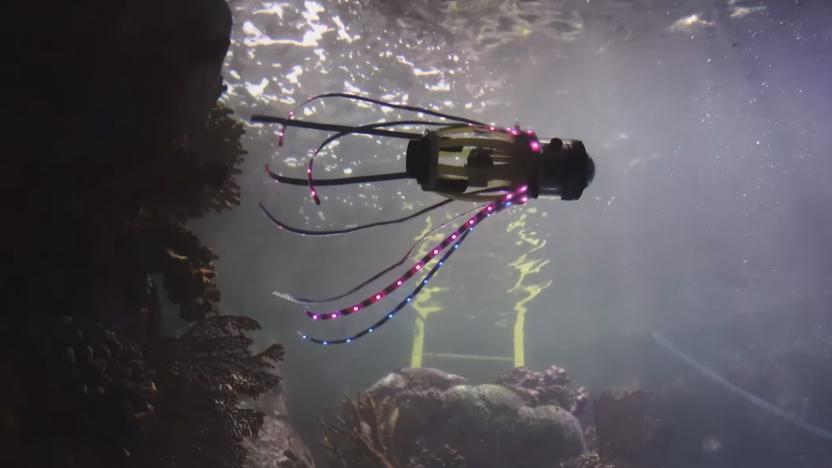
Researchers built a robot squid that propels itself with a water jet
The robot can house a camera or other sensor in a sealed compartment.
This 3D-printed foam expands up to 40 times its original size
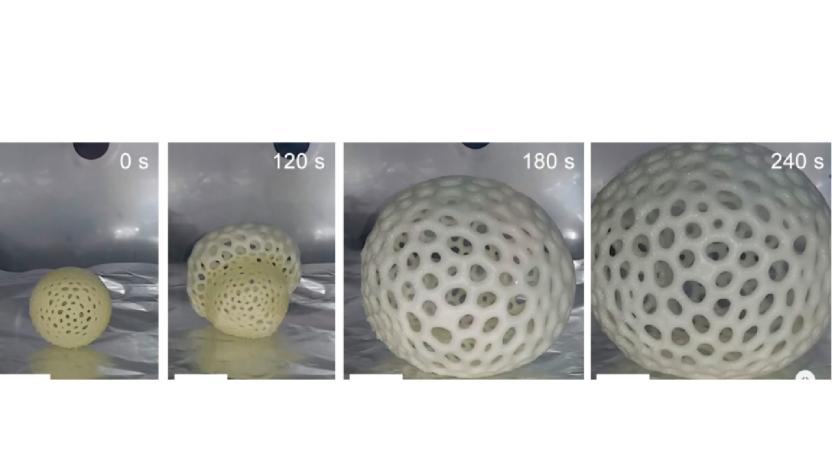
A team from UC San Diego developed a foaming resin that can expand to up to 40 times its original volume.
Scientists can 3D print insect-like robots in minutes
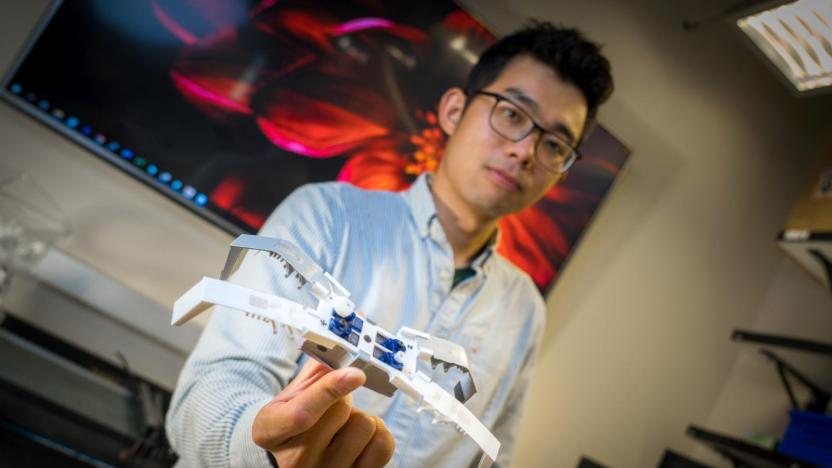
3D-printed 'flexoskeletons' make it possible to build a soft robot in less than two hours without extravagant costs.
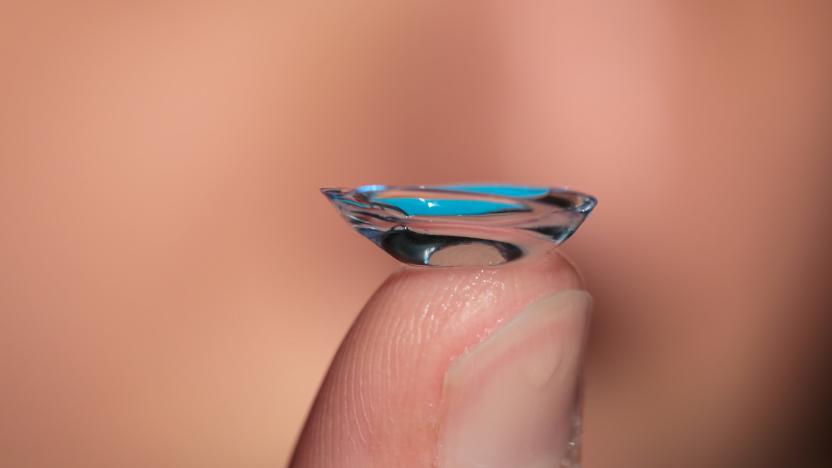
Scientists create contact lenses that zoom on command
Nosebleed seats may soon be a thing of the past. Scientists at the University of California San Diego have created a prototype contact lens that is controlled by the eye's movements. Wearers can make the lenses zoom in or out by simply blinking twice. A paper detailing the team's findings was published this month in Advanced Functional Materials.
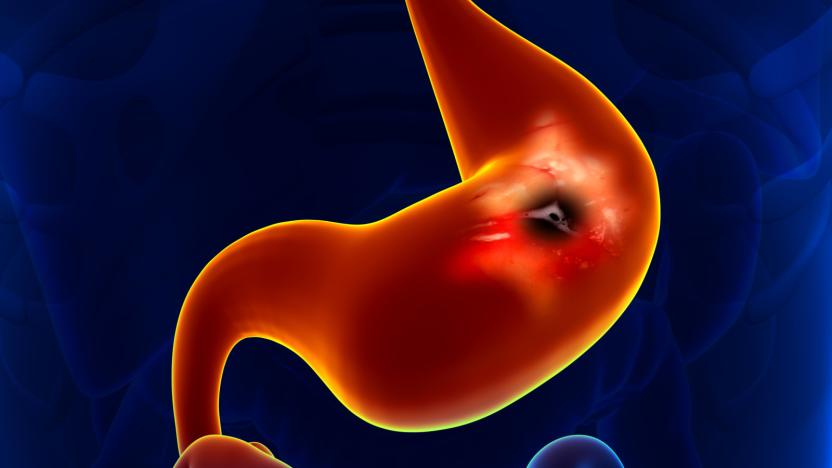
'Micromotors' alter your gut's chemistry to safely deliver medicine
There's a reason diabetics can't take their insulin orally (for the time being): stomach acid is super effective at dissolving it and similar large proteins, like antibiotics. But rather than force patients to pound pints of Maalox or chew a tub of Tums before taking their medicine, a team of researchers at UC San Diego have developed a novel method of getting your medication past the acid by using nearly microscopic drug delivery vehicles which increase the pH as they swim through your stomach.

The TRAPPIST-1 star system may be too old for life
We hate to further quash hopes that the TRAPPIST-1 star system can harbor life, but... it's not looking great. Researchers have determined that the dwarf star is between 5.4 billion years old and 9.8 billion years old, or considerably older than the 4.5 billion years of the Solar System. That age isn't necessarily bad, but it increases the likelihood that any life-supporting planets around TRAPPIST-1 lost their atmospheres and water to billions of years of high-energy radiation. And even if their atmospheres were thick enough to block the radiation, there's a possibility that a Venus-like runaway greenhouse gas effect cooked the planets' surfaces.

Gene editing technique could treat ALS and Huntington's disease
The most common gene editing technique, CRISPR-Cas9, only modifies DNA. That's helpful in most cases, but it means that you can't use it to tackle RNA-based diseases. Thankfully, that might not be a problem for much longer. After plenty of talk about editing RNA, researchers have developed a new RNA-oriented technique (RCas9) that can correct the molecular errors which lead to diseases like hereditary ALS and Huntington's.
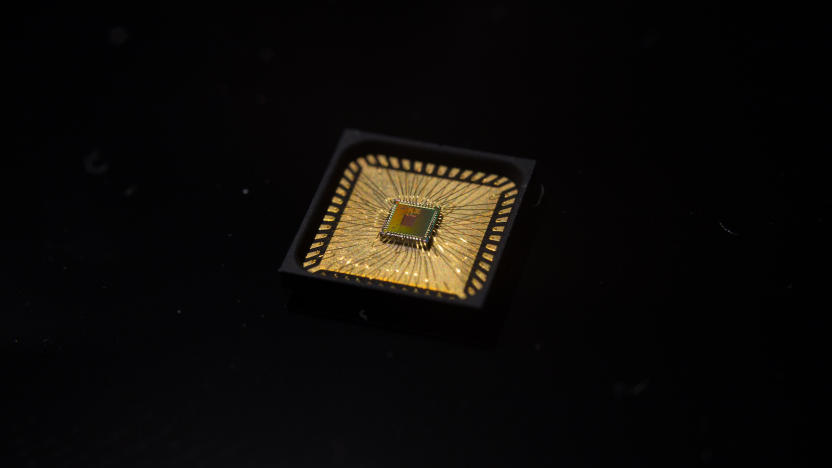
Researchers create temperature sensor that runs on almost no power
Researchers at UC San Diego have developed a temperature sensor that runs on tiny amounts of power -- just 113 picowatts, around 10 billion times less power than a watt. The sensor was described in a study recently published in Scientific Reports. "We're building systems that have such low power requirements that they could potentially run for years on just a tiny battery," Hui Wang, an author of the study, said in a statement.

ICYMI: A soft robot sleeve to keep your heart going
try{document.getElementById("aol-cms-player-1").style.display="none";}catch(e){}Today on In Case You Missed It: A soft robotic device made by Harvard and Boston Children's Hospital researchers has been tested on pigs and so far, seems quite promising in treating heart disease. The robotic heart wraps around parts of existing tissue and helps squeeze, keeping the blood moving. But unlike other existing devices that are inserted into the heart, this just goes over the top. Its makers believe that will lead to better outcomes for patients that use it, since cycling blood through a medical device can lead to all kinds of complications, from infection to blood clots. No word yet on when they'll begin tests in humans.

Researchers discover bacteria can communicate electrically, like neurons
Bacteria may be unicellular but that doesn't mean they're complete loners. They often congregate in (relatively) large colonies, not unlike human cities. In fact, a team of researchers from the University of California, San Diego have recently discovered that at least one species has even developed a long-range (again, relatively) communications mechanism which works very similarly to the brain's neurons.

Nano-sized metal fish deliver targeted drugs to your body
Doctors have long dreamed of delivering drugs to specific parts of your body, and they may soon have a clever way to do it: fish. UC San Diego researchers have developed nanoscale metallic fish (they're just 800 nanometers long) that could carry medicine into the deeper reaches of your bloodstream. Each critter has a gold head and tailfin, as well as a nickel body joined by silver hinges. You only have to subject them to an oscillating magnetic field to make them swim -- there's no need for propellers or a passive (read: slow) delivery system. That, in turn, could make the drug carriers smaller even as they move quickly.

Artificial cell membranes could lead to more effective drugs
Medical science often targets drugs at the proteins in cell membranes. But how do you study everything about their behavior when you can't control them? That's what UC San Diego researchers aim to fix. They've developed artificial cell membranes that grow and model themselves just like those in mammal cells, making them ideal for testing how drugs will behave. The trick is to use reversible chemical reactions that remodel phospholipids (key molecules in the cell membrane) and make the cell 'recycle' them, rather than generate them from scratch. That, in turn, saves the cell a lot of effort as its membrane grows.
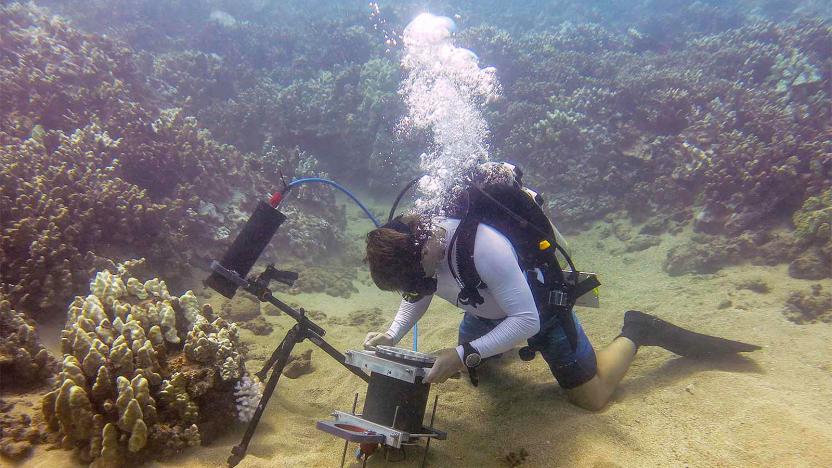
Underwater microscope offers a brand new look at sea life
Scientists have a hard time studying microscope sea life, and for good reason. Underwater scientific equipment can't study things at that scale, and bringing samples up to the surface frequently deprives them of that all-important natural context. Enter UC San Diego: its researchers have crafted the Benthic Underwater Microscope, the first undersea microscope that can study "millimeter-scale" activity in its native habitat. It combines a water-friendly computer with an imaging system that revolves around both a high magnification lens and a flexible, tunable lens that can see shapes in 3D. Combined with an LED ring light and fluorescence imaging, the system shouldn't be daunted by most water conditions or unusual specimens.

ICYMI: Robot news round-up, 3D hand scanner and more
#fivemin-widget-blogsmith-image-439685{display:none;} .cke_show_borders #fivemin-widget-blogsmith-image-439685, #postcontentcontainer #fivemin-widget-blogsmith-image-439685{width:570px;display:block;} try{document.getElementById("fivemin-widget-blogsmith-image-439685").style.display="none";}catch(e){}Today on In Case You Missed It: iRobot sold its line of military robots to a US-based firm to focus on Roomba and a new chameleon robot changes color to blend in; a student built a 3D scanner with cameras and Raspberry Pi that is much cheaper than any other scanner; and a new pedestrian detection software from the University of California, San Diego, is nearly as fast as the human brain.
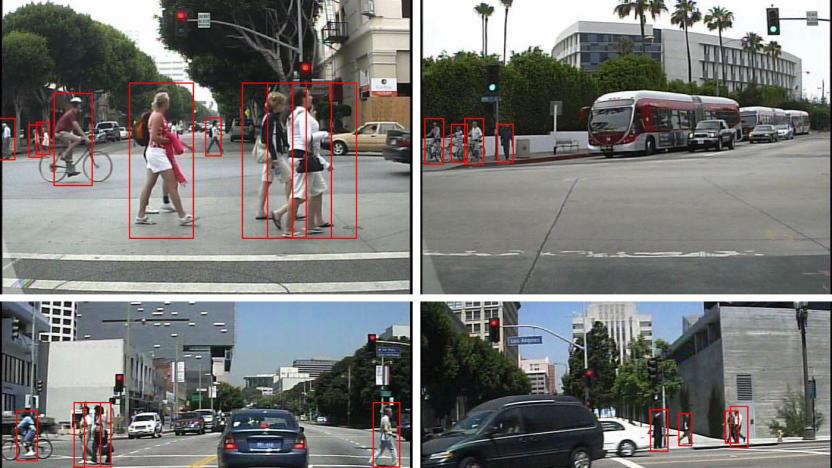
Smart car algorithm sees pedestrians as well as you can
It's one thing for computers to spot people in relatively tame academic situations, but it's another when they're on the road -- you need your car to spot that jaywalker in time to avoid a collision. Thankfully, UC San Diego researchers have made that more realistic than ever. They've crafted a pedestrian detection algorithm that's much quicker and more accurate than existing systems. It can spot people at a rate of 2-4 frames per second, or roughly as well as humans can, while making half as many mistakes as existing systems. That could make the difference between a graceful stop and sudden, scary braking.

UC San Diego researchers aim to bring EEGs out of the lab
A team of researchers from the Jacobs School of Engineering and Institute for Neural Computation at UC San Diego have developed a 64-channel "dry" electroencephalogram (EEG), reportedly the world's first. Traditional EEGs require their electrodes be coated in a conductive paste and the skin below them be cleaned and prepared prior to application. This has generally prohibited using them outside of the lab. However, the new EEG foregoes the conductive paste while reportedly providing equivalently accurate readings of brain activity.

Researchers use creepy robo-baby to figure out why infants smile
Researchers at the University of California, San Diego have developed a robotic infant to test a hypothesis that babies can (and regularly do) manipulate their mothers into smiling on command. Turns out that your 4-month-old progeny is a lot craftier than you thought.

Bluetooth alternative sends signals through the human body
A team of researchers from the University of California, San Diego announced Tuesday that they had developed a proof-of-concept wireless transmission system that is both more efficient and more secure than Bluetooth. It works by sending data signals through your body's natural magnetic field instead of over the air and could lead to a new class of ultra-low power wearables.

Mollusk-inspired robot will hunt you down one hop at a time
A team of Harvard and UC San Diego scientists believes the perfect robot is neither rigid nor soft -- instead, it's a combination of both. To prove that, the group (led by Michael Tolley from UCSD and Nicholas Bartlett from Harvard) has created a hybrid robot capable of over 30 untethered jumps without breaking into pieces. It's also faster than completely squishy ones, which are typically slow. The top half composed of nine layers 3D printed in one piece has a soft exterior that gradually becomes more rigid as you get to the inner core. On the other hand, the bottom's entirely flexible, with a cavity where you can inject a mixture of butane and oxygen. After being ignited, the gases swell and cause the robot to jump.


