

Leasing vs. buying a new iPhone: Which is better if you upgrade every year?
The lower monthly payments of leasing your iPhone can be tempting, but it's not always the cheapest option.
If you're someone who always buys the latest iPhone, there are lots of payment and upgrade options to navigate. Apple's new program, called Apple Upgrade, lets you lease an iPhone for 12 or 24 months. That poses a big question for annual upgraders: is leasing actually cheaper than buying?
With the iPhone 18 Pro starting at $1,199 and the exciting iPhone Duo at $1,999, paying full price for a phone you'll only keep for a year can feel excessive. Apple Upgrade's lower monthly payments might seem like the perfect solution to that, but leasing isn't necessarily the most cost-effective option. Buying and trading can often cost less when you take everything together. And even if you do lease, buying out the phone at the end could be the smartest move.
The current iPhone lineup
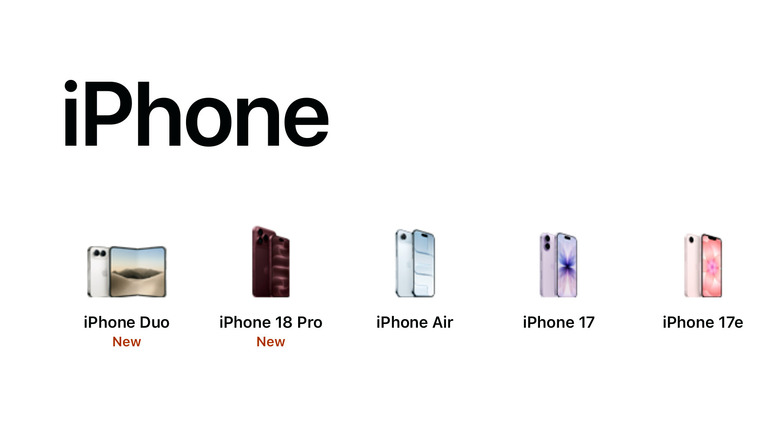
Here's how Apple's wide-ranging iPhone lineup looks right now (the company still sells the iPhone 16, but it isn't eligible for Apple Upgrade):
| Model | Starting price | Apple Upgrade — monthly payment (12 months) | Apple Upgrade — total payments (12-month lease) |
|---|---|---|---|
| iPhone 17e, 256GB | $699 | $30 | $360 |
| iPhone 17, 256GB | $899* | $37 | $444 |
| iPhone Air, 256GB | $1,099 | $46 | $552 |
| iPhone 18 Pro, 256GB | $1,199 | $50 | $600 |
| iPhone 18 Pro Max, 256GB | $1,299 | $54 | $648 |
| iPhone Duo, 256GB | $1,999 | $83 | $996 |
*If you buy an iPhone 17 outright and choose to activate later with another carrier, the price is $929.
Note that prices for the older devices went up in September 2026 following Apple's event. For simplicity, we're comparing the base storage for all models, but you can upgrade to a higher-storage model for a higher monthly cost.
An important factor to consider is that Apple Upgrade requires connecting your iPhone to AT&T, T-Mobile or Verizon at enrollment. Most of the plans from the big carriers are much more expensive than what you can get with an MVNO, so you should also factor in your mobile service cost to determine the true bottom-line expense.
Don't forget trade-ins
At first glance, leasing looks cheaper. But buying leaves you with something of value when you want to upgrade: an iPhone you own that you can trade towards the next one.
Say you buy the iPhone 18 Pro (256GB) for $1,199 today. Apple is currently offering $785 when you trade in an iPhone 17 Pro in good condition, so let's assume everything will be equal next year. Trading in your 18 Pro for the theoretical 19 Pro next fall would result in an effective cost of $414. Meanwhile, a 12-month lease on the same phone costs $600. When you return it at at the end, you don't get trade-in credit. In this example, buying and trading would save you about $186.
Another way to look at it: ask how much the phone needs to be worth after a year for buying to be cheaper than leasing. The table below shows the break-even trade-in value needed for each model by subtracting the 12-month lease cost from the purchase price. If you get more than that amount on a trade-in, buying is cheaper; if you'd receive less, leasing and returning is more cost-effective.
| Model | Trade-in value needed to match leasing |
|---|---|
| iPhone 17e | $339 |
| iPhone 17 | $455 |
| iPhone Air | $547 |
| iPhone 18 Pro | $599 |
| iPhone 18 Pro Max | $651 |
| iPhone Duo | $1,003 |
For context, Apple currently offers up to $270 for the iPhone 16e and $430 for the iPhone 16, making leasing the better option for those. The company will give $585 for the iPhone Air, $785 for the iPhone 17 Pro and $885 for the iPhone 17 Pro Max, meaning trade-in is a better deal for the premium phones. There's no previous-generation equivalent for the iPhone Duo.
Of course, next year's trade-in values aren't guaranteed. Apple could offer less for the current models than these numbers suggest. That's one argument in favor of leasing: if Apple decides to get stingy, you can just return the phone.
The flexibility of leasing
There's one big wrinkle with this comparison, though: you can buy the leased iPhone at the end of the term instead of returning it. And in some cases, that might make more sense.
In the Apple Upgrade program, you have three choices at the end of the term: return the phone and start a new lease, buy it out for its original price minus the lease payments you've made, or return it and leave the program.
For the iPhone 18 Pro in our example, the buyout after 12 months would be about $599 (before taxes). If Apple then offered you $785 for the phone as a trade-in, buying it out would put you about $186 ahead vs. returning it. Your net cost for the year would then be $414, which happens to be the same as if you'd bought the phone and traded it in.
But if the trade-in offer was lower than the buyout price, returning the phone would make more sense. One advantage of leasing is flexibility, as it lets you wait and see what Apple's trade-in offer is before making the decision. Compare the trade-in price with the full buyout cost, and choose the cheaper option.
Buying doesn't necessarily mean paying upfront
If you have an Apple Card with sufficient credit available, you can spread the cost of buying a new iPhone over 24 months with no interest. That comes out to about $50 a month for the iPhone 18 Pro, $54 for the iPhone 18 Pro Max and $83 for the iPhone Duo. Those are essentially identical to what Apple charges for 12-month leases.
The difference is that Apple Card financing lasts 24 months. If you trade in the phone after a year, you still owe the remaining balance. Don't ignore that extra year of debt when comparing costs. Of course, you'd first need to apply and get approved for the Apple Card. And for this financing option, you must choose to connect your new phone to AT&T, T-Mobile or Verizon at checkout. That means the mobile plan costs mentioned earlier come into play again.
Similar to Apple Card financing, be careful with Apple Upgrade's 24-month leases if you want to upgrade every year. The lower monthly payments can be tempting, but you're still on the hook for the remaining 12 months of lease payments if you decide to upgrade after a year. At ~$35 monthly for the iPhone 18 Pro, you'd still owe another $420 after the first year, bringing your total lease cost to about $840.
Carrier financing options are also available, but the current offers are for 36-month plans — even less ideal for those who want to upgrade every year.
Making sense of it all
If you upgrade annually, the biggest takeaway is to not let the monthly payment alone dictate your decision. For example, the iPhone Duo's $83 monthly leasing rate (for a 12-month term) looks like a bargain compared with its $1,999 sticker price. But you'll still spend nearly $1,000 over a year for a device you won't own at the end of the term.
Condition is another factor to consider. AppleCare isn't included with Apple Upgrade, and returning a damaged phone could lead to fees. Poor condition could also lower your trade-in value if you opt for buying.
Buying is the most straightforward option if you want to own the phone from the get-go and trade it in when it's time to upgrade. It also gives you the option to connect to any carrier and enjoy lower mobile plan costs. Apple Card financing can give you a monthly payment that's nearly identical to the cost of leasing, while still leaving you with a phone you own and can trade in.
Meanwhile, leasing gives you more flexibility at the end of the year. But no matter what, compare what you'll spend over the full year and consider what you'll have left at the end.