Ben Gilbert

Engadget Editorial Policies

The unique content on Engadget is a result of skilled collaboration between writers and editors with broad journalistic, academic, and practical expertise.

In pursuit of our mission to provide accurate and ethical coverage, the Engadget editorial team consistently fact-checks and reviews site content to provide readers with an informative, entertaining, and engaging experience. Click here for more information on our editorial process.

Stories By Ben Gilbert

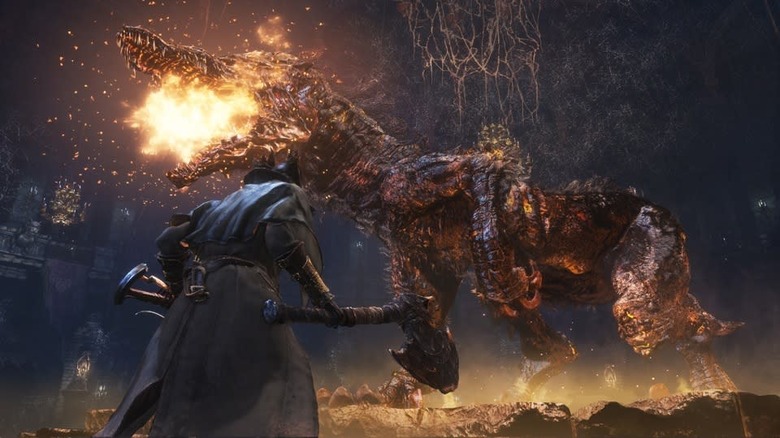
  • Are you good enough for 'Bloodborne'?

    Am I "good" at games? I don't know. I'm 30 years old: I've been playing video games for 25 of those years, give or take, and covering games professionally for just over six years. I spent two weeks this year completing Mega Man 1 through 4. I've sunk hundreds of hours into Spelunky. Whether I'm "good" at games is up for debate; I love challenging games. Despite this, I've never loved the divisive, feverishly adored/hated Souls games (Demon's Souls, Dark Souls 1 and 2). Their challenges felt too great to overcome, their systems too inscrutable, their technical issues too great in number. They felt frustrating instead of challenging. Bloodborne -- the latest entry in the series and the first without a "Souls" moniker attached -- changes that. This is a game I love to hate. But I mostly just love it.

    By Ben Gilbert Read More
  • This is Sony's streaming TV service, PlayStation Vue

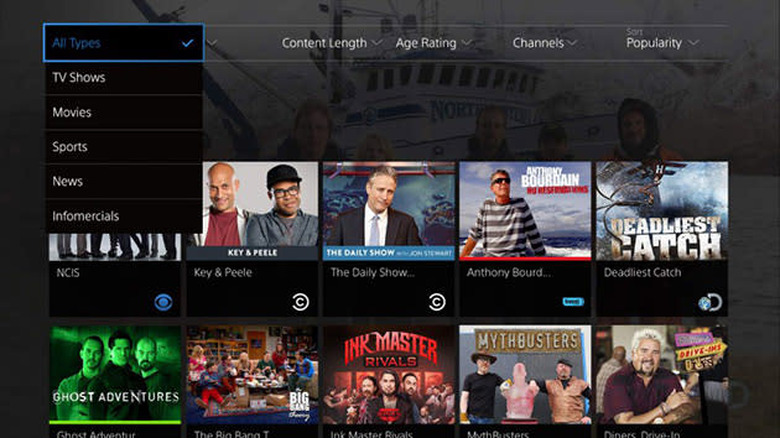
    #fivemin-widget-blogsmith-image-366276{display:none;} .cke_show_borders #fivemin-widget-blogsmith-image-366276, #postcontentcontainer #fivemin-widget-blogsmith-image-366276{width:570px;display:block;} try{document.getElementById("fivemin-widget-blogsmith-image-366276").style.display="none";}catch(e){} Wondering what Sony's new live streaming TV service, PlayStation Vue, looks like in action? Well, if you live in Chicago or New York City or Philadelphia, you can go try for yourself on PlayStation 3 or PlayStation 4. There's a seven-day free trial! But if you're one of the billions of people outside of the trio of introductory markets, we've got a video walkthrough for you above.

    By Ben Gilbert Read More
  • The history behind Nintendo's flip-flop on mobile gaming

    Did you hear the one about Nintendo "never" putting its content on mobile platforms? About how Nintendo makes its own hardware specifically intended to cater to its software? About how it would dilute those "brands" (think: Mario, Zelda, Donkey Kong) to put them on hardware other than Nintendo's? Clearly Nintendo isn't so worried about that, as it announced plans last evening to work with Japan mobile game giant DeNA on moving its many brands over to mobile. Or, as Nintendo describes the relationship: a "business and capital alliance to develop and operate new game apps for smart devices and build a new multi-device membership service for consumers worldwide." Sounds like a blast!

    By Ben Gilbert Read More
  • Everything Valve does is because of Steam

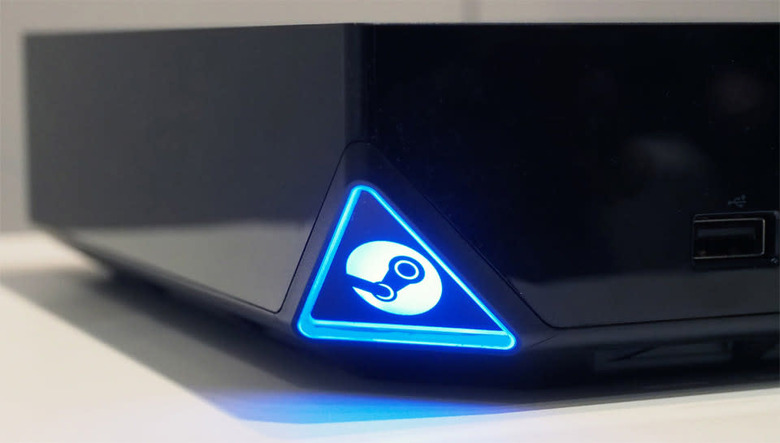
    Why is Valve getting into virtual reality? Why is Valve making Steam Machines and the Steam Controller? Why did Valve make its own Linux-based operating system? Why did Valve make the Steam Controller? Why is Valve releasing its game engine, Source, for free? It's the Steam economy, stupid! Valve's game store boasts "over 125 million active accounts worldwide." How does Valve keep growing that store? By literally everything else it does. Here's Valve president Gabe Newell explaining it to us last week at GDC 2015: "We're trying to build standard interfaces and standard implementations that other people can use. Because, to be honest, we're going to make our money on the back end, when people buy games from Steam. Right? So we're trying to be forward-thinking and make those longer-term investments for PC gaming that are going to come back a couple years down the road."

    By Ben Gilbert Read More
  • Sony's PlayStation Vue TV service to launch in the next two weeks

    Sony's PlayStation-based streaming live TV service won't go live nationwide until sometime later in 2015. If you live in Chicago, Philadelphia or New York City, however, the service lights up "in the next two weeks." That's according to Sony Computer Entertainment head Andrew House -- he's the top PlayStation exec at Sony. House told the Wall Street Journal as much in an interview today, though he stopped short of providing details on pricing or launches in other parts of the US.

    By Ben Gilbert Read More
  • Apple wants your iPhone to double as a medical device

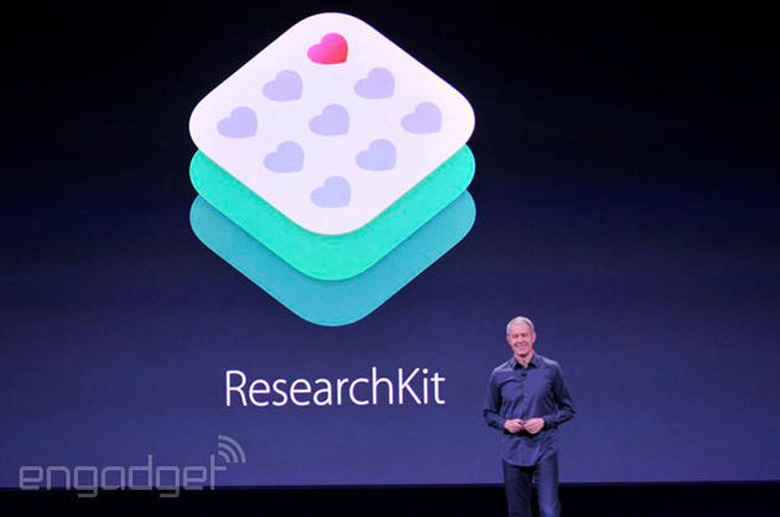
    Apple's taking another step in its ongoing effort to make its iDevices more friendly to medical professionals. "ResearchKit" was introduced this morning in a San Francisco event by Senior VP of operations Jeff Williams; he calls it, "a software framework made specifically for medical research." More specifically, ResearchKit is a solution for making iOS devices with HealthKit into "powerful tools for diagnosis." The long and short is ResearchKit is intended to make medical diagnosis apps easier to create by medical professionals. A handful of apps were shown off that help with diagnosis of a range of conditions, from Parkinson's to breast cancer. The data collected by these apps, which Apple says it won't see and you can opt out of sharing, can be used for enormous research projects.

    By Ben Gilbert Read More
  • How serious are you about virtual reality?

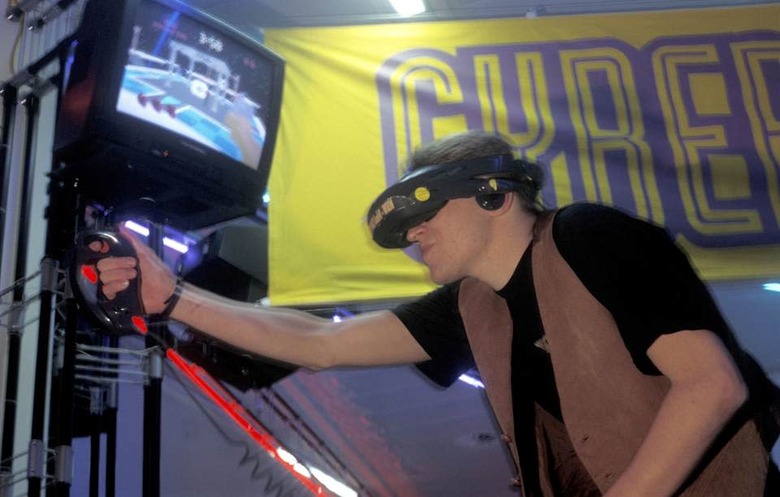
    The absolute best/worst virtual reality stock photo we could find Are you prepared to dedicate a room in your house to virtual reality? Perhaps you're a little less crazy than me, but you're okay with a wire running across your living room to a headset? Or maybe both of those sound crazy to you, but a headset that can plug into your phone is okay? These are the emerging options for virtual reality: a medium finally coming into its own, that's poised to disrupt industries and hairdos the world over.

    By Ben Gilbert Read More
  • 'Rock Band' is back with 'Rock Band 4': headed to Xbox One and PS4 in 2015

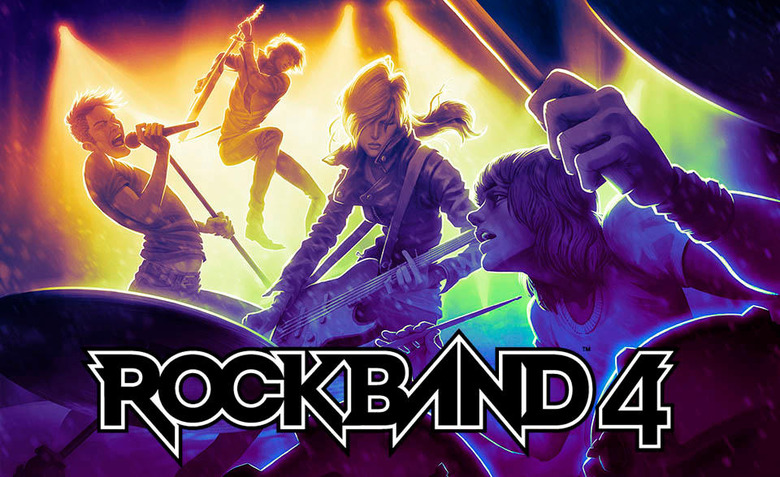
    Remember way back in 2009? Times were simpler then: Pittsburgh's Steelers were Super Bowl champions; Tiger Woods was caught having an affair; and I was playing a lot of Rock Band. You probably were too. Many millions of you were, anyway, and the plastic peripheral market was booming. In a few short years, the world went from zero to dozens of plastic guitars, keyboards, mics and drums per household, all in the name of games like Rock Band and Guitar Hero. House parties quickly turned into Rock Band parties with surprising frequency. It was only another few short years before those games, and the peripherals they required, fell off a cliff. That was 2010, when Rock Band 3 launched. It's been five years, and the world is apparently ready for more Rock Band. The folks behind the original Guitar Hero and Rock Band franchises are back in the development seat and bringing Rock Band 4 to Xbox One and PlayStation 4 later this year.

    By Ben Gilbert Read More
  • Valve's push into VR will span many headsets from many companies

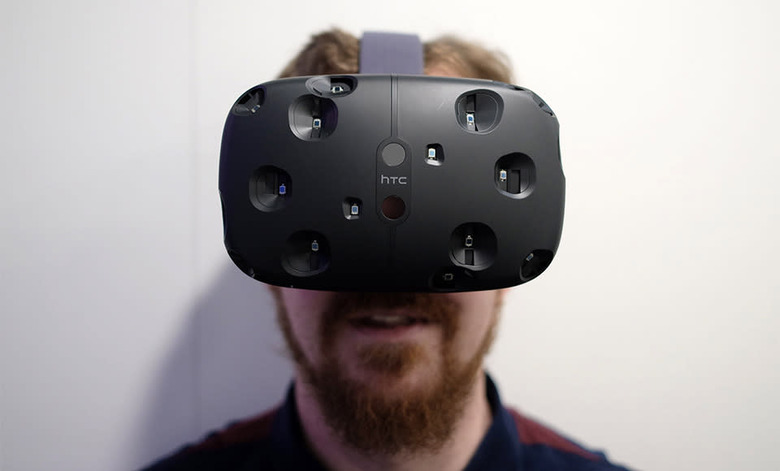
    Currently, the HTC Vive is the only virtual reality headset that's part of Valve's Steam VR push. That's not because it's the only one, but because it's the only one we know about thus far. "You should think of the Vive as the first in the same way there are multiple Steam Machines," Valve president Gabe Newell told me this morning. In other words, Steam VR is an open platform supported by Valve. "We're building tools and hopefully they're valuable to hardware partners who want to do it. In some cases, we'll take the leadership role in shipping stuff. But we're really just building tools for other people to continue. So you'll see more headsets."

    By Ben Gilbert Read More
  • Valve is solving virtual reality's input problem

    Among the handful of announcements Valve made at this year's Game Developers Conference was a subtle and hugely important one: Lighthouse. What in the world is Lighthouse? It's the "base stations" referenced in Valve's VR headset announcement, and it's even more important than the incredibly impressive headset. Valve president Gabe Newell compares it to USB and expects it to fundamentally change how people interact with virtual reality. "Now that we've got tracking, then you can do input," Newell said in an interview with Engadget this morning. "It's a tracking technology that allows you to track an arbitrary number of points, room-scale, at sub-millimeter accuracy 100 times a second." What that means for me and you is that Lighthouse puts your body into the virtual world with stunning precision. I tested it and can confirm: holy shit, yes, this really works. Want to reach out and touch something in VR? Lighthouse is how you'll do it.

    By Ben Gilbert Read More
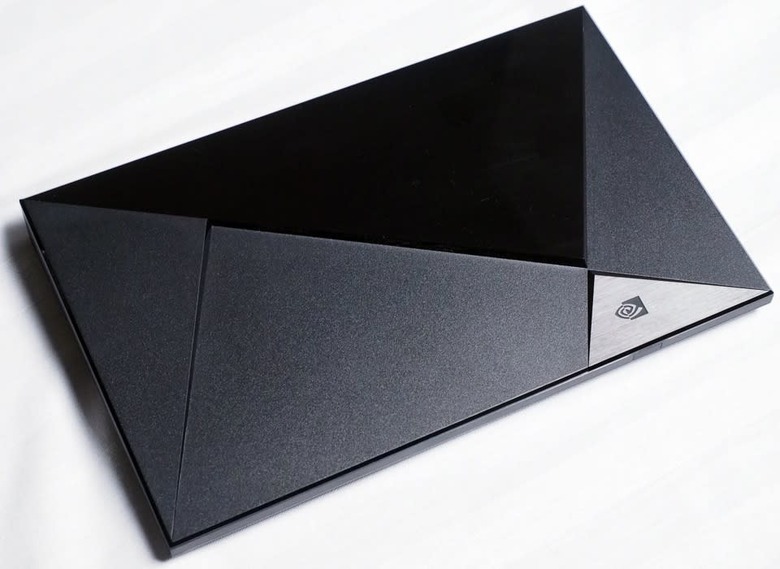
  • Using NVIDIA's streaming, Android TV set-top box: the Shield

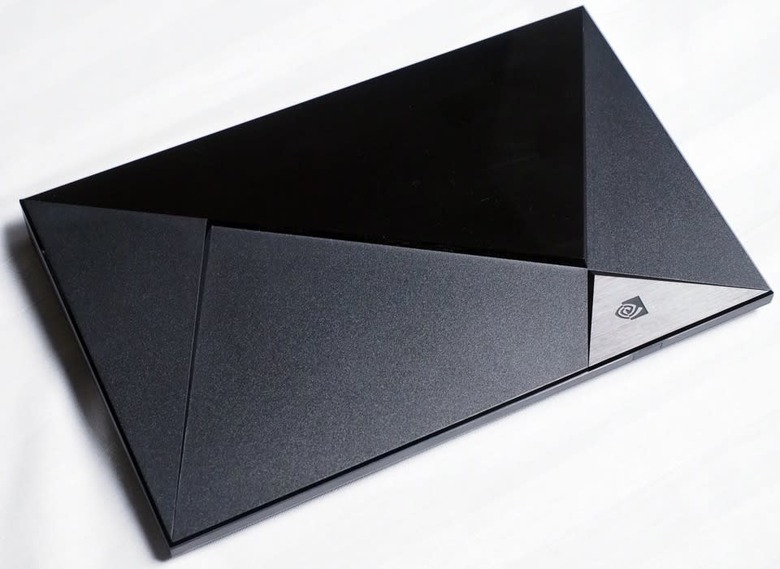
    You already know what NVIDIA's latest Shield hardware is: an Android TV-powered set-top box that uses the latest chip from NVIDIA. It streams games over the company's "Netflix for gaming" platform known as GRID; it streams games from your local PC; it powers Twitch streaming at the same time of said streamed content; heck, it powers games like Crysis 3 locally, running on Android. But is it any good? The only answer I've got is maybe.

    By Ben Gilbert Read More
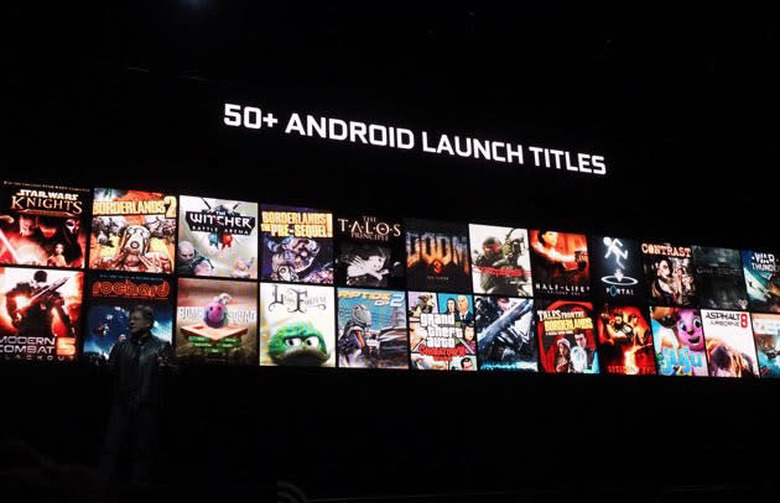
  • Crysis 3, Doom 3 and more ported to Android, powered by NVIDIA

    "Can it play Crysis?" is the question people are still asking after all these years, despite the vast majority of game hardware now being more than capable of running Crytek's gorgeous first-person shooter. It's how NVIDIA introduced Crysis 3 this week, running on its new Android TV-powered NVIDIA Shield set-top box. Which is to say yes, it can play Crysis. The game is outright running on Android, albeit only Android devices powered by NVIDIA's bleeding edge X1 processor.

    By Ben Gilbert Read More
  • Shield: NVIDIA's $200 gaming-focused Android TV set-top box

    Another year, another new Shield device from NVIDIA. What's Shield? It's the hardware line from NVIDIA that spans a bizarre handheld game console, a powerful gaming tablet, and now a $200, Android TV-powered set-top box. NVIDIA CEO Jen-Hsun Huang unveiled the Android TV-powered set-top box this evening during a GDC 2015 press conference, which the company referred to as a combination "revolutionary TV", "gaming console" and "supercomputer." Head below for all the specs as we learn them live from NVIDIA.

    By Ben Gilbert Read More
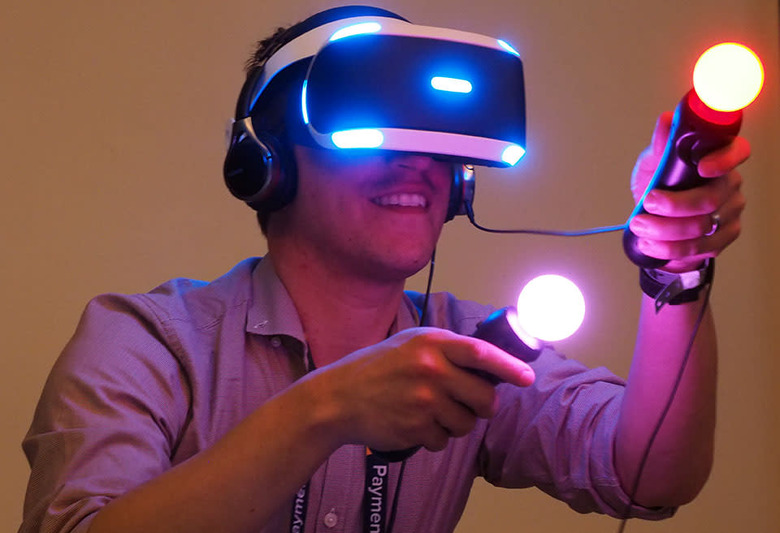
  • Using the PlayStation 4's new version of Project Morpheus

    I just used Sony's newest version of the PlayStation 4 virtual reality headset, Project Morpheus. Rather, I should say that I just faced down a burly, British would-be-torturer before being whisked away to a first-person gunfight in a well-appointed London manor. That's "The London Heist," one of the new demos from Sony's London Studio being shown off this week at GDC 2015. It's intense, and demonstrative of the new prototype's upped specs.

    By Ben Gilbert Read More
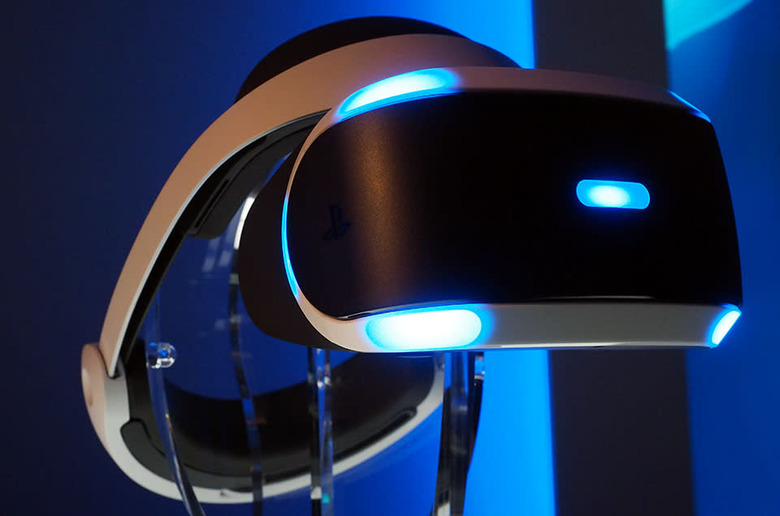
  • Sony's PlayStation 4 VR headset launching in the 'first half of 2016'

    Sony's PlayStation 4-powered virtual reality headset, Project Morpheus, has new specs and a slightly different look (seen above). Okay, it doesn't look that different. What's new? For one, the screen resolution is improved: it's now 1,920 x RGB x 1,080. The refresh rate is doubled from last year at 120Hz, and the new 5.7-inch screen also has a higher field of view (nearly 100 degrees). Oh right! It's got a new, bigger screen at 5.7 inches! But you already guessed that. Further upping the specs is lower latency, now under 18 milliseconds. Most importantly, the unit will launch at retail in "the first half of 2016." That's... kinda soon? Almost?

    By Ben Gilbert Read More
  • 'Liquid VR' is AMD's push into virtual reality with software

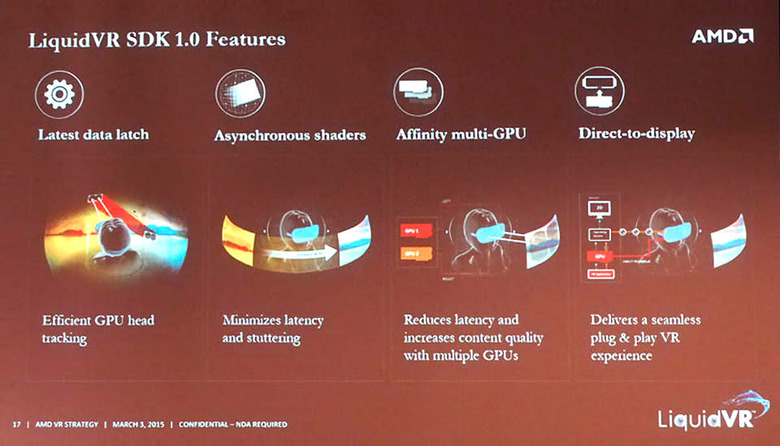
    The latest Silicon Valley company to hop on the virtual reality bandwagon is AMD, this morning unveiling what it's calling "Liquid VR": a software development kit aimed at making VR easier for everyone. The announcement comes from a presentation at GDC 2015 in San Francisco, where virtual reality is dominating the news. What does Liquid VR do for developers and users? It essentially makes everything much easier. As one AMD rep put it during this morning's presentation, "You can plug an Oculus Rift into a computer and start 3D rendering directly to the headset, even without Oculus' SDK." In so many words, Liquid VR is yet another solution for making various VR headsets work easily on various devices; it also optimizes the use of that headset for that particular computer (no doubt powered by AMD's chips).

    By Ben Gilbert Read More
  • We're live at the 2015 Game Developers Conference in San Francisco!

    Every year, in late winter, covering the game industry gives me a chance to leave New York City at its most miserable. It's with great pleasure that I tell you, yes, we're here in San Francisco -- where it's 60 degrees and not 34 -- to bring you all the news, hands-ons, interviews, videos and combinations thereof, straight from the 2015 Game Developers Conference. From here on out, we're gonna make that name a bit simpler: GDC 2015. We've even got a page right here where you can keep up to date on all the aforementioned coverage. Head below for a brief rundown of the week to come.

    By Ben Gilbert Read More
  • One of gaming's most used engines is now free

    Created in Unreal Engine 4 Game development is expensive. It's not a question of the tools costing too much; game engines like Unity and GameMaker Studio offer free versions, and paid versions aren't far out of reach. That's a recent development, though. When the last generation of game consoles (Xbox 360, PlayStation 3, Nintendo Wii) ruled the roost, the Unreal Engine was both ubiquitous and costly. Its latest iteration, Unreal Engine 4, is widely used, but has taken a sideline to free offerings from the likes of Unity. The engine's maker, Epic Games, isn't sitting idly by and letting the competition take over, though: as of this morning, Unreal Engine 4 is free for all to use.

    By Ben Gilbert Read More
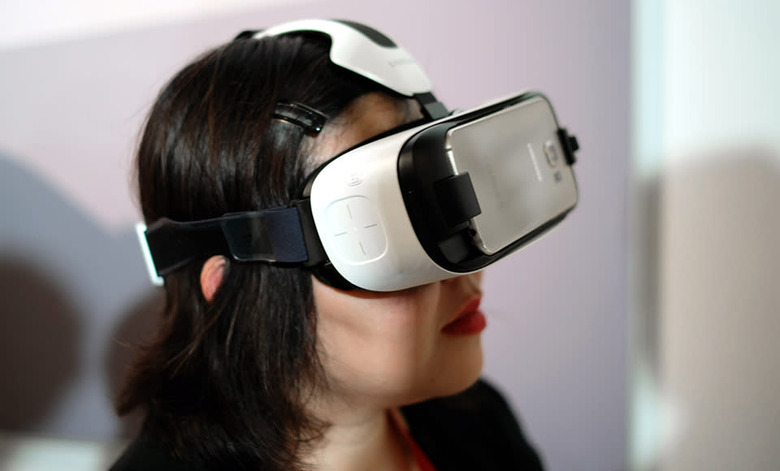
  • Samsung's VR headset gets the first Oculus-powered paid app store

    It's the day many, many virtual reality developers have been waiting for: Finally, a way to sell VR games to people with VR headsets. Namely, Oculus and Samsung's collaboration on the Gear VR headset is bearing digital fruit in the form of a digital store. In short: You can finally buy and sell games on Samsung's VR headset. That's a bigger deal than it sounds, as Gear VR's store has been riddled with little more than tech and game demos since its launch late last year. We've been anxious for deeper experiences, and many developers have been withholding those experiences for a time when they could actually make money on their work. Let the floodgates open!

    By Ben Gilbert Read More
  • JXE Streams: The wild and weird 'Legend of Zelda: Majora's Mask'

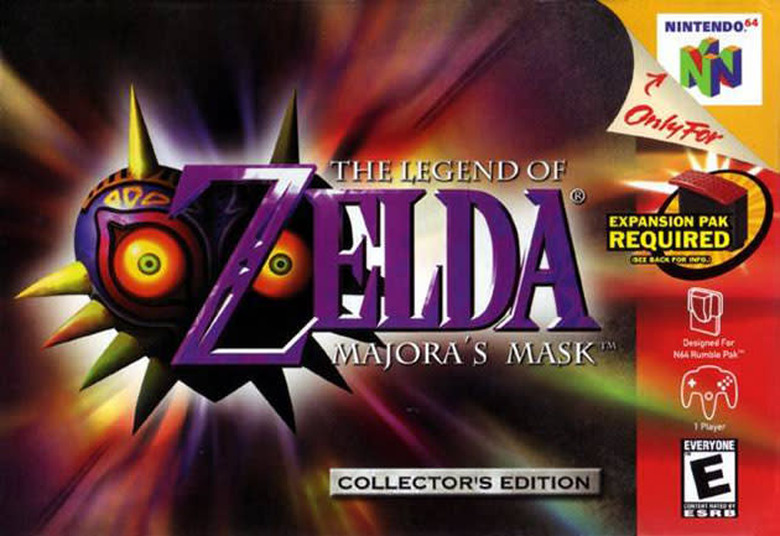
    This week -- tomorrow -- Nintendo is re-releasing its polarizing Nintendo 64 third-person action game, The Legend of Zelda: Majora's Mask. But today -- at 3PM ET! -- we're streaming the game and hosting a rousing discussion. No "expansion pak" required! Though we'd love to show you the re-release for Nintendo 3DS, there's simply no way for us to stream from our handheld game systems. As such, today we're streaming the original Nintendo 64 game. No, we don't have a magical Nintendo 64 with HDMI-out, but we do have a Wii U, which has a Wii built into it, which has Virtual Console. All that to say this: we're streaming the Wii re-release of Nintendo 64 game The Legend of Zelda: Majora's Mask. The future! We're in it!

    By Ben Gilbert Read More
  • JXE Streams: Creeping through 'Darkest Dungeon'

    We're back! Like clockwork, every Tuesday and Thursday afternoon you can expect Joystiq X Engadget streams on Twitch, and today is no different. I'm jumping into Darkest Dungeon, a game only available on Steam's Early Access program right now -- I'm told it's both excellent and scary as hell. Given that, I'm going in completely blind and learning as I go. Won't you join my expedition into the mouth of madness? I sure hope you will! The pre-show kicks off just ahead of our official 3PM ET start time -- head blow for the stream and comments, or head to our Twitch page right now and follow along so you know when we're streaming any time of the week!

    By Ben Gilbert Read More
  • Valve just opened its virtual item economy to all Steam games

    Like virtual hats? Valve certainly does. The company behind gaming classics like Half-Life and Portal is also the creator of Steam, the world's largest digital game store. Beyond just buying games on that store, though, there are hats. Virtual hats, of course, and they are very popular -- Valve's paid out over $50 million to users who created virtual wares in its games (from Team Fortress 2 to the immensely popular DOTA 2). You can buy them, you can create them, you can trade them -- it's quite literally its own economy, and Valve even hired economists to analyze its complex, extremely lucrative system. Today, Valve is opening up that store to all the games on Steam.

    By Ben Gilbert Read More
  • Microsoft leaked the Xbox One, HoloLens and more way back in 2012

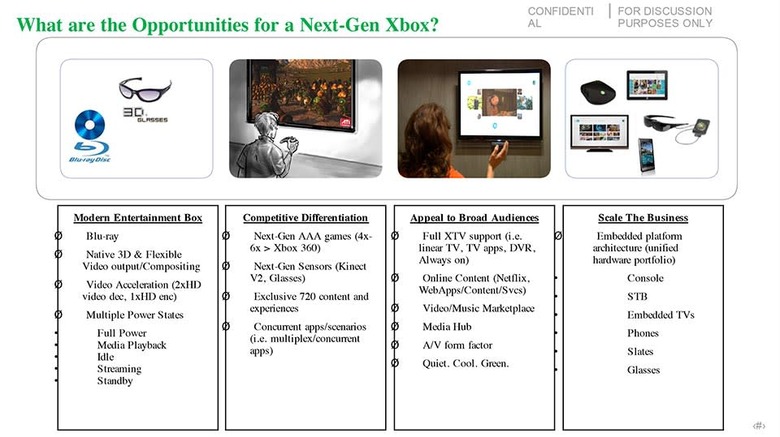
    Covering Microsoft can be comical. The enormous, multinational company is notoriously prone to leaks. Here's a short highlight list from our vast library of leak posts about Microsoft: Microsoft's fitness wearable, Band The Xbox One game console, in development kit form, on eBay of all places Cortana for Windows, the voice-based search engine Former CEO Steve Ballmer's entire CES 2010 keynote speech While that list of all stars is impressive unto itself, there's a far more interesting leak that happened way back in June 2012. A 56-page business presentation was uploaded to document-sharing service Scribd -- the document outlined four years of Xbox plans, the vast majority of which have now played out. From Kinect 2.0 shipping with Xbox One to HoloLens (then known as "Project Fortaleza"), essentially the entire recent history of Xbox was exposed nearly three years ago.

    By Ben Gilbert Read More
  • Introducing 'Joystiq X Engadget': A new beginning

    There is no end. A new beginning starts today: "Joystiq X Engadget" is the temporary name for a long-term home. A new place to laugh along with us on Twitch streams; a new place to commiserate when all the games are broken; a new place to celebrate when an unexpected jewel shines through the din of hype. A new place, yes, but a new place full of familiar faces. Hi, I'm Ben Gilbert, and I used to work at Joystiq. Maybe you heard me on the Joystiq Podcast, or read my work on the site? It's been a few years, but I've been heading up gaming coverage at Engadget in the meantime. To my virtual left is Joystiq senior reporter Jess Conditt, who's joining me at the helm of this new venture. We are the continuation of Joystiq -- its new beginning -- if not in name, certainly in spirit and drive.

    By Ben Gilbert Read More
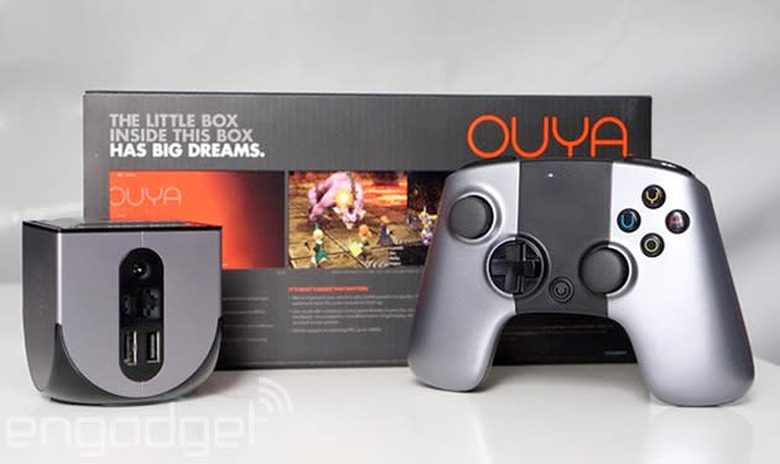
  • OUYA confirms further moves into China with Alibaba deal

    Is Chinese giant Alibaba investing $10 million into California-based game console maker OUYA? That report remains unconfirmed, but OUYA did confirm this morning that Alibaba is getting the OUYA game library on its YunOS platform. Sorry, the what platform? It's essentially a version of Android that was created by Alibaba, intended to compete with Android in China. So does that mean OUYA is heading to smartphones in China? Not quite.

    By Ben Gilbert Read More
  • B-OUYA! Guess who just got a $10 million investment from Alibaba?

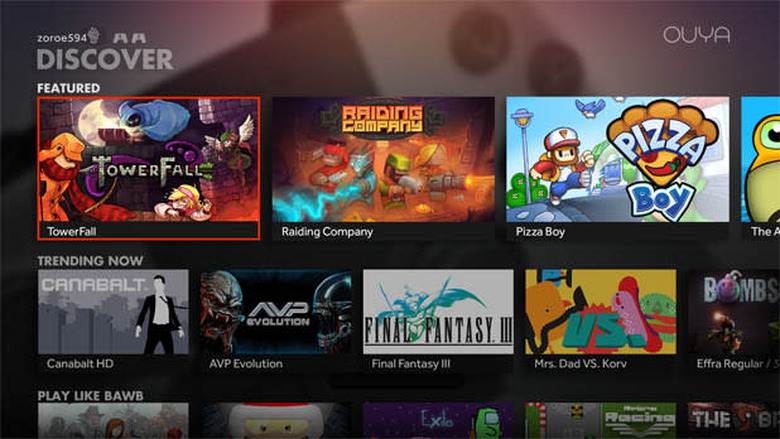
    Are we tired of making puns based around the silly name for the Kickstarter-funded, Android-powered, miniature game console, OUYA? No, friends. No we are not. Clearly. That aside, there's a whole nation of people who are just now hearing of OUYA for the first time: China. That's because Chinese e-commerce giant Alibaba reportedly dropped $10 million into OUYA's coffers within the last month, according to The Wall Street Journal -- an investment in trade for bringing OUYA's platform to Alibaba's set-top box. That's quite an investment considering OUYA's poor-to-tepid response in the United States: "The system is rough around the edges in many ways, quite literally when regarding the controller, but the interface and menus also could use work," is what we wrote in our review from 2013. Much of those early edges were eventually smoothed, and OUYA branched out as a software platform known as "OUYA Everywhere." Xiaomi added OUYA everywhere to its set-top boxes last year, and now apparently Alibaba is looking to do something similar.

    By Ben Gilbert Read More
  • Sony closing Music Unlimited in favor of Spotify-powered service (update)

    Sony today revealed PlayStation Music, a new Spotify-powered music service coming to PlayStation 3, 4 and "Xperia smartphones and tablets" this spring. The service will outright replace Music Unlimited, the service that Sony previously implemented across devices, powered by its own enormous music catalog. The news marks the first time Spotify has come to any game console, and is a major coup for Sony's PlayStation group in the battle for major home entertainment apps on game consoles (Xbox One notoriously got HBO Go first). PlayStation Music will require a Spotify paid subscription (the "Premium" membership), and enables both playback on the aforementioned devices and the ability to listen to music in the background during games. When the service launches at some point in Spring 2015, it'll be available in "41 markets around the world." Update: The PlayStation Music service will support the "ad-supported free tier" of Spotify as well, a Sony rep told Engadget.

    By Ben Gilbert Read More