Zach Honig

Engadget Editorial Policies

The unique content on Engadget is a result of skilled collaboration between writers and editors with broad journalistic, academic, and practical expertise.

In pursuit of our mission to provide accurate and ethical coverage, the Engadget editorial team consistently fact-checks and reviews site content to provide readers with an informative, entertaining, and engaging experience. Click here for more information on our editorial process.

Stories By Zach Honig

  • Where in the world is your iPhone 6?

    If you checked your iPhone 6 (or 6 Plus)'s shipping status before making coffee, walking the dog or catching up on your favorite tech site this morning, you're definitely not alone. With a record number of pre-orders this year, there are thousands of soon-to-be iOS 8 users doing exactly the same thing. If you want to take your obsession to new heights, however, the aircraft tracking service FlightAware is eager to help. Once you receive a UPS tracking number for your precious cargo, you can head on over and track the exact location of your phone, be it in China, Anchorage (for a re-fueling stop), the Louisville (Kentucky) distribution center, or somewhere in between. Or you could just wait patiently for the doorbell to ring. [Photo credit: Getty Images]

    By Zach Honig Read More
  • Fujifilm packs a ton of power in the X30 point-and-shoot

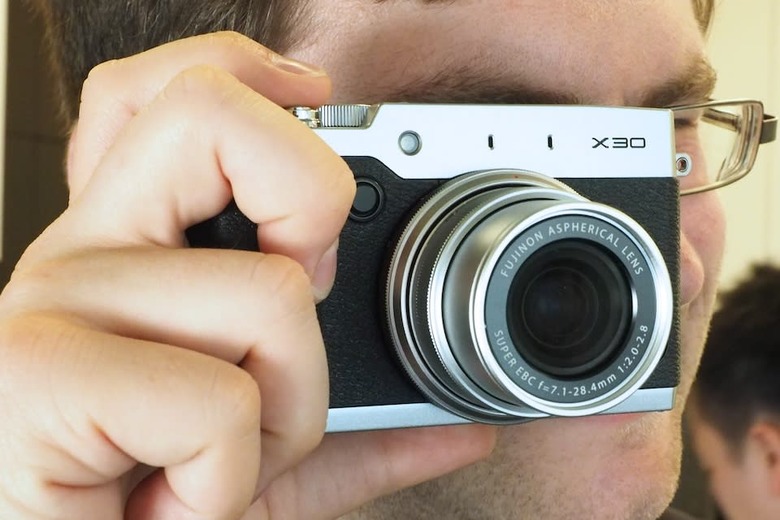
    The highlight for Fujifilm at this year's Photokina is undoubtedly the X100T and its brilliant hybrid viewfinder, but the X30 point-and-shoot is also not to be missed. Internally, the $599 compact is nearly identical to its predecessor, the X20, with the same 12-megapixel, 2/3-inch CMOS sensor and f/2.0-2.8, 28-112mm lens, but it features a few improvements that might make an upgrade worthwhile for at least a few select Fuji fans. The most significant boost is a new 2.36M-dot electronic viewfinder, which provides a full 100-percent view, along with a new tilting 3-inch high-res LCD.

    By Zach Honig Read More
  • Leica continues tradition of re-branding Panasonic cams with V-Lux, D-Lux

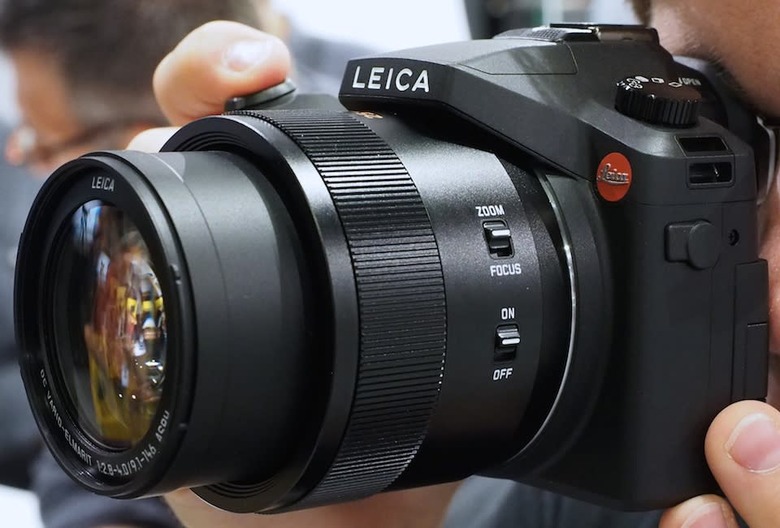
    We've seen plenty of interesting rebrands in past years. Leica's perhaps the most prolific manufacturer to redesign housings and jack up a camera's price, but Hasselblad is also guilty of trying to pass off a competitor's cam as its own, with the $10,000 Solar. Leica's own recreations are hardly as egregious -- select photographers certainly don't mind paying a few hundred dollars more for what's arguably a better-looking camera from a more premium brand, making this year's V-Lux and D-Lux a reasonable purchase for some. That first model is based on the Panasonic Lumix FZ1000, while the D-Lux is a deluxe version of the LX100, which squeezes a powerful Micro Four Thirds sensor into a surprisingly compact body.

    By Zach Honig Read More
  • Capture super-sharp shots with Leica's X point-and-shoot

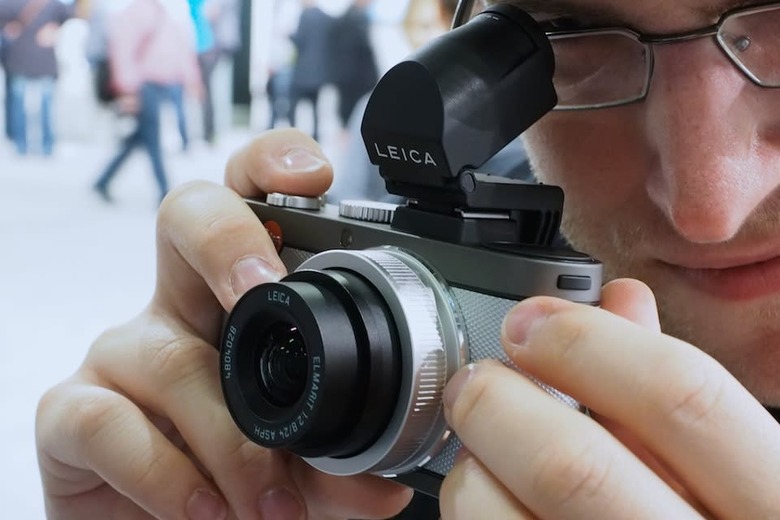
    Leica cameras are not without their critics, especially when it comes to pricing (which admittedly can be absolutely absurd at times), but the company's point-and-shoots are more affordable. Of course you'll still pay a significant premium for the Leica name, but if you have the cash to spare, there are some very capable cameras to choose from, including the latest X model we met at Photokina today. Like its predecessor, the X sports a large 16.2-megapixel APS-C sensor (the same size you'll find in most DSLRs), paired with a fixed 23mm f/1.7 lens, which provides a field of view equivalent to a 35mm lens on a full-frame camera.

    By Zach Honig Read More
  • Relonch camera case brings an APS-C sensor, f/2 lens to your iPhone

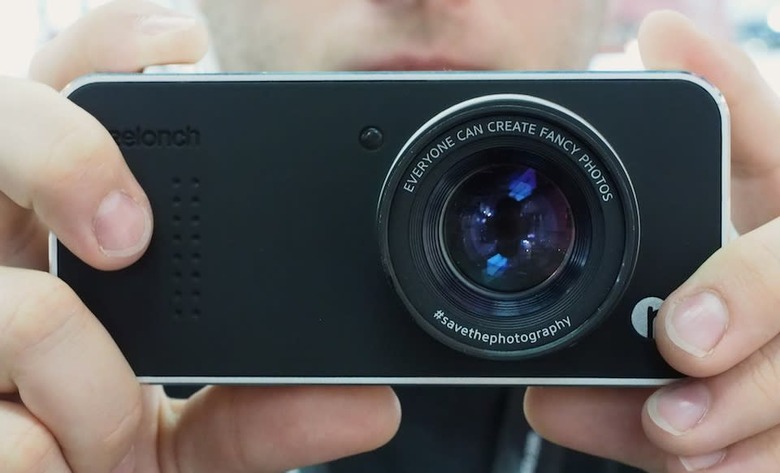
    "It would be really hard to make a trashy photo." That's the actual tagline for a company called Relonch, which just launched (correct spelling) a camera case for iPhone 5 and iPhone 6 at Photokina today. Normally we'd dismiss such a product as vaporware, but this could end up being a pretty nifty gadget, if it ever makes it to market. Once you slide your iPhone into the $499 jacket, you'll have access (via the Lightning port) to an APS-C sensor and a permanently affixed f/2 (or better) lens. The version above is just a mock-up -- we did see a working prototype (it performed very well), which is simply a hodgepodge of "parts from different cameras." The final version will also serve as an external battery for your smartphone, enabling more than four hours of use.

    By Zach Honig Read More
  • Leica's medium-format S shoots 4K video, 37.5-megapixel stills

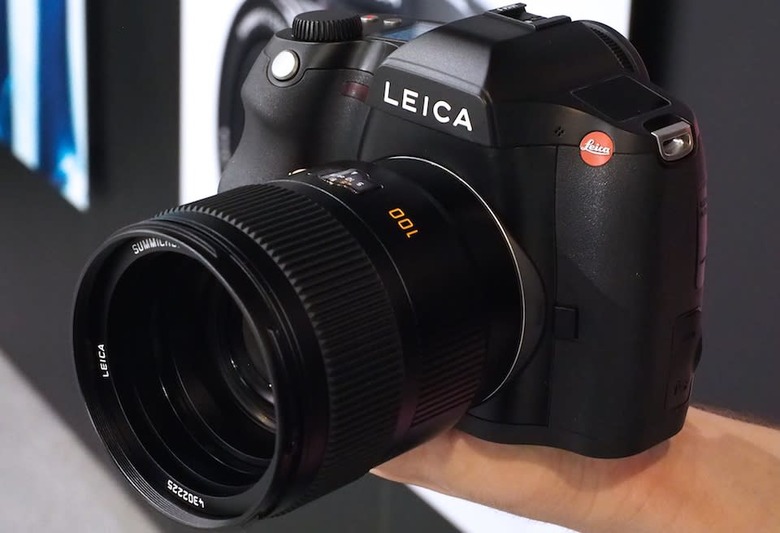
    Leica's ready to jump on the professional video bandwagon, releasing its 4K-capable S here at Photokina in Cologne, Germany. The 37.5-megapixel camera sports a medium-format sensor that's just a hair larger than full-frame, giving you a crop factor of 0.8x. It can snap 3.5 frames per second in a continuous-shooting mode, 1080/30p video and 4K clips at 24 fps. You can capture 42MB RAW files or 37.5, 9.3 or 2.3-megapixel JPGs, but if you're spending €20,230 ($25,400 in the US) on a camera (body only), you better be shooting RAW.

    By Zach Honig Read More
  • Leica's M-P rangefinder will run you $7,950, red dot sold separately

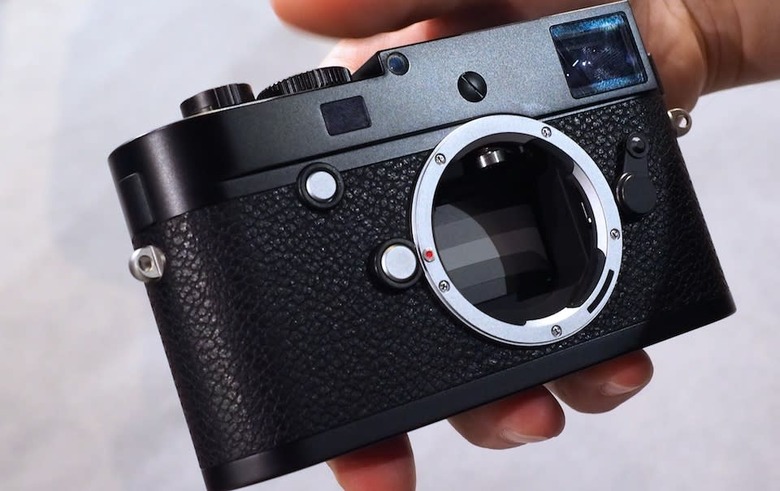
    Of all the new Leica models at Photokina, the M-P represents the slightest of tweaks. It's essentially a Leica M, but with a new 2GB buffer, double the size of the original. It's also missing the familiar red dot on the front, which the company says makes the cam "particularly discreet" (note: you're still shooting with a massive, very expensive looking Leica). It's available now in silver chrome or black for €6,700 in Europe or $7,950 in the US. Check 'er out below.

    By Zach Honig Read More
  • Meet the Leica X-E, an almost-affordable APS-C compact

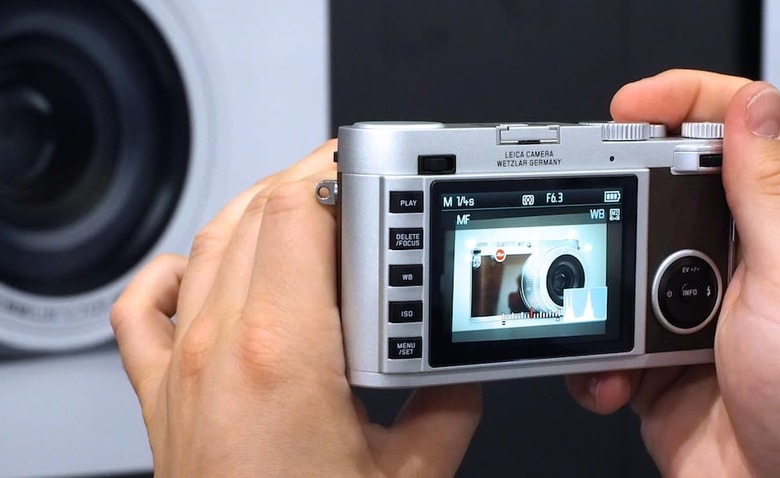
    Leica just released an update to its X2 point-and-shoot camera here at Photokina. The X-E has a look and feel that's very similar to its predecessor, with comparable specs as well. There's a 16.5-megapixel APS-C sensor that, like the X model also announced today, can capture images with a level of quality that rivals that of many DSLRs. What you can't do, unfortunately, is swap in a different lens -- there's a 24mm f/2.8 optic permanently attached, which is what you'd expect given the light weight and compact size, but if you need to get closer to your subject, you'll need to walk forward rather than zoom in.

    By Zach Honig Read More
  • Hands-on with Leica's super-rare $19,400 M Edition 60

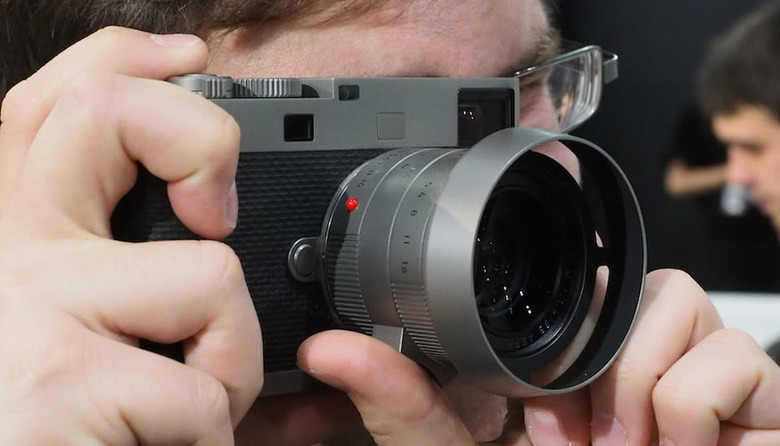
    As of this writing, 15,000 Euro is the equivalent of $19,400 -- a very reasonable exchange rate indeed, and a fair price to pay for a mid-range car or a year of college. Only a select few can justify handing over that sum for a digital camera, however, regardless of the exclusivity that comes in tow. Leica's counting on at least a few die-hard fans to fork over the cash, though, for the M Edition 60, a very special model created to celebrate the M system's 60th anniversary. Only 600 have been made, and each is numbered between 001 and 600. Most peculiar is what this camera doesn't include -- a display, menu system, electronic viewfinder or any indicators at all, besides a tiny red light that flashes when the SD card is in use.

    By Zach Honig Read More
  • Canon targets Sony's popular RX100 with PowerShot G7 X point-and-shoot

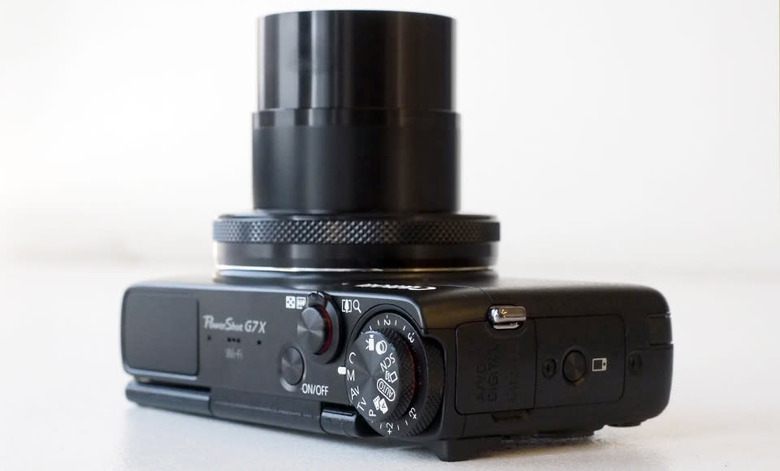
    When you're looking to buy a camera, the physical size of the sensor -- not the megapixel rating -- is what you want to keep an eye out for. The larger the better, of course, and while we may never see pocketable full-frame cameras with powerful zoom lenses, some manufacturers are getting close. Sony was the first such camera maker to debut a camera with a 1-inch sensor, the RX100, and now Canon's trying to reclaim some of that high-end point-and-shoot market share with a model of its own. The PowerShot G7 X is Canon's first 1-inch sensor camera, and while it costs a pretty penny ($700), you do get what you pay for.

    By Zach Honig Read More
  • The 7D Mark II is Canon's best DSLR without a full-frame sensor

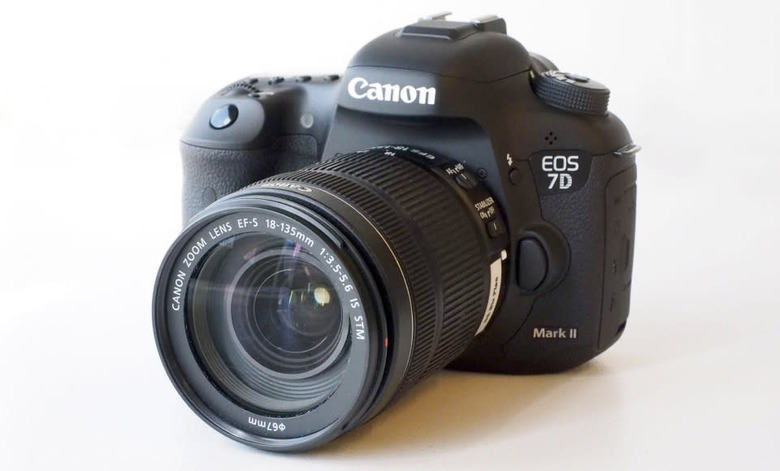
    The wait is over. Canon's long-anticipated EOS 7D Mark II is here, shipping in November for $1,799, without a lens. With a price tag that high, you'd think it'd be safe to assume that the company's consumer flagship sports a full-frame sensor. It does not. It does, however, represent an enormous step up from the original model -- the Mark II includes just about every feature a pro photographer (and video shooter) could hope for, excluding a 35mm sensor, of course, and integrated WiFi. Instead, there's a 20.2-megapixel APS-C CMOS sensor, which, despite a similar spec, is an improvement over what you'll get with the 70D. You can also take advantage of a new 51,200 top ISO and a 10 fps continuous shooting mode (at full resolution, of course), powered by the dual DIGIC 6 processors.

    By Zach Honig Read More
  • Canon's bringing back the square selfie cam with PowerShot N2

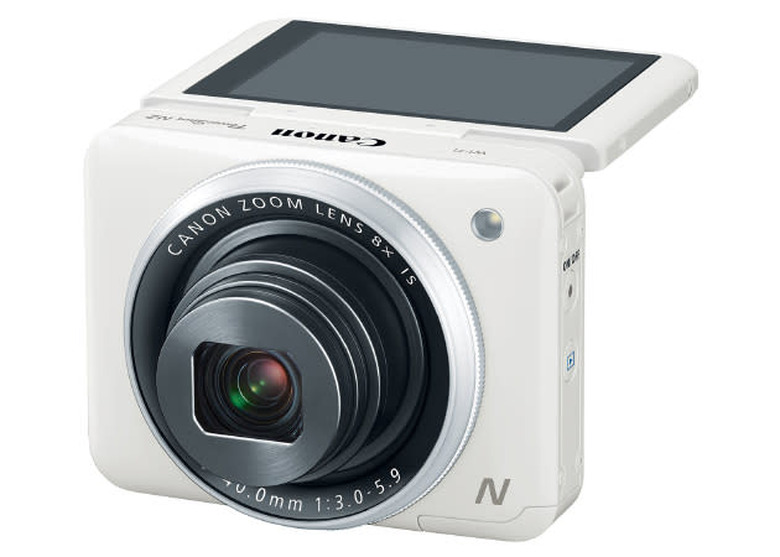
    Early last year, a Canon rep pulled out a point-and-shoot with a very peculiar design. Instead of the rectangular form factor we'd grown used to, this camera was square. The PowerShot N was designed to be held any which way, making it a good fit for both righties and lefties, but without any pronounced grip, it didn't feel quite as natural to hold. We were a bit relieved, then, when Canon debuted the N100 with a more familiar look and feel, but at Photokina, the company's returning to the original shape and size with the PowerShot N2. The N2 replaces the original N -- the N100 will remain on the market -- bringing a slew of new features for social sharers and video bloggers alike.

    By Zach Honig Read More
  • Canon's most powerful superzoom sports advanced video features, 65x lens

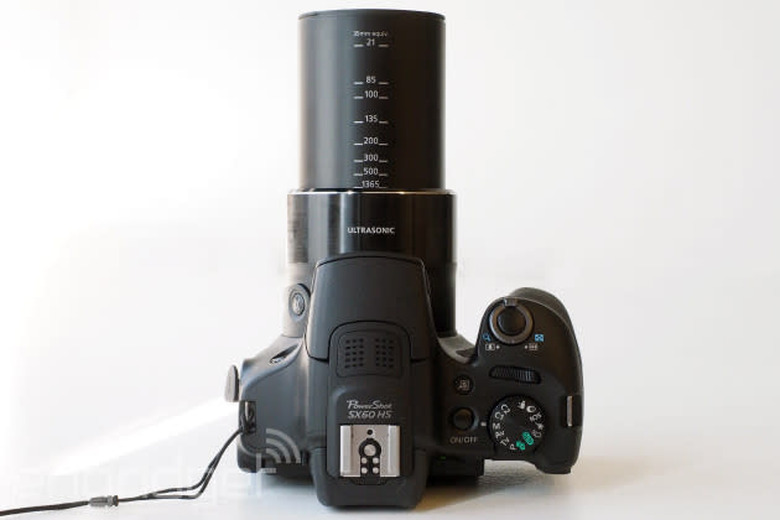
    If you need a 21-1365mm focal range in a single permanently affixed lens, man does Canon have the camera for you. The PowerShot SX60 HS, which replaces the SX50, sports a 65x optical zoom with an f/3.4-6.5 maximum aperture range and features to help you track distant subjects when you're zoomed all the way in. The camera's Advanced Zoom Framing Assist lets you select how much of a person you want to keep in the frame, and the camera will automatically zoom in and out to maintain that composition. The SX60 has an upgraded 16.1-megapixel 1/2.3-inch CMOS sensor, a DIGIC 6 processor, a 922k-dot viewfinder that flips out, up and forward, along with built-in WiFi and NFC.

    By Zach Honig Read More
  • This levitating Bluetooth speaker is the best we've seen

    When I met with OM Audio in Manhattan to check out what the company was calling the "world's first levitating Bluetooth speaker," I didn't bat an eye. I had never myself seen a levitating speaker before that day, and a thorough internet search turned up nil. As it turns out, a Taiwanese company has been showing off a very similar (albeit nonfunctioning) device for months. ASWY, based in Taipei, is here at IFA in Berlin demoing a production-ready version of its own speaker, which at this stage looks much more polished than the OM Audio prototype I saw last month. Audio quality is quite good, as well, and while a noisy trade show floor isn't the best place to test a speaker, it sounded better than the OM model I was able to experience in a silent room.

    By Zach Honig Read More
  • IRL: Olloclip's 4-in-1 photo lens for Galaxy S4 and S5

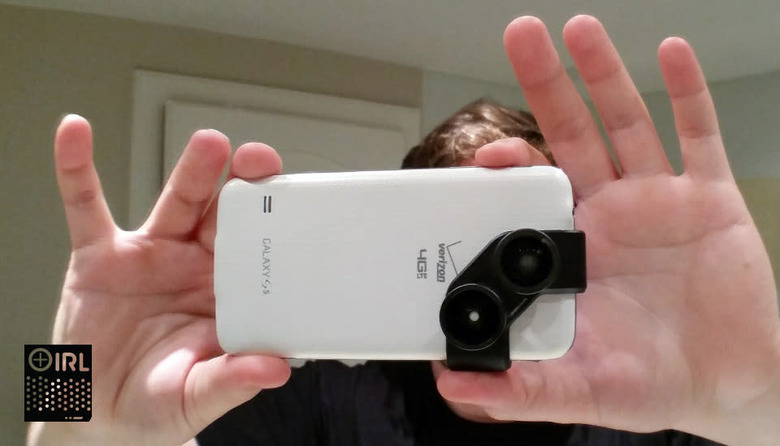
    We first met Olloclip's tiny pop-on camera lens more than three years ago. The iPhone accessory got its start on Kickstarter, in the crowdfunding site's infancy, and became our very first featured Insert Coin project. Today, it's a staple at the Apple Store and a slew of other retailers -- you can even pick one up at those Best Buy vending machines in the airport. Several more iPhone versions have since debuted, but we've never seen an Olloclip for Android smartphones, until today. The first Android versions are compatible with two recent Samsung flagships, the Galaxy S4 and Galaxy S5. Because photo effects are created using a physical lens rather than an app, Olloclips are designed for specific devices. If you don't own a Galaxy S4 or S5 (or an iPhone), don't lose hope -- we may see models for other handsets in the near future.

    By Zach Honig Read More
  • Boot content to any TV wirelessly with Screen Sharing for Lumia

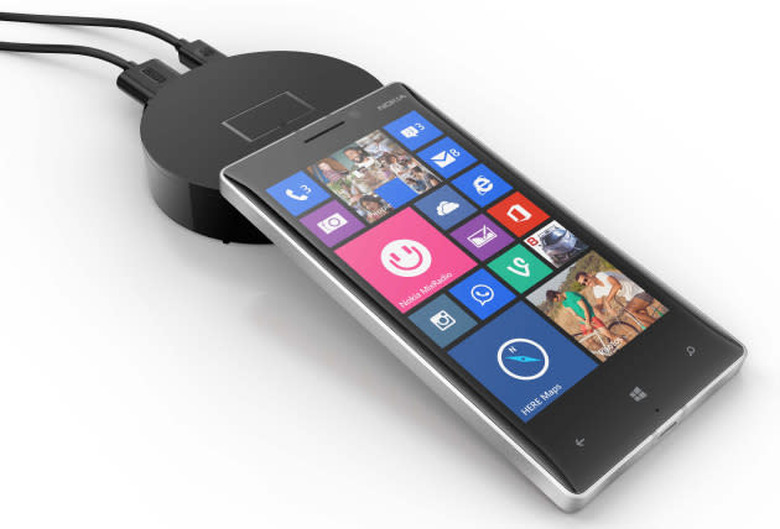
    In addition to a pair of smartphones, Microsoft announced a new screen-sharing tool for Lumia devices at the company's Berlin press event today. Screen Sharing for Lumia is compatible with any television or other display with an HDMI port. The compact $79/€79 box, which is powered by micro-USB and supports 1080p output, lets you mirror your Windows Phone's screen. It ships with an NFC "coaster" that lets you pair your handset without walking over to the box itself. The device will work with Lumias that support screen projection, along with WiFi Miracast products. It's expected to ship later this month.

    By Zach Honig Read More
  • Sony's Action Cam Mini packs just as much power in two-thirds the size

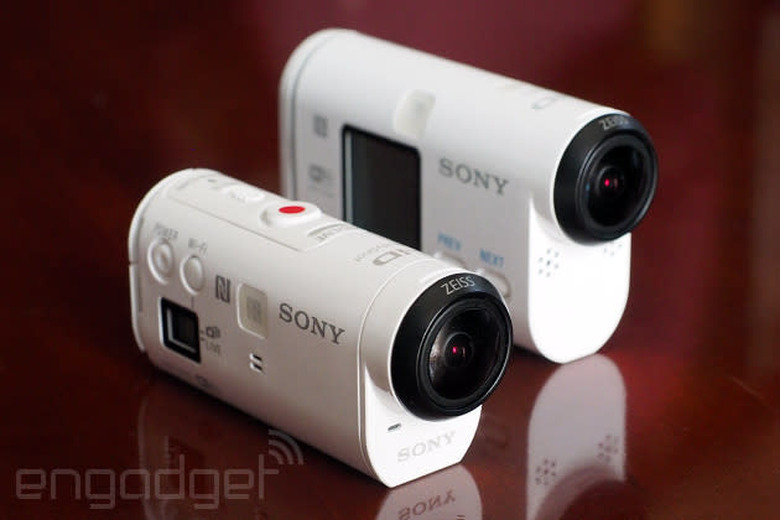
    While some users might not love everything about Sony's current adventure camera lineup, you can hardly fault the Action Cams for being too large. Still, when size and weight really matter, such as when you're mounting a camera on a helmet or a drone, it certainly wouldn't hurt to shave off an inch or two. That's exactly what Sony's done with its Action Cam Mini, which replaces the AS100V we first met at CES with a camera that's two-thirds the size. Fortunately, you won't have to compromise on image quality, and all of the former model's accessories work with the Mini, too.

    By Zach Honig Read More
  • Sony updates 'lens camera' lineup with QX30, interchangeable-lens QX1

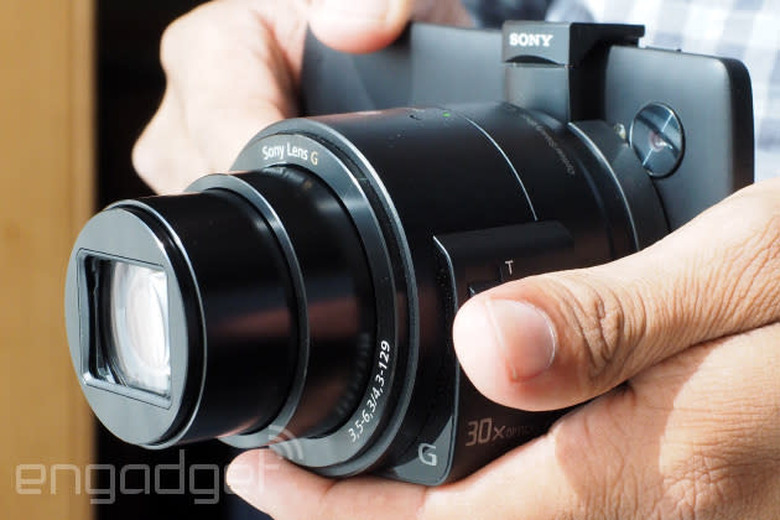
    At last year's IFA in Berlin, Sony announced its first two "lens cameras," a pair of point-and-shoot cams that clip onto your smartphone. You use your phone's display to control the camera, and while you can technically fire off shots using the integrated zoom toggle and shutter release, there's no built-in LCD. Given the limitations, they're not for everyone, but there's apparently been enough interest for Sony to keep the QX line going, with a 30x zoom version and a unique interchangeable-lens model that accepts any E-mount optic now making their debut here in Berlin.

    By Zach Honig Read More
  • Royal Caribbean's latest ship sports a robot bar, super-fast connectivity

    Assuming you weren't traveling on the Carnival Ecstasy or Crown Princess, your last cruise ship probably had flushing toilets and 24/7 electricity, but not much else in the way of tech amenities. Royal Caribbean's latest vessel, the Quantum of the Seas, promises so much more. We've already met the ship's Virtual Balconies, which use 80-inch displays to bring a live sea view to windowless staterooms, but the company just announced a slew of other features, including a new venue called Bionic Bar where you can place an order on a tablet and watch a robotic bartender mix up your concoction.

    By Zach Honig Read More
  • Acer's Chromebox CXI ships next month for $180

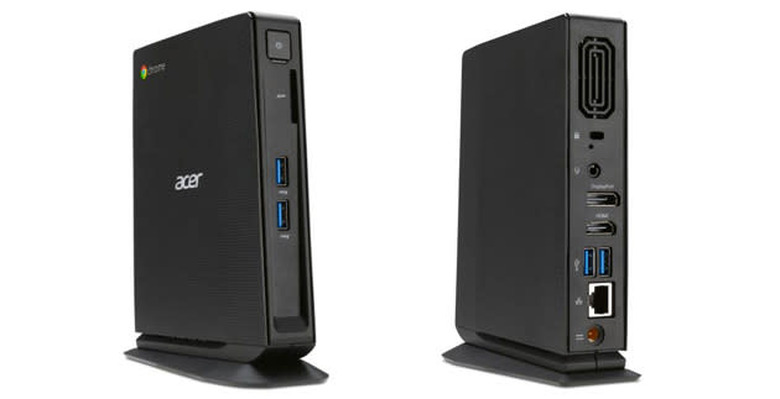
    Have a spare display sitting around that you want to turn into an (albeit limited) PC? You might consider picking up a Chromebox. The tiny low-powered machines, which run Google's Chrome OS, are best for basic productivity apps and content consumption, but if you don't need to do any complex processing, they might be a solid fit -- especially if you're on a very tight budget. Today, Acer announced a new model of its own, the Chromebox CXI. There's an Intel Celeron (Haswell) processor, a 16GB SSD, plenty of connectivity and support for two displays. One version includes 2GB of RAM and ships next month for $180, while a model with 4 gigs of RAM will run you $220. Both include a keyboard, mouse and mounting kit in the box.

    By Zach Honig Read More
  • Samsung USB cable lets you charge three mobile devices at once

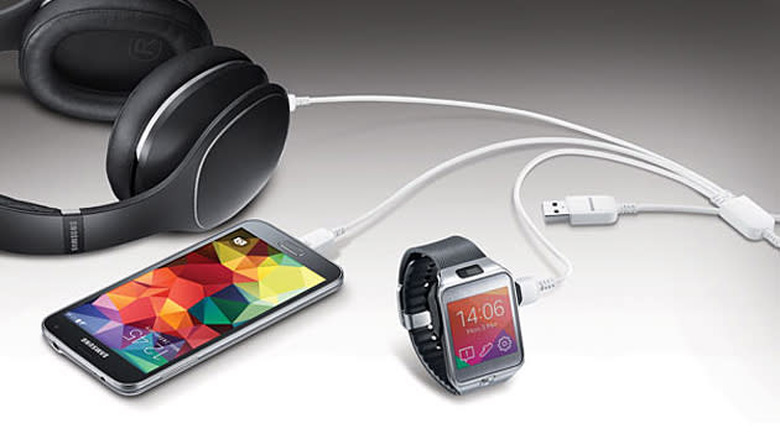
    If you've owned a handful of portable gadgets in recent years, you've probably managed to build up a healthy supply of micro-USB cables. Spending 40 bucks to acquire another might sound absurd -- unless this is the cable you're looking to buy. While a bit pricey, this Multi-Charging Wall Charger from Samsung packs three connectors at the tail end, letting you power multiple devices from a single USB port. There's a 2-amp charger included in the box, which outputs two amps of power when charging one device, one amp per device when you have two attached or 667mA each when you're using all three ports. Samsung hasn't announced a ship date yet, but you can pre-order the cable today.

    By Zach Honig Read More
  • Xbox One gamers could soon try before they buy with a 'Free Play Day' (update)

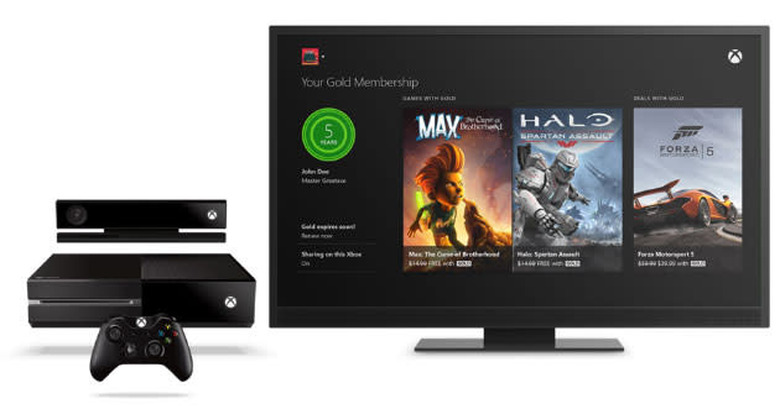
    At $60 per year, an Xbox Live Gold subscription isn't cheap, but Microsoft's working to make the all-access package a bit more attractive to gamers. The 'Games with Gold' offering that we first saw with Xbox 360 made its way to One as well, and now it appears that the company's latest console may soon get a second bonus feature. Xbox One beta users noticed a new 'Free Game Day' option this week, which enables 24 hours of access to select titles, giving you a chance to preview games before making a purchase. Max: The Curse of Brotherhood appears to be the first offering, and if an Xbox Support tweet is any indication, a broader rollout may be on the way very soon. Update: Microsoft tells GamesIndustry.biz that the tile was posted "in error" yesterday, and would only say that it's "constantly exploring different ways to offer more benefits to our Xbox Live Gold members." Our interpretation? It's not if, just when this kind of promo starts popping up regularly.

    By Zach Honig Read More
  • Sony Alpha 5100 is the smallest APS-C camera with a built-in flash

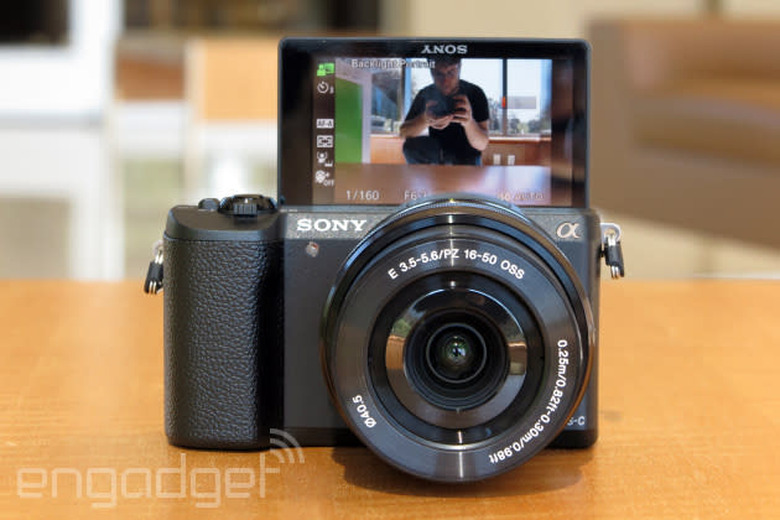
    If you've been holding out on purchasing an Alpha 6000 because you don't need an electronic viewfinder, Sony's got a mirrorless camera just for you. Internally, the Alpha 5100, which replaces the NEX-5T, is nearly identical to its pricier counterpart, with a 24.3-megapixel sensor and a BIONZ X processor. You also get a 16-50mm f/3.5-5.6 power-zoom lens, bundled with the camera for $700 ($550 for the body only), and the same hybrid focusing system, letting you acquire a subject in as little as 0.07 second. It excludes an EVF, but the A5100 does have a 921k-dot display (with touch functionality this time) that flips forward 180 degrees for self-portraits. There's also built-in WiFi, XAVC S video capture and a top sensitivity of ISO 25,600. It ships next month in black and white.

    By Zach Honig Read More
  • The death of the original jumbo jet, Boeing's 747-400

    Later this month, Cathay Pacific's 747 will fly from San Francisco to Hong Kong for the very last time. It's a story we're hearing from nearly every airline still flying the most recognizable passenger jet in aviation history -- rising fuel costs are prompting carriers to ground their fleets, opting to shuttle passengers in more modern (and efficient) airliners instead. Hundreds of 747s still take to the skies every day, but their numbers are dwindling, with Boeing's 777-300ER and 787 Dreamliner, as well as the enormous Airbus A380, picking up the slack. The flagships of yesteryear now litter the desert, with several sites in California serving as a permanent resting place for the plane that was once known as the Queen of the Skies, the Boeing 747-400.

    By Zach Honig Read More
  • Harvard provides a glimpse at how the robot plague will overrun us all

    Think that fancy 3D printer of yours is a technological marvel? Well, it's got nothing on these tiny coin-sized robots. Computer scientists at Harvard University have built an army of 1,024 bots that collaborate to create various shapes, much in the way ants link to form bridges or birds fly in formation. The Kilobots, as they're called, communicate using infrared light, moving from one precise location to another based on issued commands. To form each object, four robots mark the origin, then each secondary Kilobot very slowly moves into place based on the transmitted image -- the short GIF above represents several hours of work. Of course, that's simplifying the process significantly, so head on over to Harvard's site for all the juicy details.

    By Zach Honig Read More
  • YouTube refreshes television app for set-top boxes, game consoles and smart TVs

    If you use YouTube's app on your TV, get ready for a new UI (finally!). The app has a much cleaner look now, in line with Google's Material Design, and includes features that you're used to seeing on your computer, smartphone and tablet, such as a guide that pops up on the left side, latest videos from your subscriptions and curated channels. The refreshed interface should pop up soon -- it's available now with Xbox One, and Google plans to roll it out to other devices within the next few weeks.

    By Zach Honig Read More
  • Motorola will unveil new smartphones and the Moto 360 on September 4th

    With Samsung's Note 4 announcement on September 3rd and Apple's iPhone launch expected a few days later, September is shaping up to be a busy month when it comes to smartphone (and wearable) unveils. Motorola's just sent out invitations for its own launch in Chicago, scheduled for the day after Samsung's big event in Berlin. Of course, we don't know exactly what to expect, but given the "choose your own adventure" invite, it looks like two smartphones (perhaps the X+1 and a new G model), Moto 360 and an in-ear wearable (Bluetooth headset?) are on order.

    By Zach Honig Read More