Skip to Content

AOL Tech

Cell posts

Ukraine war memorial given eternal LED torch, cell antenna

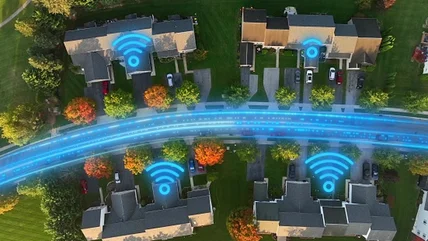
An eternal flame that once blazed via good old fashioned science has now been given a new lease on life thanks to modern technology. This Cherkassy, Ukraine war monument, erected in honor of fallen World War 2 soldiers, had been sitting extinguished given the price of natural gas after the fall of the Soviet Union. Now, though, the bowl has been gifted with a LED marquee simulating a flame, which covers up its alternate use as a cell tower. Sure, beauty's in the eye of the beholder and we're fairly certain this hasn't been accepted with universal approval, but if you ask us, and admittedly we're biased, the more LEDs the better.

[Via Hack a Day]

Toshiba Cell Regza 55X1 and Regza Next concepts hands-on (video)

Now that the Cell-powered cat's out the bag, we had a chance to get up close and personal with a number of its 55-inch Cell Regza 55X1 LCD TVs on hand at the CEATEC show floor. It's certainly not the thinnest flat-screen panel, but the screen was crisp and colors bright. The Cell and most of the heavy duty components were housed in a separate Cell Box -- frankly, it was disappointing just how large the box was, out-sizing even the original PlayStation 3. For reasons that weren't quite made clear to us, the 3TB of storage were divided among four separate drives, two 1TB and two 500GB. None of them are accessible, leaving you only an external USB drive as an expansion option. Frankly, the real draw here (at least the multitaskers inside of us) is eight-window display function and hyper-fast channel scrolling, which in our time with the TV worked great without a hitch.

Also on hand were the four Cell Regza Next concept models. There's not much to say about the entertainment server and the all-in-one, but we do have to give credit to the 4K2K TV for the expected visual quality. The 3D unit was showing off a hands-only motion-controlled user interface, demonstrated only by a Toshiba rep, that seemed to have a few technical hiccups. As we've said before (Natal, anyone?), waving your arms is a fun concept, but here we're not yet sold on the usefulness over novelty of it -- something Toshi can mull over between now and at whatever point in the future it plans on upgrading it beyond concept phase. Video of the 55X1 and the conceptual 3D UI after the break.

Toshiba details Cell Regza LCD TV, coming December to Japan (update: video!)

It's a day before CEATEC officially kicks off, but Toshiba's getting a head start on the news, dishing out all the deets on its Cell-powered Cell Regza LCD TV, now officially due out in Japan in early December. The 55-inch, 240Hz display boasts a mighty impressive 5,000,000:1 contrast ratio, self-congruency technology for improved picture detail on the edges, a peak luminance of 1250cd/m², and LED backlits dividing the screen into 512 distinct areas. A 7-speaker sound bar lies just below the display. Want more? How about eight-window simultaneous multi-display, an Opera-based web browser, DLNA, and a 3TB hard disk drive, 2TB for "time-shift" recording recording up to 26 hours of programs, up to eight channels simultaneously. There's a sizable box on display, too, which seems to be where the Cell hardware is being housed. Curious about price? If we heard correctly, the retail price is expected to be around 1,000,000 yen, or around US $11,140. We just heard their sales target is leaning on the conservative side, about 1,000 units pushed each month.

If that's not forward-thinking enough, Toshi's also outlining its future concepts, dubbed Cell Regza Next. Those four include a 3D set, a 4K2K version that upcoverts 1080p to 3840 x 2160 resolution, a 46-inch model integrating its Cell Box dedicated TV tuner and HDD, and a 37-inch that works as a home network server. It looks like we'll be getting some hands-on time with the 55X1 shortly, but in the meantime, one more pic and video after the break.

Scientists set lasers on cells, end up playing Pong


Researchers have devised plenty of innovative ways of viewing living cells, but their options are a bit more limited when it comes to actually manipulating cells without, you know, destroying them. Scientists at the University of California, Los Angeles have now come up with one promising new possibility, however, using lasers instead of the fixed electrodes more commonly used today. Those, as you might expect, don't hit the cells directly, but are rather used to shine light on a "high-tech Petri dish," which has a grid of light detectors built into its floor and sets of transparent electrodes on the top and bottom. When lit up in a pattern of a circle or square, the cells can then be isolated and moved about at will or, conceivably, even be used for a game of Pong. Check out the video after the break to see for yourself.

PS3 Slim is cheaper, yes, and new Cell processor makes it faster, maybe

If you've been on the fence with that new console purchase then maybe this bit of information will push you over. Not only is the $299 PS3 Slim a skinnier version than its fat bro, it also features a new upgraded Cell processor (jointly developed by IBM, Toshiba, and Sony), according to an IBM spokesman, that uses smaller, more efficient, and less costly 45-nm processes first hinted at back in February of 2008. IBM doesn't specify the clock speed. The 45-nm Cell is 34 percent smaller and requires 40% less power than the original 65-nm processor according to earlier accounts. Any changes to the graphics in the PS3 Slim are still unknown -- the GPU is simply listed as the NVIDIA RSX like the ol' chubster before it. Nevertheless, the IDG New Service says the PS3 Slim "adds hardware enhancements that make it speedier."

What's odd is that Sony didn't make any claims of the PS3 slim being faster at launch and the "boost" in processing speed in the IDG article quoting IBM doesn't seem to come from the IBM spokesman. As such, we're not sure if this is just an improvement in performance-per-watt or something the gamer will actually notice during play. We're still working on the review but rest assured, that's one question we're determined to answer.

Sony's Stringer dismisses PS3 price-cutting threats by noisy Activision CEO

We can attest that Howard Stringer, CEO of Sony, is a pretty nice guy. But all the PS3 price-cut chatter from industry analysts and gaming execs seems to have the man riled as he tries to keep Sony afloat. Responding directly to Robert Kotick's threat to stop developing Activision titles on the PS3 (and PSP) due to the console's relative high price, Stringer told Reuters, "He likes to make a lot of noise. He's putting pressure on me and I'm putting pressure on him. That's the nature of business." When asked about the logic of not cutting prices, Howard said, "I (would) lose money on every PlayStation I make -- how's that for logic." True, until the 45nm Cell processor launches allowing for a cheaper, cooler running slim PS3 later this year, right Howie... wink, wink?

[Via GameDaily]

WinFast HPVC1100 is world's first external SpursEngine encoder


Toshiba's Cell-based SpursEngine HD video co-processor has made plenty of appearances within monstrous gaming machines, but this marks the very first time where it has stepped out of the laptop chassis and into a portable enclosure. Granted, the language barrier is killing us here, but it seems as if the Leadtek WinFast HPVC1100 wraps a SpursEngine encoder into an on-the-go solution that can be lugged around with a standard laptop in order to churn through video while on set, in the field or on the road. Other specs include 128MB of RAM, a PCI-Express slot and a weight of 1.54 pounds; there's no word just yet on pricing or availability. One more shot is after the break.

[Via Akihabara News]

World's smallest periscope provides multi-dimensional view of cells

We never thought we'd say this, but the standard microscope's day may be coming to an end. Okay, so maybe that's a stretch, but a new device conjured up by scientists at Vanderbilt University sure could stand in as a suitable and deserving replacement. In what's being described as the world's smallest version of the periscope, the so-called mirrored pyramidal wells are being used to allow researchers to see several sides of cells simultaneously. The pyramidal-shaped cavities are molded into silicon "whose interior surfaces are coated with a reflective layer of gold or platinum," and when a cell is placed inside, it gives Earthlings a magical multi-dimensional view. It's said that this technology is actually stupendously inexpensive compared to other methods of 3D microscopy, and according to Vandy's own Ron Reiserer, this "could easily become as ubiquitous as the microscope slide." Them's fightin' words, no?

[Via Physorg]

David Reeves drops hint of Sony's shift to 45nm PS3s

It's no secret that Sony has been eyeing a shift to 45nm Cell processors in the PS3 sooner or later, but the always talkative David Reeves (Sony Europe's president) has now finally dropped a bit more specificity on the matter, while naturally still leaving the company quite a bit of wiggle room. Speaking to The Guardian newspaper, Reeves said that Sony is "always looking at ways to reduce costs," and that one of those measures is "replacing the current 65 nanometer Cell chip with a 45 nanometer one probably in middle of year." Reeves also expectedly talked up the PS3's multimedia capabilities, which he says will help the PS3 compete better with the Xbox 360 in the short term without the need for drastic price cuts, although he doesn't seem to complete rule out the notion of some increased affordability before the end of the year, saying "it will make progress" in that direction, no doubt with the aid of that aforementioned 45nm Cell processor.

[Thanks, Khattab]

Book details how Sony paid for Xbox 360 dev, let Microsoft borrow its car, acted like a doormat

This year we've seen the PS3's Cell processor pitch in and help break the petaflop barrier, exploit a major security hole in SSL encryption and enable adolescent hijinks on PlayStation Home. Obviously, this is one serious piece of kit. According to The Race For A New Game Machine, written by two of the folks responsible for designing the thing, the Cell (a partnership between Toshiba, Sony and IBM) was the product of a deal that opened the door to IBM selling key parts of the chip to Microsoft before they had even finished building it -- even though this was clearly not part of the plan. Essentially, Sony's R&D money was spent creating a component for their rival, helping the Xbox 360 make its launch date of November 2005, while the PlayStation 3 was pushed back a full year. It seems somewhat fitting that the troubled game system should have such dysfunctional origins, no?

[Via PS3 Fanboy]

PlayStation 3 used to hack SSL, Xbox used to play Boogie Bunnies


Between the juvenile delinquent hordes of PlayStation Home and some lackluster holiday figures, the PlayStation has been sort of a bummer lately, for reasons that have nothing to do with its raison d'etre -- gaming. That doesn't mean that the machine is anything less than a powerhouse -- as was made clear today when a group of hackers announced that they'd beaten SSL, using a cluster of 200 PS3s. By exploiting a flaw in the MD5 cryptographic algorithm (used in certain digital signatures and certificates), the group managed to create a rogue Certification Authority (CA) which allows them to create their own SSL certificates -- meaning those authenticated web sites you're visiting could be counterfeit, and you'd have no way of knowing. Sure, this is all pretty obscure stuff, and the kids who managed the hack said it would take others at least six months to replicate the procedure, but eventually vendors are going to have to upgrade all their CAs to use a more robust algorithm. It is assumed that the Wii could perform the operation just as well, if the hackers had enough room to spread out all their Balance Boards.

[Via ZD Net]

Leadtek intros SpursEngine-packing PCI-E card


Well, it looks like Toshiba isn't just keeping its Cell-based SpursEngine chip confined to its laptops and super-resolution DVD players, as Leadtek has now also taken the wraps off a PCI-E card that'll let you add some of that "faster than real-time" HD video transcoding to your desktop PC. Dubbed the WinFast PxVC1100, the card promises to encode and decode H.264, MPEG-2 and MPEG-4 video with ease (and entirely in hardware), and it includes 128MB of 1.6GHz XDR memory to aid in the process. Just don't expect it to come cheap, as the card's apparently set to demand ¥30,000 (or $286) when it hits Japan later this month.

[Via Custom PC]

Sony and Toshiba to begin mass producing 45nm cell processor in 2009 -- cheaper, slimmer PS3s to come?

Japan's Nikkan is reporting that Sony and Toshiba will begin mass production of the 45nm Cell processor in 2009 -- not this autumn as previously rumored. The smaller chip which cost less than the current 65nm Cell to manufacture also require 40% less power to run. This opens the door to possible price drops on existing PS3 consoles in 2009 as well as slimmer, cooler running rigs should Sony decide to refresh the industrial design.

Video: Toshiba's gesture control coming to its cell-based TVs?


Remember that Qosmio G55 laptop with gesture control? Yeah, the one with the Cell-based SpursEngine under the hood. Well it looks like Tosh is bringing that so-called "natural" gesture input to its future cell-based televisions. Judging by the latest video alone, the gesture control seems more at home on the big-screen TV than smaller-screened laptops that require a higher degree of precision and closer viewing proximity. Demonstrated on a prototype, Toshiba hints that the tech might come to future Cell-based TVs -- interesting what with the cell-based ZF televisions already announced for Europe. While we find pushing buttons on a remote about as natural (and lazy) as it gets, here's hoping for this arm-flailing gesture control on future Toshiba TVs just for the nerdiness of it. Video of the G55 gesture input as well as the prototype television show at IFA after the break.

[Via AVING]

Multitouch Oy demos Cell multitouch display


Microsoft had better hurry and get more than one Surface rig out on the market, because there are plenty of other companies working on large-format multitouch hardware -- the latest is Finland's Multitouch Oy, which recently demoed its Cell display for jkkmobile. Just the usual photo pinching demo, but it's running at an impressively fluid 60fps on desktop hardware, even with multiple users. Multitouch Oy says it'll run about $7,000 for a 32-inch model when it hits -- yeah, we'll stick with the DIY kit for now. Video after the break.

[Via jkkmobile]
Zune HD ExposedHTC Hero: Android Evolved
Follow us on TwitterEngadget Video


AOL News

Joystiq

Download Squad

TUAW

Daily Finance

Asylum

Autoblog

Switched.com

FanHouse

Autoblog Green