telepresence
Latest
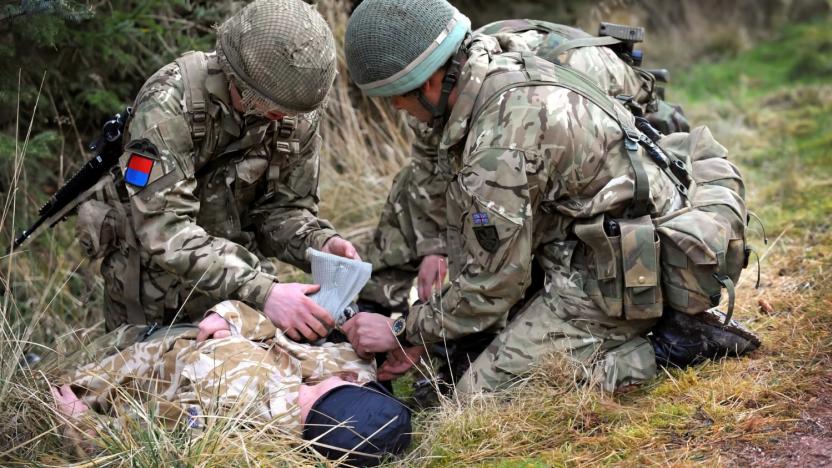
VR-controlled robots are being designed to treat injured soldiers
UK researchers envision a future where medical technicans send telepresence robots into harm's way.
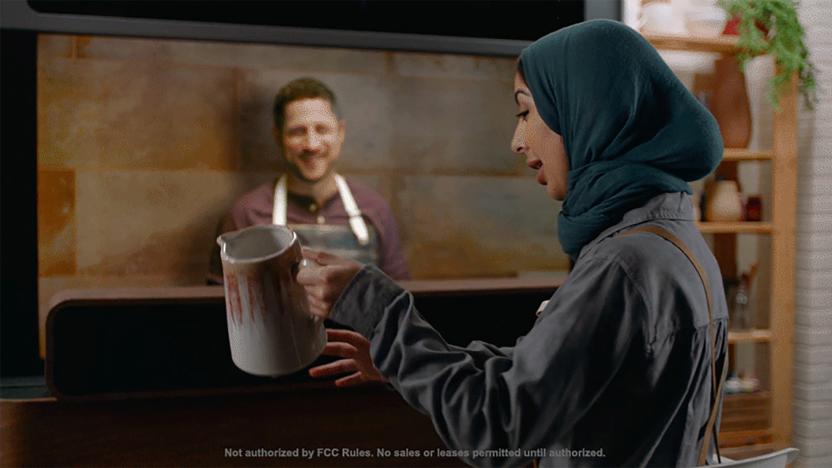
Google will soon test Project Starline video chat booths in the real world
Google now plans to test its huge video chat booths in real life with companies like T-Mobile and WeWork.
Hitting the Books: The case against tomorrow's robots looking like people
In the excerpt below from 'Human-Centered AI' professor emeritus at the University of Maryland, Ben Shneiderman, examines the pitfalls of our innate desire to humanize the mechanical constructs we build.
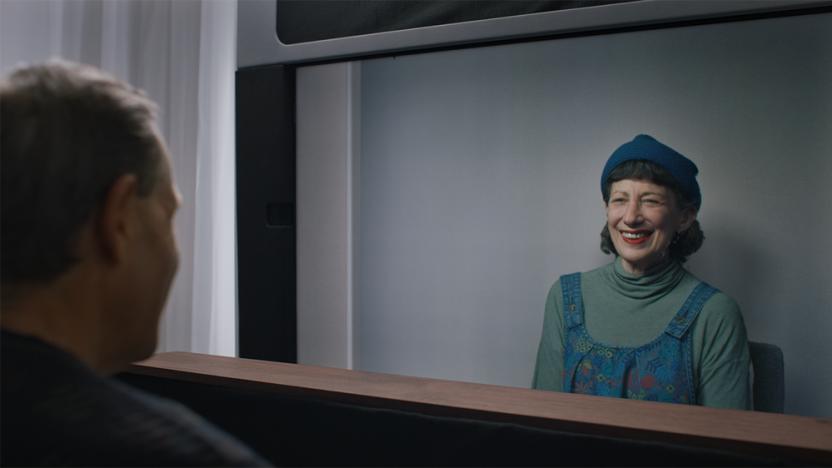
Google’s Project Starline is a ‘magic window’ for 3D telepresence
Google's Project Starline uses a combination of specialized hardware and computer vision technology to create a “magic window” for immersive video chat without a headset.

This cardboard Wolfenstein 3D setup invites you to punch Nazis remotely
A smartphone in a cardboard case is driving around punching Nazis, and you can control it over the internet.

Japanese airline's robots could let the elderly 'travel' from home
If your inability to travel prevents you from embarking on a dream vacation, a robot might one day stand in your place. Japan's All Nippon Airways has unveiled plans to deploy 1,000 "Newme" telepresence robots as surrogates for people whose health prevents them from traveling far. It could attend a big game in your place or go shopping on your behalf, ANA said.
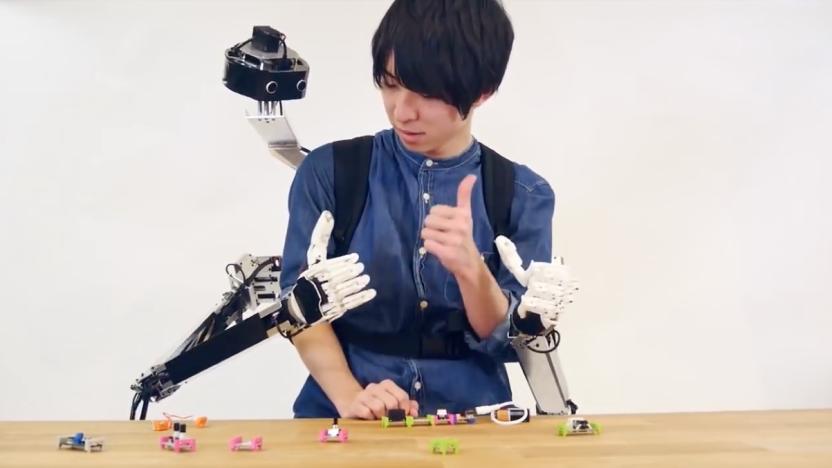
This telepresence robot offers a remote-controlled set of extra hands
Researchers at the University of Tokyo and Keio University have created a robotic system called Fusion that's worn on a user's back and operated remotely. Fusion is a telepresence robot with two arms and a head and it can allow a remote operator to not only see what the wearer sees, but also manipulate the robot's arms or use the robot to move the wearer's arms. Yamen Saraiji, a researcher on the project, told The Verge that Fusion could be used, for example, by an expert to "guide new practitioners on how to operate certain instruments or to assist them remotely without the need of their physical presence."
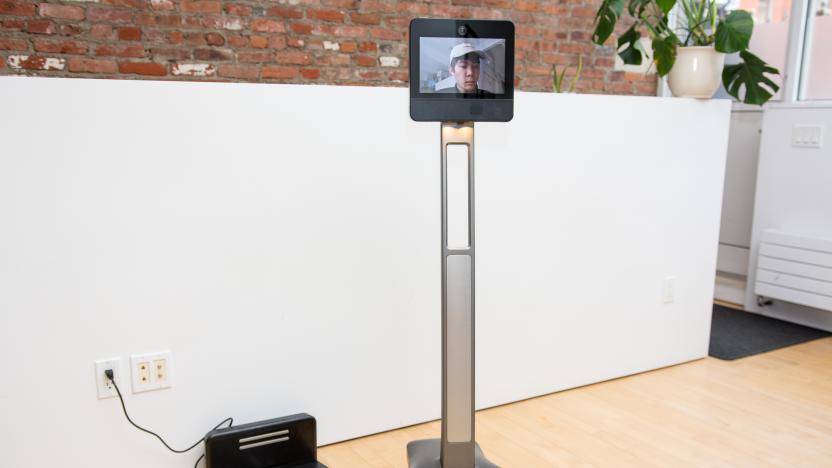
The best telepresence robot
By Patrick Austin This post was done in partnership with The Wirecutter, a buyer's guide to the best technology. When readers choose to buy The Wirecutter's independently chosen editorial picks, it may earn affiliate commissions that support its work. Read the full article here. After spending 20 hours researching telepresence robots and testing two of the most promising models in office and home settings, we don't think these devices are ready for prime time. But if you want a telepresence robot to give remote employees a physical presence in your office, the Suitable Technologies Beam Enhanced is the only bot that's reliable and user-friendly enough to consider.

How about a nice hot cup of virtual tea?
Electronics company ALPS tests (and manufactures) all kinds of things. But its virtual cup, made possibly by haptic technology and heat transmission, is the electronics manufacturer at its weird best. The cup, which is the size of a typical tumbler, is able to transmits a material's tensile strength and even the temperature of your beverage of choosing. That is, as long as it's cold water in a plastic cup or hot tea in a mug. As you tilt it, you feel the weight of the cup shift, and hear the water slosh around. As Engadget's Deputy Tea Editor, I can confirm that the effect is... freaky.

Watch Snowden talk 'Snowden' with Oliver Stone next month
NSA whistleblower Edward Snowden's telepresence world tour has another stop: a conversation following an early screening of the upcoming Oliver Stone biopic, Snowden. The Oscar-winning director will also be a part of the fireside chat, but rather than beaming in from Moscow, according to Deadline he'll be joining from New York. That, in a nutshell, is the difference between being wanted by the federal government and making a movie about someone wanted by the federal government.

BuzzFeed and Washington Post turn to robots for RNC coverage
Both the Washington Post and Buzzfeed have sent robots to cover the Republican National Convention in Cleveland. Call it forward thinking, call it a gimmick, inventive, desperate... doesn't matter. But it's happening, and both outlets couldn't be prouder of their efforts to modify their news gathering process and bring additional interactivity to their reporting.

Double Robotics turns its telepresence robot into a VR rig
There's one big problem with trying to capture virtual reality video while moving... those pesky humans. Even if you have stabilizing gear, the person carrying the camera will still limit what and how you shoot. Double Robotics has a simple answer to that, though: its newly-launched 360 Camera Dolly robot transforms the company's telepresence bot into a remotely controlled, silent VR camera rig. If you want to record a cinematic tracking shot or college campus tour, you don't need any people or noisy equipment on the scene.

Mind-controlled robot gives the disabled a taste of home
Brain-controlled robot limbs have already helped the disabled gain some mobility, but full-fledged robots have proven elusive: how do you use thoughts to steer a free-roaming machine? Swiss researchers think they have the answer. They've developed a mind-controlled telepresence robot that lets those with motor disabilities travel when it would otherwise be impractical. It's ultimately a laptop on a pedestal, but it uses clever semi-autonomous software to take the hard work out of controlling where the robot goes. You only have to don an EEG-based cap and imagine moving your hands or feet -- the robot plots a path based on your commands, and avoids obstacles all on its own.

Getting out of the garage and into VR with 'Dungeons and Dragons'
When I was a kid, my best friend's garage was a magical place. My friends and I would gather around a dirty table on cold winter nights, huddled between unused sports equipment and the family's spare TV, to kill monsters with dice. It was where we played Dungeons & Dragons. Then I grew up; my friends grew up. We all got jobs and moved away. Now all the old building does is hold cars. Over the years, our group has tried to recreate our adventures over the phone, through online chat programs and even over Skype, but nothing ever felt right. Tabletop gaming is a social activity that demands a sense of presence, which makes playing Dungeons & Dragons across state lines really hard. Recently, a company called AltspaceVR invited me to try an option I hadn't considered before: Playing D&D in virtual reality. Believe it or not, it might actually work.

NASA Spacebot, what big eyes you have
Space isn't exactly the safest of places for squishy meatbags like us, what with the lack of atmosphere and all. But when satellites in orbit break, somebody's got to fix them. That's why NASA is developing a robotic remote viewing system called the VIPIR (Visual Inspection Poseable Invertebrate Robot). It leverages an articulating borescope as well as a zoom-lens camera to help Earth-bound engineers troubleshoot external issues aboard the ISS, launch vehicles and satellites. NASA is currently in the second phase of operational testing with the VIPIR. Eventually the space agency hopes to eventually pair these eyes with Dextre, Canada's dual-armed spacebot that is currently serving aboard the ISS.

President Obama welcomes telepresence robots into the White House
If you can't greet the president in person, don't worry... as of now, you can send a robot in your stead. President Barack Obama has welcomed a telepresence robot into the White House for the first time, letting Disability Visibility Project founder Alice Wong attend a celebration and say hello to both Obama as well as Vice President Joe Biden. It's not going to replace a handshake and a photo op, but it beats staying at home. It certainly won't be shocking if you see more of these robotic stand-ins at 1600 Pennsylvania Ave. in the future -- they could help dignitaries show up at important events when traveling to Washington just isn't an option. [Image credit: Pete Souza, Instagram]

DORA offers a realistic telepresence experience through Oculus Rift
Many commercial telepresence robots are merely screens or iPads on moving platforms. DORA (Dexterous Observational Roving Automaton), however, promises to make users feel like they've been transported to another location when it does become available. The system was created by a team of University of Pennsylvania roboticists who want to provide people a more immersive telepresence experience without draining their bank accounts. Their robot is paired with an Oculus Rift headset, which can track the user's head movements and orientation, whether up/down, left/right or forward/backward. That data is wirelessly transmitted to the robot's Arduino and Intel Edison microcontrollers, prompting its camera-equipped head to follow the user's movements.

Scientists want to fight the Ebola outbreak using robots
Outbreaks of lethal viruses like Ebola are bad enough by themselves, but they're made worse by having to send in aid workers -- these people can quickly become victims, no matter how careful they are. To eliminate that risk, both the White House and a trio of educational institutions are holding workshops on November 7th where scientists will discuss using robots to tackle the current Ebola crisis. The goal is to minimize physical contact whenever possible while keeping patients and families in touch. At a basic level, they'd like machines to disinfect areas and deliver supplies. Telepresence robots, meanwhile, could both let people visit patients without putting themselves in danger.

Aquarium of Boise gives the internet control of a tank-dwelling submarine
Maybe you like swimming. Maybe you like going to the aquarium. Maybe you'd like to do both without leaving your house. Now, you can: a new exhibit at the Aquarium of Boise allows anyone with an internet connection to take a virtual tour of one of its largest fish habitats using a remote controlled submarine. The telepresence sub can be controlled from the aquarium's webpage using either a computer keyboard or clicking on-screen controls. It works okay, but there's a noticeable delay: we had a hard time getting the LiveDiver sub to look at much else besides a wall. Part of this could be the tank's regular inhabitants: the aquarium says that Letterman, a gap-toothed mappa puffer fish, has taken to chewing the submarine's tether, disrupting service several times. Still, it's a neat exhibit and (provided Letterman hasn't fouled things up recently) you can try it out for yourself at the source link below.

Look who's talking: The birth of the video phone
The videophone was always the obvious next step in the evolution of the telephone. It's a concept that has spent decades in development. And when it finally arrived, it looked a bit different than had always been imagined. Follow along, as we explore the bumpy road that led to those FaceTime and Google Hangout sessions you enjoy on your device of choice today.


