nec
Latest
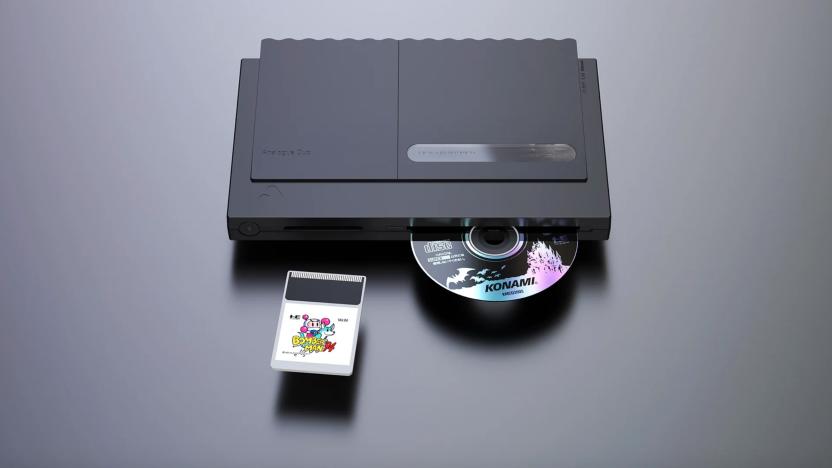
You can preorder Analogue’s TurboGrafx-inspired Duo console this Friday
Analogue’s universal TurboGrafx-16 retro console, the Duo, will finally be available for preorders later this week, on May 19th. The company noted that preorders begin sharply at 8AM PDT. The updated price for the console is $250.

Lenovo Japan president weighs in on how weird concepts make it to market
We've previously established that the NEC Lavie Mini -- that 8-inch laptop that doubles as a gaming machine -- is a charmingly weird concept that stands a solid shot making it production.
Presenting the Best of CES 2021 finalists!
Here are the finalists for the official 2021 Best of CES Awards.
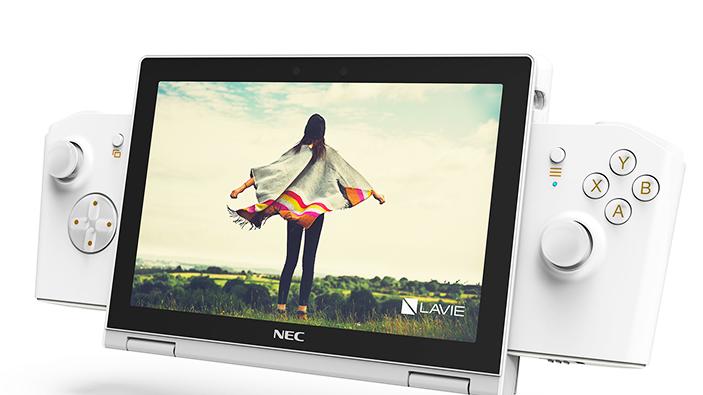
The Lavie Mini is a modern netbook that doubles as a game console
Enter the NEC Lavie Mini: a sort of modern take on the classic netbook that, with the right accessories, doubles as a Switch-style game console. The jury’s still out on how usable the Lavie Mini will actually feel because — again — it only exists as a protoype right now.
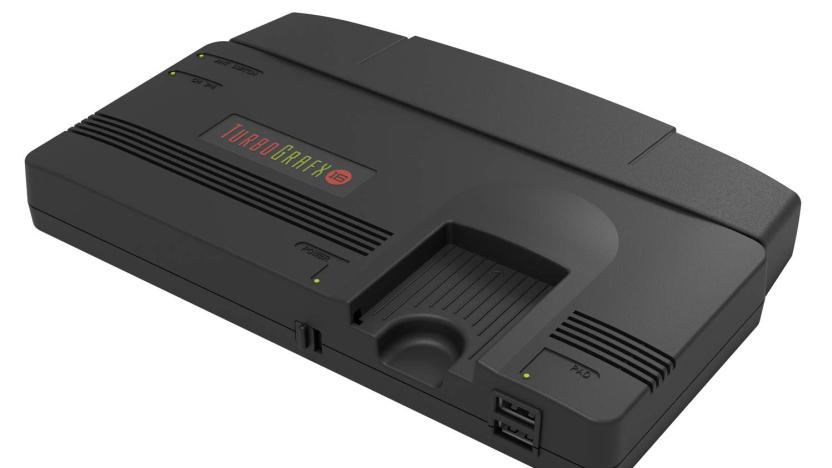
Share your thoughts on the TurboGrafx-16 Mini
We want to hear how the TurboGrafx-16 Mini has been treating you.
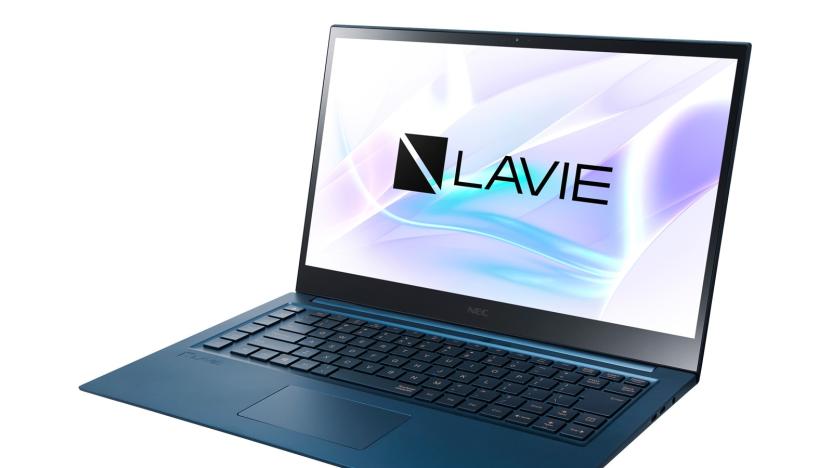
NEC's new PC lineup for the US includes a 4K OLED laptop
NEC's LaVie PCs have come to the US before, but with Lenovo badging -- and they've usually played second fiddle to Lenovo's own IdeaPads and ThinkPads. Now, however, they're getting more of a chance to shine. Lenovo is releasing three higher-end LaVie PCs in the US under the NEC name, each of which has at least one stand-out feature. The highlight for many may be the LaVie Vega (above), a 15.6-inch macine that touts a 4K OLED display, a six-core 2.6GHz Intel Core i7 and a 512GB Optane-assisted SSD despite a body that weighs just 4.06 pounds. The base system is stuck with 8GB of RAM and Intel's integrated graphics, but the LaVie logo on the back doubles as a Cortana smart speaker that works even when the portable is asleep.
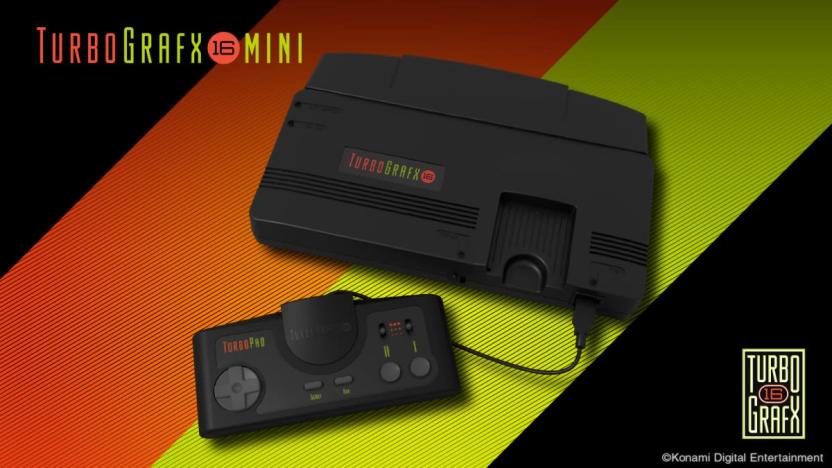
Konami's TurboGrafx-16 mini is ready to ride the retro-gaming wave
Need a sign that the retro gaming console market just won't come to an end? At E3 Konami just announced the TurboGrafx-16 mini, marking a return for the console that debuted in the US alongside the Sega Genesis in 1989, but never quite enjoyed the support or sales of its competitors. There's no price or release date yet for this bit of late 80s / early 90s nostalgia, but when it is released it will include the requisite suite of throwback games including: R-Type New Adventure Island Ninja Spirit Ys Book I & II Dungeon Explorer Alien Crush Other titles have yet to be revealed (where's Bonk's Revenge?) , and outside of North America the box will have different names just like it did way back when. In Europe it's called the PC Engine Core Grafx Mini, and in Japan, where the system originally launched in 1987, it's just the PC Engine Mini. It's unlikely we'll see anything as groundbreaking as the original TurboGrafx-16's CD-ROM add-on -- a first for consoles at the time -- but it's good to see the name in circulation again all the same.

Olympic organizers may use facial recognition to manage guests
Japan is looking for a different way to confirm the identity of the hundreds of thousands of athletes, officials and journalists who will be attending the 2020 Olympics. The Japan Times reports that sources close to the Tokyo 2020 Olympic organizing committee say organizers are planning to utilize facial recognition technology. Not including spectators, attendees are expected to number in the 300,000 to 400,000 range and officials are concerned that ID sharing or theft will reduce the Games' safety. Facial recognition technology could get around those issues while also reducing entrance waiting times.
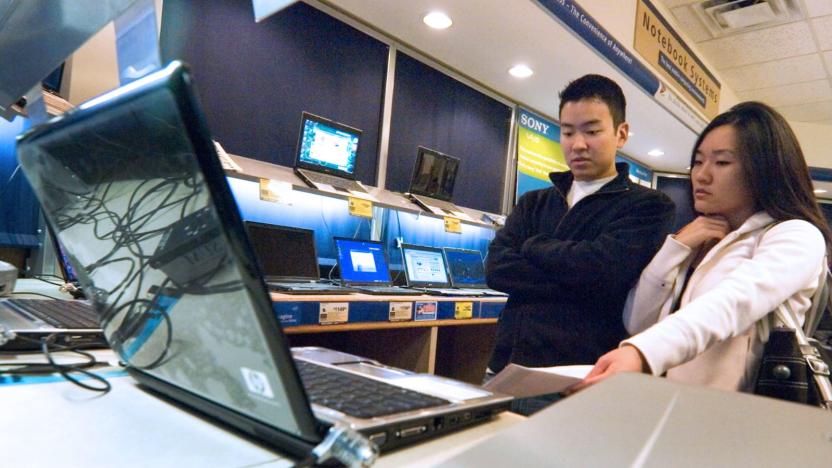
Your old PC's DVD drive might earn you $10
The PC you had a decade ago might be a clunker in comparison to what you have now, but it might just make you a little extra money. In the wake of a class action settlement with major optical disc drive makers over price fixing, Americans can now claim $10 in compensation for every PC-capable DVD drive they bought between April 1st, 2003 and December 31st, 2008. That's whether or not the drive was built into your system, we'd add. You'll have to live in one of 23 states or Washington, DC, but you could have a payment on the way with just a few minutes' work. You have until July 1st, 2017 to make a claim.

Nissan may stop making its own electric car batteries
Nissan has long made its own electric car batteries thanks to Automotive Energy Supply, its team-up with NEC, but it appears to be having second thoughts. Sources speaking to both Nikkei and Reuters understand that Nissan plans to sell its controlling stake in AES, with NEC likely following suit. It'd just be less expensive to buy batteries from an outside supplier, according to tipsters. While it's not certain who would snap up the business, the car maker is supposedly in talks with both Panasonic and "overseas companies" that include Chinese firms.

NEC can verify your identity using sound-capturing earbuds
Sure, you could use your fingerprint to unlock your phone, but NEC developed a way to verify your identity with your ears. The corporation announced technology this week that used the way in which sound resonates in the ear canal to identify a person. Ear shape is also unique to each of us, so NEC created a way for microphone-equipped earbuds to measure the acoustics after sending out a sound. What's more, the company says the technology works with 99 percent accuracy and only takes about a second to take its measurements.

Which monitors are worth buying?
With all the work you do, the games you play and the videos you watch, you spend a lot of time staring at your monitor. So why not do your eyes a favor and make sure you get one that's got exactly what you need, whether it's precise colors, fast response time or just a pleasing design? We've delved into some of the better monitors currently on the market to let you know which ones give you the best view for the money.

Best of CES 2015 Awards, PC: Lenovo LaVie HZ550
#fivemin-widget-blogsmith-image-431162{display:none;} .cke_show_borders #fivemin-widget-blogsmith-image-431162, #postcontentcontainer #fivemin-widget-blogsmith-image-431162{width:570px;display:block;} try{document.getElementById("fivemin-widget-blogsmith-image-431162").style.display="none";}catch(e){}Lenovo typically brings a lot of new product releases to CES. And it did it again in 2015. However, there was one particular highlight: a 13-inch laptop with top-end specs, but somehow weighing in at 1.7 pounds.This is Lenovo (and NEC's) slender LaVie HZ550. For reference, that's 43 percent lighter than the latest MacBook Air -- and in person you'd think it was a dummy laptop shell. Despite that, the laptop still packs fifth-generation Intel Core processors: It's got muscle too. Was it the best PC we saw at CES? We think so, yes.

Lenovo's skinny new ultraportable claims to be the lightest 13-inch laptop
It's impossible to convey in a photo how light Lenovo's new ultraportable, the LaVie HZ550, is. So instead I'll say this: When I first picked it up, I was sure I was handling a prototype; some sort of dummy unit without any actual components inside. In fact, though, the HZ550 is very real, and at 1.72 pounds, it's stupidly, record-breakingly compact; in fact, Lenovo claims this is the world's lightest 13-inch laptop. What's more, the company just announced what it says is the lightest 13-inch convertible notebook: a machine called the HZ750, which has a 360-degree hinge that allows it to fold back into tablet mode. At 2.04 pounds, it's lighter than any laptop with a touchscreen and rotating hinge has the right to be. Either way, even in a field of increasingly skinny notebooks, both of these stand out.

NEC wants you to spot counterfeits using your phone's camera
Want to find out whether or not something at the street market is a fake? In the future, you might only have to snap a photo with your smartphone. NEC has developed "object fingerprint" technology that compares the tiniest details of an object (such as the metal or plastic grain) with images in a cloud database; if something doesn't look quite right in that cut-rate handbag, you'll know right away. It's useful beyond piracy, too. You could trace the origins of legitimate items, or make sure that repair crews are using the right parts.

Former NEC employees tell the ballad of the TurboGrafx-16
NEC was poised to capture a significant share of the emerging North American video game market with the release of the TurboGrafx-16, but corporate indifference doomed the console to obscurity, an interview feature posted at Gamasutra today reveals. Released alongside the Sega Genesis in 1989, the TurboGrafx-16 hosted a number of exceptional games during its short lifespan, and was the first home console to boast a CD-ROM add-on. While standout games like Bonk's Revenge, Blazing Lazers, and Ys Book 1 & 2 earned it a contingent of devoted fans, many of the console's greatest efforts -- including acclaimed Castlevania: Symphony of the Night predecessor Dracula X -- languished in Japan, leaving its North American branch to suffer a slow death.

UK police begin trialling the world's fastest face recognition tech
With more than six million CCTV cameras in operation, Britain is the most watched country in the world. London's police officers are trialling body-worn cameras to help bring about "speedier justice," but only now are other forces beginning to find efficient ways to process that surveillance. Leicestershire Police today confirmed it has become the first force in the UK to test NEC's NeoFace face recognition software, which it hopes will "transform the way criminals are tracked down." NeoFace's strengths lie in analysing "dozens" of facial features from digital images captured by CCTV or police body cameras and matching them with the 90,000 photos stored on Leicestershire Police's database.

Facial recognition software helps convict a robber
Watch Dogs' vision of a super-connected Chicago may be truer than you think. A local judge has convicted Pierre Martin of armed robbery after police used facial recognition software (NEC's NeoFace) to match surveillance camera footage with an existing mugshot. While the cops still used witnesses to confirm their findings and make an arrest, the technology was vital to pinpointing Martin in the first place -- it's doubtful that investigators would have had time to sift through 4.5 million booking photos.

Intel unveils RealSense hardware and software line, including 3D camera module
The takeaway at today's Intel press event? All signs point to the RealSense product line -- a number of hardware and software products that "make interaction with technology simple, more natural and immersive," according to Intel's own words. The first product bearing the compound name is the RealSense 3D camera. Intel describes the product as "the world's first integrated 3D depth and 2D camera module that helps devices 'see' depth much like the human eye," suggesting that this isn't just a substitute for Leap Motion or Kinect. The camera does full-color 1080p and has an on-board sensor for gesture and face detection. The latter of which apparently helps it "understand emotions." It also recognizes foregrounds and backgrounds, so you can replace that messy room and make it appear as if you're Skypeing from the Moon. But, if you're looking for something more practical, you can also use it to scan objects in 3D using 3D System's Sense software. The RealSense 3D camera is set to be integrated into a number of diverse devices come the second half of this year, including tablets, Ultrabooks, laptops and all-in-ones, from top companies like Acer, ASUS, Dell, Fujitsu, HP, Lenovo and NEC. Seven such devices are being demonstrated today, and Intel itself has a demo unit. If you'd rather talk to your computer than wave at it, there's also a next-generation version of Dragon Assistant from Nuance that will be part of Intel's RealSense push. Of, course, while all this sounds good on paper, it remains to be seen how much people will actually want to wink, point or shout at their laptop to get it to open Netflix or point Chrome towards Engadget.

Nikkei: NEC to halt smartphone business after Lenovo deal falls through
Barely a month after NEC introduced the Terrain (seen above), its first phone in the US in eight years, and it looks like the company is about to give up its smartphone business for good. According to Japan's Nikkei, NEC has been trying to sell its loss-leading mobile division to Lenovo since late last year, especially since the two already have an existing PC partnership. However, it looks like that deal has fallen through and the sale is no longer in the cards. The Nikkei reports that NEC hopes to focus on just its feature phone lineup for now, and to sell off a few mobile-related patents in the process.


