We ran every test you could think of on the M1 Ultra
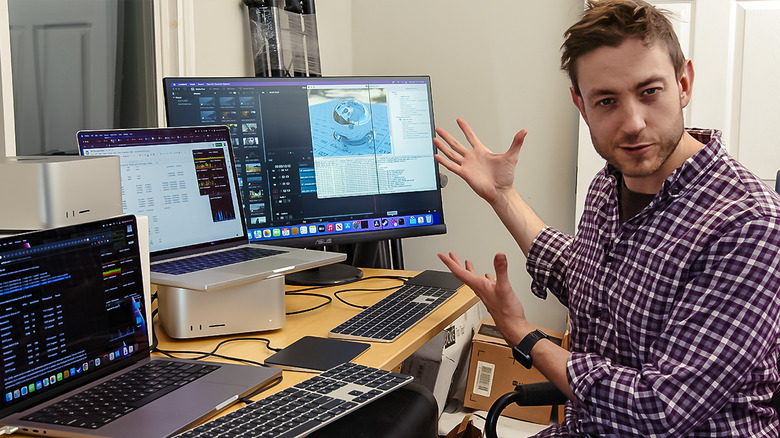
We ran every test you could think of on the M1 Ultra to see how fast Apple's new flagship processor really is.
Read More

The unique content on Engadget is a result of skilled collaboration between writers and editors with broad journalistic, academic, and practical expertise.
In pursuit of our mission to provide accurate and ethical coverage, the Engadget editorial team consistently fact-checks and reviews site content to provide readers with an informative, entertaining, and engaging experience. Click here for more information on our editorial process.
We ran every test you could think of on the M1 Ultra to see how fast Apple's new flagship processor really is.
Read MoreHow do Apple's best chips stack up against AMD's 5950X and a top-of-the-line Intel MacBook?
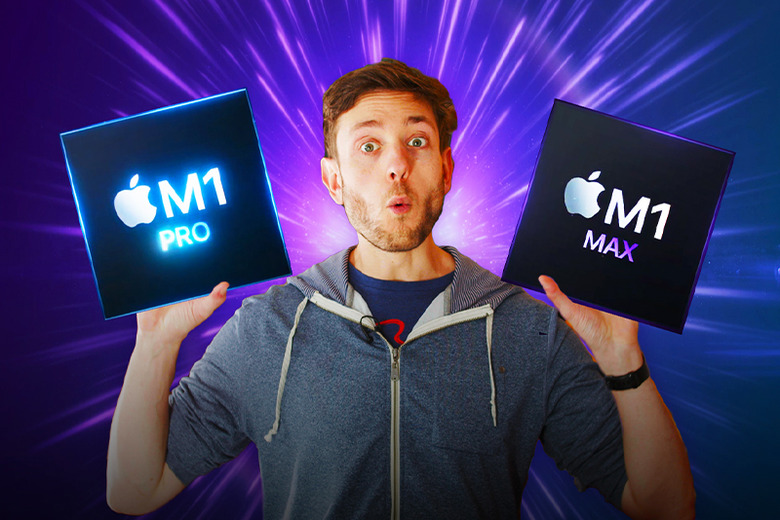
Read MoreApple's new processors double the core count of the already impressive M1, and quadruple the GPU power. All that power will cost you, though, with the new Macbook Pros running as much as $4,300 for a fully-loaded machine.
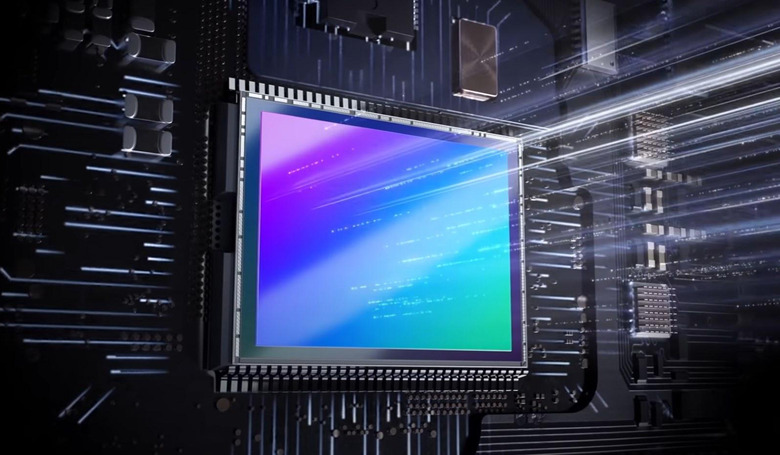
Read MoreIn the latest episode of our Upscaled series, we explain how camera sensors work, and how they'll improve in the near future.
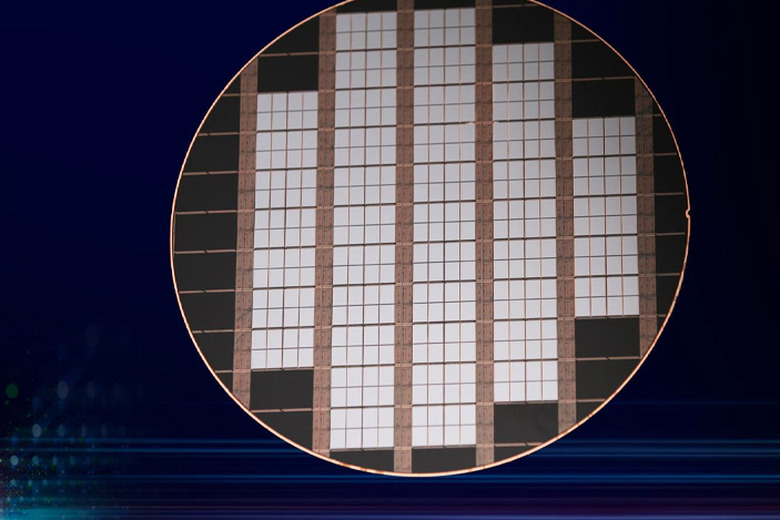
Read MoreIntel revealed a rebrand of their node names, and an aggressive new roadmap that ends with inconceivably tiny 18-angstrom transistors.
Read MoreIn the latest "mini" episode of our Upscaled explainer show, we dive into IBM's announcement that it had created 2nm transistors. Size, in this case, isn't the most important innovation.
Read MoreIntel unveiled its plan to get the company back on track. including taking contract manufacturing jobs, and a massive $20 billion investment in building new factories.
Read MoreHAMR and MAMR are a pair of new methods for writing data to hard drives that could boost capacity as high as 60TB per drive, or beyond.
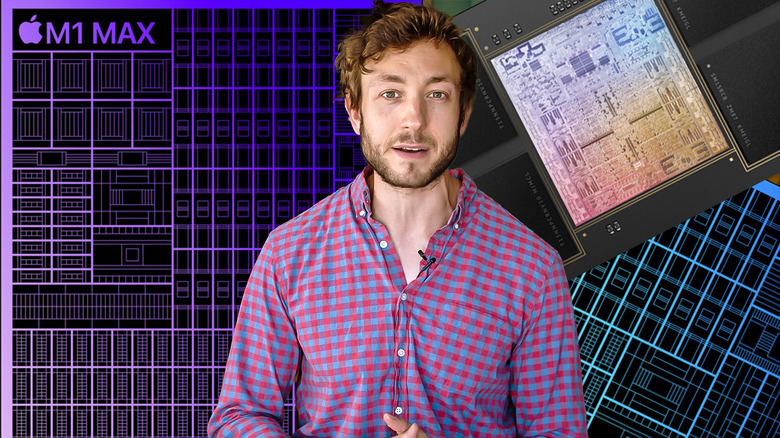
Read MoreApple used a super-wide processor design paired with fast memory and cache to create a speedy, efficient processor for its new Macbook Pro.
Read MoreApple's M1 is seriously fast, but how did they do it? Processor performance isn't witchcraft, it's physics and design. We compare the M1 to Microsoft's similar SQ2 and dig into just how Apple managed this feat.
Read MoreIntel put out another high-end chip, 10th-gen "Comet Lake", which added a few cores but is still based on its aging 14nm transistor design, and AMD countered with Zen 3, an improved version of its desktop architecture that now goes up to 16 cores. While Zen 3 didn't increase core counts or clock speeds dramatically, it did deliver a big boost in instructions per-clock without increasing power consumption.
Read MoreWith the Zen 3 chips, AMD has reclaimed the desktop performance crown, and the flagship 16-core 5950X is one of the fastest processors we've ever seen. But how much speed do you really need?
Read MoreRSC-V is a new fully open-source processor design and instruction set. Developed at UC Berkeley, RISC-V is trying to do away with license fees and proprietary tech to make processor design accessible to companies all other the world.
Read MoreQLC flash is enabling bigger and bigger SSDs, including the first 8TB consumer flash drives, but it comes with the serious drawbacks. How exactly does flash memory work, what is QLC and what is it good for?
Read MoreThe semiconductor GaN has already changed the world once, it's at the heart of blue and white LEDs, but researchers are looking at how this materials could revolution power systems, space travel, telecommunications, and even processors.
Read MoreFor the latest episode of our explainer show Upscaled, we dive into the history of the RISC architecture. With Apple dropping Intel for its own RISC-based CPUs, this will be the first time in decades we've seen a company try to produce high-end RISC processors.
Read MoreFor the latest episode of our explainer show Upscaled, we compared Intel's new flagship 10-core chip, the i9-10900K, with AMD's budget-level Ryzen 3 3300X. We were trying to answer one question: How much does your CPU matter in gaming performance?
Read MoreIn this mini-episode of our explainer show, Upscaled, we break down NVIDIA's latest GPU, the A100, and its new graphics architecture Ampere. Announced at the company's long-delayed GTC conference, the A100 isn't intended for gamers, or even for workstation users. Volta never directly came to consumers — aside from the Titan V and a Quadro workstation card — but the improvements and tensor cores it introduced were a key part of Turing, the architecture which underpins almost all of NVIDIA's current GeForce and Quadro cards.
Read MoreNow, with its 10th-gen "Comet Lake" desktop chips, Intel is offering up to 10 cores on top-line chips. These Intel 10th-gen chips are also still based on Intel's aging 14nm manufacturing process and Skylake architecture, so aside from more cores, don't expect huge performance gains here.
Read MoreMonitor specs are hard to interpret at best, and downright fictional at worst. So how can you tell which numbers to actually pay attention to?
Read MoreThe Xbox One and PS4 were the start of an unusual console generation. Both systems adopted very "PC-like" architecture and instead of a new generation we instead got a refresh where Microsoft and Sony both released faster versions of their existing consoles, the PS4 Pro and Xbox One X. We may still have a few months left to wait, but finally we've gotten details of what the next real generation will bring. Microsoft and Sony have both stuck with the PC-like design of their predecessors, and are again using AMD as their CPU and GPU supplier, but the Xbox Series X and PS5 will be very different from the current generation. The biggest changes come from the storage systems. Considering the Xbox One and PS4 both still use slow mechanical hard drives, we figured a move to smaller, faster, more efficient flash-based SSDs was inevitable, but Microsoft and Sony have gone all out. Both systems feature custom storage interfaces with PCI Express 4.0 SSDs and custom hardware to handle real-time decompression. That means these drives will move serious amounts of data very quickly. The Series X is claiming transfer speeds of around 3-4GB/s, while the PS5 may be capable of data rates as high as 9GB/s. With data rates that high (the current consoles manage maybe 150MB/s in ideal conditions), load times should be cut down to seconds, and in-game load screens may become a thing of the past. Faster data rates could also enable higher resolution textures for more photo-realistic graphics, and enable you to switch between games with the click of a button. Add in a significantly upgraded CPU and a long-awaited AMD ray tracing solution for hyper-realistic lighting, and these consoles represent a huge leap forward. Hopefully, their benefits will also trickle down into the PC space as well, and games on every platform will be able to leverage these new possibilities to be faster and better looking. We don't know exactly when they'll arrive yet, or how much they'll cost, but we'll have more details on the Series X and PS5 as soon as they're announced.
Read MoreLast time on our explainer show Upscaled, we took a look at 5G, the new high-speed mobile technology starting to roll out in 2020. But 5G isn't entirely new technology, it builds on the mobile networks already in place around the world. This has been the pattern for mobile networks, incremental upgrades that added more capacity and speed bit by bit. This approach has yielded incredible results; as much as we might gripe about coverage or speeds today, the first real cell networks could only support about a dozen calls per tower, had no data capacity, and used unencrypted analog signals that were easy to intercept.
Read MoreGame genres can wax and wane in popularity. It's a sad truth that two of my favorites, real-time strategy and space simulation games, have been on the decline since the glory days of Tie Fighter and Warcraft. We may never see the likes of Warcraft 3 again, but in recent years there have been some valiant attempts to revive the space sim, with releases like Everspace, Rebel Galaxy, and Elite breathing new life into the genre. But I haven't been playing any of those, because all my free time has been completely consumed by Freespace 2.
Read MoreWe've been hearing about 5G for ages, and 2020 is the year it'll finally become a reality for some people. Until this point there have been a few sparse 5G networks available in cities, but with only a handful of phones supporting 5G, even if you lived in an area with coverage odds are you couldn't connect. That's all set to change with a host of new 5G phones expected to be announced through 2020, and providers all around the world starting to switch on additional 5G towers. Even so, it's hard to know what to expect from 5G. Depending on your provider and your network, you may get blazing fast speeds but only in certain places, a bump in reliability without much speed, or anything in between. It turns out 5G isn't really one thing, it's a collection of technology and new frequency bands, and different carriers are focusing on different aspects of the network.
Read MoreHades is the game that finally got me to try an early-access release. I should explain: I generally feel you should buy a game only once it's been released and reviewed. In an era where physical stock is rarely a concern, pre-ordering games basically means you're giving publishers free money, but early access titles go a step further -- it's like paying to be a beta tester.
Read MoreAside from a few laptop launches, recently CES hasn't brought much computer news. AMD seems intent on changing that, launching the Radeon VII last year, and this year announcing a slate of new mobile processors. While AMD's chips may be changing the desktop landscape, bringing eight, twelve, and now sixteen cores processors within reach of the average desktop user, they've struggled in the mobile space. Put simply, AMD's current desktop chips are too slow, use too much power, and were a generation behind the minute they launched. But now at CES AMD CEO Lisa Su announced their 4000 line of mobile processors, which promise double the performance per watt of its current lineup (critical for mobile chips). AMD's own benchmarks, which admittedly must represent a best-case scenario, show its 15-watt low-power chips trading blows with Intel's 1065G7 laptop chip -- which currently powers the Dell XPS 13. AMD says its new 4800U should be 4% faster in single-core performance, but a staggering 90% faster in multicore benchmarks.
Read MoreAll the current camera hype may be around mirrorless cameras, but Canon is determined to prove DSLRs aren't dead. With the new 1DX MIII, Canon has created what might be not only the best photo camera for sports, news and wildlife, but also an exceptional video camera. First things, this is a giant DLSR. If you're used to nice compact mirrorless cameras, a pro camera like the 1DX or Nikon D5 feels enormous. For one, with its second grip (complete with control wheels), and a shutter built so you can swap to portrait orientation, the camera's body is almost square.
Read More